Ken Jacobs Collection, Vol. 1 Blu-ray Movie
HomeKen Jacobs Collection, Vol. 1 Blu-ray Movie 
Kino Lorber | 1955-2021 | 433 min | Not rated | Jul 27, 2021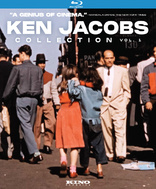
Price
List price:Listed on Amazon marketplace

Movie rating
7.2 | / 10 |
Blu-ray rating
| Users |  | 0.0 |
| Reviewer |  | 4.0 |
| Overall | | 4.0 |
Overview
Ken Jacobs Collection, Vol. 1 (1955-2021)
Ken Jacobs is one of the most wildly creative and influential film artists and teachers in the history of the medium, and Kino Classics is proud to present this two-disc selection from his vast body of work (additional titles will be available digitally via Kino Now). Jacobs, born in Brooklyn, NY in 1933, studied Abstract Expressionism with Hans Hofmann before turning to filmmaking – where he became a prolific member of the underground scene, along with contemporaries Jonas Mekas, Jack Smith, and Stan Brakhage. His early films use NYC as a poetic landscape (Orchard Street) and as a setting for Smith’s carnivalesque performances (Little Stabs at Happiness and Blonde Cobra – both preserved by Anthology Film Archives). Jacobs then started experimenting with found footage, expanding a five-minute fragment of Billy Bitzer’s Tom, Tom, the Piper’s Son to feature length (restored in 2K by Museum of Modern Art), and went on to embrace digital tools - using stroboscopic effects to turn silent shorts and Victorian stereoscopic photographs into mind-expanding 3D investigations (Capitalism: Child Labor). He continues to push the boundaries of the art form – as you can see with his hypnotically abstract Movie That Invites Pausing (2021). In addition to his landmark films, which have been honored by the American Film Institute, the Guggenheim Foundation, and the Rockefeller Foundation, Jacobs (along with his wife Flo) founded the free film school Millennium Film Workshop, and he also helped create SUNY Binghamton’s experimental Department of Cinema in 1969, where he became a Distinguished Professor and influenced generations of artists and scholars.
Director: Ken Jacobs| Documentary | 100% |
| Short | 90% |
| Surreal | 62% |
| Other | 29% |
Specifications
Video
Video codec: MPEG-4 AVC
Video resolution: 1080p
Aspect ratio: 1.33:1
Original aspect ratio: 1.33:1
Audio
English: DTS-HD Master Audio 2.0
Subtitles
English SDH
Discs
Blu-ray Disc
Two-disc set (2 BDs)
Playback
Region A (B, C untested)
Review
Rating summary
| Movie | | 4.0 |
| Video |  | 3.0 |
| Audio | | 3.0 |
| Extras | | 3.0 |
| Overall | | 4.0 |
Ken Jacobs Collection, Vol. 1 Blu-ray Movie Review
An engaging assortment of films from experimental filmmaker Ken Jacobs.
Reviewed by Neil Lumbard November 20, 2022Ken Jacobs: Collection – Vol. 1 offers an impressive slate of short films from the experimental filmmaker. The collection includes the following shorts: Orchard Street (1955, 27 min.), The Whirled (1961, 19 min.), Little Stabs at Happiness (1963, 15 min.), Blonde Cobra (1963, 34 min.), Window (1964, 12 min.), The Sky Socialist: Environs and Outtakes (1964-1966/2019, 47 min.), The Georgetown Loop (1996, 11 min.), A Tom Tom Chaser (2002, 11 min.), Capitalism: Child Labor (2006, 14 min.), Capitalism: Slavery (2006, 3 min.), and Movie that Invites Pausing (2021, 20 min.) and the release also includes the feature-length films The Sky Socialist (1963-1964/2019, 96 min.) and Tom, Tom, The Piper’s Son (1969, 115 min.) (to round out the expansive collection).
Jacobs is both an acclaimed filmmaker and a film professor, instructing students in the art of filmmaking. Kino Lorber is proud to present a collection containing several of his most accomplished and acclaimed shorts and feature-length productions. Born in New York, Ken Jacobs draws inspiration from his time living in Brooklyn. The material included in the set includes numerous shorts that drew inspiration in Jacobs time in Brooklyn, New York.
The early works of Ken Jacobs showcase NYC life and the raw realities of the city landscape of the time. The shorts have been preserved in collaboration with the Anthology Film Archives. Jacobs is an award-winning filmmaker who has been honored by the American Film Institute, the Rockefeller Foundation, and the Guggenheim Foundation.
Ken Jacobs is regarded as one of the most influential experimental filmmakers working in the medium. Little-known to some, Jacobs is considered a revolutionary director exploring abstract filmmaking and avant-garde expressionism. Jacobs recalls the likes of Jean-Luc Godard and the freewheeling expression of the French New Wave.
NYC is the back-drop of Orchard Street. Showing the raw reality of the city – from shop-corners to street performers, cats, and lone wanderers – Orchard Street is a compelling short film. The experimental and thought-provoking short feels part documentarian and part avant-garde mind-bender (and audiences should appreciate the experimental nature of the filmmaking and the exquisite framing of the camera).
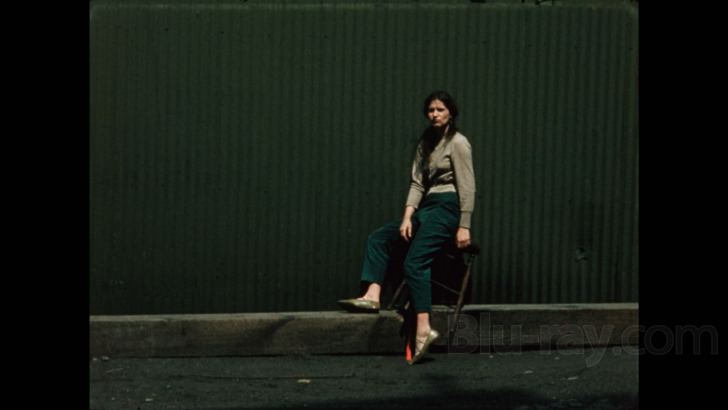
A freewheeling spirit.
Jack Smith delivers horrifying performances in Little Stabs at Happiness and Blonde Cobra, it is as though Jacobs filmmaker is descending in to a total state of madness – it feels akin to entering a mad-house with a man escaped from the looney-bin – horrifying, chaotic, and disturbing. These films have horrifying and disturbing performances. Audiences will find the mad-house style piercingly disturbing and the performance is an example of the depths of chaos an actor can go to for a role. Audiences who are uncomfortable with films depicting these types of scenarios may struggle but the artistry on display remains notable.
Later works became even more experimental for Jacobs with digital filmmaking tools heralding in his new approach: relying upon stroboscopic effects in order to transform traditional silent films and photography in to new and innovative forms of expressionism. These shorts exude confidence, experimentation, and a sense of vitality.
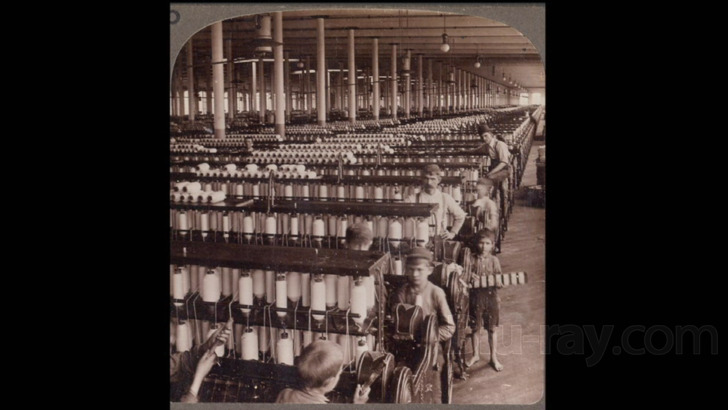
Capitalism: Child Labor is a disturbing short film with a horrific undertone about exploitation in the child labor period of Victorian history. The short uses still photography combined with stroboscopic effect to create a haunting portrait of the time. The effect could cause nausea for those sensitive to epileptic effects as the pulsating imagery creates a shocking effect (and a warning disclaimer precedes the presentation).
The same critique could also be said of the late-career Movie that Invites Pausing, a short film using an increasingly chaotic effect of stroboscopic effects with brightness flickering at a rapid speed – some audiences may feel as though their eye-balls are being pushed to their absolute limits. The result? Madness. Chaos. The short will test the limits of audiences with pulsating visual effects and may ultimately cause more squeamish viewers to feel nausea. Indeed, the movie invites pausing.
Ken Jacobs: Collection – Vol. 1 offers an incredible assortment of experimental works from the brilliant and complex filmmaker at the helm. Jacobs doesn’t shy away from making audiences feel uncomfortable with his work. Exploring topics as complex as slavery while using experimental visual effects is compelling and will cause audiences to confront the realities of our world’s past – and make one consider the possibilities of the future. A filmmaker with a gift for pushing boundaries and finding rhythm in the experimental nature of film, Ken Jacobs is a filmmaker with a gift. Fans of Godard should take note of the similar nature of disregard for the traditional rules of filmmaking.
Ken Jacobs Collection, Vol. 1 Blu-ray Movie, Video Quality
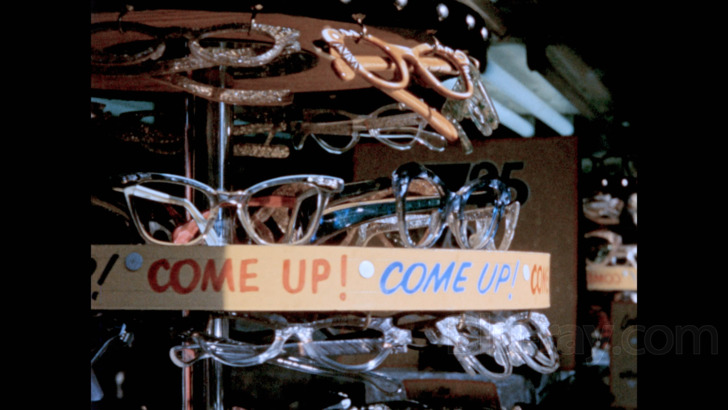
The short films and theatrical features have been restored and are preserved utilizing the best available masters. The quality of the restorations and short films varies across the collection and some of these films unsurprisingly appear to be in better condition than others. Tom, Tom, The Piper's Son was a feature provided with a brand new 2K restoration completed by the Museum of Modern Art. The included short films from his late-career are in better condition than some of his earliest shorts, exhibiting more dirt, scratches, and print deficiencies that are inherent in the source used.
Ken Jacobs Collection, Vol. 1 Blu-ray Movie, Audio Quality
The audio on the release is presented in DTS-HD Master Audio 2.0. The lossless audio quality on the release preserves the original sound design. The majority of the included shorts and features are silent presentations. Only select shorts provide audio presentations (and most are sparse and experimental in sound design). Some of these shorts have a combination of silence and experimental sound selections, which is keeping in the nature of Jacobs filmmaking. Though the non-traditional sound designs are certainly far from the norm, the audio encoding by Kino Lorber is true to the source.
Ken Jacobs Collection, Vol. 1 Blu-ray Movie, Special Features and Extras

Includes a booklet featuring an essay entitled "Ken Jacobs: Film Philosopher" as penned by author J. Hoberman. The booklet also includes a selection of photographs and a listing for all of the shorts provided in the collection (alongside information about their release year and run- time).
The release includes on-disc supplements as well:
Disc 1:
Conversation between Director Ken Jacobs and film scholar Tom Gunning (HD, 28:51)
There are no additional bonus features included on disc two of the collection.
Ken Jacobs Collection, Vol. 1 Blu-ray Movie, Overall Score and Recommendation
The Ken Jacobs: Collection – Vol. 1 is an outstanding set representing the vast body of the work from acclaimed filmmaker Ken Jacobs. The filmmaker is considered a pioneer of experimental and avant-garde filmmaking with good reason. Jacobs is a freewheeling spirit with a disregard for the traditional rules of cinema in the same vein of Godard. The release includes a plethora of early and later career films. The release also includes an exclusive conversation with Ken Jacobs and scholar Tom Gunning. Fans of the filmmaker should consider is an essential purchase. Highly recommended.
Similar titles
Similar titles you might also like

Yum, Yum, Yum! A Taste of Cajun and Creole Cooking
1990

Gap-Toothed Women
1987

Non, Je Ne Regrette Rien (No Regret)
1993

Affirmations
1990

Room 666
Chambre 666
1982

L' enfant aimé, ou Je joue à être une femme mariée
1971

A Hollis Frampton Odyssey
1966-1979

Huie's Sermon
1981

La chambre
1972

Hotel Monterey
1972

The Private Life of a Cat
1946

Fellow Citizen
همشهری
1983

À propos de Nice
1930

News from Home
1977

Taris
Taris, roi de l'eau / La natation par Jean Taris / Jean Taris, Swimming Champion
1931

Uncle Yanco
Oncle Yanco
1967

Black Panthers
1968

Ydessa, les ours et etc.
Ydessa, the Bears and etc.
2004

Ulysse
1982

Salut les cubains
1964