Zen: Vendetta / Cabal / Ratking Blu-ray Movie
HomeZen: Vendetta / Cabal / Ratking Blu-ray Movie 
BBCWarner Bros. | 2011 | 266 min | Not rated | Aug 02, 2011
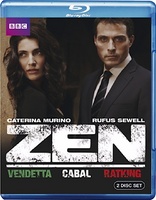

Movie rating
7.1 | / 10 |
Blu-ray rating
| Users |  | 0.0 |
| Reviewer |  | 4.0 |
| Overall | | 4.0 |
Overview
Zen: Vendetta / Cabal / Ratking (2011)
Aurelio Zen is a detective with the police force in Rome. In three separate stories, he investigates cases of murder, kidnapping and apparent suicide, all the while navigating the murky waters of corruption and influence that are an inescapable fact of life in Italy. In his private life, he explores a complicated and intense relationship with his chief's secretary, Tania, who has her own personal issues. Based on a series of novels by English author Michael Dibdin.
Starring: Rufus Sewell, Caterina Murino, Nathalie Rapti Gomez, Stanley Townsend, Ben MilesDirector: John Alexander (IX), Jon Jones (II), Christopher Menaul
| Thriller | Uncertain |
| Crime | Uncertain |
| Mystery | Uncertain |
Specifications
Video
Video codec: MPEG-4 AVC
Video resolution: 1080i
Aspect ratio: 1.78:1
Original aspect ratio: 1.78:1
Audio
English: Dolby Digital 2.0
Bitrate=448kbps
Subtitles
English SDH
Discs
50GB Blu-ray Disc
Two-disc set (2 BDs)
Playback
Region A, B (C untested)
Review
Rating summary
| Movie |  | 4.5 |
| Video | | 4.0 |
| Audio |  | 3.5 |
| Extras |  | 3.0 |
| Overall | | 4.0 |
Zen: Vendetta / Cabal / Ratking Blu-ray Movie Review
Disinterested Sleuth
Reviewed by Michael Reuben November 23, 2011When the late Peter Falk first shambled onto TV screens as Lt. Columbo, the audience was riveted, because no one had ever seen a cop like him. Columbo blazed the trail, kicked down the door, broke the glass ceiling -- pick your cliche -- for every TV detective who's succeeded him with quirks, eccentricities, even neuroses front and center, commanding the viewer's attention as much as the crimes to be solved. Monk, Andy Sipowicz and Grace Hanadarko may not have much else in common, but they're all descendants of that disarmingly pesky little guy who always wore the same raincoat. Aurelio Zen is a distant European cousin, and he's unlike any TV detective I've ever encountered. Part of the difference is that Zen works for the Italian state police, where solving the crime isn't necessarily the top priority. But most of Zen's peculiarity results from his origin. The creation of an English author, Michael Dibdin, who lived in Italy and poured his intimate familiarity with the country into a series of novels about Zen's experiences, Zen retains his creator's point of view, which is that of an outsider. Within his fictional world, Dibdin explains Zen's detachment by making him a Venetian transplanted to Rome, but Zen's reserve is so familiarly British (especially in the wry portrayal by English actor Rufus Sewell) that it's hard not to suspect the Venetian heritage is just a disguise for Dibdin's own Anglo-Saxon perspective. Certainly a healthy dose of English common sense is what's needed when wading through the Roman muck that surrounds Zen on all sides. Zen has a reputation on the force for being honest and ethical, and it says a lot that these qualities are considered rare within Rome's institutions of law enforcement. Everything in Rome is corrupt, manipulated and controlled by forces of wealth and power (whether industry, government or the Catholic Church doesn't seem to matter). Conspiracy theories are common sense rather than paranoia. Precisely because of his upright reputation, Zen is routinely given high-profile cases, so that his presence will provide an appearance of propriety. Then, before he can even begin work, he is told what result to reach, often by different highly placed people dictating contrary results. Why do they want a particular result? They don't always say. And even when they do, it would be foolish to take their explanation at face value. Zen deals with this miasma of hidden agendas by accepting that he has no idea what's really going on. He follows procedure, visits crime scenes, interviews witnesses, reviews forensics and generally puts one foot in front of the other while keeping his eyes open. He'll sometimes seek assistance from a friend and former colleague who's now a private investigator, Gilberto Nieddu (Francesco Quinn), and he has a few shady friends with a foot in the underworld, like Angelo (Garry Cooper). But more often than not, the multifarious plots and machinations swirling around Zen sort each other out, allowing him to achieve a reasonably satisfactory resolution, or at least one that lets him both sleep at night and keep his job. The trick is to remain calm and be ready for anything, even being kidnapped at gunpoint when your mother sends you out to buy tomatoes (yes, that does happen in one of the episodes). Zen also has an intriguing personal life. Separated from a floozy of a wife named Mara (Julie Cox) -- she slept with all his friends and taunts him that she enjoyed cheating on him -- Zen lives with his mother (Catherine Spaak), an overprotective policeman's widow, who has obviously devoted too much of herself to her son since his father was killed on the job when Zen was just a boy. That's just how I learned about your father, Mamma tells Zen, when he receives a late night call summoning him to an emergency, as if he needed to be reminded. Plainly awaiting an incentive to move on from the women currently dominating his life, Zen perks up when his blustery boss, Moscati (Stanley Townsend), is assigned a new assistant. Her name is Tania Moretti, and she's played by the elegant and graceful Caterina Murino (whose character came to a bad end after dallying with James Bond in Casino Royale). Every man in the precinct takes notice, and a betting pool is established for the first man to sleep with Tania. But like many attractive and intelligent women, she's more than a match for a mob of overgrown teenagers, especially Vincenzo Fabri (Ed Stoppard), the one with the rich uncle who's utterly full of himself. (Not all of them are terrible. Zen's partner, Giorgio (Vincent Riotta) is a pretty decent guy.) Tania has her own personal issues, and at this point in her life the man who most appeals to her is the quiet, reserved fellow with the mordant wit and the gentle smile. She quickly becomes Zen's unofficial Girl Friday, and then, as they warily circle each other, something more. But will this be the love of Zen's life or merely a transitional affair that finally frees him from the emotional shackles of a failed marriage? It's a tribute to the charming and light-hearted chemistry between Caterina Murino and Rufus Sewell that this question becomes every bit as compelling as the mysteries that Zen is called upon to solve.
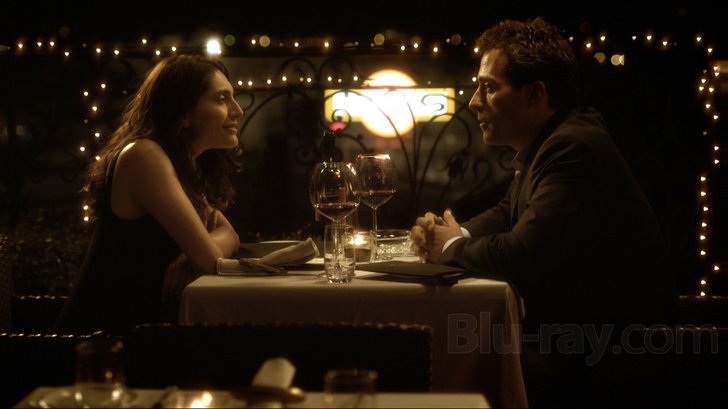
Zen is composed of three episodes, each of them approximately 90 minutes long. "Vendetta" In the opening of "Vendetta", a judge named Bertolini (Roberto Nobile) is ambushed and shot to death on a mountain road. The killer is one Tito Spadola (Peter Guinness), whom Bertolini sentenced to prison. It seems that Spadola is convinced he was wrongfully convicted and has a list of those he holds responsible. Bertolini is only the beginning. Back in Rome, Zen and his boss, Moscati, find themselves summoned to a meeting with a high-ranking Minister named Guerchini (Anthony Higgins) and his slick aide, Colonna (Ben Miles). Zen has been conducting an official review of the file concerning the murder of a wealthy industrialist named Oscar Faso (Alessandro Cica). Faso's business partner, Renato Favelloni (Greg Wise), confessed to the crime, but has now experienced a religious awakening and recanted his confession. He plans to go to trial. Is the case airtight? Zen, with his famous reputation for uprightness, will not provide the four-square assurance Chief Moscati would like to hear. The circumstantial evidence is strong, but a few I's weren't dotted and T's weren't crossed. The Minister seems satisfied, but Moscati tells Zen that it's his job to see that Favelloni is convicted. The only problem is that, after the meeting, the Minister's aide, Colonna, comes to Zen with the opposite instruction. It seems that Favelloni knows embarrassing things about the government from his and Faso's various business dealings. At a contested trial, these things would surely come out. But if Zen can find a mistake in the evidence before trial, then Favelloni goes free, and everything will be neatly hushed up. Get him off, says Colonna, and the Minister will be grateful. Welcome to the heads I win, tails you lose world of Roman police work. Lacking any other option, Zen travels to the country home where Faso was murdered and begins re-examining the crime scene and re-interviewing the witnesses. The entire episode is a classic example of how storylines in Zen veer off in unexpected and unpredictable ways that eventually circle back to the original case. Zen's country outing involves an old house with a curiously selective security system (it recorded the murder, but not the murderer); a missing rifle; a caretaker with a considerably younger Russian wife, who remains meek and mild in front of her husband, then puts on bedroom eyes and a "come hither" smile as soon as her husband's back is turned (at one point she actually uses a line from an old Monty Python routine: "Do you want to go upstairs?"); a former Russian employee of the household, whose background is much more interesting than the police file disclosed; and the daughter of the house's former owner, who shuns society and lives on her own in the wild, because, until he died, her father kept her locked in the basement and raped her every Sunday after mass. Didn't anyone know? Zen asks a local cop. People around here keep to themelves, comes the reply. Fine, upstanding Christians. Then again, the only reason Zen is there is because Christianity called to Favelloni in prison -- and he, too, may be lying. Meanwhile, Tito Spadola, who began the episode with the murder of a judge, has continued working through his hit list. The last person on it is a person involved in the Faso case. In the end, the vendettas stack up in a pile. How does Zen find a solution to all these dilemmas, including his conflicting directives from the Chief and the Minister? It is entirely accurate to say that he falls into it.


Zen: Vendetta / Cabal / Ratking Blu-ray Movie, Video Quality
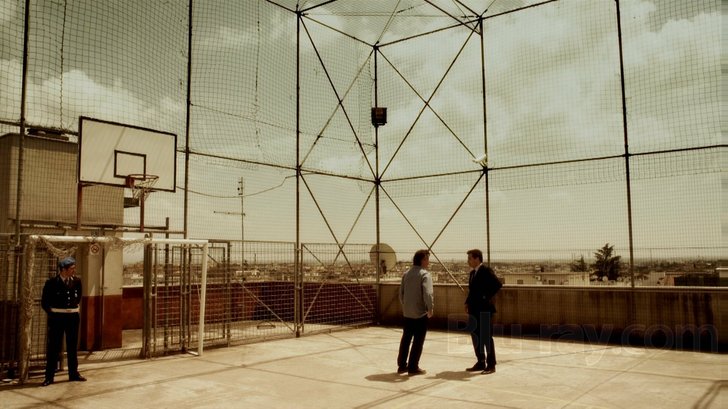
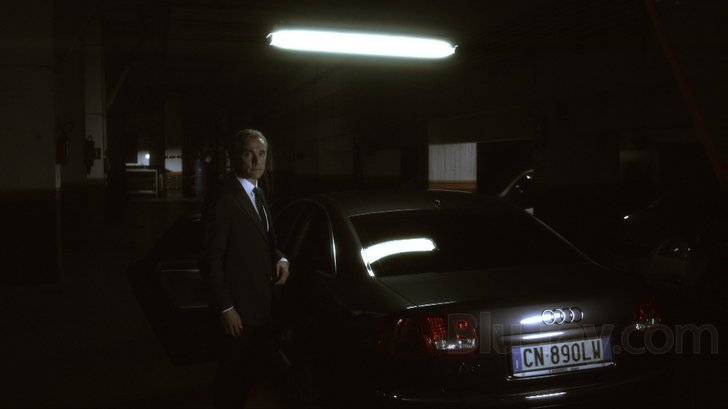
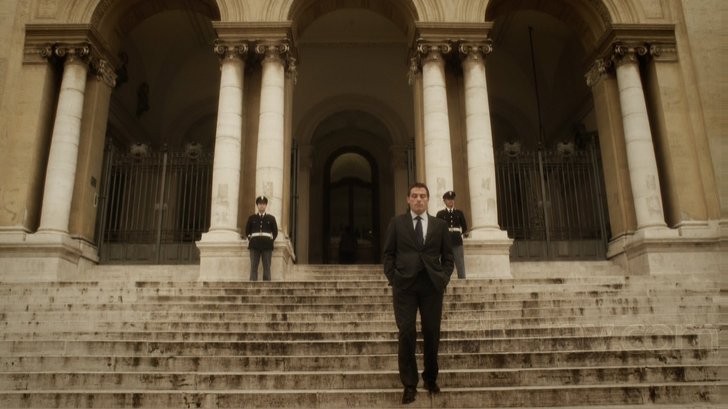
Shot on hi-def video, Zen comes to Blu-ray in a 1080i, AVC-encoded transfer on one BD-50 and one BD-25 (not two BD-50s, as indicated on the jacket). The series was shot entirely on location in Rome and surrounding areas, including interiors wherever possible, but nothing about the style of the photography suggests a travelogue. This is an everyday reality, the kind where people get up, brush their teeth and go to work. Consistent with the faded grandeur of an ancient city, colors tend to be desaturated, although this effect becomes less pronounced as the episodes progress. Detail is generally very good, and black levels are mostly solid, except for some minor crush during night scenes, which is probably a result of light levels that were beyond the control of the production company. Despite the interlaced format, I did not observe any combing artifacts in the moving image, and since the origination was digital, I did not expect to encounter (and did not) any of the types of artifacts that can result from film-to-video transfers. No compression artifacts or significant video noise was observed.
Zen: Vendetta / Cabal / Ratking Blu-ray Movie, Audio Quality
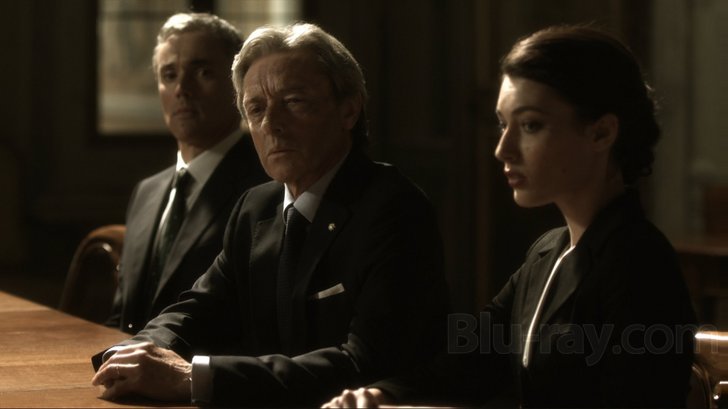
The audio for Zen is Dolby Digital 2.0, but before anyone complains about the lack of lossless, it should be noted that the bitrate is 448kbps, which is very high for DD 2.0 (indeed, more than twice the standard rate on DVD). The result may not be lossless, but I doubt many ears could distinguish the difference. It's a suitably utilitarian mix that captures the diverse locales to which Zen's activities take him, including, obviously, his office in the Questura, the apartment he shares with his mother, various cafes, restaurants and crime scenes, and several more exotic locales, not always of Zen's choosing. Dialogue can be something of a challenge, because of the mixture of accents. Most of the principal cast are English, and the decision was made to have them speak in their native inflection, even when pronouncing Italian names. This can sometimes lead to confusion, especially when an English cast member is engaged in conversation with an Italian cast member, a common example being Zen with Tania Moretti. Also, in playing Zen's strategic reticence, Sewell often drops his voice into the lower registers, so that anyone not attuned to the accent and cadence may have trouble picking up his words. Fortunately, there are subtitles, and they're generally accurate. The moody score, which manages to suggest European films of the Sixties and Seventies, even though Zen is set in the 21st Century, is by Adrian Johnston, a veteran of British TV who has also worked in film (e.g., Becoming Jane).
Zen: Vendetta / Cabal / Ratking Blu-ray Movie, Special Features and Extras
- Zen: An Italian Adventure (SD; 1.78:1, enhanced; 31:28): This professional making-of documentary appears to have been created for broadcast and features interviews with the principal cast and crew. Topics include adapting the books for the screen, casting the parts, shooting in Rome and developing the visual style. Of particular interest is the challenge faced by the creative team in deciding where to draw the line between Italian and English linguistic and cultural elements. The settings and characters are Italian, but the source material and the audience (and most of the actors) are British. Should background extras be speaking English or Italian? Should principal actors, while speaking English, pronounce Italian names as they would in English or speak them with an Italian accent? The TV world of Zen involved hundreds of such tiny decisions, all of which quickly become familiar conventions to the viewer.
- Trailers: Disc 1 opens with a trailer for the first season of Sherlock and a promo for BBC America. Disc 2 opens with a trailer for the 2009 production of Hamlet starring David Tennant. All of these can be skipped with the chapter forward button, and none is available once the respective disc loads.
Zen: Vendetta / Cabal / Ratking Blu-ray Movie, Overall Score and Recommendation
Zen is one of the most original and involving detective series I've seen in a long time. Since there are a limited number of Aurelio Zen novels, and with Michael Dibdin's death in 1997, there won't be any more, we're unlikely to see a second series. These three tales stand successfully on their own as a complete package. Highly recommended.
Similar titles
Similar titles you might also like
(Still not reliable for this title)

Goldstone
2016

The Jinx: The Life and Deaths of Robert Durst
2015-2024

The Company You Keep
2012

The Day of the Jackal
1973

The End of Violence
1997

The Prize
Warner Archive Collection
1963

RBG
2018

Where to Invade Next
2015

Magician: The Astonishing Life and Work of Orson Welles
2014

Whitey: United States of America V. James J. Bulger
2014

Why We Fight
20th Anniversary Edition
2005

The Gatekeepers
2012

The Tillman Story
2010

Inside Job
2010

Electra Glide in Blue
4K Restoration
1973

Page Eight
Masterpiece Classic: Page Eight
2011

The Ritual Killer
2023

Our Kind of Traitor
2016

The Gingerbread Man
1998

Stage Fright
Warner Archive Collection
1950