Why We Fight Blu-ray Movie
HomeWhy We Fight Blu-ray Movie 
20th Anniversary EditionSony Pictures | 2005 | 98 min | Rated PG-13 | Jul 21, 2026


Movie rating
7.5 | / 10 |
Blu-ray rating
| Users |  | 0.0 |
| Reviewer |  | 2.5 |
| Overall | | 2.5 |
Overview
Why We Fight (2005)
Winner of the 2005 Grand Jury Prize at Sundance, Eugene Jarecki's groundbreaking documentary dissects the political, economic and historic reasons behind our increasingly aggressive military strategy since the end of World War II. The film opens with President Eisenhower's 1961 farewell speech, in which he warned Americans of the growing power of the "military industrial complex." Expanding upon Eisenhower's warning, Jarecki relies on interviews with American soldiers, government officials, military insiders, defense industry personnel, congressman, scholars, ordinary Iraqis, and others to provide analysis of the last 50 years of U.S. military expansion, wars and interventions.
Director: Eugene Jarecki| Documentary | 100% |
Specifications
Video
Video codec: MPEG-4 AVC
Video resolution: 1080p
Aspect ratio: 1.78:1
Original aspect ratio: 1.85:1
Audio
English: DTS-HD Master Audio 5.1 (48kHz, 16-bit)
Subtitles
English, English SDH
Discs
Blu-ray Disc
Single disc (1 BD)
Playback
Region A, B (C untested)
Review
Rating summary
| Movie |  | 4.0 |
| Video | | 2.5 |
| Audio | | 4.0 |
| Extras |  | 3.5 |
| Overall | | 2.5 |
Why We Fight Blu-ray Movie Review
♫ It's the money ♫
Reviewed by Randy Miller III November 6, 2026A standout documentary during a decade full of great ones, Eugene Jarecki's Why We Fight just celebrated its 20th anniversary in 2025. Sony's new Blu-ray edition may be a year late despite its designation, but it's never too late to add this to your collection... especially since we never covered the film's previous Blu-ray edition, a burned-on-demand release that tightly squeezed this 98-minute film and DVD-era extras onto a single-layered disc. While I don't have that edition on hand for a direct comparison, I do own the much older DVD... and you'd think the 20-year jump would reveal massive visual improvements over that outdated format. Sadly it doesn't, but let's talk about the film first.
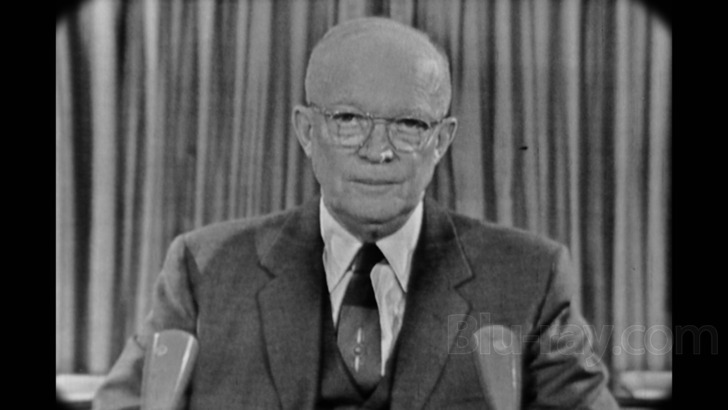
Why We Fight gets its name from President Dwight D. Eisenhower's 1961 farewell address (seen above and on the cover) where he warned Americans about a growing relationship between our government and the defense industry. Through interviews with military officials, politicians, journalists, defense contractors, and regular Americans, Jarecki's pointed documentary explores how the United States became a country so heavily invested in military power. Compact and efficient at just 98 minutes, Why We Fight follows the growth of America's military presence from World War II and the Cold War through the events of September 11 and a series of invasions and conflicts that followed in the early 2000s. It questions why military spending grew even after the Cold War ended and whether America's continued involvement in foreign conflicts has always been driven by national security, even suggesting that economic interests, political influence, and the desire to maintain global power can play just as important a role in decisions about going to war. It also examines how defense contractors make enormous profits from military spending and how their influence can affect government decisions and foreign policy; in other words, war is no longer just a matter of protecting the country, but has instead developed into a system benefitting powerful political and business interests.
Along with the political and economic side of war, Why We Fight also looks at the human cost through interviews with veterans, military families, and others directly affected by conflict that reveal personal consequences of the decisions made by political and military leaders. Collectively, these stories bring attention to physical and emotional sacrifices made by soldiers, as well as the suffering experienced by civilians caught in the middle of the machine.
Films like Why We Fight are inherently political based on their subject matter, so your appreciation or dismissal of it may hinge on
your personal leanings. Even so, I'd argue that it at attempts to keep its subject matter as neutral and objective as possible while encouraging
viewers to think more critically about why America goes to war and who might actually benefit from the decision to do so. Why We
Fight also directly challenges the idea that military action is always necessary for national security and warns that the growing influence of the
U.S. military-industrial complex might affect government priorities, weaken democratic accountability, and keep the country involved in conflicts that
may not serve the best interests of the American public. Current events suggest that things haven't changed much (if at all) during the last
20+ years, but that only makes Why We Fight's underlying messages more important.
Why We Fight Blu-ray Movie, Video Quality
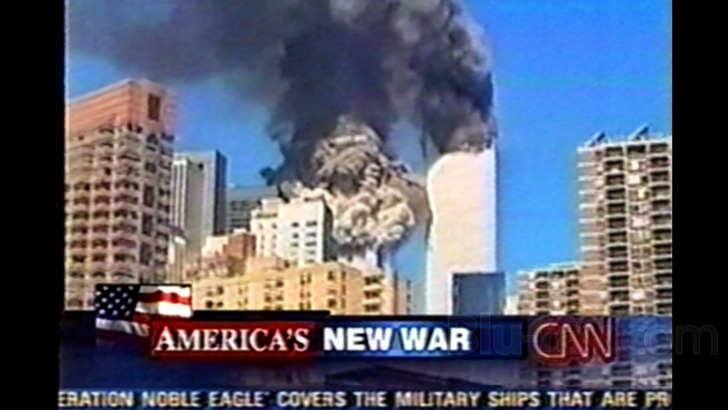
The mid-2000s were a rocky time for small-budget filmmaking, with the relatively new novelty of early (and in many cases, consumer-grade) digital video often replacing more expensive 16mm/35mm film and bulky, low-res videotape. Unfortunately, this era of visuals rarely survives the transition to HD unscathed, and nowhere is that more evident than this Blu-ray presentation of Why We Fight. It's not all digital, of course: lots of vintage clips -- typically shown in their original aspect ratios, thank goodness -- are on board, which gives much of this film a charmingly analog appearance that "older" viewers can easily appreciate. It's the then-newer footage that suffers here, as a majority of the digitally-captured clips show obvious signs of interlacing and other garbled anomalies that look quite harsh to the eyes. While mixed-bag visuals are par for the course for documentaries of this type, Why We Fight is pushing it.
Out of curiosity, I blew the dust off my 2006 DVD to see if Why We Fight always looked this rough... and the short answer is "kinda". My setup handled the DVD's encoding much better in regards to the digital footage, which didn't show nearly as many signs of interlacing and related issues, whereas other portions of the Blu-ray came out ahead in regards to image detail (again, just barely) and even framing, as the DVD was squeezed vertically a bit. Colors are actually a toss-up, believe it or not. So there are a few trade-offs here, and certainly not enough to call the Blu-ray a clear winner: it can and should have looked better, but that likely would have involved a costly ground-up rebuild, the kind that are exceedingly rare these days. I'll split the difference and award Why We Fight middle-of-the-road marks (with an asterisk) for its visuals -- this is no disaster, but those hoping for a huge upgrade won't get one.
Why We Fight Blu-ray Movie, Audio Quality
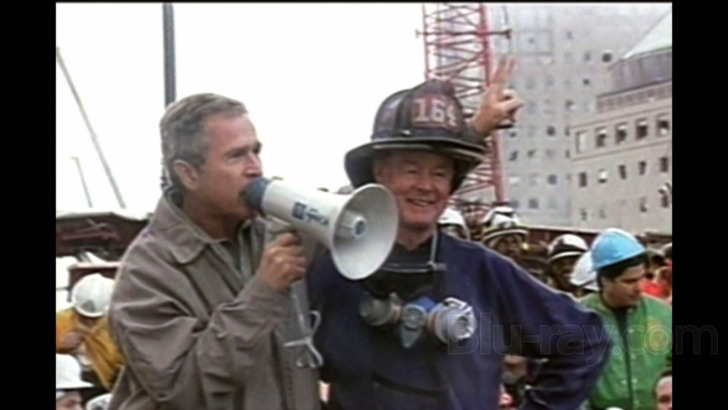
Though again somewhat limited by its source material, the DTS-HD 5.1 Master Audio handles the transition to HD better with a suitably clean and trouble-free port of the DVD's lossy track. As expected within usual genre boundaries, the mixed nature of its footage -- which in this case is mostly television broadcasts sourced from several decades and more recent talking-head interviews -- means that Why We Fight features a largely front-forward presentation with occasional "sweetening" in the form of music and other added effects. There's no damage to report other than what's tied to the older footage, meaning that this is about as good as it gets for a release of this type.
Optional subtitles, including English (SDH), are included during the main feature.
Why We Fight Blu-ray Movie, Special Features and Extras

This one-disc MOD (pressed) release ships in a keepcase with cover artwork and bonus features identical to previous releases... minus its theatrical trailer, which was apparently only included on the 2006 DVD release.
- Audio Commentary - This DVD-era track features director Eugene Jarecki and U.S. Army Colonel Lawrence Wilkerson, who at one time served as Chief of Staff to former Secretary of State Colin Powell. Not surprisingly, it offers a balanced perspective that covers technical issues as well as "inside" information, making it an enjoyable and informative listen that almost resembles a second film in itself.
- Deleted Scenes (28:52 total) - These five scenes have a "Play All" option and include "Ike's Evolution", "The Missing C", "Frank Capra's Original Why We Fight", "The Dangerous Illusion", and "What You Can Do".
- The Characters - Additional short video segments featuring some of the main interview participants.
- Wilton Remembers Jason (1:18)
- William and Yo-TV (5:20)
- Karen's Story (3:22)
- Franklin "Chuck" Spinney (2:15)
- Chalmer's Evolution (1:43)
- TV Appearances - Two vintage television segments featuring director Eugene Jarecki.
- The Daily Show with Jon Stewart (7:05)
- The Charlie Rose Show (9:01)
- Audience Q&A - Four video segments from various live events with Jarecki.
- What Do You Hope to Achieve? (2:21)
- Doesn't America Need Defense? (3:26)
- How Did You Meet Wilton (2:25)
- What Do High School Kids Think? (5:19)
Why We Fight Blu-ray Movie, Overall Score and Recommendation
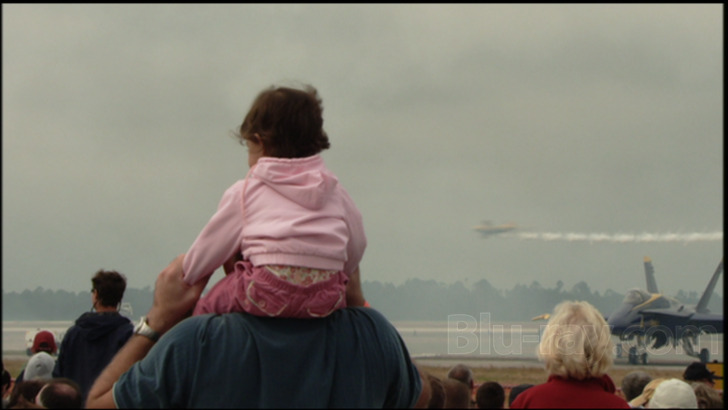
Eugene Jarecki's Why We Fight may have arrived on "official" Blu-ray a year too late for its 20th anniversary, but its unwavering strength and timeless message still make it worth adding to your documentary collection. Though I don't have Sony's 2017 BD-R edition on-hand for a direct comparison, this one's likely a straight port with perhaps a beefier encoding, since it's now a dual-layered disc. However, the limited nature of its source doesn't make this an essential "upgrade", as a quick spin of my old 2006 DVD found that it still holds up well... and in some respects, better. This Blu-ray is tough to endorse for that reason, but curious fans and newcomers may want to indulge at the right price.

Similar titles
Similar titles you might also like
(Still not reliable for this title)

Fahrenheit 11/9
2018

Untold History of the United States Part 3: Reagan/Bush/Clinton/Obama
Oliver Stone's
2012-2013

The Look of Silence
2014

The Fog of War: Eleven Lessons from the Life of Robert S. McNamara
2003

Capitalism: A Love Story
2009

RBG
2018

Where to Invade Next
2015

The Gatekeepers
2012

The Atomic Cafe
1982

Waiting for "Superman"
2010

An Inconvenient Sequel: Truth to Power
2017

I Am Not Your Negro
2016

Fahrenheit 9/11
2004

Trinity and Beyond: The Atomic Bomb Movie
70th Anniversary Special Edition
1995

Inside Job
2010

An Inconvenient Truth
2006

Whitey: United States of America V. James J. Bulger
2014

Food, Inc.
2008

Forks Over Knives
2010

The Amish
American Experience: The Amish
2012