The Harimaya Bridge Blu-ray Movie
HomeThe Harimaya Bridge Blu-ray Movie 
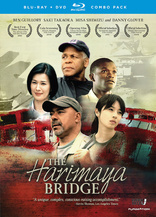
Blu-ray + DVDFUNimation Entertainment | 2009 | 120 min | Rated TV-14 | Oct 18, 2011
Price
List price:Listed on Amazon marketplace

Movie rating
6.6 | / 10 |
Blu-ray rating
| Users |  | 0.0 |
| Reviewer |  | 4.0 |
| Overall | | 4.0 |
Overview
The Harimaya Bridge (2009)
After the sudden death of his estranged son in rural Japan, an American man must go there to claim some important family items. While there, he discovers some secrets his son left behind.
Starring: Bennet Guillory, Saki Takaoka, Misa Shimizu, Danny Glover, Akira HamadaDirector: Aaron Woolfolk
| Drama | 100% |
Specifications
Video
Video codec: MPEG-4 AVC
Video resolution: 1080p
Aspect ratio: 1.78:1
Original aspect ratio: 1.85:1
Audio
English: Dolby TrueHD 5.1
Subtitles
English
Discs
50GB Blu-ray Disc
Two-disc set (1 BD, 1 DVD)
DVD copy
Packaging
Slipcover in original pressing
Playback
Region A (B, C untested)
Review
Rating summary
| Movie |  | 3.5 |
| Video |  | 4.5 |
| Audio | | 4.0 |
| Extras |  | 2.5 |
| Overall | | 4.0 |
The Harimaya Bridge Blu-ray Movie Review
The bridge to somewhere.
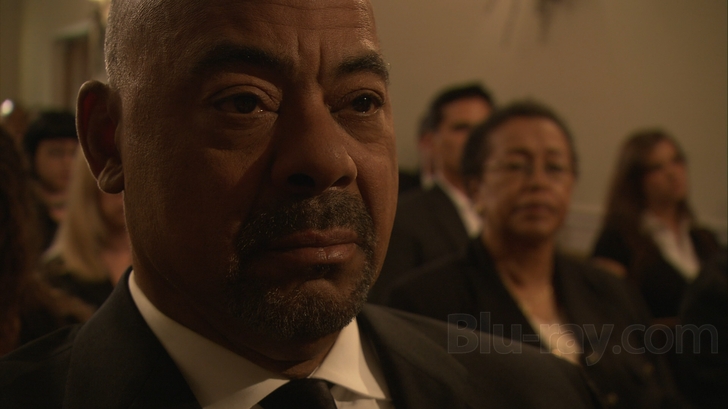
Reviewed by Jeffrey Kauffman October 19, 2011It’s a rare film that has the courage of its convictions, portraying not just family dysfunction but whole layers of bigotry and prejudice with an unflinching eye. It’s an even rarer film that manages to do so while portraying an uptight, arrogant, xenophobic main character who is, to put it bluntly, an unmitigated asshole for at least half to two thirds of the film. The fact that The Harimaya Bridge does all of this and still manages to be a touching, even uplifting, experience is something of a minor (maybe even a major) miracle. Bolstered by a commanding performance by Ben Guillory (The Color Purple, The Harimaya Bridge has the unusual distinction of depicting black prejudice— against Japanese! Guillory portrays retired professional photography Daniel Holder, whose father died an ignominious death in a Japanese Prisoner of War camp during World War II. Holder still harbors resentment against the Japanese for this fact, but the film subtly hints that this is a defense mechanism, a projection to use psychological terms, of Holder’s own childhood experience of being discriminated against as a young black kid in San Francisco. Holder is estranged from his artist-teacher son Mickey (Victor Grant) because the young man has decided to take a job in Japan. When Mickey is killed in an unfortunate motorcycle accident, Daniel’s rage seems about to explode. Daniel’s brother Joseph (Danny Glover, who Executive Produced the film and is Guillory’s founding partner in the Robey Theatre Company) takes Daniel to a concert being given by a once distraught father (Peter Coyote) who has found solace by having his dead daughter’s compositions performed nationally. That gives Daniel the idea of somehow elevating his son’s art to further prominence by going to Japan and reclaiming all of Mickey’s paintings which were left behind after his death.
Writer-Director Aaron Woolfolk’s own personal history helps to make the transcultural aspect of The Harimaya Bridge very real indeed. Woolfolk grew up African American in San Francisco, where (as he discusses in an interview included as a supplement on this Blu-ray) he was exposed to all sorts of international people, cultures and customs. But he then went to Japan as an exhange student, and continued to visit there frequently as he began to nurse ideas of a career in film. He shot two student films in Japan as part of his work on his graduate thesis, both of them giving a bit of a prequel of sorts to The Harimaya Bridge, dealing with Mickey’s story. (It would have been great to have had those included on this Blu-ray as supplements, but unfortunately they’re not). But Woolfolk’s obvious familiarity with the ins and outs of traditional Japanese culture and morés helps to give The Harimaya Bridge a fascinatingly visceral feel.
Parts of this film are extremely uncomfortable to watch, at least for those who are sensitive to other cultures and ways of doing things, for Daniel is just such an unbelievable boor throughout much of this film that it almost defies credulity (it’s to Guillory’s credit that Daniel’s incredibly rude behavior seems organic). Daniel basically marches into Japan, meets with a trio of workers at the education office where Mickey worked, and “informs” them that they will help him retrieve his son’s paintings. This after he had already alienated them by not acceding—at least not initially—to their polite requests that he remove his shoes when entering the apartment they had arranged for him to stay in. Daniel’s main liaison is the lovely and extremely patient Japanese woman who helps to run the education office, Hara (Misa Shimizu), and she agrees (somewhat reluctantly, to be sure) to help Daniel find his son’s paintings and to act as his tour guide.
The culture clash, while an intrinsic element of The Harimaya Bridge, may strike some as forced, to say the least, as Daniel’s reason for hating the Japanese whole cloth (namely, that his father died in a POW camp) seems far fetched at best, even with the overlay of the psychological aspect to which I referred above. This makes some of Daniel’s behavior almost psychotic at times, and Hara’s sweet-natured responses equally hard to take. The film would have benefited from a somewhat more modulated approach to the subject matter, for the salvation and redemption Daniel experiences (and it’s no major spoiler to mention it, for virtually anyone coming to this film is going to know that’s the point of the whole enterprise) is rather sudden and relatively unmotivated, especially given the unbelievably inconsiderate behavior Daniel exhibits for the first half of the film.
The best aspect to The Harimaya Bridge is its very unusual focus on an African American male dealing both with his own self-imposed prejudices as well as his interaction with Japanese culture. In this regard, the film is spectacularly successful. The Japanese penchant for bowing submission and inerrant politeness is beautifully depicted in this film, and the horror many of these native Japanese feel at Daniel’s incredibly uncouth behavior is also viscerally presented. Despite this being his first feature film, Woolfolk has an incredible eye for the beauty of the Japanese landscape as well as the more ephemeral aspect of the Japanese soul. If things get a bit touchy-feely at the end, with a perhaps too sanguine denouement that ties everything up in a pretty little bow, The Harimaya Bridge still is an emotional blockbuster that manages to convey the idiocy of preconceptions and cultural strictures without alienating the audience at the same time.
The Harimaya Bridge Blu-ray Movie, Video Quality
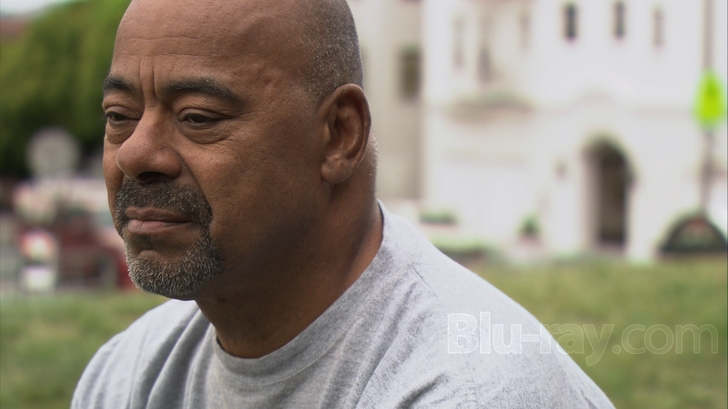
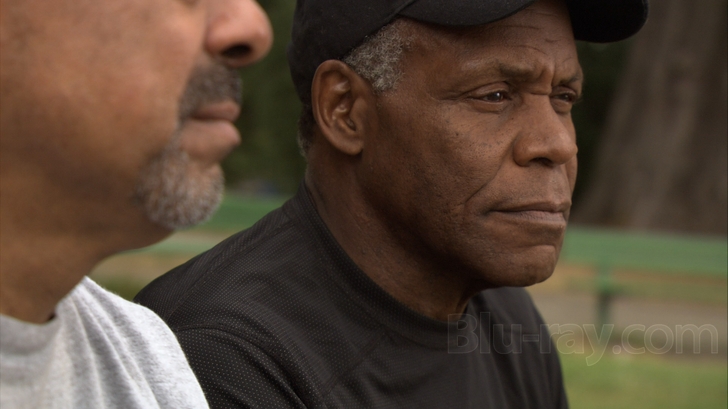
There is a moment early in The Harimaya Bridge's AVC encoded 1080p transfer in 1.78:1 that is literally breathtaking. Guillory and Glover are sitting on a bench in a San Francisco park and the camera dollies into Glover and it's like seeing these two actors through a perfect window. Dimensionality and fine detail are simply awesome. If the rest of the film doesn't quite measure up to this brief but breathtaking sequence, it often comes close. The location footage in the gorgeous, mist-strewn hills of Japan is simply lovely, like seeing a silk painting come to life, and the film's more "realistic" moments also bristle with fine detail, exceptional color and saturation, and well modulated contrast. Woolfolk deliberately limits the number of extreme close-ups in the film (as he mentions in his commentary) in order to make those brief moments stand out all the more, but even midrange shots reveal a wealth of fine detail. There were a couple of very minor artifacts in this presentation, including one fairly bad moment of moiré on a suit jacket of Shimuzu's.
The Harimaya Bridge Blu-ray Movie, Audio Quality
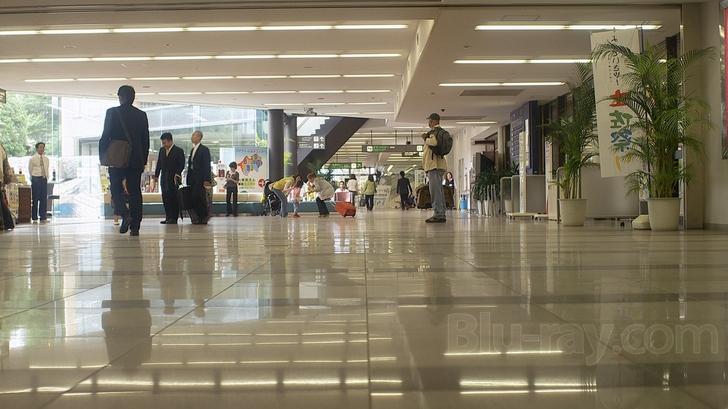
The Harimaya Bridge is presented with a Dolby TrueHD 5.1 mix that features both English and Japanese elements. The film also has an incredibly lovely score by Kazunori Maruyama which sounds beautiful throughout the film. Though the film is really a rather small scale, dialogue driven drama, there's a surprising amount of immersion scattered throughout the film's sound design. Listen for example to Guillory's breathing which accompanies his first trek through Kochi, Japan, or later as he waits outside a pagoda to the incredible sounds of the breeze wafting through leaves making a sound almost like tiny hands clapping. The scene recreating his son's accident also features some involving (and scary) panning effects as the kid's motorcycle weaves up a winding road and collides with a truck. Some of the Japanese actors are a bit hard to decipher when they speak English and unfortunately the English subtitles are only available to translate the Japanese language portions of the film. Fidelity is very strong throughout this track, with well prioritized dialogue, effects and score.
The Harimaya Bridge Blu-ray Movie, Special Features and Extras
- Making Of (SD; 21:10) looks at the film's production in June of 2008 and discusses the challenges of having an American director working with an all Japanese crew.
- Cast Interviews (SD; 12:20) features sit downs with Guillory, Saki Takaoka, Misa Shimizu and Glover.
- Staff Interviews (SD; 7:28) does similar service with writer-director Woolfolk and cinematographer Masao Nakabori.
- Director's Commentary. This is a really interesting commentary by Woolfolk, one that goes off into some unexpected tangents (like his history with San Francisco's Youth Symphony, which is featured briefly in the film). Woolfolk's very personal connection to aspects of this story comes through loud and clear and he makes for a thoughtful, articulate commentator.
The Harimaya Bridge Blu-ray Movie, Overall Score and Recommendation
The Harimaya Bridge is flawed, but it is an intriguing and promising first feature from writer-director Aaron Woolfolk. Incredibly scenic while at the same time emotionally devastating, the film would have done better to have not made Daniel such a boorish cartoon, and to have helped his transformation along a bit more subtly. But Guillory provides an amazing performance here, and he is matched by several incredibly good Japanese actors, especially Shimizu, who seems to sum up the entire Japanese soul and ethos in her beautifully nuanced performance. With really stunning looking video and well above average audio, as well as some appealing supplements, The Harimaya Bridge comes Highly recommended.
Similar titles
Similar titles you might also like
(Still not reliable for this title)

Kumiko, the Treasure Hunter
2014
Stroszek
1977

The Attack
2012

The Landlord
1970

Evil Does Not Exist
悪は存在しない
2023

Aquarius
2016

Winter Sleep
Kış Uykusu
2014

The Only Son
一人息子
1936

Jayne Mansfield's Car
2012

First Cow
2019

Stromboli
Stromboli, terra di Dio / English and Italian Versions
1950

The Farewell
2019

Merry Christmas Mr. Lawrence
1983

Kajillionaire
2020

Hardcore
Special Edition
1979

Wake in Fright 4K
Limited Edition
1971

Air Doll
空気人形 / Kûki ningyô / Slipcover in Original Pressing
2009

Outrage
アウトレイジ / Way of the Yakuza
2010

La Ciénaga
The Swamp
2001

Jean de Florette
1986