The Greatest Places Blu-ray Movie
HomeThe Greatest Places Blu-ray Movie 
IMAXInception Media Group | 1996 | 40 min | Not rated | May 17, 2011

Movie rating
6.7 | / 10 |
Blu-ray rating
| Users |  | 0.0 |
| Reviewer |  | 4.0 |
| Overall | | 4.0 |
Overview
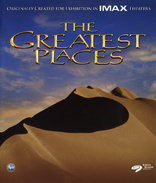
The Greatest Places (1996)
Seven of the world's most geographically incredible locations come to life in The Greatest Places.
Narrator: Avery BrooksDirector: Mal Wolfe
| Documentary | 100% |
Specifications
Video
Video codec: MPEG-4 AVC
Video resolution: 1080p
Aspect ratio: 1.78:1
Original aspect ratio: 1.78:1
Audio
English: DTS-HD Master Audio 5.1
French: DTS-HD Master Audio 5.1
Subtitles
None
Discs
25GB Blu-ray Disc
Single disc (1 BD)
Playback
Region A (B, C untested)
Review
Rating summary
| Movie | | 4.0 |
| Video |  | 4.5 |
| Audio | | 4.5 |
| Extras | | 0.0 |
| Overall | | 4.0 |
The Greatest Places Blu-ray Movie Review
Around the world in 40 minutes.
Reviewed by Jeffrey Kauffman May 2, 2011McGillivray Freeman may not strike many readers as a well known film production entity, but if you’ve ever wandered into a cavernous IMAX theater and seen an IMAX documentary, chances are you’ve experienced the wonder of a McGillivray Freeman film. Calling themselves “the most prolific independent producer of giant screen films,” McGillivray Freeman has well over 30 large format documentaries to their credit, and several of these usually excellent films have made it to Blu-ray. The Greatest Places is a typically expansive McGillivray Freeman outing, taking the viewer on a whirlwind tour through seven specially selected sites that are intended to show the staggering diversity of life on Planet Earth. This may indeed play somewhat like a Reader’s Digest version of Planet Earth, but it has such staggering imagery and evocative music, and is filled with the redolent tones of narrator Avery Brooks, that most viewers will probably be willing to excuse the film’s relative brevity and instead be happy to simply revel in the sights and sounds that The Greatest Places offers.
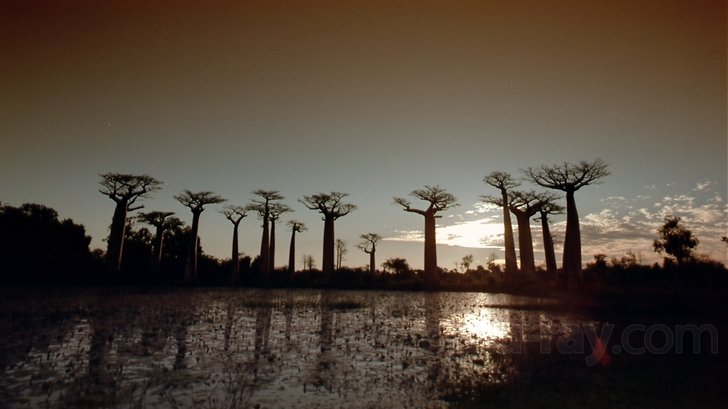
After a brief review of how Pangaea became the separate continents we know today, we drop by one of the interesting “exiles” of Pangaea’s slow, steady disbursement of land masses, the island of Madagascar. This fascinatingly quarantined island experienced 40 million years of evolution with no outside interference, and so is home to a really intriguing assemblage of all sorts of unique life forms. The island hosts the most species of the Baobab, the “upside down tree” which appears to have its roots in the sky. These incredible trees can live for more than a thousand years. The island is also home to two thirds of all chameleon species. But perhaps the most striking life form inhabiting the island are the amazing variety of lemurs, and The Greatest Places has ample footage of these furry little critters—distantly related to monkeys—as they ply their trade in and among the island’s tree canopy.
From Madagascar we take off to Tibet and the Himalayas. The plateau leading up to the mountains is itself higher than the highest peak in America’s Rocky chain. This sequence focuses as much on the native peoples as it does on the topography and expansive vistas, and as such we get a nice overview of how Tibetan Buddhists see a sacred connection between people and nature. Some of their interesting customs include writing prayers on flags which are hoisted into the sky to wave to the heavens themselves, as well as writing prayers which they place in little prayer wheels that they keep revolving by hand in a sort of meditative analog to praying the Rosary. This sequence has some of The Greatest Places’ most evocative music, with long drone tones from the famous “throat singers” of Tibet, as well as squawking horns and pounding drums.
Next we visit The Amazon, the raging river which crosses more than two-thirds of the South American continent. Despite the innate power of this immense body of water, this is really one of the more peaceful segments of The Greatest Places, with some calm and calming tracking shots following various boaters down various expanses of the river. The Amazon Basin’s daily weather cycle, which is almost Groundhog Day-esque in its predictability, is shown here in some great footage, and the nearly daily occurrences of thunderstorms gives the soundtrack a very impressive moment or two of LFE in this segment. A brief bridging sequence of Iguazu Falls leads to our next destination.
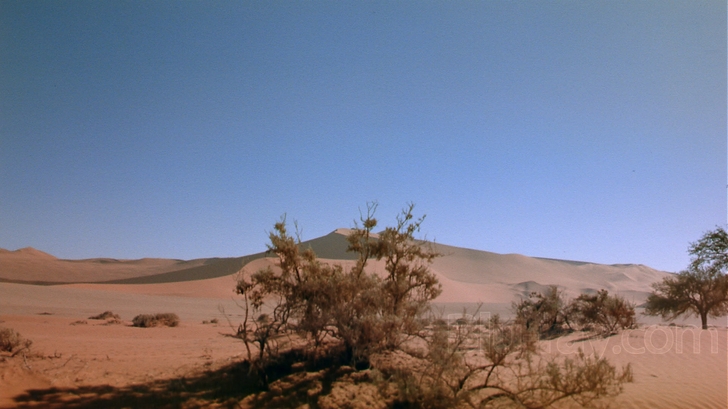
From the rain forests of the Amazon to one of the driest places on earth highlights the variety which is part and parcel of The Greatest Places. The Namib Desert is an 80 million year old expanse of sand which includes dunes over one thousand feet tall. Despite its aridness, the Namib supports the greatest variety of life of any desert, and several interesting species are caught in their native habitats, including beetles which collect moisture on their sticky backs in order to survive, and adders which store water between their scales. One of the fascinating things shown in some very pretty footage is how the Namib is one of five west coast deserts which stretch to a cold sea, promoting the interaction of climates and elements to produce a lot of fog. While the fog is often omnipresent, it never falls as rain, and indeed more often than not simply obscures visibility, leading to a number of shipwrecks and the iconic appellation The Skeleton Coast.
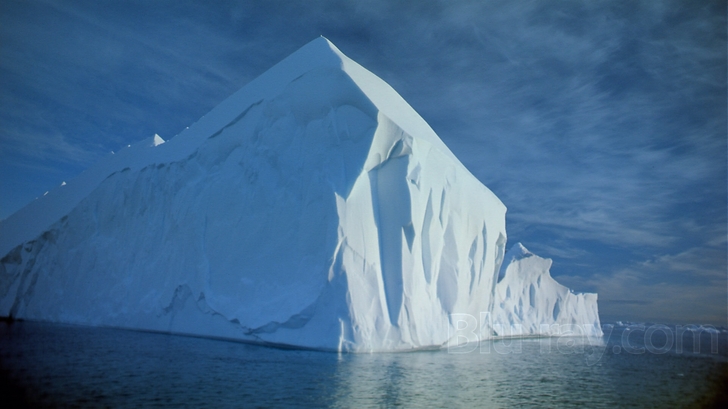
The stifling heat of the Namib gives way to the frigid climes of Greenland and the Arctic Circle, the largest island in the world and, according to The Greatest Places, the world’s oldest landscape which has now sunk below sea level. We get some very pretty footage of icebergs, mountains of frozen water which are five times as massive underwater as they are above. A nicely evocative sequence shows a brave shaman of sorts, Greenland’s native story teller, The Drum Dancer, out pounding rhythms in weather that frequently dips to 40 below zero. This sequence also offers some lovely and hauntingly beautiful, ghostly infused underscore.
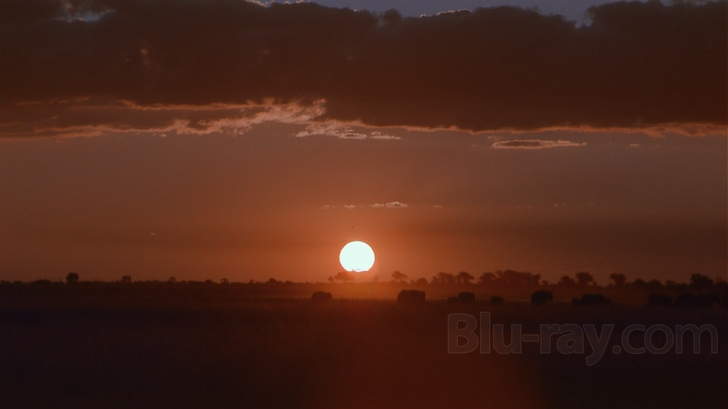
Our final stop on this 40 minute tour around the world is Botswana in Southern Africa, home to the Okavango Delta, a place which has lured many documentary filmmakers through the years. The Okavango River Delta is Africa’s greatest oasis, an island of life which flows from the Okavangan River, creating the largest inland river deltas in the world. Aerial shots show us the amazing maze of land and water, water that never flows to the sea, but instead spreads across the Kalahari Desert. This sequence has some of the most incredible fine detail in the entire documentary, with the canvassy texture of elephants completely noticeable.
The Greatest Places is one of the more spectacularly visual outings from McGillivray Freeman, certainly a very high compliment indeed, especially if you’ve seen any of their other pieces. While Director Mal Wolfe does a brilliant job of crafting a wonderful entertainment, aided by the gorgeous cinematography of DP Chuck Davis, and the very inviting music score of Christopher James Thomas, there will be those who will have at least one major complaint about this brilliant piece of visual storytelling: it’s quite simply way too short. If Phineas Fogg took 80 days to wend his way around the world, certainly 80 minutes wouldn’t have been too long to visit The Greatest Places.
The Greatest Places Blu-ray Movie, Video Quality
The Greatest Places arrives on Blu-ray with an AVC encoded 1080p transfer in 1.78:1. As with virtually all Blu-rays culled from IMAX source material, there is often a crystalline clarity to the imagery here, one which truly seems like your flatscreen television has become a window on a variety of amazing sights. Colors are resplendent throughout this documentary, with some amazingly robust hues. Some of the avian wildlife is most impressive in this regard, with some astoundingly bright green and red parrots featured in the Amazon sequence. But throughout this documentary, an amazing variety of colors is presented. Fine detail is extremely strong, as might be expected, giving us everything from individual sand granules stuck to the back of a beetle to the bristly hair of Madagascar's lemur population. Black levels and contrast are extremely strong, adding to this outing's overall visual excellence. There were one or two very brief moments of artifacting, typically aliasing, that marred this otherwise near perfect presentation.
The Greatest Places Blu-ray Movie, Audio Quality
The Greatest Places offers a really well conceived soundtrack delivered via a lossless DTS-HD Master Audio 5.1 mix. Surround channels are almost always engaged with the very appealing underscore or with a variety of evocative ambient environmental sound effects. This is a rather surprisingly detailed track that captures everything from the rustle of lily pads in the water to the scurry of sharp-clawed scorpion talons across the sand with amazing accuracy and immersive directionality. Brooks' narration is front and center, and while the Deep Space Nine actor has one of the more impressively redolent voices outside of James Earl Jones, it might have been nice to have offered a music only audio option for those who want to revisit this documentary without having to hear the narration over and over. Otherwise, though, the DTS track offers superb fidelity and very facile dynamic range. Just be prepared for the LFE during the thunderstorm sequence noted above in the main body of the review.
The Greatest Places Blu-ray Movie, Special Features and Extras
A long list of trailers for other McGillivray Freeman films is included, and while those may indeed provide some passing entertainment value, I personally never include trailers as part of my scoring for supplements.
The Greatest Places Blu-ray Movie, Overall Score and Recommendation
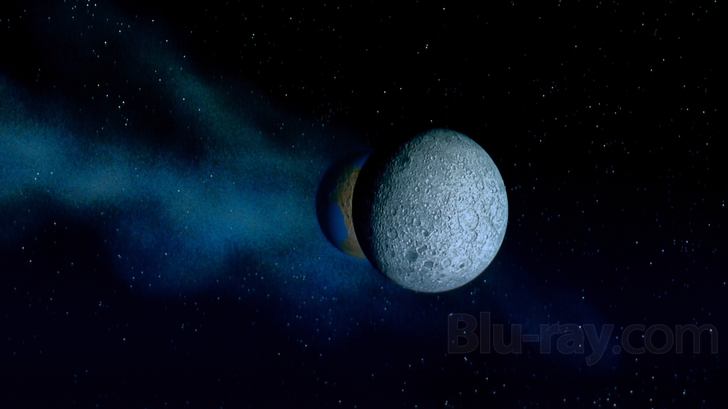
The Greatest Places may seem like a fairly haphazard assortment of various locales around this amazing planet on which we live, but considering this wonderful documentary only lasts 40 minutes, these seven choices seem as good as any. This piece does a good job of giving both some natural history information as well as (occasionally at least) concentrating on the human side of things. The Greatest Places is certainly no replacement for the more exhaustive nature-based documentaries which have sprung up like weeds in the high definition era, but for those who want a quick 40 minute tour around some truly astounding locales, you'd be hard pressed to do better than this piece. Bolstered by excellent video and audio quality, this release is Highly recommended.
Similar titles
Similar titles you might also like
(Still not reliable for this title)

NOVA: The Fabric of the Cosmos
2011

Magic of Flight
IMAX
1996
Spitfire: The Plane That Saved the World
2018

Microcosmos
1996

Rocky Mountain Express 4K
IMAX
2011

Stephen Fry in America
2007

Turtle Odyssey 4K
IMAX Enhanced
2018

Helvetica
2007

A Beautiful Planet 4K
IMAX Enhanced
2016

How the Universe Works
2010

Humpback Whales
IMAX
2015

Why We Fight
20th Anniversary Edition
2005

Jerusalem 3D
2013

The Amish
American Experience: The Amish
2012

Waiting for "Superman"
2010

Food, Inc.
2008

Space Junk 3D
IMAX
2013
Galápagos 3D
IMAX
1999

Flight of the Butterflies 4K + 3D
IMAX
2012

Arabia 3D
IMAX
2010