The Dragon Painter Blu-ray Movie
HomeThe Dragon Painter Blu-ray Movie 
Milestone | 1919 | 61 min | Not rated | Sep 24, 2024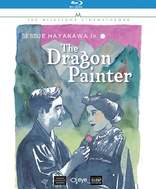

Movie rating
Movie has not been rated yetBlu-ray rating
| Users |  | 0.0 |
| Reviewer |  | 4.5 |
| Overall | | 4.5 |
Overview
The Dragon Painter (1919)
A wild man and genius becomes a master painter's disciple, but loses his divine gift when he finds love.
Starring: Sessue Hayakawa, Tsuru Aoki, Edward Peil Sr., Toyo FujitaDirector: William Worthington
| Drama | Uncertain |
| Romance | Uncertain |
| Nature | Uncertain |
| Period | Uncertain |
Specifications
Video
Video codec: MPEG-4 AVC
Video resolution: 1080p
Aspect ratio: 1.33:1
Original aspect ratio: 1.33:1
Audio
English: DTS-HD Master Audio 5.1 (Instrumental)
English: DTS-HD Master Audio 5.1 (Instrumental)
5.1 #1: 2360 kbps; 5.1 #2: 2369 kbps
Subtitles
English, French, German, Spanish, Dutch
Discs
Blu-ray Disc
Single disc (1 BD)
Playback
Region free
Review
Rating summary
| Movie |  | 4.0 |
| Video | | 4.0 |
| Audio |  | 5.0 |
| Extras | | 5.0 |
| Overall | | 4.5 |
The Dragon Painter Blu-ray Movie Review
Reviewed by Dr. Stephen Larson October 11, 2024Cinema audiences generally know Sessue Hayakawa best for his Oscar-nominated performance as Colonel Saito opposite William Holden and Alec Guiness in David Lean's The Bridge on the River Kwai (1957). But far fewer know that the Japanese-American actor was a matinee idol during the silent era. Producer/director Thomas Ince first gave Hayakawa his first chance in Hollywood in the early 1910s. Producer Jesse Lasky followed when he gave Hayakawa a co-starring role in Cecil B. DeMille's The Cheat (1915). While Hayakawa became a prolific screen actor, he grew tired of playing villains and lovers-who-are-doomed roles. Hayakawa formed his own company with director William Worthington, which became Haworth Pictures.
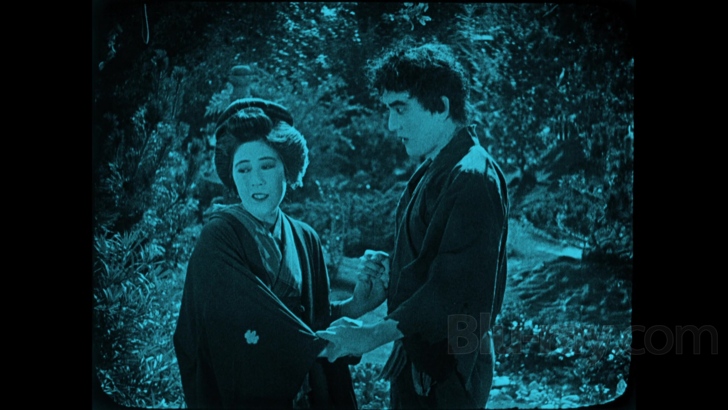
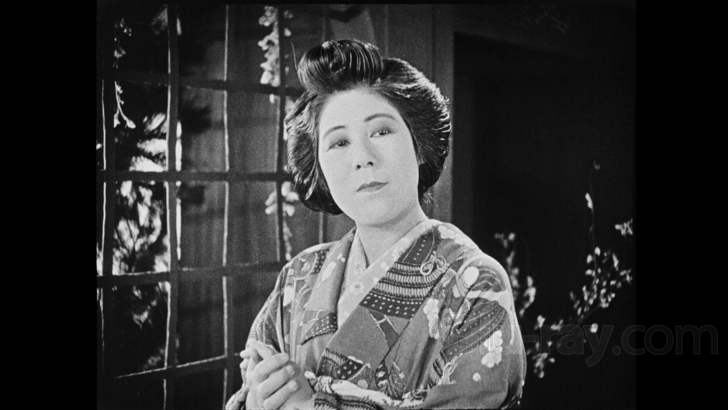
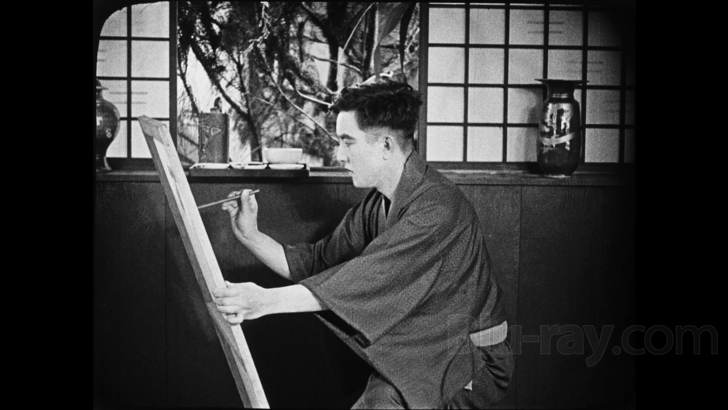
Hayakawa and Worthington's partnership on The Dragon Painter saw them partake in a sumptuous production with entirely Japanese settings (though it was filmed in California) and mostly Japanese actors. Tatsu (Sessue Hayakawa) is the titular painter who works in the Hanake Mountains awaiting the return of his fiancée princess, who he believes was summoned by spirits one thousand years and transformed into a dragon. Tatsu surmises that she may be lurking underneath the lake in the mountainous area. One day, Undobuchida (Toyo Fujita), a Tokyo-based government surveyor, witnesses Tatsu's work and becomes impressed with his paintings. The surveyor encourages him to meet Kano Indara (Edward Peil), a master painter whose always wanted a son. When Tatsu visits the artist's home, it's love at first sight when he sees Kano's daughter, Umé-ko (portrayed by Hayakawa's real-life wife, Tsuru Aoki). Kano claims that Umé-ko is the dragon princess that Tatsu has long sought. Tatsu wants to marry her but Kano stipulates that he first complete an apprenticeship. Tatsu becomes so smitten with Umé-ko that he loses his desire to paint. Umé-ko believes that she has been a distraction and inhibitor so she pens what may be a farewell letter to her possible future husband. During a dream, Tatsu receives a vision that rekindles his motivation to paint.
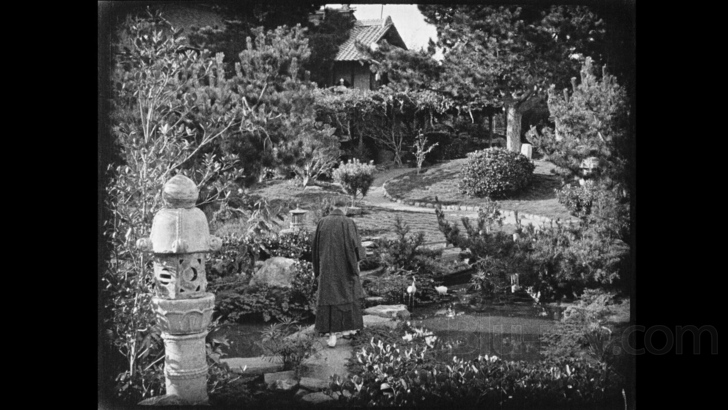
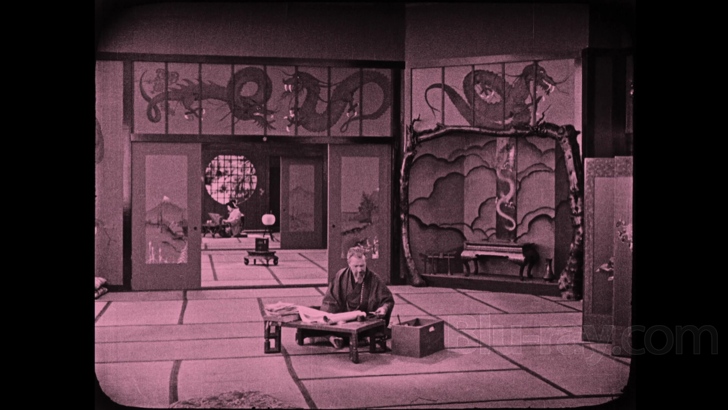
The publicity for The Dragon Painter in 1919 heralded the scenic locales in California. The San Francisco Bulletin reported that most of the scenes were filmed in the Yosemite Valley. Cameras were placed at an elevation of 14,000 feet to achieve the necessary effects and impact from the settings. According to The Bath Daily Times (Brunswick, ME), filming also took place at the Japanese Tea Gardens at Coronado with night shooting done in the Kingdom of Flowers. William Worthington was quoted in some papers as proclaiming his movie "is the finest production, pictorially, Sessue Hayakawa has ever appeared in. I can safely say that The Dragon Painter surpasses in artistry and settings anything the Haworth Company has ever put on.” An advert in The Evening Day (New London, CT) touted it as "THE MOST ARTISTIC PICTURE EVER FILMED."
It was received well by journalists at the time. The Austin American Statesman gave some impressions by M. Chabrier-Ribaud, who was "the eminent French authority on oriental languages and customs." The paper stated that the French critic was an ardent admirer of Hayakawa and saw him perform with the Imperial Japanese Dramatic Company in Tokyo several years earlier. Chabrier-Ribaud commented: "M. Hayakawa possesses every requisite of the supreme artist. He has dramatic instinct to a remarkable degree, extraordinary facility and variety of facial expression, and is endowed, above all, with an appreciation of the beautiful which finds an outlet in such exquisite dramatic creations as The Dragon Painter. I have never seen anything to equal the visual excellence of this production. It is a revelation in artistic photography, and reflects the ideals and beauty of Japan with absolute fidelity." Grace Kingsley of the Los Angeles Daily Times had similar words of praise: "[Hayakawa] has the power, above anyone I know, to project those [dramatic] stories upon the screen amid the most ideally suitable and beautiful settings—settings which, beside charming with their loveliness, include even touches of mood; and yet he does this by some magic means which enhances the spectator's feeling for the drama, rather than distracting his attention....[The Dragon Painter] is a film poem." The Los Angeles Evening Express similarly observed: "The story is thoroughly Japanese throughout and may not be appreciated by American audiences, but the beauty of the photography, the harmonious settings, wonderful gardens and the grandeur of the mountains certainly will leave their impression upon the open mind." The Reading Times (Reading, PA) appreciated the film's aesthetics, themes, and acting: "[I]ts action is pictured against a background of such beauty that one feels grateful that the director has not forced any 'situations.' The Japanese settings are truly remarkable. The views of the mountain country and remote village are very fine. The tiny gardens and houses are certainly as realistic as anything that could be found in this country. The director has caught an admirable contrast between the rude life of the mountain boy and the cultured and cultivated environment of the city artist. Mr. Hayakawa’s acting is some of the finest that he has done."
The Dragon Painter Blu-ray Movie, Video Quality
The Dragon Painter has recently arrived for its global debut on Blu-ray courtesy of Kino Classics and Milestone Film & Video on this MPEG-4 AVC-encoded BD-50 (disc size: 42.35 GB). The following text appears in a prefatory note prior to the start of the feature:
THE DRAGON PAINTER was produced by Haworth Pictures Corporation. The five-reel feature was released in the United States on 28 September 1919.This is one of the longest notes about a film's restoration on a DVD or Blu-ray that I have seen. But it explains the process of restoring this film succinctly and in ample detail. According to Milestone Film's 2024 press kit, the movie was photochemically restored by the American Film Institute in 1988. In 2023, a 4K digital restoration was completed through the joint efforts of the San Francisco Silent Film Festival, Eye Filmmuseum, and George Eastman Museum. 4K scanning of the 35 mm nitrate print was performed by Cineric Portugal while Colorlab oversaw the 4K scan of the 35 mm diacetate print.
This restoration is based on the two surviving original copies of the film: a tinted and toned 35mm nitrate print in the collection of Eye Filmmuseum, with Dutch titles and based on the American domestic negative; and a tinted and toned 35mm diacetate negative conserved at the George Eastman Museum that has French titles and is based on the foreign export negative.
Both source prints include material not present in the other. Because the Dutch print originated from the American negative, it was selected as the primary source. Shots and segments not present in the Dutch print were selected from the French print.
Because no original titles are known to survive, new English language titles have been created. The new text is based on translation of the Dutch and French titles, and by referencing the story "The Dragon Painter" by Mary McNeil Fenollosa, upon which the film is based. These new titles are marked with "SFSFF/EYE/GEM" in the lower right corner.
Title graphics and typography are based on the style of other films produced by Haworth Pictures at the time.
The color tinting and toning was reproduced using the original nitrate prints for reference.
This restoration was completed in April 2023 as a collaboration between Eye Filmmuseum, the George Eastman Museum, and the San Francisco Silent Film Festival.
The restoration looks mostly beautiful on this Blu-ray. The image sports a lot of tramlines and horizontal scratches but the high resolution still takes advantage of the exquisite settings. Co-restorer Kathy Rose O'Regan explains in the commentary that she and her colleague used the Dutch copy as a template for tinting and toning. The outdoor nighttime scenes yield a rich blue. Exteriors have a tinge of cyan. Outdoor day scenes are often pink. Interiors take on an amber look.
The picture is by and large watchable but has two instances of pretty bad nitrate decomposition. The first occurs beginning at the 48:42 mark (see Screenshot #21). The second is considerably longer. It begins at 56:26 and lasts for a full minute (stopping at 57:26; see frame grab #s 22 and 23). Kino has encoded the feature with average video bitrates of 19997 kbps and 20006 kbps. My video score is 4.25/5.00.
The newly designed English intertitles are printed on black cards and can't be switched off. They can be translated during playback into French, German, Spanish, or Dutch.
The 61-minute feature receives seven scene selections from Kino.
The Dragon Painter Blu-ray Movie, Audio Quality
Kino and Milestone have supplied two new scores by composers Mas Koga and Makia Matsumura. Each receives a DTS-HD Master Audio 5.1 mix. The first carries an average bitrate of 2360 kbps (24-bit) and second a mean bitrate of 2369 kbps (24-bit). Even though these are technically 5.1 tracks, musical accompanied is directly exclusively to the center and front channels. Matsumura performs on piano. Koga plays the shakuhachi, flute, Shakulute, and soprano saxophone during the film. Other musicians include Art Hirahara (piano), Eleanor Norton (cello), and Keita Ogawa (percussion). I listened to each score twice. I prefer Koga's score because I believe it goes with the film better.
The Dragon Painter Blu-ray Movie, Special Features and Extras
New Yorker Video/Milestone's 2008 DVD of The Dragon Painter included the 57-minute The Wrath of the Gods (1914), the 1921 short, Screen Snapshots (both starring Sessue Hayakawa), a reprint of the original novel by Mary McNeil Fenollosa in PDF on DVD-ROM, and still galleries. While we lose those extras here, we gain an insightful and informative commentary by The Dragon Painter's two restorers, two short features starring Sessue Hayakawa courtesy of the Eye Filmmuseum, and a booklet.
- NEW Reconstructing THE DRAGON PAINTER: Original Film Sources and Restorers' Commentary (1:06:45, 1080p) - restorers Robert Byrne and Kathy Rose O'Regan deliver a continuous commentary about how they restored The Dragon Painter utilizing two different prints. While they talk, the 35 mm diacetate print (the European export negative) displays on the left side. The original French intertitles appear and are translated into English on the bottom. The 35 mm nitrate print (the American domestic negative) is shown simultaneously on the right side. These include the original Dutch intertitles and translated English subs right beneath them. Projected are the "raw materials." We get to see what the prints looked like before they were tinted, toned, and fully restored. The Dutch print contains quite a bit of material that the French print lacks. Byrne and O'Regan explain essentially how they assembled a composite restoration using different takes and intertitles from the two sources. They discuss the ethical principles facing archivists and restoration practitioners and why they don't employ any AI in their work. Byrne and O'Regan speak in English, not subtitled.
- His Birthright (1918; 47:21, 1080p) - Hayakawa plays the son of a naval officer and works for an international swindler. The Hayakawa character falls under the influence of both the swindler and a female spy. He filches a secret document from his father in the process. The print is in rougher shape than The Man Beneath. It's missing Reels 1 and 4. It includes Dutch intertitles along with English subs that translate them. The original score is by Brett Miller.
- The Man Beneath (1919; 1:06:31, 1080p) - this romantic drama stars Hayakawa as a well-known Indian scientist who visits Scotland and becomes involved in an unlikely love affair with a white woman. This is a "raw" print without any restoration work. It looks mostly acceptable for its age. It contains Dutch intertitles along with English subs that translate them. The original score is by Brett Miller.
- Illustrated Booklet - a 16-page booklet containing an essay by author Daisuke Miyao (Sessue Hayakawa: Silent Cinema and Transnational Stardom), restoration notes, a list of credits, mini-bios of the musicians who produced the new scores, small frame reproductions from The Dragon Painter, and archival imagery.
The Dragon Painter Blu-ray Movie, Overall Score and Recommendation
The 2008 DVD of The Dragon Painter has a runtime of 53 minutes. This recent restoration adds eight additional minutes of footage and expands the character of Umé-ko (Tsuru Aoki), who is better fleshed out here. This Blu-ray from Kino is the perfect introduction to the early career work of Sessue Hayakawa. It features three silent movies starring the actor (all directed by William Worthington). The restorers' commentary is enlightening and I hope more boutique labels include ones like it. For silent film fans, this is DEFINITELY WORTH CHECKING OUT.
Similar titles
Similar titles you might also like

The Bostonians
1984

Heat and Dust
1983

A Story from Chikamatsu
近松物語 / Chikamatsu monogatari / The Crucified Lovers
1954

Coming Home
归来 / Gui Lai
2014

Mélo
Arrow Academy
1986

Flowers of Shanghai
海上花 / Hai shang hua
1998

Letter from an Unknown Woman
Signature Edition
1948

Hester Street
1975

My Name Ain't Suzie
Fa gai si doi / Hua jie shi dai / 花街時代 / Slipcover in Original Presisng
1985

The Road Home
Wo de fu qin mu qin
1999

The French Lieutenant's Woman
1981

Gas, Food, Lodging
Choice Collection
1992

L' important c'est d'aimer
The Most Important Thing: Love / Slipcover in Original Pressing
1975

The Hard Part Begins
Slipcover in Original Pressing
1973

Mademoiselle Chambon
2009

Cross of Love
Rakkauden Risti
1946

The Pillow Book
1996

In the French Style
Limited Edition to 3000
1963

The Earrings of Madame de...
Madame de...
1953

Maurice
1987