South of the Border Blu-ray Movie
HomeSouth of the Border Blu-ray Movie 
Cinema Libre Studios | 2009 | 78 min | Not rated | Oct 26, 2010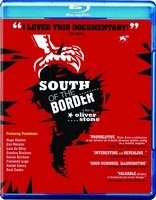

Movie rating
7 | / 10 |
Blu-ray rating
| Users |  | 5.0 |
| Reviewer |  | 3.0 |
| Overall |  | 3.2 |
Overview
South of the Border (2009)
There's a revolution underway in South America, but most of the world doesn't know it. Oliver Stone sets out on a road trip across five countries to explore the social and political movements as well as the mainstream media's misperception of South America while interviewing seven of its elected presidents. In casual conversations with Presidents Hugo Chavez (Venezuela), Evo Morales (Bolivia), Lula da Silva (Brazil), Cristina Kirchner (Argentina), as well as her husband and ex-President Nestor Kirchner, Fernando Lugo (Paraguay), Rafael Correa (Ecuador), and Raul Castro (Cuba), Stone gains unprecedented access and sheds new light upon the exciting transformations in the region.
Starring: Tariq Ali, Raúl Castro, Hugo Chávez, Rafael Correa, Cristina KirchnerDirector: Oliver Stone
| Documentary | 100% |
Specifications
Video
Video codec: MPEG-4 AVC
Video resolution: 1080p
Aspect ratio: 1.78:1
Original aspect ratio: 1.85:1
Audio
English: Dolby Digital 5.1
Subtitles
None
Discs
25GB Blu-ray Disc
Single disc (1 BD)
Playback
Region A (B, C untested)
Review
Rating summary
| Movie | | 3.0 |
| Video | | 3.0 |
| Audio | | 3.0 |
| Extras | | 3.0 |
| Overall | | 3.0 |
South of the Border Blu-ray Movie Review
Caution: Political Conjecture Ahead...
Reviewed by Kenneth Brown December 2, 2010Oliver Stone was, is and always will be a divisive filmmaker, and South of the Border does nothing to change that. Media hounds will have widely different opinions of his South American documentary: Fox News zealots will despise it, clinging to whatever inane banter the "Fox and Friends" bobble-heads have shared on the subject, and MSNBC junkies will emphatically embrace its broad assertions, losing sight of objectivity as Stone raises serious questions about the integrity of the US government and the intentions of the American media. Home-brewed partisan pundits will split down the middle: uncompromising conservatives will balk at its villainization of the Bush administration and what I'm sure will be deemed the director's unpatriotic sentiments, and hardline liberals will gorge themselves on its indictment of popular Republican opinion and prevailing foreign policy. Even Stone's usual audience will separate into two camps: detractors who see it as a manipulative bit of cinematic tunnel-vision (one that reeks of JFK paranoia), and longtime fans who see it as a captivating glimpse into the tenuous balance of power in the free world. However, those who don't have a visceral reaction to South of the Border, and those who are willing to research Stone's every one-note claim, will actually find it more thought-provoking than extremists on either side.
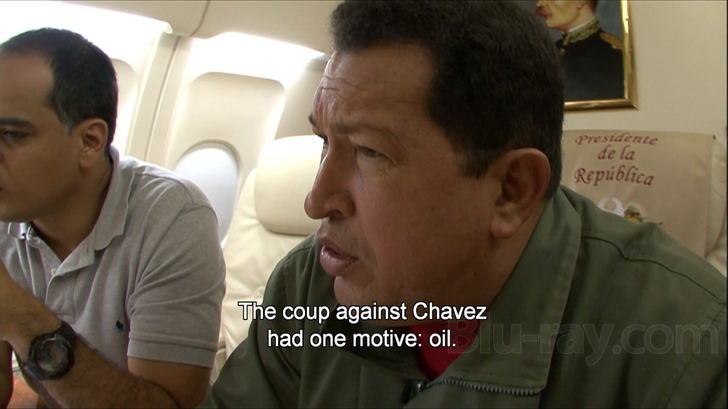
Still here? If my introduction didn't ruffle your feathers or leave you in a huff, slide South of the Border further up your Netflix queue: you're exactly the kind of filmfan Stone is anxious to engage. In 2009, the director was given a unique chance to interview Venezuelan president Hugo Chávez. His goal? To determine just how anti-American the purported critic-of-all-things-America actually is. Sure enough, the man he met was a decidedly different person, politician and leader than the unstable, conflict-inciting tyrant portrayed by the American media. After spending a great deal of time with Chávez, Stone began wondering if other leaders in the region also felt Chávez was being mischaracterized by the US government and misrepresented by the presiding 24-hour news networks. (And subsequently misunderstood by the public at large.) Traveling from country to country, supposed South American hotspot to hotspot, Stone was able to document a variety of equally revealing conversations with Evo Morales in Bolivia, Lula da Silva in Brazil, Cristina Kirchner in Argentina (as well as her husband, former president Nestor Kirchner), Fernando Lugo in Paraguay, Rafael Correa in Ecuador and Raul Castro in Cuba, each of whom painted a drastically different picture of the region -- its individual countries, their relationships, politics, world views, intentions, and social strides included -- than most people in the US have been sold.
The first and only question that plagued my mind while watching South of the Border? Just how candid are Stone's conversations? Putting aside his integrity and intentions for a moment (which strike me as patriotic and polemic, despite his harshest critics' and most adulating fans' cries to the contrary), it's important to note that the filmmaker is speaking with political leaders about policies and practices that pertain to their own back yards; smart, savvy political leaders who know full well who Stone is, the international audience his presence and cameras can provide, and the exceedingly unique, high-profile opportunity with which they're being presented. Each one has a deeply vested interest in the tone and tenor of the message being formulated -- as would any politician or, really, any human being, saint or sinner -- and their opinions and observations should be considered carefully and absorbed judiciously. The US government and the American media aren't the only salesman on the planet with a bill of goods to promote. However, and this is crucial, there are a few signs that the insights of these particular politicians are more credible than the average corrupt-fat-cat in Washington or smarmy populist pundit on CNN, Fox News or MSNBC. For one, they all but dare Stone to verify things for himself; to judge with his own eyes whether their various claims and impressions hold water. (He does just that on occasion, albeit with a limited pool of political scientists and authors in tow, an increasingly narrow perspective and, generally, to uneven effect.) All the while, complex political and socioeconomic realities emerge that simply can't be baseless coincidences or contrived conspiracies. It's just a shame Stone neglects to dig deeper, nuzzling up to Chávez rather than casting any sort of critical gaze on his newfound BFF.
If anything, the director is his film's own worst enemy. His reputation as cinema's Boy Who Cried Wolf hinders South of the Border more than he realizes, cultivating doubt where it isn't deserved and giving his critics leave to shrug off what could have been a more important documentary. How much does Stone's own political views taint the proceedings? Honestly, it's impossible to tell. If Michael Moore has taught us anything though, it's that we should be most cautious when accepting the proposed narrative of any outspoken pundit with a camera, regardless of whether he bleeds Red or Blue. Editing is a documentary devil's deadliest tool, and it's unclear if Stone has really uncovered a clear-cut case of US-spun propaganda or if he's trimmed away any and all footage, comments or interview segments that might undermine the film's intensely focused revelations. Is South of the Border a product of Stone the controversial filmmaker or Stone the dutiful documentarian? My hunch, unfortunately, is that it's more the former than the latter as the director all but transforms Chávez into the tragic victim of a vicious international machine. Sadly, questions as to whether or not this characterization is accurate cease to matter the moment Stone the filmmaker muscles Stone the documentarian out of the editing bay. It doesn't help that Border's runtime -- a mere 78-minutes -- seems woefully inadequate to simultaneously explore such a multi-faceted series of international issues, discuss the misrepresentation of an entire region, provide an overview of North and South America's current disagreements, weave a Chávez biography, assemble a grander historical perspective piece, interview multiple leaders in the region and challenge both the US government and media.
But while Stone inadvertently sullies the experience and fails as a documentarian, he accomplishes a number of things that shouldn't be minimalized: he raises essential questions, brings a few interesting facts to light and, if nothing else, presents an argument sure to generate further discussion and research. Within five minutes of finishing the film (and digging through its entire supplemental package), I was darting from reputable website to website, studying the intricacies of the region, the implications and accuracies of Stone's brazen assertions, and revisiting one of my go-to subjects, the bastardization and devolution of the US media (a decline many people have rightfully attributed to the sensationalized, ratings-fueled, corporate-driven reporting of the 24-hour news networks). But I digress. Imperfect as it may be, suspect as its filmmaker's intentions will strike some, South of the Border is worth watching, if for no other reason than to examine a region that may not be the Southern threat some Americans believe it to be.
South of the Border Blu-ray Movie, Video Quality
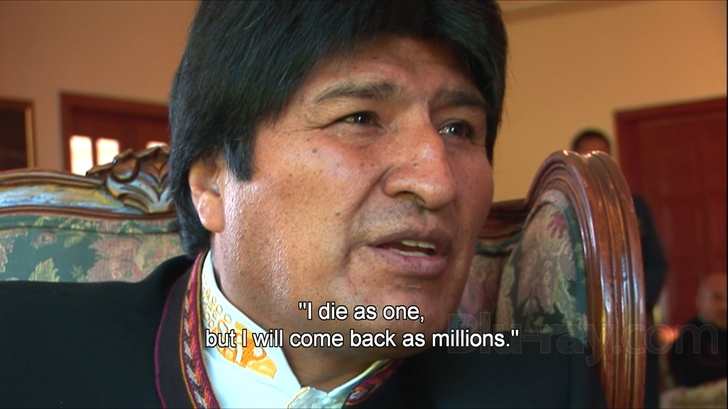
Visually, South of the Border offers exactly what you'd expect from a documentary of its ilk -- a mishmash of various video sources, standard definition archive footage and news reports -- and its 1080p/AVC-encoded presentation suffers accordingly. Artifacting, blocking, aliasing, banding, smearing, ringing, color bleeding... it's all here, all inherent to the low-resolution imagery that comprises the bulk of the film. Stone's interview segments and on-site trips look better of course, even if the director doesn't always have the benefit of using high definition cameras. Color saturation, black depth, texture clarity, edge definition and the overall integrity of the encode are relatively sound, and there aren't many aberrant anomalies. Stone's shooting conditions are also far from ideal. Dark shots are peppered with noise, sunlight and the elements wreak mild havoc on his lenses, and other factors hinder his ability to deliver a pristine picture. Still, I seriously doubt the director had image quality in mind when filming his documentary. Nor should he have. Ultimately, South of the Border's shortcomings shouldn't surprise anyone except those wondering, "why release it on Blu-ray at all?" It met my expectations; I couldn't ask for much more.
South of the Border Blu-ray Movie, Audio Quality
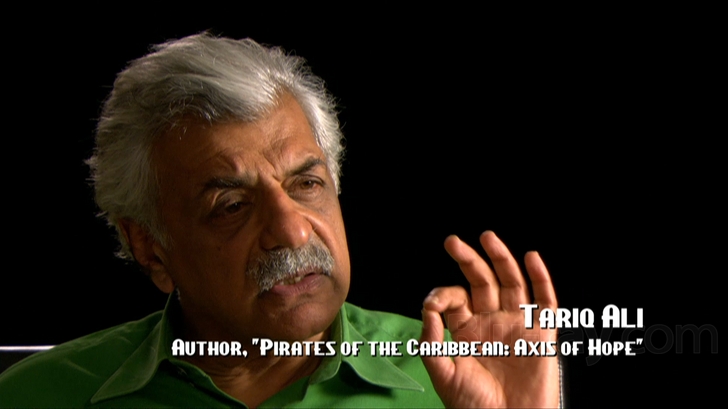
South of the Border doesn't include a lossless audio mix of any sort, but its 448kbps Dolby Digital 5.1 surround track gets the job done all the same. Narration, interview segments and on-site conversations are clear and intelligible, environmental noise and air hiss are kept to a reasonable minimum, and only the documentary's archive footage and news reports pose any sort of major problems (all of which are inherent to their decades-old sources). LFE output is adequate, the rear speakers are restrained but supportive, the film's music is full and hearty, and dynamics are decent enough to effectively convey the weight of the issues being discussed. Border's sonic wares aren't awe-inspiring by any means, but like its video presentation, the track's quality is well with reason.
South of the Border Blu-ray Movie, Special Features and Extras
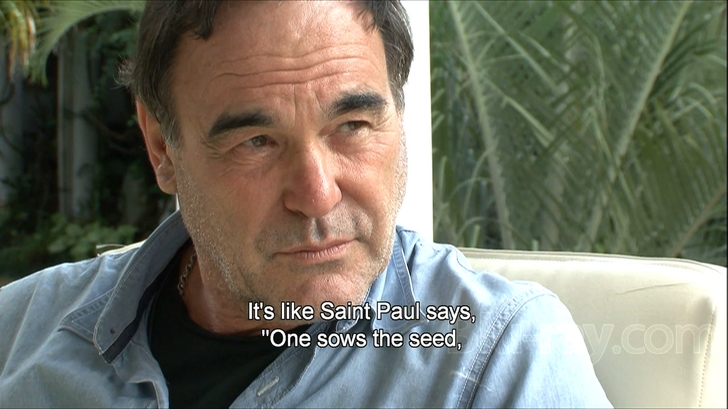
Filmmaker Oliver Stone and Cinema Libre Studio have assembled a intriguing selection of supplemental materials, most of which enhance the film they accompany. An audio commentary would have added tremendous value, mind you, but the content on tap is strong and satisfying nonetheless.
- South American Tour 2010 (HD, 23 minutes): Follow Oliver Stone to Latin America (and back again) in this candid behind-the-doc documentary.
- Additional Questions for President Chavez (HD, 17 minutes): A series of additional questions Stone posed to Chavez in a 2010 followup meeting.
- Changes in Venezuela (HD, 11 minutes): A look at the social, medical and political strides Venezuela has made as a nation since 2009.
- Deleted Scenes (HD, 36 minutes): Seven extended and deleted segments are included.
- Argentinian TV Interview (HD, 6 minutes): Telma Luzzani interviews Stone and asks about his career, intentions and latest film.
- Brazilian TV Interview (HD, 10 minutes): Kennedy Alencar does the same.
- Cinema Libre Previews (HD, 7 minutes): Trailers for South of the Border, Fuel and The End of Poverty are available as well.
South of the Border Blu-ray Movie, Overall Score and Recommendation
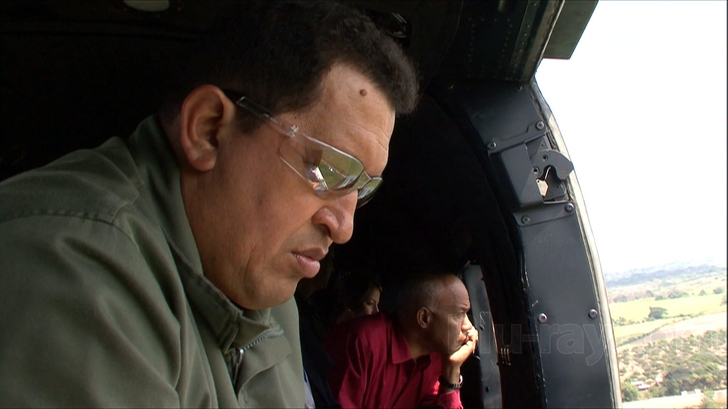
South of the Border is an unabashedly divisive, terribly problematic documentary; one that's sure to upset, offend, anger, intrigue and inspire a variety of people for a variety of very legitimate reasons. Regardless of your personal reaction though, it's hard to deny that Stone raises a number of important questions, all of which beg further research. As for Cinema Libre Studio's first Blu-ray release, it isn't a show-stopper in any way, but that's mainly because South of the Border doesn't offer any AV demo material. Even so, both its video transfer and Dolby Digital audio track are commendable, and its special features are worth exploring. Adjust your expectations accordingly.
Similar titles
Similar titles you might also like
(Still not reliable for this title)

Fahrenheit 9/11
2004

Marley
with Bonus Disc
2012

I Am Not Your Negro
2016

LennoNYC
Lennon NYC
2010

Michael Jackson Bad 25
2012

Marilyn Manson: Guns, God and Government, Live in L.A.
2002

Score: A Film Music Documentary
2016

Western Stars
2019

Roger & Me
1989

An Inconvenient Sequel: Truth to Power
2017

The Sparks Brothers
2-Disc Special Edition
2021

The Decline of Western Civilization
1981

The Amish
American Experience: The Amish
2012

Why We Fight
20th Anniversary Edition
2005

Searching for Sugar Man
2012

Linda Ronstadt: The Sound of My Voice
2019

An Inconvenient Truth
2006

Sympathy for the Devil
One Plus One / The Rolling Stones
1968

Shock and Awe
2017

Stop Making Sense
1984