Racing Extinction Blu-ray Movie
HomeRacing Extinction Blu-ray Movie 
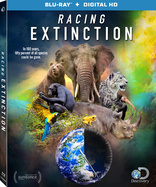
Blu-ray + UV Digital CopyLionsgate Films | 2015 | 90 min | Not rated | Feb 23, 2016
Price
List price:Listed on Amazon marketplace

Movie rating
6.9 | / 10 |
Blu-ray rating
| Users |  | 0.0 |
| Reviewer |  | 4.0 |
| Overall | | 4.0 |
Overview
Racing Extinction (2015)
Utilizing state-of-the-art equipment, Louie Psihoyos assembles a team of artists and activists intent on showing the world never-before-seen images that expose issues of endangered species and mass extinction.
Starring: Elon Musk, Louie Psihoyos, Jane Goodall, Leilani Münter, Charles HambletonDirector: Louie Psihoyos
| Documentary | 100% |
| Adventure | Insignificant |
| Action | Insignificant |
Specifications
Video
Video codec: MPEG-4 AVC
Video resolution: 1080p
Aspect ratio: 1.78:1
Original aspect ratio: 1.85:1
Audio
English: DTS-HD Master Audio 5.1
Subtitles
English, English SDH, Spanish
Discs
50GB Blu-ray Disc
Single disc (1 BD)
UV digital copy
Packaging
Slipcover in original pressing
Playback
Region A (C untested)
Review
Rating summary
| Movie | | 4.0 |
| Video |  | 3.5 |
| Audio | | 4.0 |
| Extras |  | 1.0 |
| Overall | | 4.0 |
Racing Extinction Blu-ray Movie Review
Widening the cove.
Reviewed by Jeffrey Kauffman February 12, 2016Comedian Gary Gulman does a routine about his use of Netflix and the often kind of weird recommendations the streaming service offers. Gulman jokes about getting a recommendation that he might like The Cove, Louis Psihoyos’ devastating Academy Award winning documentary which depicts the gruesome slaughter of dolphins in the port city of Taiji, Japan. Gulman, whose routines tend to be peppered with a certain amount of snark, wonders in his bit just how Netflix managed to come up with this kind of odd “recommendation”. “When am I going to be in the mood to watch a dolphin murder movie?” he asks the audience, before offering an absurd “combo platter” of films he liked that managed to generate this recommendation. “Based on your interest in Hotel Rwanda and Flipper, you will love The Cove! Hey, it says here you liked Apocalypse Now and Finding Nemo, you’re going to love The Cove! Free Willy and Schindler's List? This will be right up your alley, my friend!” (You can see the entire routine here, and in the interest of accuracy, Gulman also admits that he gave a five star rating to Food, Inc., which may in fact have influenced Netflix’s algorithm of recommendations.) Of course the general import of The Cove and Psihoyos' latest film, Racing Extinction, is not exactly a laughing matter, and both films offer a rather grim assessment of Man's relationship with his environment, specifically with regard to how Man treats other species that also happen to inhabit the planet. If The Cove centered on Man destroying (or at least brutalizing) one species, Racing Extinction broadens the story to show how there may be a coming global apocalypse of sorts that may wipe out up to 50% of the species currently inhabiting Earth along with their human "overlords".

Even some of those who were understandably horrified by The Cove took Psihoyos to task for supposedly “politicizing” the situation in Taiji, and my hunch is those folks are only going to find more fodder for that opinion throughout Racing Extinction, especially due to the fact that Psihoyos inserts himself into the story even more than he did in The Cove, including quite a few confessional and/or information interviews which are delivered “first person” style directly to the camera. Psihoyos’ figurative canvas is bigger than simply one secluded gulf in Japan, something that gives Racing Extinction perhaps an even more visceral impact, since it’s less likely that viewers will see the horrors as being “not in my backyard”.
The film begins with a rather interesting verité sequence which finds a coterie of police utilizing an almost comical array of undercover equipment like secret cameras and other recording devices to document being served some highly illegal whale sushi at a restaurant. That “sting” video ends up costing the restaurant several charges for criminal activity and, ultimately, its very existence when protesters catch wind of the story and begin picketing. Even after the protesters leave, another industrious fellow, one whose multimedia installations have been utilized by a number of high profile show business clients, shows up to shame the restaurant by erecting a huge screen where he projects evidence of their shenanigans. This is actually just the first instance of the public getting involved to right a wrong, something that Psihoyos previously documented in The Cove, but which is here a much more prevalent occurrence. And in fact that’s part of what makes the sometimes unbearably sad Racing Extinction tolerable—at least there are good folks seemingly everywhere working to prevent a global calamity of untold proportions.
Despite several planetary roads being paved with good intentions, there’s still some visual hell to sit through in this piece, as Psihoyos doesn’t shirk from showing the viewer the unbelievably disturbing ways that people have been marauding through various forms of wildlife for sport, commodity procurement and—of course—profit. While some of this imagery is just kind of generically sad, including looks at stuffed remnants of now extinct species which are stored away in museums, other scenes are nearly unbearable to see, like a really discomfiting few seconds showing a poor shark whose fins have been torn off of it (shark fins are a huge business, especially in Asia) and which is trying desperately to swim in its mutilated state.
The more generalist outlook of Racing Extinction is probably even more disturbing than the more focused examination that was at play in The Cove, since there's no way to escape from a truly global catastrophe. But in a way there’s also almost a built in “distance” from some of the trauma due both to that very generality as well as the huge timeframes that are being discussed. The frequent analog of making the entire history of the planet fit into one year and then deriving various touchstones from that “ratio” (with humans showing up a few seconds before midnight on December 31) is just one indication of how much content, including several previous mass extinctions, needs to be covered in this piece. That fact may therefore offer a bit of an “ignorance is bliss” set of blinders for those less prone to really think about ramifications that may not be immediately apparent, but which are inarguably unfolding before our eyes at this very moment.
Racing Extinction Blu-ray Movie, Video Quality

Racing Extinction is presented on Blu-ray courtesy of Lionsgate Films with an AVC encoded 1080p transfer (mostly) in 1.78:1. This is a documentary which follows traditional methods by having been assembled out of sometimes widely disparate sources (hence some of the varying aspect ratios), and as such quality is pretty widely variant. What's a bit unusual about this presentation is how inconsistent even some of the native high definition video can look at times, with a slightly ragged quality and occasional issues including rippling and aliasing. Some of the lower fi scenes, like those caught on spycams during the sushi sting, are almost completely lacking in any recognizable detail while at least occasionally suffering from lots of noise (see screenshot 7). Sharpness can vary from excellent (screenshot 12), to good (screenshot 1), to pretty middling (screenshot 16) to poor (screenshots 8 and 13). This fairly heterogeneous appearance doesn't ultimately sink the visual presentation, but those expecting a uniformly sharp and well detailed image may find this somewhat lacking.
Racing Extinction Blu-ray Movie, Audio Quality

Racing Extinction's lossless DTS-HD Master Audio 5.1 mix manages to have moments of excellent immersion in some passing sequences like a recreation of the extinction of dinosaurs due to asteroids, but generally speaking this is a fairly restrained mix which tends to offer voice over and first person talking heads sequences placed squarely front and center. While not the most overwhelming surround mix imaginable, there are good uses of the side and rear channels at various points, especially in the outdoor scenes. Fidelity is fine throughout the presentation, and there are no instances of distortion, dropouts or other damage.
Racing Extinction Blu-ray Movie, Special Features and Extras
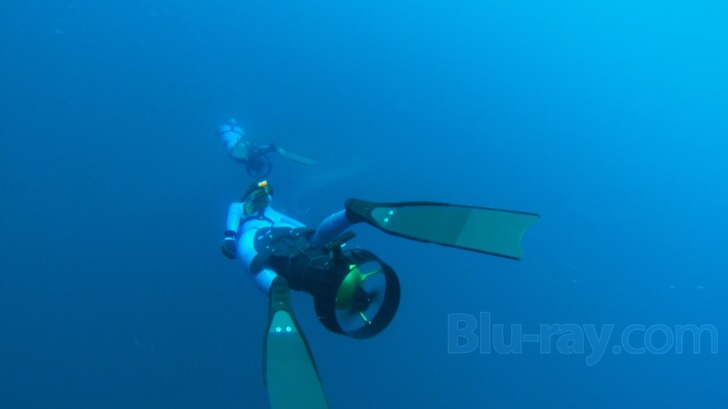
- The Virtual Field Trip (1080i; 53:38) repeats a bit of info from the feature documentary before getting into an interesting assortment of folks and information, including from the National Zoo in Washington, D.C. Most of the focus is on endangered species and the heroic efforts various people are making worldwide to halt or at least slow extinction rates. This evidently first aired on Discovery Education and must have served as a tie-in to the release of the feature film.
Racing Extinction Blu-ray Movie, Overall Score and Recommendation
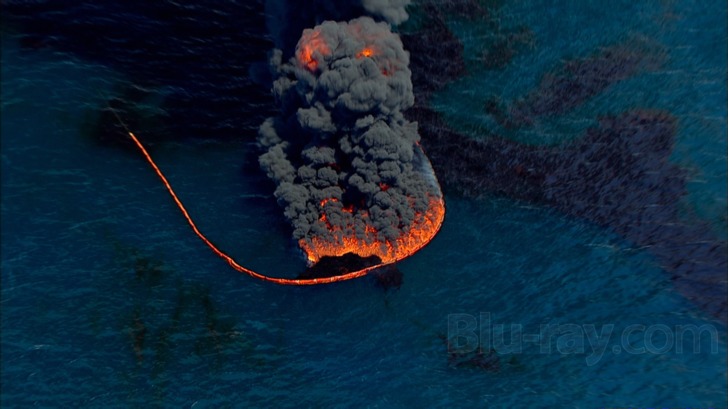
Racing Extinction is often quite difficult to sit through, and those who tend to be on the squeamish side had better be prepared to quickly cover and/or avert their eyes at various moments, but perhaps surprisingly the film is not a complete downer and even posits a bit of hope for the situation. The fact that there are so many committed activists working to prevent the devastation of various species is actually quite heartwarming as Racing Extinction continues, even if some cynical types may understandably feel like all these efforts may ultimately be for naught. This is timely piece that should certainly appeal to those with an environmental bent. Video quality is spotty on occasion throughout this presentation, but audio quality is fine. Highly recommended.
Similar titles
Similar titles you might also like
(Still not reliable for this title)

Pandas 4K
2018

Citizenfour
2014

Sharkwater
2006
Galápagos 3D
IMAX
1999

Why We Fight
20th Anniversary Edition
2005

Journey to the South Pacific 4K
IMAX Enhanced
2013

Meru
2015

Forks Over Knives
2010

James Cameron's Deepsea Challenge 3D
2014

An Inconvenient Sequel: Truth to Power
2017

The Late Great Planet Earth
1979

The Captains
2011

Magician: The Astonishing Life and Work of Orson Welles
2014

More Than Honey
2012

Corman's World: Exploits of a Hollywood Rebel
2011

Fahrenheit 9/11
2004

In Search of the Last Action Heroes
2019

Raiders!: The Story of the Greatest Fan Film Ever Made
2015
An Inconvenient Truth
2006

Cinerama: South Seas Adventure
1958