Nijinsky Blu-ray Movie
HomeNijinsky Blu-ray Movie 
Olive Films | 1980 | 98 min | Rated R | Feb 28, 2012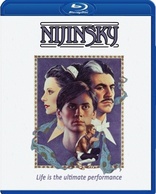

Movie rating
6.8 | / 10 |
Blu-ray rating
| Users |  | 0.0 |
| Reviewer |  | 3.0 |
| Overall | | 3.0 |
Overview
Nijinsky (1980)
Set in the early 1910s at a time of passionate artistic experimentalism, and based on biographical fact, this is the story of Vaslav Nijinsky, the young and brilliant but headstrong premier danseur and aspiring choreographer of the Ballets Russes. The company is managed by the famous Sergei Diaghilev, himself a controlling and fiercely possessive impresario. The increasing tension between these powerful egos, exacerbated by homosexual desire and jealousy, becomes triangular when the young ballerina Romola de Pulsky determinedly attempts to draw the increasingly mentally unstable Nijinsky away from Diaghilev.
Starring: Alan Bates, George De La Pena, Leslie Browne, Jeremy IronsDirector: Herbert Ross (I)
| Biography | Uncertain |
| Drama | Uncertain |
| Music | Uncertain |
Specifications
Video
Video codec: MPEG-4 AVC
Video resolution: 1080p
Aspect ratio: 1.78:1
Original aspect ratio: 1.85:1
Audio
English: DTS-HD Master Audio 2.0
Subtitles
None
Discs
25GB Blu-ray Disc
Single disc (1 BD)
Playback
Region A, B (C untested)
Review
Rating summary
| Movie | | 3.0 |
| Video | | 3.0 |
| Audio |  | 3.5 |
| Extras | | 0.0 |
| Overall | | 3.0 |
Nijinsky Blu-ray Movie Review
Crazy about ballet.
Reviewed by Jeffrey Kauffman March 2, 2012A recent online poll asked film lovers to vote for their favorite film that centered on the world of dance or ballet. In what
will probably be a shocking result to those who lionize the iconic pairing of Michael Powell and Emeric Pressburger,
The Red Shoes did not win the poll—not by a long shot. Perhaps because it’s considerably more
contemporary and in a way more “accessible” than the somewhat high minded The Red Shoes, Herbert Ross’
well-remembered 1977 The Turning Point took first place in the poll by a rather large margin. Ross had a long
and varied career that first flowered on the stage, where he was both an actor and dancer, eventually moving into the
world of choreography where he first attracted real attention. While he dabbled in film (he worked—uncredited—on the
film version of Carmen Jones and did two Cliff Richards musicals some years later), his “big break” in terms of
American recognition came in 1968 when he choreographed and worked on the musical sequences of the film version of
Funny Girl with a certain Barbra Streisand (Ross had choregraphed Babs’ big “breakthrough”
performance, that of Miss Marmelstein in the Harold Rome Broadway musical I Can Get it For You Wholesale,
which starred one Elliott Gould). The next year he finally helmed his first picture, the disastrous flop musical version of
Goodbye, Mr. Chips starring Peter O’Toole and Petula Clark, a film that helped vigorously pound one of the final
nails into the coffin of the big budget “event” musical in Hollywood. (The film is actually quite enjoyable seen now with
the advantage of perspective, and it features a superb performance by O’Toole. The multi-disc CD release of its
soundtrack, featuring Oscar nominated work by John Williams, by Film Score Monthly is highly recommended if
you can find a copy.)
Ross followed up Goodbye, Mr. Chips with a rather amazingly diverse group of films, including a couple more
starring Ms. Streisand (The Owl and the Pussycat and the Funny Girl sequel Funny Lady), as well
as one of the smartest comedy thrillers of the early seventies, the Stephen Sondheim-Anthony Perkins penned The
Last of Sheila (if you’ve never seen this film, it’s a must-see for murder mystery lovers). It wasn’t until 1977,
though, that Ross finally revisited the world of dance that had helped forge his early career, and The Turning
Point was one of his standout success stories, earning him his only Best Director Academy Award nomination.
Three years later, once again collaborating with his ballerina wife Nora Kaye, Ross went back to the world of dance for
Nijinsky, a somewhat staid yet strangely sensational (at least in its day) portrayal of the legendary Russian
dancer who was forever associated with the work of Sergei Diaghilev.
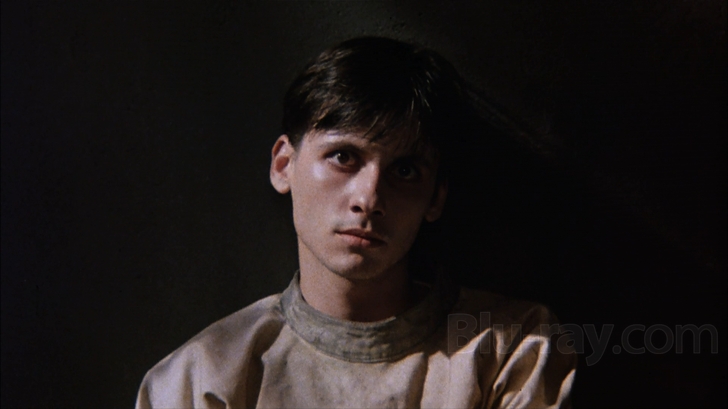
Nijinsky didn’t even place in the online poll mentioned above, and it’s not hard to understand why. Despite obviously having been a labor of love for Ross and Kaye, this film is one of those biographical dramas that looks and sounds great but has absolutely nothing with which to connect on a heart level. What’s so odd about Nijinsky is how it flirts with supposedly scandalously sexual behavior— Nijinsky’s homosexual affair with Diaghilev is a major plot point—without ever raising the cinematic temperature even one degree. This might be simply due to the fact that in 1980 the filmmakers just couldn’t effectively portray a gay love affair, but even so, the film is awfully stuffy, with none of the passion it really needed to have in order to rise above turgid melodrama. (As it stands, the film received a frankly ill fitting R rating, probably due to a couple of lip kisses between Diaghilev and Nijinsky. It's also interesting to note how Ross emulates, if not outright apes, that "other" quasi-gay themed film of just a few years prior, Death in Venice, with Bates looking suspiciously like Dirk Bogarde in a white suit and wide brimmed hat whilst lounging on the beaches of Italy. Ironically, Death in Venice received a PG rating, despite being at least as supposedly provocative.)
American Ballet Theater star soloist George De La Pena had his first starring film role as Nijinsky, and while his dance sequences are stupendously effective, his performance chops aren’t able to keep up with the film’s real star, Alan Bates, giving a nicely understated if just slightly smarmy performance as impresario Sergei Diaghilev. The film actually starts with Nijinsky locked away in an institution (the dancer would spend most of his life institutionalized after a devastating series of breakdowns), and then drifts into the familiar biographic film trope of a flashback to divulge how he ended up there. Ross and screenwriter Hugh Wheeler (who wrote the book for the lovely Stephen Sondheim musicalization of Bergman’s Smiles of a Summer Night, A Little Night Music) simply give us a chronological account of Nijinsky’s glory years with Ballets Russes, replete with little establishing shots and subtitles letting us know where we are and what month and year it is. This therefore becomes almost more of a calendar or datebook rather than a drama with some sort of emotional arc.
Jeremy Irons also made his film debut in Nijinsky, playing choreographer Mikhail Fokine as an uptight little brat who throws vicious tantrums when he doesn’t get his way. Ross’ goddaughter Leslie Browne, who made such an impact (and received an Academy Award nomination) in The Turning Point, is here cast as a scheming woman out to land Nijinsky as her own (and who later marries him), and she is one of the film’s fatal flaws. She simply doesn’t have the dramatic gravitas to pull off this role, and that leaves one of the film’s central tenets—that Nijinsky’s internal conflict between his heterosexual and homosexual leanings led to his breakdown—strangely lopsided and ineffective.
The film is nonetheless extremely handsome and some of its historical recreations are very effective, including the wonderfully disastrous premiere of Stravinsky's Le Sacre du Printemps, replete with Nijinsky frantically standing in the wings screaming out the beats of each measure to his dancers while the audience riots in the hall. In fact, it's probably the historical recreations of some of these iconic dances that remains Nijinsky's overall strongest selling point. For a man who reinvented the world of modern ballet in his own image, perhaps that's more than fitting.
Nijinsky Blu-ray Movie, Video Quality
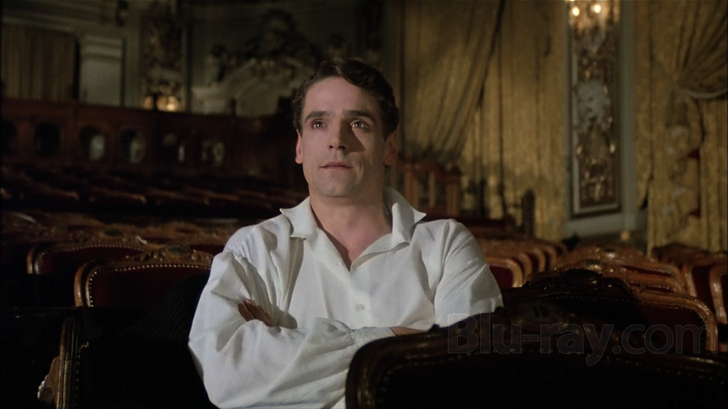
Nijinsky is presented on Blu-ray courtesy of Olive Films with an AVC encoded 1080p transfer in 1.78:1. This is arguably the softest looking Blu-ray that Olive has released, with an overall gauzy texture that is only increased by the film's many opticals in its establishing shots where textual titles are superimposed letting us know where we are and what month and year it is. The transfer does sport some very nicely robust color, with the ballet costumes looking especially resplendent, and the production design also pops rather nicely throughout, but fine detail is often lacking in midrange shots. Close-ups alleviate that symptom to at least some degree, but inconsistent contrast and black levels often work to the film's disadvantage.
Nijinsky Blu-ray Movie, Audio Quality
Nijinsky offers as lossless DTS-HD Master Audio 2.0 audio mix that sounds quite alive and vibrant, and which shows off John Lanchbery's nicely done adapatations of several classic scores to which Nijinsky danced, including pieces by Ravel and Stravinsky. (Lanchbery, in case his name isn't familiar, is one of the most legendary ballet arrangers of the twentieth century, having forged wonderful collaborations with both Kenneth MacMillan and especially Frederick Ashton.) Dialogue sounds clean and clear, and fidelity is excellent throughout this track, with no damage whatsoever to report.
Nijinsky Blu-ray Movie, Special Features and Extras
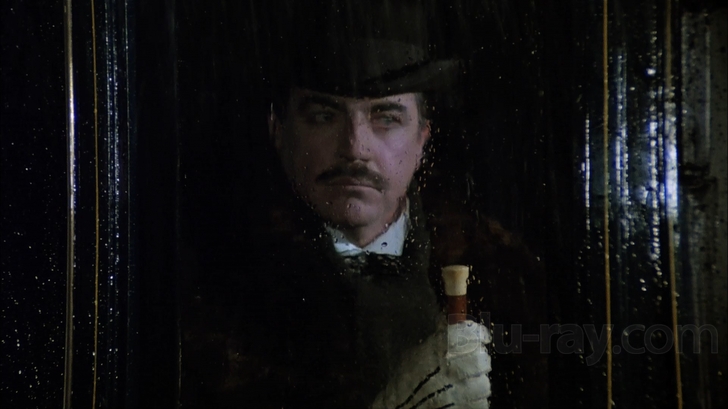
This is another bare bones Olive release with no supplements whatsoever. At least there's a main menu.
Nijinsky Blu-ray Movie, Overall Score and Recommendation
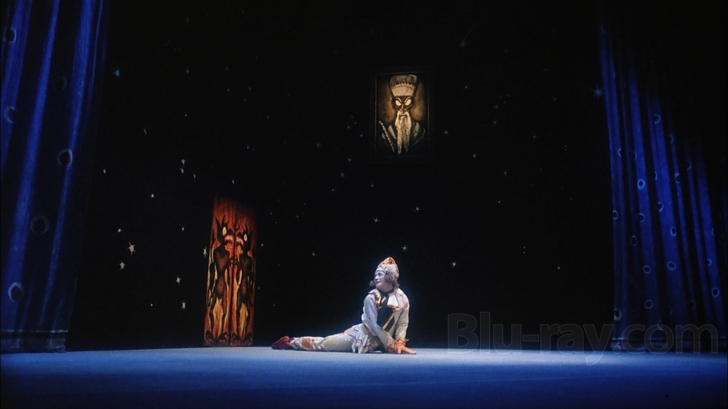
Nijinsky is sumptuously produced and features some fantastic dancing, but a story this concerned with sexuality and passion really should have given off a lot more sparks than it does. Bates is great, if understated, and some of the supporting performances are fine, but both De La Pena and (especially) Browne just seem out of their element in terms of performance caliber (De La Pena at least dances extremely well). The best part of Nijinsky, aside from the really gorgeous production design, is its recreations of several iconic ballets that Nijinsky either danced in or had a hand in creating. Those moments are when this film finally takes flight and delivers something visceral to its audience. Otherwise, this is like reading a history text. The facts may be there, but there's no emotional resonance or connection.
Similar titles
Similar titles you might also like
(Still not reliable for this title)

Ray
Universal 100th Anniversary
2004
El Cantante
2006

Mao's Last Dancer
2009

The Soloist
2009

Grace of Monaco
2014

24 Hour Party People
2002

The Doors 4K
The Final Cut
1991

La Vie en Rose
La Môme / Warner Archive Collection
2007
Factory Girl
2006

Coal Miner's Daughter
1980

A Complete Unknown 4K
2024

Coco Before Chanel
Coco avant Chanel
2009

The Josephine Baker Story
1991

Get on Up
2014

De-Lovely
Special Edition
2004

The Runaways
2010
I'm Not There
2007

Elvis 4K
2022

Nina
2016

Love & Mercy
2014