JFK Blu-ray Movie
HomeJFK Blu-ray Movie 
American ExperiencePBS | 2013 | 226 min | Not rated | Nov 19, 2013

Price
List price:Listed on Amazon marketplace

Movie rating
6.4 | / 10 |
Blu-ray rating
| Users |  | 0.0 |
| Reviewer |  | 4.0 |
| Overall | | 4.0 |
Overview
JFK (2013)
Starring: John F. KennedyNarrator: Oliver Platt
| Documentary | 100% |
Specifications
Video
Video codec: MPEG-4 AVC
Video resolution: 1080i
Aspect ratio: 1.78:1
Original aspect ratio: 1.78:1
Audio
English: Dolby Digital 5.1
English: LPCM 2.0
Subtitles
English SDH
Discs
25GB Blu-ray Disc
Two-disc set (2 BDs)
Playback
Region A (B, C untested)
Review
Rating summary
| Movie |  | 4.5 |
| Video | | 4.0 |
| Audio | | 4.0 |
| Extras | | 0.0 |
| Overall | | 4.0 |
JFK Blu-ray Movie Review
Lover. Addict. President.
Reviewed by Brian Orndorf November 16, 2013On the 50th anniversary of his assassination in Dallas, the life and times of John Fitzgerald Kennedy is recounted in the new American Experience production, “JFK.” Stripped of conspiracy theories and belabored political dissection, the two-part program seeks to pull focus away from eye-crossing debate to expose how John lived his life, growing from a sickly boy into one of the most powerful men in the world. Gathering interviews with experts, family members, and authors, collecting photos and film, and using recordings created by John while in the White House, “JFK” constructs a dynamic weave work of experience and ambition, shaping a portrait of an American icon that’s honest and engaging. Instead of playing up the myth, the show scrapes away the protective layer of time to expose John as a fallible man who strived to make his homeland a better place, using connections, good looks, and intelligence to achieve greatness in a manner that might inspire his fellow Americans, working to protect a country he dearly loved.
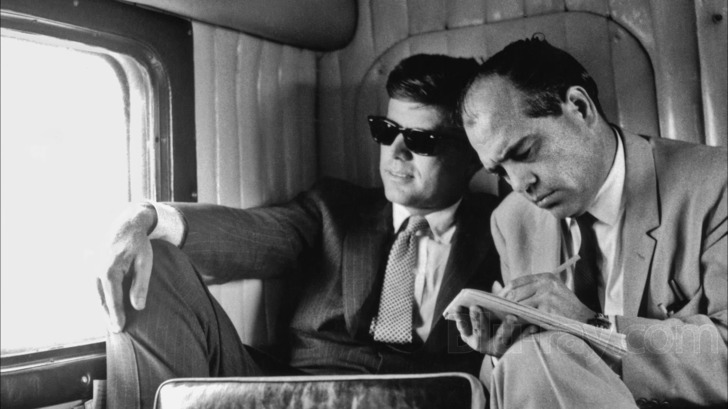
The nearly four hours allotted to “JFK” (narrated by Oliver Platt) isn’t nearly enough to pick up on all the details of John’s 46 years, but the effort is there to communicate a span of time. We see the subject as a child raised in the shadow of his powerful, opinionated father and competitive family. We watch as he tries on leadership for the first time, getting a feel for politics and the wearing demands of bureaucracy. We reflect on his ascendance to power and his weakness for women, understanding the human side to brand name that would come to dominate politics and headlines for decades. There’s so much in “JFK,” yet the production avoids simply ticking off accomplishments. The program generates an irresistible feeling for forward momentum, identifying habits and heroism, working to expose a life of tragedy, physical pain, arrogance, and idealism, all the while filling in the details on otherwise blocky sections of history. It’s impressive, fulfilling work, making the run time fly by as the particulars of this unusual existence are revealed, with impressive audio and visual evidence to support arguments.
“Part One” (113:30)
Although “JFK” commences with the tension of the Cuban Missile Crisis, the story actually begins with John’s father Joseph, a wealthy politician who set out to build a dynasty with his large brood. Sidelined with repeated illnesses as a boy, John faced pain and confinement, though the spirit of Kennedy competition kept him sharp, while Joseph’s influence eventually led the privileged man to Harvard. With Joseph’s ambassadorship responsibilities taking him to Great Britain, John witnessed the rise of tensions in Europe as Hitler began his invasions, leading him to understand the precarious position of isolationism, eventually penning the book “Why England Slept.” Diagnosed with colitis, John was refused access to WWII, ultimately turning to Joseph for help, working his way to a harrowing experience on the boat PT-109. Returning home, John entered politics, teaching himself to be a proper candidate despite his young age, questing for a congressional seat in Boston. Hit with a diagnosis of Addison’s disease and the death of two siblings, John learned to deal with his own mortality, inspiring him to reach further into politics, although he had a clear disinterest in the day-to-day work. With the support of brother Bobby, John rose to prominence, while a romance with Jacqueline Bouvier gave him a domestic foundation, though one tested by repeated extramarital affairs. In 1956, a flirtation with a nomination for the vice presidency left John hungry for greater achievements, spending the next years building himself in a powerful political and publicity figure, eventually embarking on an underdog presidential campaign (topped off with Frank Sinatra theme song). Retaining a red-hot competitive streak with the Soviet Union and sympathy for civil rights issues, John claimed the presidency in 1960, at 43 years of age, ready to pay off a campaign that promised to restore American pride as it faced a complicated future.
“Part Two” (111:24)
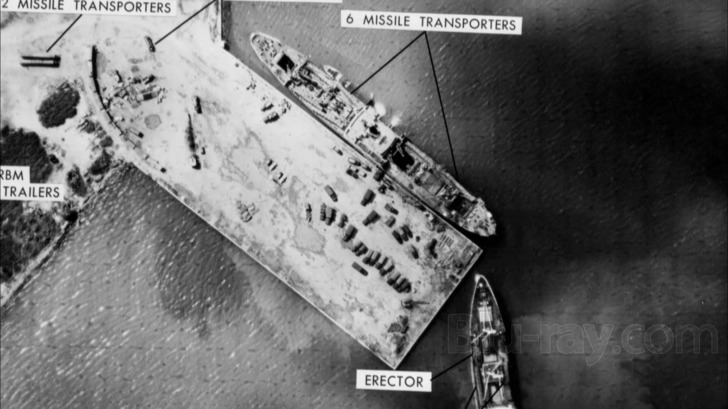
Blistering cold and heavy snow welcomed the President’s 1961 inauguration, while parties and style warmed up the festivities, solidifying John and Jackie’s Washington presence. Building his cabinet, John selected an unusual range of men for top positions, including Bobby as Attorney General, creating a force of opinion to draw from. With tensions mounting between John and Soviet Union leader Khrushchev over the future of Cuba, the “Bay of Pigs” incident commenced, leading to a humbling disaster for the new president, who found additional political woe in the form of the Freedom Riders and their tireless, aggressive quest for equality in the south. Building toward a productive meeting with Khrushchev in Vienna, John once again fell short of expectations, failing to advance talks on nuclear concerns facing both nations. Striking out at the rise of communism, war quietly began in Vietnam, while John faced crippling back problems, requiring a steady routine of injections from the shady “Dr. Feelgood” to remain upright. Jackie, finding her identity as the First Lady, remodeled the White House, manufacturing an aura of royalty around the couple. With the question of Castro demanding attention, Bobby pushes for removal, leaving Khrushchev an opportunity to apply pressure on America, commencing the Cuban Missile Crisis. Trying to maintain a family life with children Caroline and John Jr., the President is taxed by several domestic affairs, including a deteriorating racial situation in Birmingham, Alabama. Nearing the end of his first term, John finds a rhythm of optimism to share with the country, marked by the signing of Partial Nuclear Test Ban Treaty. And after pondering his rocky years as a world leader and his hopes for a second term, John and Jackie elect to visit Texas on an early campaign stop, hoping to win back the state.
JFK Blu-ray Movie, Video Quality
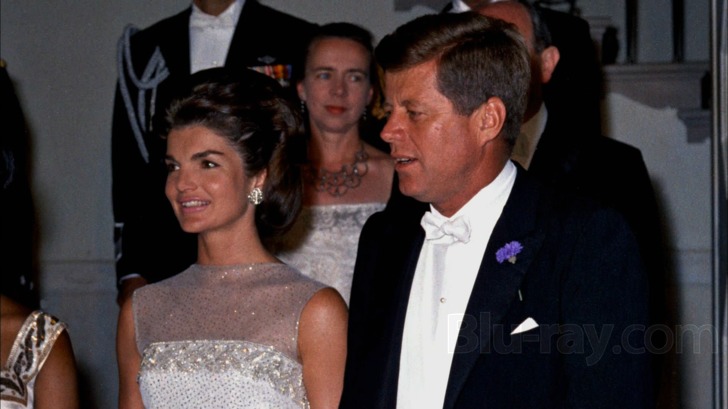
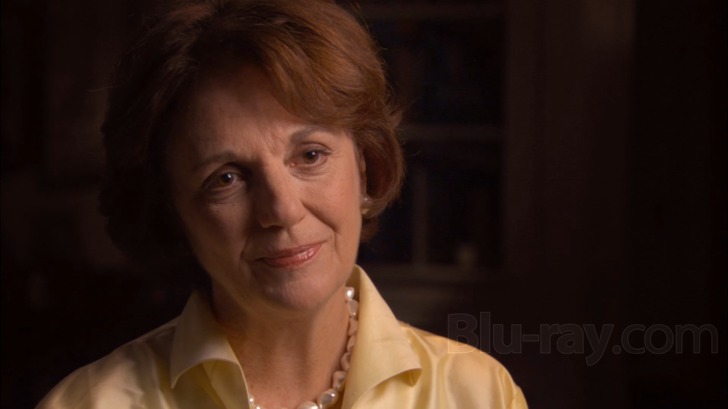
The AVC encoded image (1.78:1 aspect ratio) presentation is made up of numerous film and video sources, with transitions handled smoothly, even with some understandable wear and tear. Contemporary interviews are defined with an inviting HD look, offering pleasing facial and fabric textures. Historical images also carry satisfactory detail, bringing out the particulars in portraits and news photos. Colors are equally strong, cutting through the viewing experience after long bouts of distinct black and white, and skintones are natural. Shadow detail is deep and supportive. "JFK" has a lot to juggle when it comes the myriad of images and footage surrounding the man's life, and the program registers without much disruption, only revealing some mild pixelation and noise with troublesome source material.
JFK Blu-ray Movie, Audio Quality
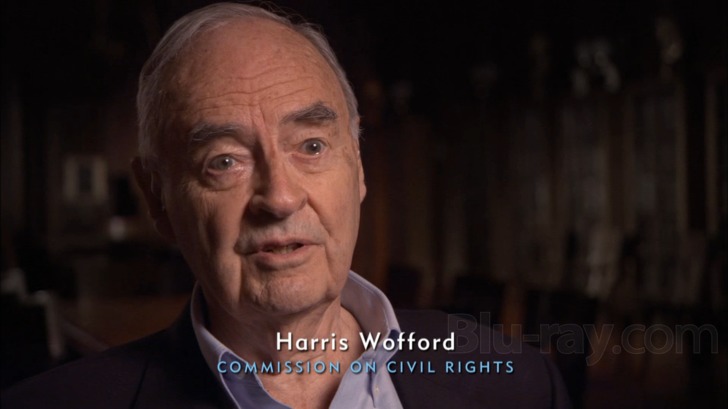
The 5.1 Dolby Digital sound mix is a modest affair, remaining frontally minded for its extended run time. The limitations aren't disagreeable, with scoring efforts managing to find some circular life in the surrounds. Narration is concretely centered, with Platt's voice deep and secure, carrying the dramatic force of the documentary with confidence. Period sounds are scratchy but perfectly understandable, keeping Kennedy's iconic voice defined. Low-end is rarely engaged outside of some war footage. Interviews retain HD freshness, communicating passions concerning JFK's political and private interests.
JFK Blu-ray Movie, Special Features and Extras
There is no supplementary material on this disc.
JFK Blu-ray Movie, Overall Score and Recommendation
"JFK" doesn't end with an exhaustive deconstruction of assassination theories or evaluation of post-presidency influence. The journey quietly concludes in Dallas, refusing to indulge hysteria in the pursuit of respect. It's a decision that will likely infuriate some viewers, but I found it most refreshing. After all, the tragedy in 1963 has been worked over in the media countless times, keeping "JFK" on target as a production out to understand what drove John to impressive heights of public service and what threatened to ruin him along the way. Pieces are missing, inevitable with this type of endeavor, yet the educational benefits of "JFK" are numerous, supplying a richly detailed overview of political and personal history.
Similar titles
Similar titles you might also like
(Still not reliable for this title)

JFK: A New World Order
2013

I Am Chris Farley
2015
Spitfire: The Plane That Saved the World
2018

A Band Called Death
2012

Studio 54: The Documentary
2018

Bowling for Columbine
2002

Fahrenheit 9/11
2004

The Late Great Planet Earth
1979

The Amish
American Experience: The Amish
2012

Sicko
2007

Roger & Me
1989

Microcosmos
1996

I Am Not Your Negro
2016

Amazing Grace
Aretha Franklin
2018

NOVA: The Fabric of the Cosmos
2011

Bully
2011

Helvetica
2007

Stephen Fry in America
2007

Magic of Flight
IMAX
1996

Why We Fight
20th Anniversary Edition
2005