I Used to Be Funny Blu-ray Movie
HomeI Used to Be Funny Blu-ray Movie 
Slipcover in Original PressingUtopia Distribution | 2023 | 106 min | Not rated | Oct 29, 2024

Price
List price:Amazon: $24.49 (Save 8%)
Third party: $24.49 (Save 8%)
Only 7 left in stock - order soon.

Movie rating
7 | / 10 |
Blu-ray rating
| Users |  | 0.0 |
| Reviewer |  | 4.0 |
| Overall | | 4.0 |
Overview
I Used to Be Funny (2023)
Sam, a stand-up comedian struggling with PTSD, weighs whether or not to join the search for a missing teenage girl she used to nanny.
Starring: Rachel Sennott, Olga Petsa, Jason Jones, Sabrina Jalees, Caleb HearonDirector: Ally Pankiw
| Drama | Uncertain |
| Dark humor | Uncertain |
| Comedy | Uncertain |
Specifications
Video
Video codec: MPEG-4 AVC
Video resolution: 1080p
Aspect ratio: 2.00:1
Original aspect ratio: 2.00:1
Audio
English: DTS-HD Master Audio 5.1
English: DTS-HD Master Audio 2.0
Subtitles
English SDH
Discs
Blu-ray Disc
Single disc (1 BD)
Playback
Region A (C untested)
Review
Rating summary
| Movie |  | 3.5 |
| Video | | 4.0 |
| Audio | | 4.0 |
| Extras |  | 3.0 |
| Overall | | 4.0 |
I Used to Be Funny Blu-ray Movie Review
Reviewed by Brian Orndorf June 25, 2025“I Used to Be Funny” highlights the world of stand-up comedy, but doesn’t explore the dedication and attitude of the vocation. Instead, writer/director Ally Pankiw is more interested in making a mystery about a young woman’s emotional state, offering viewers a nonlinear journey into memory and reality as she endures all kinds of trauma over the course of two years. The material features jokes but doesn’t pursue laughs, working with the business to provide an askew characterization, getting into the folds of a person who’s used to weaponizing humor as she deals with events that are anything but funny. Pankiw maintains personality and performance in the endeavor, which always comes together when focusing on human moments between characters. “I Used to Be Funny” stumbles from time to time, but it’s a sincere study of depression and concern, giving star Rachel Sennott some room to explore her dramatic side as she blends her natural sardonic screen presence with something more human, delivering an interesting performance.
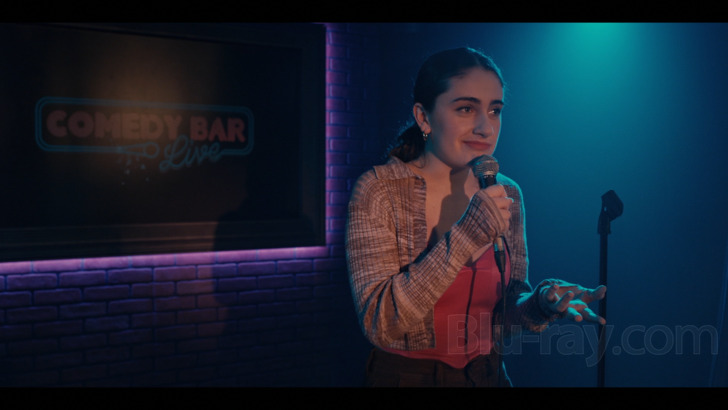
Sam (Rachel Sennott) was once a relatively happy young woman, trying to find her way around the Canadian stand-up comedy scene. Now she’s depressed, often lost in thought, finding support from her two roommates, Paige (Sabrina Jalees) and Philip (Caleb Hearon), who hope to see her return to the stage and feel like her old self once again. Triggering Sam’s woes is news that Brooke (Olga Petsa), a 14-year-old teen, is missing, recently seen at Sam’s apartment, leaving the witness to deal with a hostile interaction. Two years ago, Sam was hired as a nanny for Brooke, tasked with guardianship as the 12-year-old’s mother was on her deathbed, while her father, Cameron (Jason Jones), preferred to bury himself in work. Growing closer, Sam becomes a mother-like figure to Brooke, helping her through some heavy times in her life. Now, Brooke is gone, leaving Sam to understand the clues left behind, setting out to find the missing girl, which involves reconnecting with people from her past.
“I Used to Be Funny” plays with memory, commencing with the announcement of Brooke’s disappearance, which snaps Sam to attention. Viewers are left to decipher reactions for the first act, as Pankiw plays with time, adding pieces of Sam’s experience to the feature instead of moving in a linear fashion, embracing a level of confusion as the situation is slowly revealed. Flashbacks are common, returning Sam to her time with Brooke, brought into a troubled domestic situation as Cameron looks to pull himself out of parental duties, hiring a nanny to be a friend to Brooke as she experiences the slow decline of her mother. We never see the dying woman, but her presence is felt as deep emotions are ignored, putting Sam in a difficult position of guardianship she’s ready to face with her sense of humor.
Stand-up comedy once offered Sam a release, showing great potential as her career began to take shape, even securing T.V. time to help bring her to the masses. She struggles with thoughts of what might’ve been, watching Paige and Philip advance in their careers, with the former even securing a chance to show her stuff in America. They’re caring, supportive roommates (which is a nice touch), also sharing a special lovingly sarcastic language Pankiw spreads throughout “I Used to Be Funny,” keeping the characters armed with witticisms and observations, helping them to deal with the world and, in Sam’s case, her unrealized potential.
There’s a reason for Sam’s withdrawal from the world, and “I Used to Be Funny” presents a puzzle of sorts, sending the character back to her old life when Brooke appears at her doorstep, breaking a window with a rock as she angrily interacts with Sam. The reunion inspires Sam to deal with the cops, which remains an uneasy encounter, and she runs into old faces, including Jill (Dani Kind), Brooke’s concerned aunt, who wants the best for everyone. And there’s Noah (Ennis Esmer), Sam’s ex-boyfriend, who was deeply hurt by their breakup, revitalized by an unexpected reunion on the street, which also forces the woman to confront past mistakes. “I Used to Be Funny” manages many characters successfully, supplying an understanding of Sam’s life as it was and how it is now, gradually adding in complications and developments that play into the overall mystery of what happened to the comedian.
I Used to Be Funny Blu-ray Movie, Video Quality
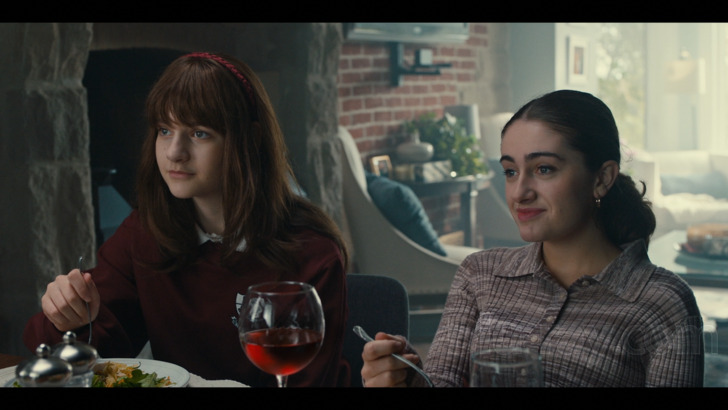
The AVC encoded image (2.00:1 aspect ratio) presentation for "I Used to Be Funny" offers excellent detail, capturing skin particulars on the cast and their states of distress. Costuming remains fibrous. Living spaces are open for exploration, with defined decoration. Exteriors maintain depth. Colors are alert, preserving changes in mood as depressive blues and sunnier yellows are visited. Fashion brings out brighter primaries, joined by comedy club stage lighting, and hair color is appreciable. Skin tones are natural. Greenery is distinct. Delineation is satisfactory. Brief, very mild banding is detected.
I Used to Be Funny Blu-ray Movie, Audio Quality
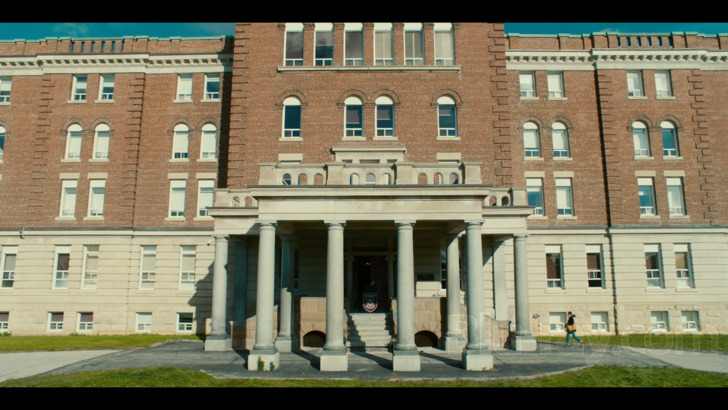
The 5.1 DTS-HD MA track for "I Used to Be Funny" doesn't deal with a particularly active feature. Dialogue exchanges are sharp, capturing performances as they visit broad stage action and hushed emotionality. Scoring supports with distinct instrumentation and dramatic support. Surrounds provide light engagement, as the mix is mostly frontal in design. Low-end isn't challenged.
I Used to Be Funny Blu-ray Movie, Special Features and Extras
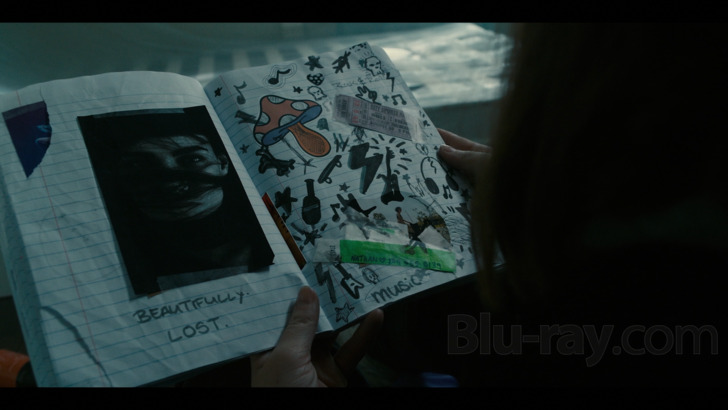
- Booklet offers an essay by Andrew Crump.
- Q&A (20:01, HD) is a 2024 discussion of "I Used to Be Funny" with writer/director Ally Pankiw, recorded at the American Cinematheque. The conversation opens with the moderator sharing that everyone "loves" the helmer, eliminating hope for a more hard-hitting understanding of the creative process. What's offered here are softball questions, but the interviewee explores her thematic approach and interest in investigating the "nightmare of being a young woman." Production woes are identified, as the picture was shot in a few weeks after a decade of development, creating a divide between the original vision for the feature and what was ultimately crafted out of the footage. Pinkiw also shares information about the soundtrack and her use of favors collected during her time on short films and music videos to complete the movie.
- Image Gallery (1:16) collects film stills.
- And a Theatrical Trailer (1:32, HD) is included.
I Used to Be Funny Blu-ray Movie, Overall Score and Recommendation
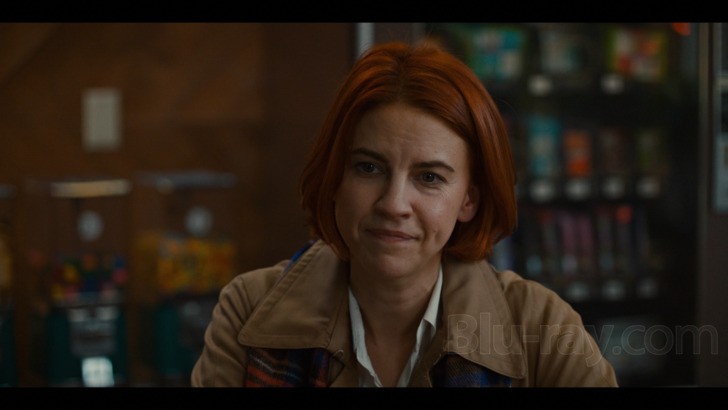
"I Used to Be Funny" has moments of clumsiness, especially when Pankiw elects to cover profound emotional moments with hand-held camerawork, which rarely mixes well with intimacy. The material's eventual move into a detective tale also doesn't completely connect, putting Sam into investigative mode, which tends to throttle pacing. "I Used to Be Funny" reaches some incredibly dark places to eventually connect the dots, but Pankiw manages to keep the feature together, inspecting the particulars of bonding and friendship, but also trauma as various events conspire to ruin lives. Sennott delivers accomplished work to help the picture reach a few of its dramatic goals, helping to divide Sam's experiences with hope and despair, which gives Pankiw a chance to create a viable question mark of concern as her main character is hit from all sides by life, challenging her pursuit to make others laugh.
Similar titles
Similar titles you might also like

Wiener-Dog
2016

Storytelling
2001

A Day at the Beach
Indicator Series | Limited Edition
1970

Trust
1990

Dark Horse
Slipcover in Original Pressing
2011

In the Soup
Slipcover in Original Pressing
1992

Coup de Chance
Wasp 22
2023

Entertaining Mr Sloane
1970

Hi, Mom! 4K
Limited Edition
1970

Kinds of Kindness
2024

The Boys in the Band 4K
Standard Edition
1970
Listen Up Philip
2014

Misericordia
Miséricorde
2024

Ugly, Dirty and Bad
Brutti, sporchi e cattivi
1976

Underground
Подземље / Podzemlje
1995

Catfight
2016

Happiness 4K
1998

Women on the Verge of a Nervous Breakdown
Mujeres al borde de un ataque de nervios
1988

Wrong
2012

Visitor Q
Bizhitā Kyū | ビジターQ | Limited Edition
2001