Raro Video: Two Classic Italian Films Coming Soon to Blu-ray
HomeRaro Video: Two Classic Italian Films Coming Soon to Blu-ray
Posted October 31, 2018 05:58 PM by Webmaster
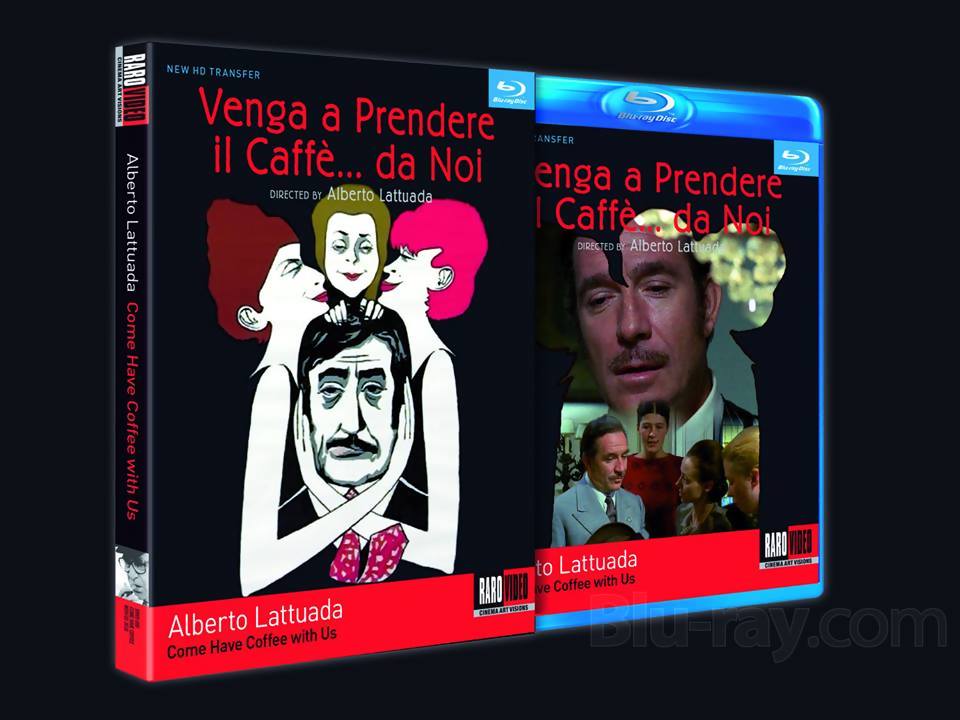
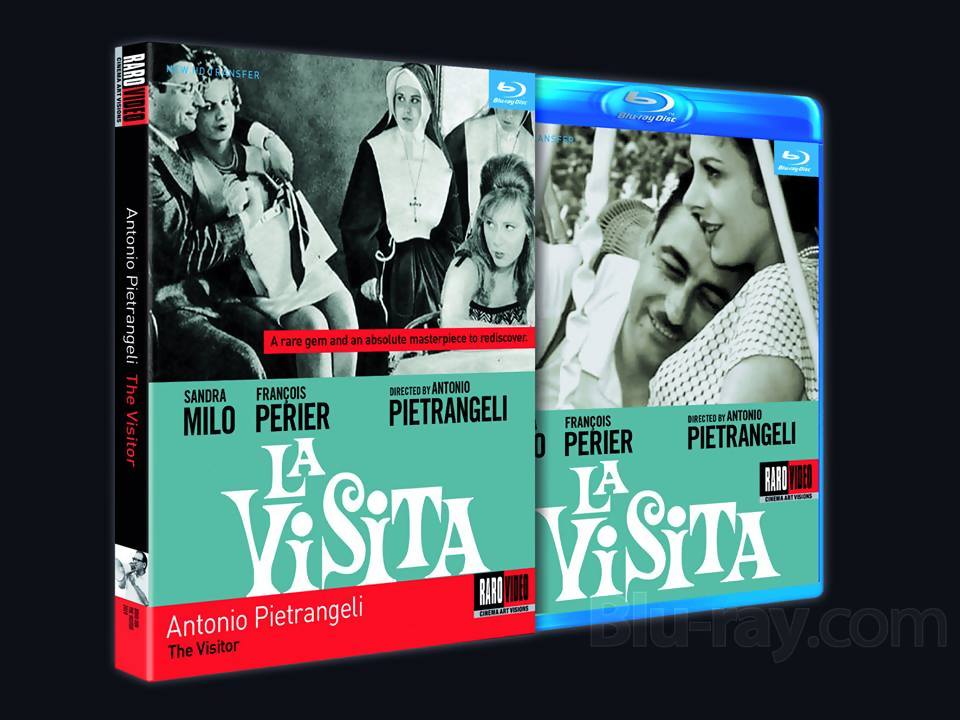
U.S. label Raro Video has informed us that it is planning to add to its Blu-ray catalog two classic Italian films: Alberto Lattuada's Come Have Coffee with Us (1970) and Antonio Pietrangeli's The Visit (1963). The releases are expected to arrive on the market early next year.
Come Have Coffee With Us
Synopsis: Emerenziano (Ugo Tognazzi, who is best known in the U.S. for the classic comedy La Cage aux Folles) is the middle-aged tax inspector who is in search of a wealthy wife. He travels to northern Italy where he meets three sisters, who, though wealthy, are not by any stretch of the imagination young or beautiful. He decides to marry one of them and then takes the other two as mistresses. The virginal sisters are slowly transformed into man-hungry mavens, each possessing their own individual sexual talents. It all seems to work out fine for him until he meets a young waitress who he entangles himself with. He soon becomes a helpless prisoner subjected to the whims of the love-starved females in this erotic dark comedy.
Special Features and Technical Specs:
Synopsis: Thirty-something stunning beauty Pina (Sandra Milo) posts an ad in the personal column hoping to find a man to take her away from the tiny Italian village where she lives. For months now she has been trying to find the right one - a man with a solid career, a family in mind and plenty of stamina. Adolfo (Francois Perier) lives in Rome and runs a profitable business. Looking to share his life with that special person willing to raise a family, Adolfo replies to Pina's ad. The couple arranges to meet in the village where Pina lives. Incorporating flashbacks that highlight Pina's and Adolfo's lives, the complexity of these characters is slowly revealed, and when the two finally meet Pina quickly concludes that Adolfo is the one. He appears noble, cultured, and ready for a serious commitment - Pina can hardly believe her luck!
Special Features and Technical Specs:
On December 18, the label will also bring to Blu-ray Massimo Dallamano's The Secret of Dorian Gray (1970), starring Helmut Berger, Richard Todd, Margaret Lee, Renato Romano, and Eleonora Rossi Drago.
The Secret of Dorian Gray
Synopsis: The Secret of Dorian Gray is a classic, seventies, Italian film restored to its original splendor. Taking place in London, a wealthy young man, Dorian Gray, is in love with an aspiring actress named Sybil. He is also in the process of getting his portrait painted by his ascot-wearing friend, Basil. When the portrait is finished however, Dorian complains that he will grow old while the painting will never change. On the same night, as if he has sold his soul to the devil, exchanging vanity for morality, he ends it with Sybil, and accepts the seductive offer of a woman whose party he attends. The next day, the painting looks slightly older. In horror and fascination, Dorian hides it away and continues a life of sexual experimentation. Over time, the portrait shows signs of aging, but he remains youthful as if fueled by his ever-increasing libidinal lifestyle; finally, he and Basil face the painting. The exceptionally groovy score by Giuseppe De Luca enhances the seventies milieu. Cinematography by Otello Spila (Pier Paolo Pasolini's Theorem, Paolo Cavara's The Black Belly of the Tarantula.
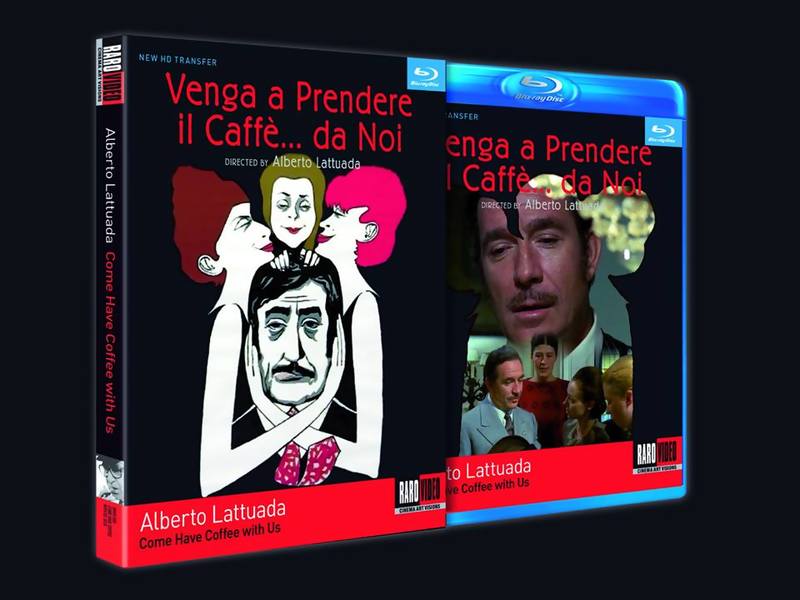
Come Have Coffee With Us
Synopsis: Emerenziano (Ugo Tognazzi, who is best known in the U.S. for the classic comedy La Cage aux Folles) is the middle-aged tax inspector who is in search of a wealthy wife. He travels to northern Italy where he meets three sisters, who, though wealthy, are not by any stretch of the imagination young or beautiful. He decides to marry one of them and then takes the other two as mistresses. The virginal sisters are slowly transformed into man-hungry mavens, each possessing their own individual sexual talents. It all seems to work out fine for him until he meets a young waitress who he entangles himself with. He soon becomes a helpless prisoner subjected to the whims of the love-starved females in this erotic dark comedy.
Special Features and Technical Specs:
- HIGH-DEFINITION REMASTER STRUCK FROM THE 35MM ORIGINAL CAMERA NEGATIVE
- A Video Thing - Interview with film critic Enrico Ghezzi
- Fully illustrated booklet including critical analysis of the film
- New and improved English subtitles
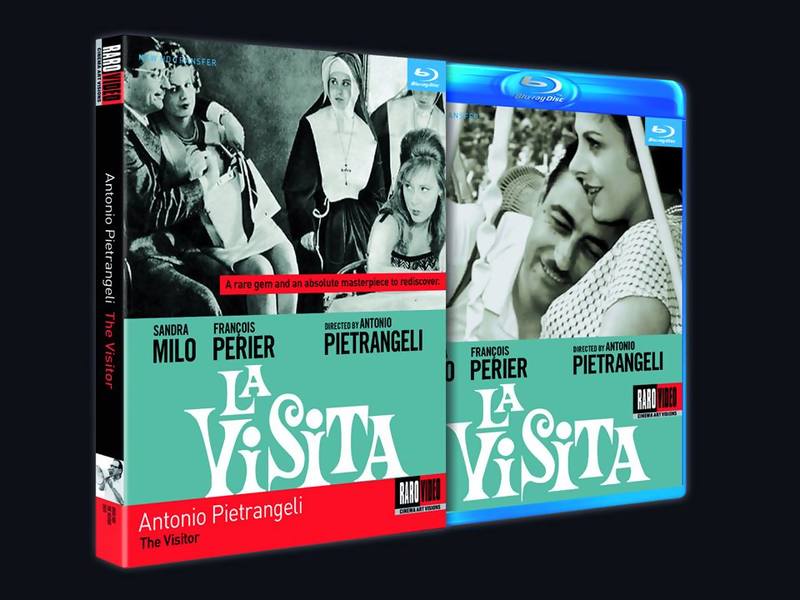
Synopsis: Thirty-something stunning beauty Pina (Sandra Milo) posts an ad in the personal column hoping to find a man to take her away from the tiny Italian village where she lives. For months now she has been trying to find the right one - a man with a solid career, a family in mind and plenty of stamina. Adolfo (Francois Perier) lives in Rome and runs a profitable business. Looking to share his life with that special person willing to raise a family, Adolfo replies to Pina's ad. The couple arranges to meet in the village where Pina lives. Incorporating flashbacks that highlight Pina's and Adolfo's lives, the complexity of these characters is slowly revealed, and when the two finally meet Pina quickly concludes that Adolfo is the one. He appears noble, cultured, and ready for a serious commitment - Pina can hardly believe her luck!
Special Features and Technical Specs:
- NEW REMASTER OF THE FILM FROM THE ORIGINAL 35MM NEGATIVE
- Video interview with Ettore Scola (Director and author of the screenplay)
- Video interview with Armando Trovajoli (Composer of the music)
- Video interview with Paolo Pietrangeli (Director)
- New and improved English subtitles
- Director biography and filmography
- BONuS ROM Content: A PDF fully illustrated booklet containing critical analysis of the film by Gabrielle Lucantonio
On December 18, the label will also bring to Blu-ray Massimo Dallamano's The Secret of Dorian Gray (1970), starring Helmut Berger, Richard Todd, Margaret Lee, Renato Romano, and Eleonora Rossi Drago.
The Secret of Dorian Gray
Synopsis: The Secret of Dorian Gray is a classic, seventies, Italian film restored to its original splendor. Taking place in London, a wealthy young man, Dorian Gray, is in love with an aspiring actress named Sybil. He is also in the process of getting his portrait painted by his ascot-wearing friend, Basil. When the portrait is finished however, Dorian complains that he will grow old while the painting will never change. On the same night, as if he has sold his soul to the devil, exchanging vanity for morality, he ends it with Sybil, and accepts the seductive offer of a woman whose party he attends. The next day, the painting looks slightly older. In horror and fascination, Dorian hides it away and continues a life of sexual experimentation. Over time, the portrait shows signs of aging, but he remains youthful as if fueled by his ever-increasing libidinal lifestyle; finally, he and Basil face the painting. The exceptionally groovy score by Giuseppe De Luca enhances the seventies milieu. Cinematography by Otello Spila (Pier Paolo Pasolini's Theorem, Paolo Cavara's The Black Belly of the Tarantula.