Interview: Broken Lizard for "Super Troopers 2"
HomeInterview: Broken Lizard for "Super Troopers 2"
Posted April 16, 2018 12:00 AM by Brian Orndorf
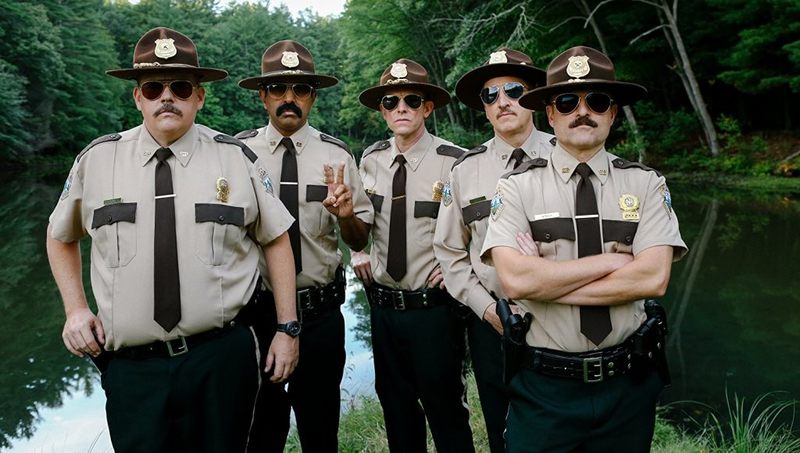
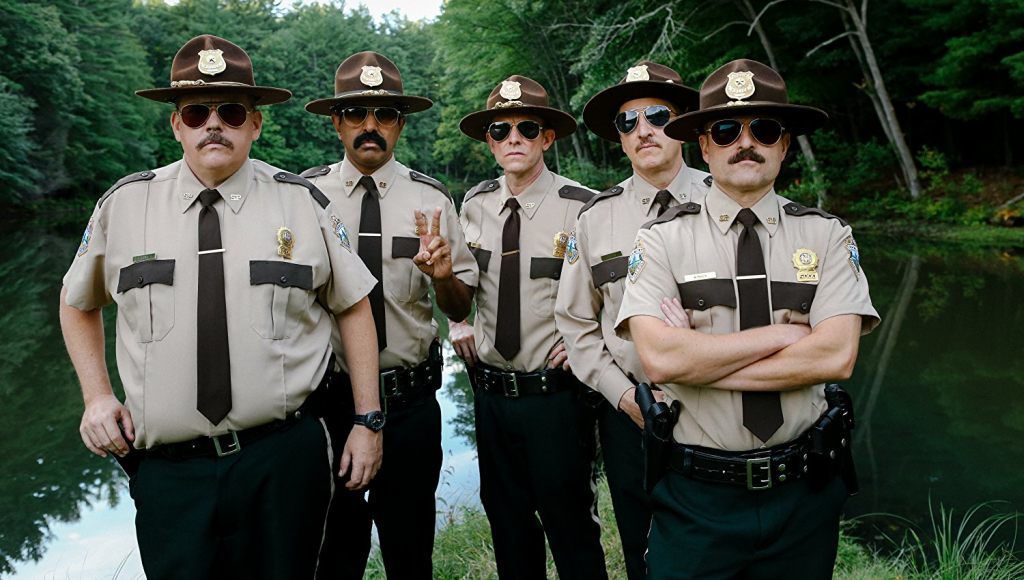
When 2001's "Super Troopers" debuted, few knew who or what Broken Lizard was. The comedy troupe was offered mainstream exposure with their second feature, and while the movie managed to find a smaller audience during its initial theatrical run, it grew into a cult sensation when issued on DVD, inspiring the Lizards to consider a sequel. Other pictures were produced in the aftermath of "Super Troopers" (including "Club Dread" and "Beerfest"), but a proper follow-up never materialized. Now, 17 years later, Broken Lizard has finally returned to the source of their greatest success with "Super Troopers 2," a long-awaited continuation (opening April 20th) that reunites viewers to the pleasures of pranks, meow-laden law enforcement, and mustaches.
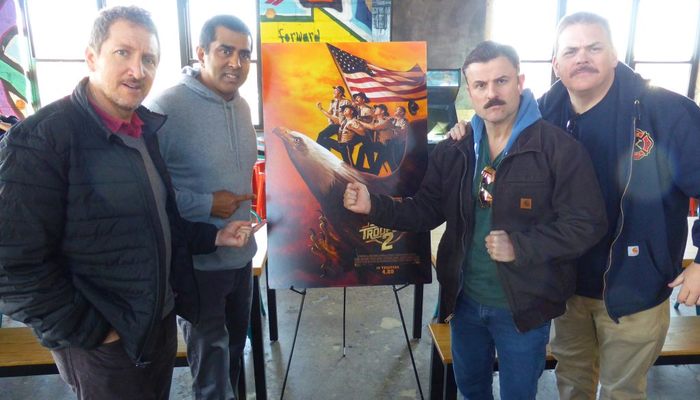
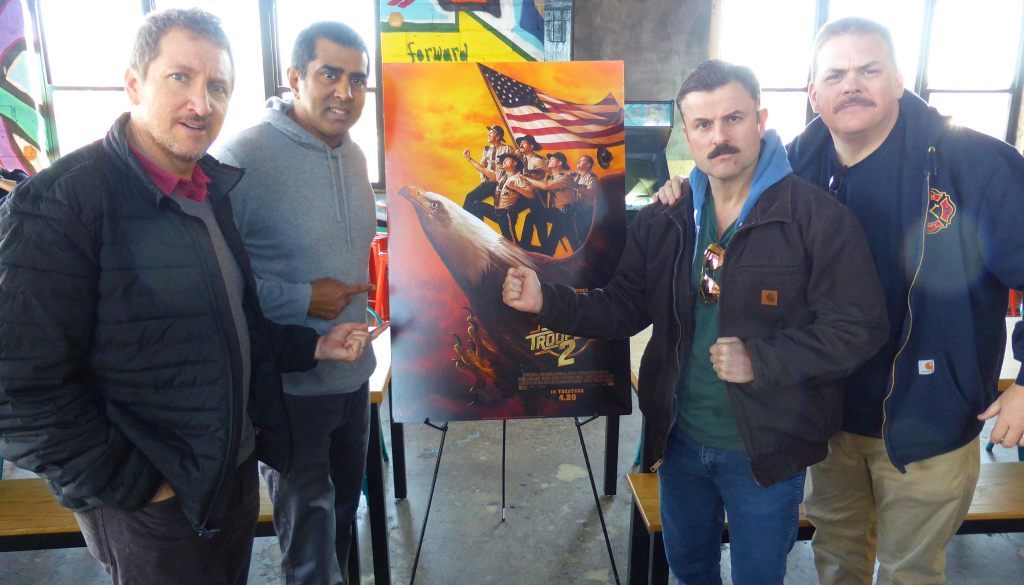
Recently, select members of Broken Lizard visited the Midwest during their promotional tour for "Super Troopers 2," sitting down for a roundtable interview to discuss their latest endeavor. The conversation features Broken Lizard members Steve Lemme, Kevin Heffernan, Jay Chandrasekhar, and Paul Soter.
Question (Blu-ray.com): The theatrical release of "Super Troopers" does business, and the home video release explodes, so why does Broken Lizard need to turn to crowdfunding to finance the sequel?
Paul Soter: 95% of the people who saw the movie didn't see it in a theater. So, we can go to 20th Century Fox all day long and say, "We go out and people are screaming about the sequel," and they're like, "We don't believe you." It can do all the home entertainment it wants, but the person writing that check is a theatrical person, so they don't give a sh-- how much home entertainment it did.
Kevin Heffernan: With home entertainment, it was a DVD market, and that doesn't exist anymore. I think they're still trying to figure out how to fill that revenue. Since we were the "DVD guys," we don't necessarily fit that box, in their minds. There was a hesitancy to it.
Steve Lemme: And some time had passed. We approached them in 2008 with an idea, slowly negotiating, but they weren't coming up with the money. They finally said, "We'll distribute it, but you guys have to raise the money." We found the financiers were a little lukewarm on it too because time had passed and the DVD market didn't exist anymore, so it actually turned out to be our only option. And so we found this guy Ivan Askwith, who did "Veronica Mars" and "Reading Rainbow," and we pitched him the idea and he put together a really great campaign. The successful campaign showed the studio that the fans were still out there, and they started to get excited about it again.
Q: What was the crowdfunding number again?
Soter: 54,000 people.
Jay Chandrasekhar: Which was surprising, because it could've been, you know, a hundred. Maybe people were like, "We liked the first movie, but we're not going to pay for the second one." And if that had happened, the movie would've never come out.
Soter: 54,000 is a lot of people, but you still need millions of people to see a movie. It went a long way, and when we were on set, we took photos of the slate and the first photo of us in uniform and put it up on Facebook, and we're getting two or three million likes a day. That loosened up things with the studio even more. We didn't have those ways of quantifying that with the first movie. We're lucky now and that's the kind of thing we're able to do to demonstrate that there's hopefully an audience ready to see the second one.
Lemme: It's nerve-racking because everything really does rest upon the shoulders of the opening weekend of this movie. They put the trailer out there and it got 50 million views in one week, which is an incredible number. I wish we could relax and say, "Yeah, okay, those number track with 'Thor: Ragnarok' and the 'Guardians of the Galaxy' sequel." It sounds amazing, but we're so shell-shocked and have been kicked around a little bit by the industry, so who knows what's going to happen. It's a terrifying time, but the movie turned out great and people seem to enjoy it, so hopefully that'll translate.
Q: So you shot the film from 2015-2017, and a lot of sh-- happened, especially issues with police nowadays, how do you guys respond to that with your filmmaking and script process?
Heffernan: We do what we do, basically. Our philosophy is always that we want the audience to feel they're with a bunch of good guys that you want to hang out with. Whether we're cops or guys in a Beerfest, or a horror movie, that's always the process, so we bring that philosophy. I think it resonates. With the live shows and making movies, our audience is always filled with cops and they're filled with stoners, and they're all sitting there laughing at the same thing. And it's a great thing to see all those people out there coming together and finding common ground of laughter, and that's the way we want to approach the whole movie.
Soter: Going through and writing things like pullovers and where cops are fu----- with people, yeah certainly it was something that wasn't in our head for the first one, but there's a certain sensitivity this time. Thinking, "Okay, this is an issue now. Let's keep our eye on it."
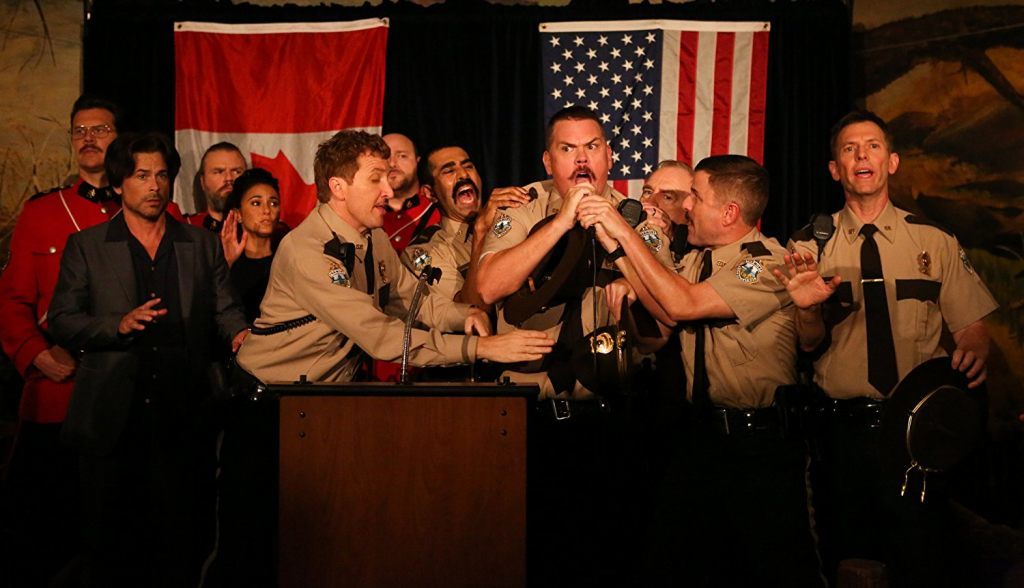
Lemme: We don't try to make any political statements, which is the fun part about the movie, because there's no real tension between Canada and the United States.
Heffernan: Says you!
Lemme: Given the current state of affairs with the national discourse and politics, this movie could be something that we really need. I think people just need to laugh and have a good time right now. Not take things so seriously.
Q (Blu-ray.com): There were over 30 drafts of the screenplay completed, what were some of the discarded ideas?
Heffernan: There were a lot of pullover ideas, but they didn't quite fit the script because now we're this occupying force in another land, and they seemed to be a little mean and abusive at times.
Lemme: They weren't bred out of boredom. In the first movie, we're entertaining ourselves in a good-natured way by doing the pullovers.
Heffernan: Now we're attacking Canadians. We tried to avoid that. We came up with the conceit of us impersonating them and making them look bad, just to screw around with them. When we started, we wanted really great, funny pullovers, and it became harder to figure out how to fit them into the script without looking like as------.
Lemme: The cold open was something that we thought about a lot. For the fans, the cold open of "Super Troopers" is considered the best scene in the movie, and I don't necessarily disagree with that, but we were really conscious of trying to at least match that and come up with something big.
Q: Since it's been 17 years since the release of the first movie, how do you expect to reach a new generation of teenagers with the sequel?
Heffernan: That's the trick. It seems like the movie is generational. We have so many interactions now where their uncles and father showed them the movie, and it seems like there are still kids in college who love the first movie. It seems like it's still on the radar.
Soter: The nice thing about the success of the first one was that it was so grassroots. It's not that there was this hit movie in 2002 and how do you remember that, but always that it took years and years of people being like, "I've got this DVD and I'm going to show it to my friends" or "Some guy in college grabbed me and told me to watch this movie." It was passed down. It seems like kids get to certain age, especially in college, and it feels like you get brought in at some point, get indoctrinated almost. We'd like to think they're out there, and those are the people approaching us on the street screaming about the sequel. We'll see if they show up.
Heffernan: Lemme's big on Instagram too.
Lemme: IG. We call it IG.
Q: I know what state I was in when I first saw the movie at college.
Lemme: On drugs.
Q: What do you think it was about that movie that resonated with people not necessarily known for their short-term memory?
Chandrasekhar: We are and were major stoners. We smoked a lot of grass back then. It's not quite Rastafarian, but we use it to unlock the joke machine. We organize these writing meetings that are sober, and we figure out the story and structure and where it's all going, A to Z, and then we get high and write jokes. I think the audience recognizes that, and they're in the same state of mind.
Lemme: I also think there are five personalities in the group, and some people like wordplay, and others like physical humor, and some dirty jokes. If it's making all of us laugh, then it's going in the script.
Soter: By the time we made the first one, we had already been best friends for ten years. It felt like you were watching friends. Guys trying to crack each other up. The organic chemistry is what appealed to people.
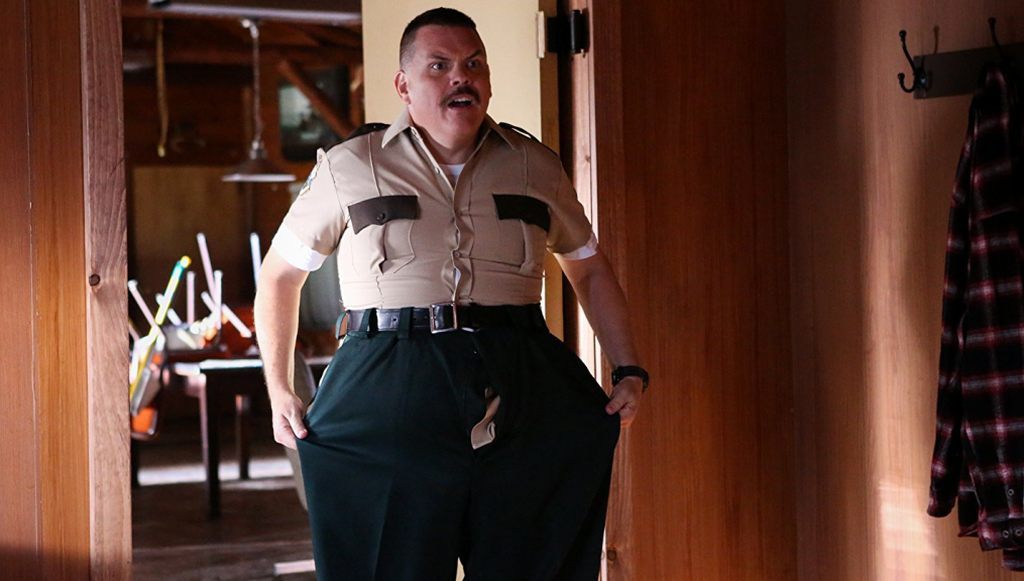
Lemme: I think the character of Farva is relatable. I know that's shocking, but people come up to us and say, "Oh, we've got a guy like that" or "We work with a guy like that." Everyone has got their own Farva, and it seems realistic to people.
Q: Which one would you say was easier to write, and do you prefer the first or the second movie?
Chandrasekhar: The second one was easier to write because we know how to write movies now. Back then, we were still testing out theories on how to write films and thinking, "Do you need to be in the three-act structure or not?" We didn't think we needed to be, but I've come to realize I was dead wrong. Now we write a three-act structure, try to give it some twists and turns, and hang jokes on it. It's a lot easier now.
Soter: We built the world already, we built the characters. It wasn't a great strain to think, "What would Farva say in this situation?" We know these guys. We wind them all up and they start talking.
Lemme: The characters are the hardest thing to write. When you're writing a script, you're figuring out who these people are, changing their personalities all the time. In this case, when they're already set in stone for you, it's much easier.
Chandrasekhar: In terms of which one is better, the filmmaking, the lighting, and the costumes are all better in the second one. It doesn't really matter. It matters how the audience experiences the movie. The first one they experienced with their friends, in groups. In order for this one to have the same impact we have to figure out how to do that again.
Lemme: We also love all of our movies. They are very much like our children, so we don't play favorites.
Q (Blu-ray.com): You mentioned recently on the Chewin' It Podcast that there's already an outline for "Super Troopers 3." What is the future for the franchise?
Heffernan: We'll see what happens on 4/20. If it's successful, the future will be bright. If not, the decision will be made for us. We've spent some time thinking about what the next step is, and just opening up the characters for this one made it funny to think about what could happen in the next one. We've started batting those ideas around. We have an outline, and we'll start putting it together with hopes of success.
Soter: We can't work like the first one where it takes five years to finally come around to it. It's a different equation now, and it's all about that opening weekend. That's why they chose 4/20 and the studio gets that too. It's about getting people to watch a different way then they watched the first one, by making that weekend an event.
"Super Troopers 2" opens on April 20th at theaters everywhere. Blu-ray.com's review of the film can be found here .
Recently, select members of Broken Lizard visited the Midwest during their promotional tour for "Super Troopers 2," sitting down for a roundtable interview to discuss their latest endeavor. The conversation features Broken Lizard members Steve Lemme, Kevin Heffernan, Jay Chandrasekhar, and Paul Soter.
Question (Blu-ray.com): The theatrical release of "Super Troopers" does business, and the home video release explodes, so why does Broken Lizard need to turn to crowdfunding to finance the sequel?
Paul Soter: 95% of the people who saw the movie didn't see it in a theater. So, we can go to 20th Century Fox all day long and say, "We go out and people are screaming about the sequel," and they're like, "We don't believe you." It can do all the home entertainment it wants, but the person writing that check is a theatrical person, so they don't give a sh-- how much home entertainment it did.
Kevin Heffernan: With home entertainment, it was a DVD market, and that doesn't exist anymore. I think they're still trying to figure out how to fill that revenue. Since we were the "DVD guys," we don't necessarily fit that box, in their minds. There was a hesitancy to it.
Steve Lemme: And some time had passed. We approached them in 2008 with an idea, slowly negotiating, but they weren't coming up with the money. They finally said, "We'll distribute it, but you guys have to raise the money." We found the financiers were a little lukewarm on it too because time had passed and the DVD market didn't exist anymore, so it actually turned out to be our only option. And so we found this guy Ivan Askwith, who did "Veronica Mars" and "Reading Rainbow," and we pitched him the idea and he put together a really great campaign. The successful campaign showed the studio that the fans were still out there, and they started to get excited about it again.
Q: What was the crowdfunding number again?
Soter: 54,000 people.
Jay Chandrasekhar: Which was surprising, because it could've been, you know, a hundred. Maybe people were like, "We liked the first movie, but we're not going to pay for the second one." And if that had happened, the movie would've never come out.
Soter: 54,000 is a lot of people, but you still need millions of people to see a movie. It went a long way, and when we were on set, we took photos of the slate and the first photo of us in uniform and put it up on Facebook, and we're getting two or three million likes a day. That loosened up things with the studio even more. We didn't have those ways of quantifying that with the first movie. We're lucky now and that's the kind of thing we're able to do to demonstrate that there's hopefully an audience ready to see the second one.
Lemme: It's nerve-racking because everything really does rest upon the shoulders of the opening weekend of this movie. They put the trailer out there and it got 50 million views in one week, which is an incredible number. I wish we could relax and say, "Yeah, okay, those number track with 'Thor: Ragnarok' and the 'Guardians of the Galaxy' sequel." It sounds amazing, but we're so shell-shocked and have been kicked around a little bit by the industry, so who knows what's going to happen. It's a terrifying time, but the movie turned out great and people seem to enjoy it, so hopefully that'll translate.
Q: So you shot the film from 2015-2017, and a lot of sh-- happened, especially issues with police nowadays, how do you guys respond to that with your filmmaking and script process?
Heffernan: We do what we do, basically. Our philosophy is always that we want the audience to feel they're with a bunch of good guys that you want to hang out with. Whether we're cops or guys in a Beerfest, or a horror movie, that's always the process, so we bring that philosophy. I think it resonates. With the live shows and making movies, our audience is always filled with cops and they're filled with stoners, and they're all sitting there laughing at the same thing. And it's a great thing to see all those people out there coming together and finding common ground of laughter, and that's the way we want to approach the whole movie.
Soter: Going through and writing things like pullovers and where cops are fu----- with people, yeah certainly it was something that wasn't in our head for the first one, but there's a certain sensitivity this time. Thinking, "Okay, this is an issue now. Let's keep our eye on it."
Lemme: We don't try to make any political statements, which is the fun part about the movie, because there's no real tension between Canada and the United States.
Heffernan: Says you!
Lemme: Given the current state of affairs with the national discourse and politics, this movie could be something that we really need. I think people just need to laugh and have a good time right now. Not take things so seriously.
Q (Blu-ray.com): There were over 30 drafts of the screenplay completed, what were some of the discarded ideas?
Heffernan: There were a lot of pullover ideas, but they didn't quite fit the script because now we're this occupying force in another land, and they seemed to be a little mean and abusive at times.
Lemme: They weren't bred out of boredom. In the first movie, we're entertaining ourselves in a good-natured way by doing the pullovers.
Heffernan: Now we're attacking Canadians. We tried to avoid that. We came up with the conceit of us impersonating them and making them look bad, just to screw around with them. When we started, we wanted really great, funny pullovers, and it became harder to figure out how to fit them into the script without looking like as------.
Lemme: The cold open was something that we thought about a lot. For the fans, the cold open of "Super Troopers" is considered the best scene in the movie, and I don't necessarily disagree with that, but we were really conscious of trying to at least match that and come up with something big.
Q: Since it's been 17 years since the release of the first movie, how do you expect to reach a new generation of teenagers with the sequel?
Heffernan: That's the trick. It seems like the movie is generational. We have so many interactions now where their uncles and father showed them the movie, and it seems like there are still kids in college who love the first movie. It seems like it's still on the radar.
Soter: The nice thing about the success of the first one was that it was so grassroots. It's not that there was this hit movie in 2002 and how do you remember that, but always that it took years and years of people being like, "I've got this DVD and I'm going to show it to my friends" or "Some guy in college grabbed me and told me to watch this movie." It was passed down. It seems like kids get to certain age, especially in college, and it feels like you get brought in at some point, get indoctrinated almost. We'd like to think they're out there, and those are the people approaching us on the street screaming about the sequel. We'll see if they show up.
Heffernan: Lemme's big on Instagram too.
Lemme: IG. We call it IG.
Q: I know what state I was in when I first saw the movie at college.
Lemme: On drugs.
Q: What do you think it was about that movie that resonated with people not necessarily known for their short-term memory?
Chandrasekhar: We are and were major stoners. We smoked a lot of grass back then. It's not quite Rastafarian, but we use it to unlock the joke machine. We organize these writing meetings that are sober, and we figure out the story and structure and where it's all going, A to Z, and then we get high and write jokes. I think the audience recognizes that, and they're in the same state of mind.
Lemme: I also think there are five personalities in the group, and some people like wordplay, and others like physical humor, and some dirty jokes. If it's making all of us laugh, then it's going in the script.
Soter: By the time we made the first one, we had already been best friends for ten years. It felt like you were watching friends. Guys trying to crack each other up. The organic chemistry is what appealed to people.
Lemme: I think the character of Farva is relatable. I know that's shocking, but people come up to us and say, "Oh, we've got a guy like that" or "We work with a guy like that." Everyone has got their own Farva, and it seems realistic to people.
Q: Which one would you say was easier to write, and do you prefer the first or the second movie?
Chandrasekhar: The second one was easier to write because we know how to write movies now. Back then, we were still testing out theories on how to write films and thinking, "Do you need to be in the three-act structure or not?" We didn't think we needed to be, but I've come to realize I was dead wrong. Now we write a three-act structure, try to give it some twists and turns, and hang jokes on it. It's a lot easier now.
Soter: We built the world already, we built the characters. It wasn't a great strain to think, "What would Farva say in this situation?" We know these guys. We wind them all up and they start talking.
Lemme: The characters are the hardest thing to write. When you're writing a script, you're figuring out who these people are, changing their personalities all the time. In this case, when they're already set in stone for you, it's much easier.
Chandrasekhar: In terms of which one is better, the filmmaking, the lighting, and the costumes are all better in the second one. It doesn't really matter. It matters how the audience experiences the movie. The first one they experienced with their friends, in groups. In order for this one to have the same impact we have to figure out how to do that again.
Lemme: We also love all of our movies. They are very much like our children, so we don't play favorites.
Q (Blu-ray.com): You mentioned recently on the Chewin' It Podcast that there's already an outline for "Super Troopers 3." What is the future for the franchise?
Heffernan: We'll see what happens on 4/20. If it's successful, the future will be bright. If not, the decision will be made for us. We've spent some time thinking about what the next step is, and just opening up the characters for this one made it funny to think about what could happen in the next one. We've started batting those ideas around. We have an outline, and we'll start putting it together with hopes of success.
Soter: We can't work like the first one where it takes five years to finally come around to it. It's a different equation now, and it's all about that opening weekend. That's why they chose 4/20 and the studio gets that too. It's about getting people to watch a different way then they watched the first one, by making that weekend an event.
"Super Troopers 2" opens on April 20th at theaters everywhere. Blu-ray.com's review of the film can be found here .