Criterion Announces August Titles
HomeCriterion Announces August Titles
Posted May 18, 2015 05:28 PM by Webmaster
The Criterion Collection has announced five new titles for Blu-ray release in August: On August 4, it will release Jules Dassin's Night and the City (1950). On August 11, it will release Karel Reisz's The French Lieutenant's Woman (1981). On August 18, it will release Brian De Palma's Dressed to Kill (1980) and François Truffaut's Day for Night (1980). And on August 25, it will release Jean-Pierre Dardenne and Luc Dardenne's Two Days, One Night (2014).
On August 11, the Criterion Collection will also release on DVD Eclipse Series 43: Agnès Varda in California.
Night and the City
Two-bit hustler Harry Fabian (Richard Widmark) longs for a life of ease and plenty. Trailed by an inglorious history of go-nowhere schemes, he tries to hatch a lucrative plan with a famous wrestler. But there is no easy money in this underworld of shifting alliances, bottomless graft, and pummeled flesh—and Fabian soon learns the horrible price of his ambition. Luminously shot in the streets of London while Hollywood blacklisters back home were closing in on director Jules Dassin, Night and the City, also starring Gene Tierney, is film noir of the first order, and one of Dassin's crowning achievements.
Special Features:
An astounding array of talent came together for the big-screen adaptation of John Fowles's novel The French Lieutenant's Woman, a postmodern masterpiece that had been considered unfilmable. With an ingenious script by the Nobel Prize–winning playwright Harold Pinter, British New Wave trailblazer Karel Reisz transforms Fowles's tale of scandalous romance into an arresting, hugely entertaining movie about cinema. In Pinter's reimagining, Jeremy Irons and Meryl Streep star in parallel narratives, as a Victorian-era gentleman and the social outcast he risks everything to love, and as the contemporary actors cast in those roles and immersed in their own forbidden affair. The French Lieutenant's Woman, shot by the consummate cinematographer Freddie Francis and scored by the venerated composer and conductor Carl Davis, is a beguiling, intellectually nimble feat of filmmaking, starring a pair of legendary actors in early leading roles.
Special Features:
Brian De Palma ascended to the highest ranks of American suspense filmmaking with this virtuoso, explicit erotic thriller. At once tongue-in-cheek and scary as hell, Dressed to Kill revolves around the grisly murder of a woman in Manhattan, and what happens when her psychiatrist, her brainiac teenage son, and the prostitute who witnessed the crime try to piece together what happened while the killer remains at large. With its masterfully executed scenes of horror, voluptuous camera work, and passionate score, Dressed to Kill is a veritable symphony of terror, enhanced by vivid performances by Angie Dickinson, Michael Caine, and Nancy Allen.
Special Features:
This loving farce from François Truffaut about the joys and turbulence of moviemaking is one of his most beloved films. Truffaut himself appears as the harried director of a frivolous melodrama, the shooting of which is plagued by the whims of a neurotic actor (Jean-Pierre Léaud); an aging but still forceful Italian diva (Valentina Cortese); and a British ingenue haunted by personal scandal (Jacqueline Bisset). An irreverent paean to the prosaic craft of cinema as well as a delightful human comedy about the pitfalls of love and sex, Day for Night is buoyed by robust performances and a sparkling score by the legendary Georges Delerue.
Special Features:
Oscar winner Marion Cotillard received another nomination for her searing, deeply felt performance as a working-class woman desperate to hold on to her factory job, in this gripping film from master Belgian directors Jean-Pierre and Luc Dardenne. Cotillard is Sandra, a wife and mother who suffers from depression and discovers that, while she was home on sick leave, a majority of her coworkers voted in favor of her being fired rather than give up their annual bonuses. She then spends a Saturday and Sunday visiting them each in turn, to try to convince them to change their minds. From this simple premise, the Dardennes render a powerful, humanist drama about the importance of community in an increasingly impersonal world.
Special Features:
The legendary French filmmaker Agnès Varda, whose remarkable career began in the 1950s and has continued into the twenty-first century, produced some of her most provocative works while living on the West Coast of the United States. After temporarily relocating from France to California in the late sixties with her husband, Jacques Demy, so that he could make his first Hollywood film, Varda became entranced by the politics, youth culture, and sunshine of the San Francisco and Los Angeles areas, and created documentary explorations and fictional narratives—sometimes within the same film. She returned a decade later, and made more fascinating portraits of outsiderness. Her five revealing, entertaining California films, encompassing shorts and features, are collected in this set, which demonstrates that Varda was as deft an artist in unfamiliar terrain as she was on her own turf.
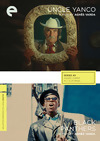
Uncle Yanco (1967)
In her effervescent first California film, Agnès Varda delves into her own family history. The short documentary Uncle Yanco features Varda tracking down a Greek emigrant relative she's never met, discovering an artist and kindred soul living a bohemian life in Sausalito.
Black Panthers (1968)
Agnès Varda turns her camera on an Oakland demonstration against the imprisonment of activist and Black Panthers cofounder Huey P. Newton. In addition to demonstrating Varda's fascination with her adopted surroundings and her empathetic humanity, this perceptive short is also a powerful and political sign of the times.
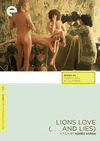
Lions Love (. . . and Lies) (1969)
Agnès Varda goes to Los Angeles, taking New York counterculture with her. In a rented house in the sun-soaked Hollywood hills, a woman and two men—Viva, of Warhol Factory fame, and James Rado and Gerome Ragni, who created and starred in the rock musical Hair—delight in each others' bodies while musing on love, stardom, and politics. They are soon joined by underground director Shirley Clarke, playing herself as well as functioning as a surrogate for Varda. Lions Love (. . . and Lies) is a metacinematic inquiry into the alternating currents of whimsy and tragedy that typified late sixties America.
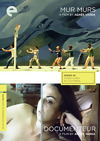
Mur murs (1980)
After returning to Los Angeles from France in 1979, Agnès Varda created this kaleidoscopic documentary about the striking murals that decorate the city. Bursting with color and vitality, Mur Murs is as much an invigorating study of community and diversity as it is an essential catalog of unusual public art.
Documenteur (1981)
This small-scale fiction about a divorced mother and her child (played by Agnès Varda's own son) leading a quiet existence on L.A.'s margins was made directly after Mur Murs, and though Documenteur is different in form and tone from that film, the two are complexly interwoven, with overlapping images and ideas. This meditative portrait of urban isolation overflows with subtle visual poetry.
On August 11, the Criterion Collection will also release on DVD Eclipse Series 43: Agnès Varda in California.
Night and the City
Two-bit hustler Harry Fabian (Richard Widmark) longs for a life of ease and plenty. Trailed by an inglorious history of go-nowhere schemes, he tries to hatch a lucrative plan with a famous wrestler. But there is no easy money in this underworld of shifting alliances, bottomless graft, and pummeled flesh—and Fabian soon learns the horrible price of his ambition. Luminously shot in the streets of London while Hollywood blacklisters back home were closing in on director Jules Dassin, Night and the City, also starring Gene Tierney, is film noir of the first order, and one of Dassin's crowning achievements.
Special Features:
- New 4K digital restoration, with uncompressed monaural soundtrack on the Blu-ray
- Alternate presentation of the 101-minute British version of the film
- Audio commentary from 2005 with film scholar Glenn Erickson
- Interview with director Jules Dassin from 2005
- Excerpts from a 1972 televison interview with Dassin
- Comparison of the scores for the British and American versions of the film
- Trailer
- PLUS: An essay by film scholar Paul Arthur
An astounding array of talent came together for the big-screen adaptation of John Fowles's novel The French Lieutenant's Woman, a postmodern masterpiece that had been considered unfilmable. With an ingenious script by the Nobel Prize–winning playwright Harold Pinter, British New Wave trailblazer Karel Reisz transforms Fowles's tale of scandalous romance into an arresting, hugely entertaining movie about cinema. In Pinter's reimagining, Jeremy Irons and Meryl Streep star in parallel narratives, as a Victorian-era gentleman and the social outcast he risks everything to love, and as the contemporary actors cast in those roles and immersed in their own forbidden affair. The French Lieutenant's Woman, shot by the consummate cinematographer Freddie Francis and scored by the venerated composer and conductor Carl Davis, is a beguiling, intellectually nimble feat of filmmaking, starring a pair of legendary actors in early leading roles.
Special Features:
- New 2K digital restoration, with uncompressed monaural soundtrack on the Blu-ray
- New introduction by film scholar Ian Christie
- New interviews with actors Jeremy Irons and Meryl Streep, editor John Bloom, and composer Carl Davis
- Episode of The South Bank Show from 1981 featuring director Karel Reisz, novelist John Fowles, and screenwriter Harold Pinter
- Trailer
- PLUS: An essay by film scholar Lucy Bolton
Brian De Palma ascended to the highest ranks of American suspense filmmaking with this virtuoso, explicit erotic thriller. At once tongue-in-cheek and scary as hell, Dressed to Kill revolves around the grisly murder of a woman in Manhattan, and what happens when her psychiatrist, her brainiac teenage son, and the prostitute who witnessed the crime try to piece together what happened while the killer remains at large. With its masterfully executed scenes of horror, voluptuous camera work, and passionate score, Dressed to Kill is a veritable symphony of terror, enhanced by vivid performances by Angie Dickinson, Michael Caine, and Nancy Allen.
Special Features:
- New, restored 4K digital transfer of director Brian De Palma's preferred unrated version, approved by the director, with uncompressed monaural soundtrack on the Blu-ray
- New interviews with actor Nancy Allen, producer George Litto, composer Pino Donaggio, shower-scene body double Victoria Lynn Johnson, and poster photographic art director Stephen Sayadian
- New profile of cinematographer Ralf Bode, featuring filmmaker Michael Apted
- The Making of "Dressed to Kill," a 2001 documentary featuring De Palma
- Interview with actor-director Keith Gordon from 2001
- Video pieces from 2001 about the different versions of the film and the cuts made to avoid an X rating
- Gallery of storyboards by De Palma
- Trailer
- PLUS: An essay by critic Michael Koresky
This loving farce from François Truffaut about the joys and turbulence of moviemaking is one of his most beloved films. Truffaut himself appears as the harried director of a frivolous melodrama, the shooting of which is plagued by the whims of a neurotic actor (Jean-Pierre Léaud); an aging but still forceful Italian diva (Valentina Cortese); and a British ingenue haunted by personal scandal (Jacqueline Bisset). An irreverent paean to the prosaic craft of cinema as well as a delightful human comedy about the pitfalls of love and sex, Day for Night is buoyed by robust performances and a sparkling score by the legendary Georges Delerue.
Special Features:
- New 2K digital restoration, with uncompressed monaural soundtrack on the Blu-ray
- New visual essay by filmmaker :: kogonada
- New interview with cinematographer Pierre-William Glenn
- New interview with film scholar Dudley Andrew
- Documentary on the film from 2003, featuring film scholar Annette Insdorf
- Archival interviews with director François Truffaut; editor Yann Dedet; and actors Jean-Pierre Aumont, Nathalie Baye, Jacqueline Bisset, Dani, and Bernard Menez
- Television footage of Truffaut on the film's set in 1972
- Trailer
- New English subtitle translation
- PLUS: An essay by critic David Cairns
Oscar winner Marion Cotillard received another nomination for her searing, deeply felt performance as a working-class woman desperate to hold on to her factory job, in this gripping film from master Belgian directors Jean-Pierre and Luc Dardenne. Cotillard is Sandra, a wife and mother who suffers from depression and discovers that, while she was home on sick leave, a majority of her coworkers voted in favor of her being fired rather than give up their annual bonuses. She then spends a Saturday and Sunday visiting them each in turn, to try to convince them to change their minds. From this simple premise, the Dardennes render a powerful, humanist drama about the importance of community in an increasingly impersonal world.
Special Features:
- New 2K digital transfer, approved by directors Jean-Pierre and Luc Dardenne, with DTS-HD Master Audio 5.1 soundtrack on the Blu-ray
- New interviews with the Dardennes and actors Marion Cotillard and Fabrizio Rongione
- When Léon M.'s Boat Went Down the Meuse for the First Time (1979), a forty-five minute documentary by the Dardennes, featuring a new introduction by the directors
- New tour of the film's key locations with the directors
- Trailer
- PLUS: An essay by critic Girish Shambu
The legendary French filmmaker Agnès Varda, whose remarkable career began in the 1950s and has continued into the twenty-first century, produced some of her most provocative works while living on the West Coast of the United States. After temporarily relocating from France to California in the late sixties with her husband, Jacques Demy, so that he could make his first Hollywood film, Varda became entranced by the politics, youth culture, and sunshine of the San Francisco and Los Angeles areas, and created documentary explorations and fictional narratives—sometimes within the same film. She returned a decade later, and made more fascinating portraits of outsiderness. Her five revealing, entertaining California films, encompassing shorts and features, are collected in this set, which demonstrates that Varda was as deft an artist in unfamiliar terrain as she was on her own turf.
Uncle Yanco (1967)
In her effervescent first California film, Agnès Varda delves into her own family history. The short documentary Uncle Yanco features Varda tracking down a Greek emigrant relative she's never met, discovering an artist and kindred soul living a bohemian life in Sausalito.
Black Panthers (1968)
Agnès Varda turns her camera on an Oakland demonstration against the imprisonment of activist and Black Panthers cofounder Huey P. Newton. In addition to demonstrating Varda's fascination with her adopted surroundings and her empathetic humanity, this perceptive short is also a powerful and political sign of the times.
Lions Love (. . . and Lies) (1969)
Agnès Varda goes to Los Angeles, taking New York counterculture with her. In a rented house in the sun-soaked Hollywood hills, a woman and two men—Viva, of Warhol Factory fame, and James Rado and Gerome Ragni, who created and starred in the rock musical Hair—delight in each others' bodies while musing on love, stardom, and politics. They are soon joined by underground director Shirley Clarke, playing herself as well as functioning as a surrogate for Varda. Lions Love (. . . and Lies) is a metacinematic inquiry into the alternating currents of whimsy and tragedy that typified late sixties America.
Mur murs (1980)
After returning to Los Angeles from France in 1979, Agnès Varda created this kaleidoscopic documentary about the striking murals that decorate the city. Bursting with color and vitality, Mur Murs is as much an invigorating study of community and diversity as it is an essential catalog of unusual public art.
Documenteur (1981)
This small-scale fiction about a divorced mother and her child (played by Agnès Varda's own son) leading a quiet existence on L.A.'s margins was made directly after Mur Murs, and though Documenteur is different in form and tone from that film, the two are complexly interwoven, with overlapping images and ideas. This meditative portrait of urban isolation overflows with subtle visual poetry.