Kino Lorber to Expand Pioneers of African-American Cinema
HomeKino Lorber to Expand Pioneers of African-American Cinema
Posted March 3, 2015 02:22 PM by Webmaster
Inspired by the overwhelming response to its current Kickstarter campaign, Kino Lorber will expand its landmark restoration for theatrical and Blu-ray/DVD release,
PIONEERS OF AFRICAN-AMERICAN CINEMA. Originally announced as being comprised of eight feature films (plus shorts, fragments, and new interviews) in a four-disc set, PIONEERS will be expanded to include twelve features, and will be released on video as five discs with even more bonus content.
Curated by historians Charles Musser and Jacqueline Stewart, the set will include such landmark films as Oscar Micheaux's Within Our Gates, Spencer Williams's The Blood of Jesus, the Norman Manufacturing Company's The Flying Ace, The Scar of Shame, and Micheaux's The Symbol of the Unconquered (featuring a score by legendary jazz drummer Max Roach), among others (see below for a partial list of titles). These films -- both the features, and the shorts and fragments -- offer an invaluable survey of the too often underrepresented but historically significant contributions to independent cinema from early African-American filmmakers.
To support the additional cost of archival access, mastering, and scoring, Kino Lorber has announced a "stretch goal" for its Kickstarter campaign, and will now aim to reach $60,000 before the campaign ends on March 21.
Launched on February 4, the Kickstarter campaign met its initial goal of $35,000 in just more than a week. "The message we take away from this is that the public has been hungry for a collection like this," says Kino Lorber CEO Richard Lorber, "To pay them back for their support, we're going to double down and give them an unforgettable box set -- one we believe will offer a significant contribution to film history."
In the remaining days of the campaign, Kino Lorber will announce additional films and incentives for contributors. Please visit the Kickstarter campaign page for updates.
Among the films selected by series curators Charles Musser and Jacqueline Stewart are:
*The Blood of Jesus (1941) Spencer Williams's directorial debut -- a surreal religious parable, selected to the National Film Registry in 1991. The film was restored by the Tyler, Texas Black Film Collection of Southern Methodist University, with funding from the National Film Preservation Foundation.
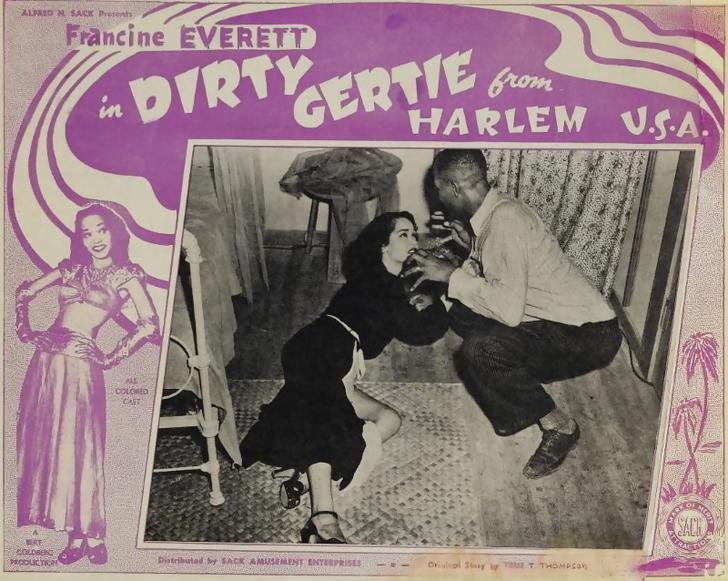
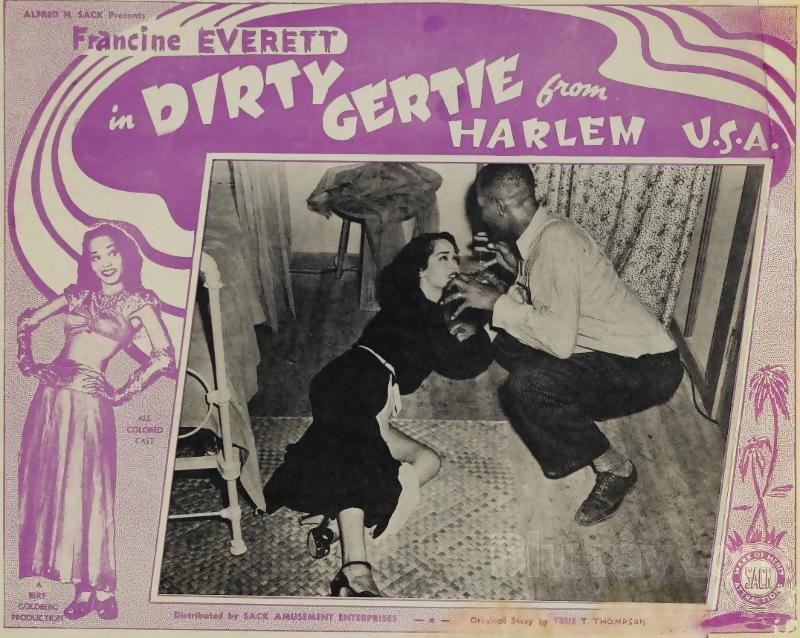
*Dirty Gertie from Harlem, U.S.A. (1946), Spencer Williams's musical adaptation of W.S. Maugham's "Miss Sadie Thompson." The film was preserved by Southern Methodist University from materials conserved by the George Eastman House, with funding from the Women's Film Preservation Fund (New York Women in Film and Television).
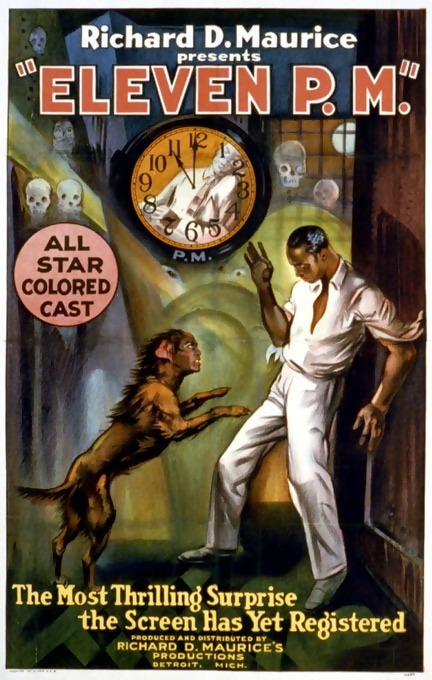
*Eleven P.M. (1928) A truly bizarre mixture of sentimentality, spirituality and the supernatural, Eleven P.M. follows an impoverished violinist who tries to protect a young girl from straying into a life of sin -- and features one of the most mind-boggling endings ever (the poster above provides a hint). Produced by the Maurice Film Company of Detroit, Michigan. Previously unavailable on video.
*The Flying Ace (1926) Conceived as an adventure serial for the "colored cast" market, The Flying Ace is an aviation-themed romance produced by the Florida-based Norman Film Manufacturing Company. This edition will be mastered in HD from 35mm elements preserved by the Library of Congress. Previously unavailable on video.
*The Girl from Chicago (1932) Oscar Micheaux's crime/romance/musical, in which a Mississippi woman becomes involved with an undercover agent and moves with him to Harlem (Library of Congress).
*The Scar of Shame: Produced by the Colored Players Film Corporation and released in 1929, The Scar of Shame dramatizes issues of class within African-American society. This new edition will include the newly rediscovered wedding sequence, missing from the version previously released on DVD.
* The Symbol of the Unconquered (1920) Perhaps the boldest film of the early African-American cinema was this film by Oscar Micheaux, that dared to confront the Ku Klux Klan. Previously unavailable on DVD, this edition will be mastered in HD from a 35mm film element preserved by the Museum of Modern Art and the Cinémathèque Royale de Belgique. It features a musical score by legendary jazz drummer Max Roach, courtesy of Turner Classic Movies.

* Within Our Gates: (1919) Considered the most influential of the early African-American filmmakers, Oscar Micheaux fearlessly confronted social issues of the day, unafraid of offending the sensibilities of the audience -- both white and black. Within Our Gates is Micheaux's masterpiece, a response to the Chicago Race Riot of 1919 and a purgative to the lingering aftertaste of D.W. Griffith's The Birth of a Nation. We will showcase the Library of Congress's acclaimed 1993 restoration, newly remastered in HD.
SHORTS / FRAGMENTS (all previously unavailable on video)
* Birthright (1939) Only three reels exist of one of Oscar Micheaux's last films (a remake of his own 1924 silent film). Preserved by the Library of Congress.
* By Right of Birth (1921) This fragment is the only film that survives from the Lincoln Motion Picture Company, one of the first and foremost producers of African-American films, co-founded by Hollywood actor Noble Johnson.
*Commandment Keeper Church: Later known for her novel Their Eyes Were Watching God, Zora Neale Hurston used a 16mm movie camera to document the social conventions and working conditions of African Americans in the deep South. Commandment Keeper Church, Beaufort, South Carolina, May 1940 is a 42-minute film that observes worship services among the Gullah people of Beaufort, South Carolina, in May, 1940. Selected for the National Film Registry in 2005, the footage will be synchronized with previously unreleased field recordings made by Hurston during her travels.
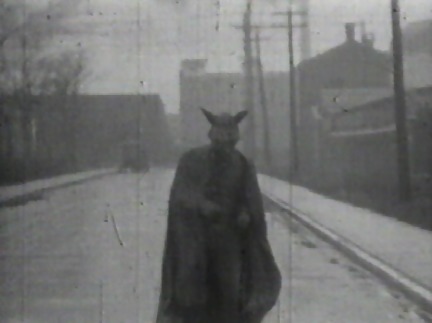
* Hellbound Train (1929) Produced by the husband-and-wife team of James and Eloyce Gist, and intended for screening in churches and meeting halls, Hellbound Train is a cinematic sermon in which the devil himself (complete with horns and a cape) leads the morally incautious down the tracks to perdition. The film is being restored by film historian Steve Torriano Berry, from 35 individual rolls of 16mm film.
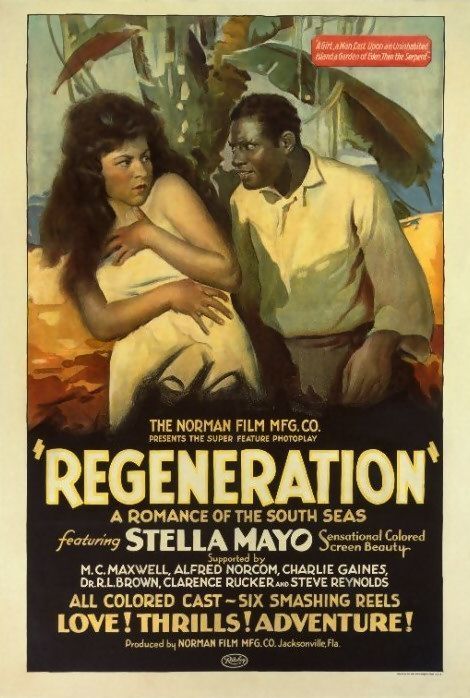
*Regeneration (1923) The single surviving reel of Richard Norman's heavily-censored South Seas drama. Preserved by the Library of Congress.
*Verdict Not Guilty (1930) This stylized, allegorical film was intended to be shown in churches prior to a sermon, and has the distinction of being the first film (co)-directed by an African-American woman, being made by the husband-and-wife team of James and Eloyce Gist. Previously unavailable on video.
(Announced titles are pending restoration and subject to change.)
Curated by historians Charles Musser and Jacqueline Stewart, the set will include such landmark films as Oscar Micheaux's Within Our Gates, Spencer Williams's The Blood of Jesus, the Norman Manufacturing Company's The Flying Ace, The Scar of Shame, and Micheaux's The Symbol of the Unconquered (featuring a score by legendary jazz drummer Max Roach), among others (see below for a partial list of titles). These films -- both the features, and the shorts and fragments -- offer an invaluable survey of the too often underrepresented but historically significant contributions to independent cinema from early African-American filmmakers.
To support the additional cost of archival access, mastering, and scoring, Kino Lorber has announced a "stretch goal" for its Kickstarter campaign, and will now aim to reach $60,000 before the campaign ends on March 21.
Launched on February 4, the Kickstarter campaign met its initial goal of $35,000 in just more than a week. "The message we take away from this is that the public has been hungry for a collection like this," says Kino Lorber CEO Richard Lorber, "To pay them back for their support, we're going to double down and give them an unforgettable box set -- one we believe will offer a significant contribution to film history."
In the remaining days of the campaign, Kino Lorber will announce additional films and incentives for contributors. Please visit the Kickstarter campaign page for updates.
Among the films selected by series curators Charles Musser and Jacqueline Stewart are:
*The Blood of Jesus (1941) Spencer Williams's directorial debut -- a surreal religious parable, selected to the National Film Registry in 1991. The film was restored by the Tyler, Texas Black Film Collection of Southern Methodist University, with funding from the National Film Preservation Foundation.
*Dirty Gertie from Harlem, U.S.A. (1946), Spencer Williams's musical adaptation of W.S. Maugham's "Miss Sadie Thompson." The film was preserved by Southern Methodist University from materials conserved by the George Eastman House, with funding from the Women's Film Preservation Fund (New York Women in Film and Television).
*Eleven P.M. (1928) A truly bizarre mixture of sentimentality, spirituality and the supernatural, Eleven P.M. follows an impoverished violinist who tries to protect a young girl from straying into a life of sin -- and features one of the most mind-boggling endings ever (the poster above provides a hint). Produced by the Maurice Film Company of Detroit, Michigan. Previously unavailable on video.
*The Flying Ace (1926) Conceived as an adventure serial for the "colored cast" market, The Flying Ace is an aviation-themed romance produced by the Florida-based Norman Film Manufacturing Company. This edition will be mastered in HD from 35mm elements preserved by the Library of Congress. Previously unavailable on video.
*The Girl from Chicago (1932) Oscar Micheaux's crime/romance/musical, in which a Mississippi woman becomes involved with an undercover agent and moves with him to Harlem (Library of Congress).
*The Scar of Shame: Produced by the Colored Players Film Corporation and released in 1929, The Scar of Shame dramatizes issues of class within African-American society. This new edition will include the newly rediscovered wedding sequence, missing from the version previously released on DVD.
* The Symbol of the Unconquered (1920) Perhaps the boldest film of the early African-American cinema was this film by Oscar Micheaux, that dared to confront the Ku Klux Klan. Previously unavailable on DVD, this edition will be mastered in HD from a 35mm film element preserved by the Museum of Modern Art and the Cinémathèque Royale de Belgique. It features a musical score by legendary jazz drummer Max Roach, courtesy of Turner Classic Movies.
* Within Our Gates: (1919) Considered the most influential of the early African-American filmmakers, Oscar Micheaux fearlessly confronted social issues of the day, unafraid of offending the sensibilities of the audience -- both white and black. Within Our Gates is Micheaux's masterpiece, a response to the Chicago Race Riot of 1919 and a purgative to the lingering aftertaste of D.W. Griffith's The Birth of a Nation. We will showcase the Library of Congress's acclaimed 1993 restoration, newly remastered in HD.
SHORTS / FRAGMENTS (all previously unavailable on video)
* Birthright (1939) Only three reels exist of one of Oscar Micheaux's last films (a remake of his own 1924 silent film). Preserved by the Library of Congress.
* By Right of Birth (1921) This fragment is the only film that survives from the Lincoln Motion Picture Company, one of the first and foremost producers of African-American films, co-founded by Hollywood actor Noble Johnson.
*Commandment Keeper Church: Later known for her novel Their Eyes Were Watching God, Zora Neale Hurston used a 16mm movie camera to document the social conventions and working conditions of African Americans in the deep South. Commandment Keeper Church, Beaufort, South Carolina, May 1940 is a 42-minute film that observes worship services among the Gullah people of Beaufort, South Carolina, in May, 1940. Selected for the National Film Registry in 2005, the footage will be synchronized with previously unreleased field recordings made by Hurston during her travels.
* Hellbound Train (1929) Produced by the husband-and-wife team of James and Eloyce Gist, and intended for screening in churches and meeting halls, Hellbound Train is a cinematic sermon in which the devil himself (complete with horns and a cape) leads the morally incautious down the tracks to perdition. The film is being restored by film historian Steve Torriano Berry, from 35 individual rolls of 16mm film.
*Regeneration (1923) The single surviving reel of Richard Norman's heavily-censored South Seas drama. Preserved by the Library of Congress.
*Verdict Not Guilty (1930) This stylized, allegorical film was intended to be shown in churches prior to a sermon, and has the distinction of being the first film (co)-directed by an African-American woman, being made by the husband-and-wife team of James and Eloyce Gist. Previously unavailable on video.
(Announced titles are pending restoration and subject to change.)