Kino Lorber Acquires Agnieszka Holland's Burning Bush
HomeKino Lorber Acquires Agnieszka Holland's Burning Bush
Posted January 16, 2014 04:42 PM by Webmaster
Kino Lorber announced today that it has acquired all U.S. rights to Agnieszka Holland's Burning Bush, the acclaimed film about Czech student Jan Palach, who set himself on fire to protest the Soviet clampdown during a period of political openness in Czechoslovakia after World War II. This major work of cinema is a timely historical prologue for democracy movements now sweeping the world.
Having lived in Czechoslovakia at the time these events took place, Polish director Agnieszka Holland, best known here for Europa Europa, a Golden Globe winner, and Angry Harvest, an Academy Award nominee, made Burning Bush as a three-part, 234 minute HBO Europe miniseries, and subsequently edited it herself as a 206 minute feature length work.
The "original version" was shown at all film festivals and received universally positive reviews after Toronto and Karlovy Vary, before premiering in the United States at last year's Telluride and New York Film Festivals, earning even more acclaim.
The nearly four-hour version of the film (at 234 minutes) is slated to open at New York's Film Forum on June 11, before a national theatrical expansion during the summer followed by VOD and home media rollout later in 2014. Kino Lorber also controls U.S. television rights which does not include any planned HBO broadcast in the U.S.
This deal was negotiated between Kino Lorber CEO Richard Lorber and Dirk Schürhoff, the Managing Director at Beta Cinema.
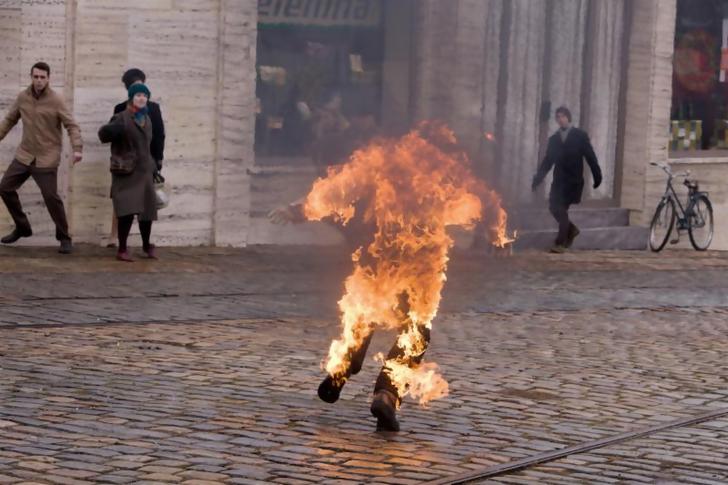
Burning Bush tells the story of Jan Palach's political activism and self-sacrifice, and is set at a turning point in Czech history. After a series of protests lead by the country's effervescent youth movement, Jan Palach set himself on fire (and died) in 1968, as a protest to the end of the Prague Spring resulting from the invasion of Czechoslovakia by the Warsaw Pact armies.
Also focusing on his family's legal efforts to clear his name in the face of the oppressive communist propaganda machine, Burning Bush bring us close to the young female lawyer, Dagmar Buresova, who led the legal fight brought by his family against the politician who slandered Palach's name and his sacrifice for freedom.
"Burning Bush encapsulates my own, crucial, personal experience (I was a student in Prague during this period) and at the same time, tells an important and exciting story for many people -- for an entire nation and even beyond it." said director Agniezka Holland.
"I always wanted to show the cruelty of soft and corrupting oppression in the communist countries," Holland continues. "The conformist cowardliness of many, as well as the courage of the few who went against the stream."
This emotional story of the actions of a student and the bravery of a young lawyer is, at its heart, a story of basic human values such as truth, honor, justice and courage. Their fight for freedom and moral principles, in a time of censorship and oppression, eventually led to the unification of an oppressed nation, a struggle which defeated the totalitarian regime twenty years later.
Palach's story also brings us back to the events that started the Arab Spring in 20122, when Tarek al-Tayeb Mohamed Bouazizi, a Tunisian street vendor, set himself on fire in protest of the confiscation of his wares - and inspired a wave of protest throughout the Middle East.
The 20th anniversary of Palach's death, in 1989, inspired a new generation of students to start protests that led to the eventual fall of communism in Czechoslovakia, alongside the fall of the Iron Curtain in Europe. The Palach family's lawyer, Dagmar Buresova, who spent her early career defending persecuted opposition leaders, became the first Minister of Justice in a freed Czechoslovakia.
"Both universal in its vision and richly detailed in its historical moment, Burning Bush stands shoulder to shoulder with Agnieszka Holland's best works," said Kino Lorber CEO Richard Lorber. "This perceptive and thought-provoking cinematic rendering of a foundational moment in Eastern European history reveals itself as an inspiration for democracy movements around the world. We could not be prouder at Kino Lorber to have the privilege to bring this epic work to our discerning audiences."
Having lived in Czechoslovakia at the time these events took place, Polish director Agnieszka Holland, best known here for Europa Europa, a Golden Globe winner, and Angry Harvest, an Academy Award nominee, made Burning Bush as a three-part, 234 minute HBO Europe miniseries, and subsequently edited it herself as a 206 minute feature length work.
The "original version" was shown at all film festivals and received universally positive reviews after Toronto and Karlovy Vary, before premiering in the United States at last year's Telluride and New York Film Festivals, earning even more acclaim.
The nearly four-hour version of the film (at 234 minutes) is slated to open at New York's Film Forum on June 11, before a national theatrical expansion during the summer followed by VOD and home media rollout later in 2014. Kino Lorber also controls U.S. television rights which does not include any planned HBO broadcast in the U.S.
This deal was negotiated between Kino Lorber CEO Richard Lorber and Dirk Schürhoff, the Managing Director at Beta Cinema.

Burning Bush tells the story of Jan Palach's political activism and self-sacrifice, and is set at a turning point in Czech history. After a series of protests lead by the country's effervescent youth movement, Jan Palach set himself on fire (and died) in 1968, as a protest to the end of the Prague Spring resulting from the invasion of Czechoslovakia by the Warsaw Pact armies.
Also focusing on his family's legal efforts to clear his name in the face of the oppressive communist propaganda machine, Burning Bush bring us close to the young female lawyer, Dagmar Buresova, who led the legal fight brought by his family against the politician who slandered Palach's name and his sacrifice for freedom.
"Burning Bush encapsulates my own, crucial, personal experience (I was a student in Prague during this period) and at the same time, tells an important and exciting story for many people -- for an entire nation and even beyond it." said director Agniezka Holland.
"I always wanted to show the cruelty of soft and corrupting oppression in the communist countries," Holland continues. "The conformist cowardliness of many, as well as the courage of the few who went against the stream."
This emotional story of the actions of a student and the bravery of a young lawyer is, at its heart, a story of basic human values such as truth, honor, justice and courage. Their fight for freedom and moral principles, in a time of censorship and oppression, eventually led to the unification of an oppressed nation, a struggle which defeated the totalitarian regime twenty years later.
Palach's story also brings us back to the events that started the Arab Spring in 20122, when Tarek al-Tayeb Mohamed Bouazizi, a Tunisian street vendor, set himself on fire in protest of the confiscation of his wares - and inspired a wave of protest throughout the Middle East.
The 20th anniversary of Palach's death, in 1989, inspired a new generation of students to start protests that led to the eventual fall of communism in Czechoslovakia, alongside the fall of the Iron Curtain in Europe. The Palach family's lawyer, Dagmar Buresova, who spent her early career defending persecuted opposition leaders, became the first Minister of Justice in a freed Czechoslovakia.
"Both universal in its vision and richly detailed in its historical moment, Burning Bush stands shoulder to shoulder with Agnieszka Holland's best works," said Kino Lorber CEO Richard Lorber. "This perceptive and thought-provoking cinematic rendering of a foundational moment in Eastern European history reveals itself as an inspiration for democracy movements around the world. We could not be prouder at Kino Lorber to have the privilege to bring this epic work to our discerning audiences."