Zemlinsky: The Dwarf / Ullmann: The Broken Jug Blu-ray Movie
HomeZemlinsky: The Dwarf / Ullmann: The Broken Jug Blu-ray Movie 
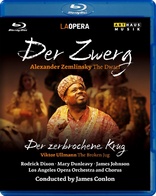
Der Zwerg; Der Zerbrochene Krug: La OperaArthaus Musik | 2008 | 122 min | Unrated | Oct 26, 2010
Price
List price:Amazon: $34.04 (Save 13%)
Third party: $34.04 (Save 13%)
Only 1 left in stock (more on the way).

Movie rating
Movie has not been rated yetBlu-ray rating
| Users |  | 0.0 |
| Reviewer |  | 4.5 |
| Overall | | 4.5 |
Overview
Zemlinsky: The Dwarf / Ullmann: The Broken Jug (2008)
The music of Alexander Zemlinsky and Viktor Ullmann remained buried for decades in the wake of the destruction wrought by the policies of the Nazi regime. This pairing of one act operas was presented as part of L.A. Opera's "Recovered Voices" project.
Specifications
Video
Video codec: MPEG-4 AVC
Video resolution: 1080i
Aspect ratio: 1.78:1
Original aspect ratio: 1.78:1
Audio
German: DTS-HD Master Audio 5.1
German: LPCM 2.0
Subtitles
English, French, Spanish, German, Italian
Discs
25GB Blu-ray Disc
Single disc (1 BD)
Playback
Region free
Review
Rating summary
| Movie | | 4.5 |
| Video |  | 4.0 |
| Audio | | 4.5 |
| Extras | | 0.0 |
| Overall | | 4.5 |
Zemlinsky: The Dwarf / Ullmann: The Broken Jug Blu-ray Movie Review
Will this patently odd pairing become the new 'Cav/Pag'?
Reviewed by Jeffrey Kauffman December 9, 2010Longtime opera attendees have become used to the pairing of two one acts to make an evening’s entertainment. Most typically in the standard repertoire that pairing has ended up being a double bill of Pietro Mascagni's Cavalleria Rusticana with Ruggero Leoncavallo's Pagliacci, two shorter pieces that are somewhat—tangentially, truth be told—thematically linked. Recently there’s been a fair amount of critical reassessment that Cav/Pag, as the pairing is colloquially labeled, should revert to either Cav or Pag. At the same time, some companies have been trying out a new, even less related, pairing, that of Pagliacci with Carmina Burana, such as was attempted by my hometown’s company, Portland Opera. Sticking two pieces together to fill out a full evening’s time may seem like the oddest of reasons to join two disparate elements together, but after all, people are shelling out sometimes considerable amounts of money to attend a live performance, and who knows what might happen if that ended after less than an hour? L.A. Opera started an interesting journey a few years ago with its “Recovered Voices” series, which was inaugurated in 2007. Though some of the composers featured in the series aren’t exactly in need of “recovering,” the series has presented little known pieces by a wide variety of composers, including Walter Braunfels, Erich Korngold, Ernst Krenek, Franz Schreker, and Erwin Schulhoff. In 2008 the company premiered a double bill of two composers whose work had fallen victim to the excesses of Nazism, though in completely different ways. Viktor Ullmann perished in Auschwitz while Alexander Zemlinsky escaped to the United States, where his career languished and he ultimately died of pneumonia. While it’s perhaps understandable why L.A. Opera would group these composers together, this pairing is on its face even odder than Cav/Pag or Pag/Bur (I just coined that one and expect royalties, thank you very much). In fact Zemlinsky has recently been the subject of his own double bill, with this program’s Der Zwerg paired with another Zemlinsky opera based upon Oscar Wilde, A Florentine Tragedy. If you treat these two very different pieces as simply odd bedfellows, there’s an incredible chance to hear some very rare music here. Just don’t go looking for any linkage between the two.
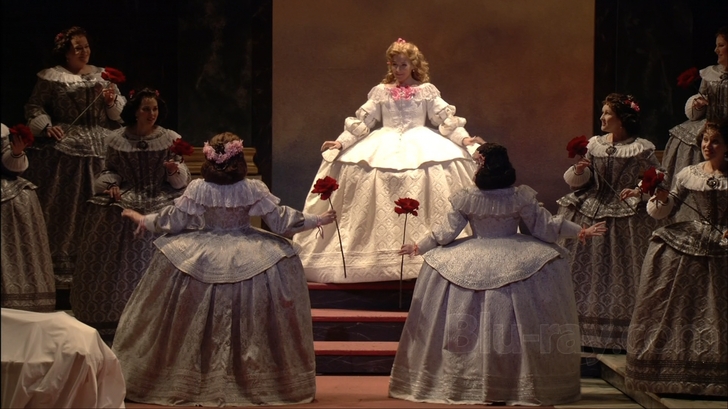
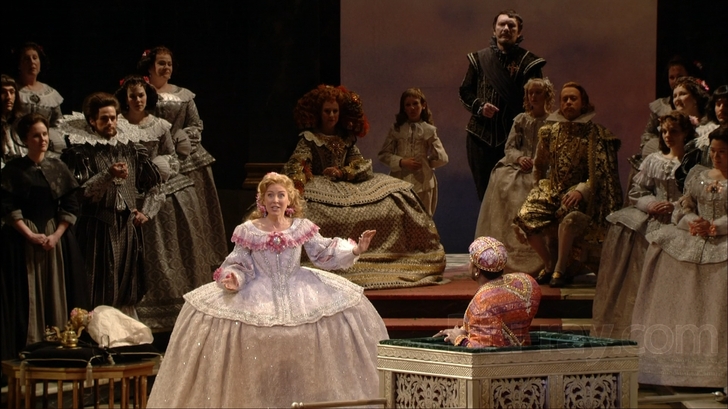
Zemlinsky is undoubtedly the better known of this particular pair of composers. A well known conductor and composer in his native Vienna, Zemlinsky became known later in life as much for his personal relationships as for his musical accomplishments. The composer ultimately became the brother-in-law of Arnold Schoenberg, and in fact was Schoenberg’s only official composition teacher, but Zemlinsky is perhaps just as remembered today for his failed love affair with one of the most famous women of late 19th and early 20th century music, Alma Schindler, who would go on to marry Gustav Mahler and help guide that composer’s sometimes rocky career. Alma wasn’t exactly the shy, retiring type, and both she and her family made no secret of their ambitions that Alma marry well, perhaps to further her own hoped for music career. Zemlinsky was ultimately seen as not important enough for Alma, and, perhaps more devastatingly, his short stature and less than comely appearance came in for direct complaints from Alma herself. This was a life changing event for Zemlinsky, something from which he never fully recovered emotionally, and he poured all of that anguish into Der Zwerg (The Dwarf), an intense one act opera about a vain Princess, Donna Clara (Mary Dunleavy), known as The Infanta, who on her eighteenth birthday is given the rather unusual present of a captured Dwarf (Rodrick Dixon). The Dwarf mistakes the Infanta’s fascination with this deformed “present” for romantic infatuation, and he quickly falls in love with Donna Clara.
The Dwarf is an exercise in perhaps unwitting—at least initially—cruelty, as Donna Clara can’t quite believe that this “object” (for surely that’s how she sees The Dwarf) would even think he was of the station, not to mention the appearance, to appeal to her. What ensues is a jaundiced study in pretension, class distinction and heartbreak, set to alternately stringent and gloriously lyrical music. It’s in fact a little noteworthy (pun intended) to hear an almost Russian influence in both of the composers featured in this program. If Ullmann occasionally has the pungency of Prokofiev, Zemlinsky has the odd proclivities of Shostakovich, where long, langorous lines suddenly erupt into shattering dissonances.
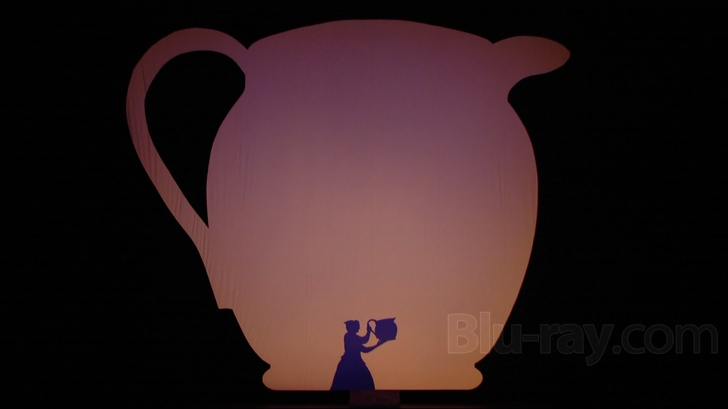
The evening actually opens with the other one act opera on the bill, Ullmann’s decidedly more comic Der zerborchene Krug (The Broken Jug). This is a relatively brief piece which is a comedy of manners and morés, as Judge Adam (James Johnson) finds himself presiding over a case of a broken jug (as you may have guessed from the title), a jug he himself has broken during his amorous adventures with Eve (Melody Moore). Adam and Eve, get it? Ullmann works the comedic material here very well, painting Judge Adam as a harried buffoon who finds himself inextricably tangled in a web of his own making. The Broken Jug was finished in a mad dash shortly before Ullmann was imprisioned at Terezin (he would ultimately be transferred to Auschwitz, where he died). The fact that this ebullient and often very funny piece was written under such trying circumstances is a testament to the resilience of the human spirit under very stressful circumstances. While some may see, as the liner notes to this release suggest, that Ullmann is engaging in a thinly veiled excoriation of the Nazi justice system, The Broken Jug is not a screed by any stretch. It’s a brisk and enjoyable romp through village life, set to some delicious music.
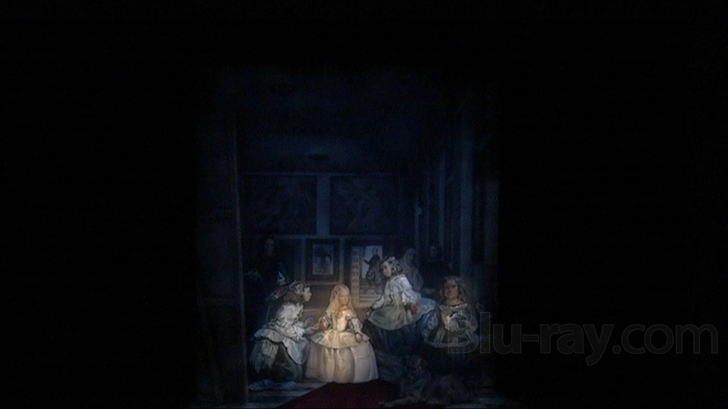
Both of these pieces are given wonderful physical productions here by the L.A. Opera. The Dwarf is considerably more sumptuous, with a gorgeous palace set, but The Broken Jug does very well with its more minimalist approach, and it features a wonderful shadow pantomime at its opening. Conductor James Conlon commands very fine work from the Los Angeles Opera and Chorus, and the leads in both pieces are brilliant. Rodrick Dixon is astoundingly effective as The Dwarf, singing mellifluously but also managing to convey the horror and hearbreak of this doomed character.
Zemlinsky: The Dwarf / Ullmann: The Broken Jug Blu-ray Movie, Video Quality
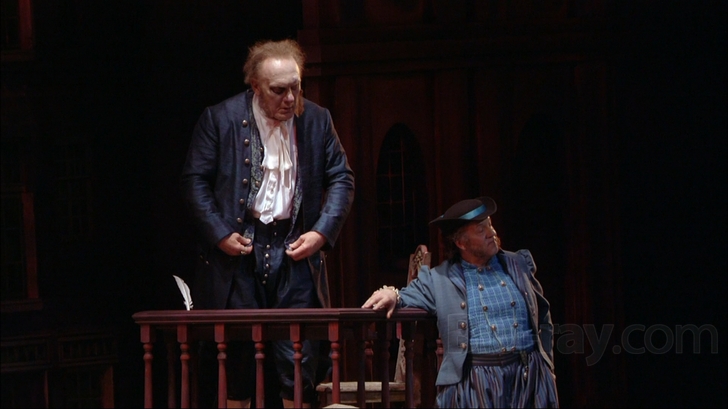
The double bill of The Dwarf and The Broken Judge arrives on Blu-ray courtesy of ArtHaus Musik, with an AVC encode in 1080i and 1.78:1. This is a decently sharp looking Blu-ray which nonetheless doesn't quite rise to the sharpness levels of some other ArtHaus releases. Colors here are wonderfully robust and beautifully saturated. The purple scrim that covers the shadow pantomime at the opening of The Broken Jug is nicely colored, and detail is sharp enough you can make out a small fold on the stage right side. The Broken Jug features a more restrained palette than does The Dwarf. The Dwarf's costumes and sets are absolutely gorgeous. Donna Clara's white brocaded gown is a sight to behold, and The Dwarf's bejeweled purple outfit glistens in the stage lighting. Contrast is very good here, though the stage lighting sometimes adds to the slight softness of the image.
Zemlinsky: The Dwarf / Ullmann: The Broken Jug Blu-ray Movie, Audio Quality
Both of the lossless audio options on this Blu-ray, a DTS-HD Master Audio 5.1 and an LPCM 2.0, sound magnificent. Conlon and the L.A. Opera have assembled a stellar orchestra, chorus and leading singers for these productions, and the lossless tracks support the able performances with excellent clarity and brilliant fidelity. These scores are both rather interesting mélanges of late 19th century Romanticism with early to mid-20th century modernism. Both composers shy away from neither tonality nor serialism, and the music is suitably bracing and often unexpected as a result. The surround track here is well modulated, with very nice and natural hall ambience. The mix here is also superb, with excellent balance between the singers, ensemble and orchestra. The recording is exceptionally transparent, letting the listener into the music easily, even in the more discordant, massed passages.
Zemlinsky: The Dwarf / Ullmann: The Broken Jug Blu-ray Movie, Special Features and Extras
No supplements other than trailers for other ArtHaus product are included.
Zemlinsky: The Dwarf / Ullmann: The Broken Jug Blu-ray Movie, Overall Score and Recommendation
This odd double bill is an important release. The pairing itself leaves more than a little to be desired, and I frankly strongly recommend you take these pieces separately, with a break in between. When taken that way, these are not only important historical documents but very strong and vibrant performances in and of themselves. "Recovered Voices" deserves kudos for bringing these lesser known composers to a larger audience, and hopefully this nice Blu-ray will help to spread the word even further. Highly recommended.