Wild Life Blu-ray Movie
HomeWild Life Blu-ray Movie 
Questar | 2010 | 312 min | Not rated | Feb 12, 2012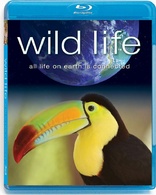
Price
List price:Listed on Amazon marketplace

Movie rating
6.8 | / 10 |
Blu-ray rating
| Users |  | 0.0 |
| Reviewer |  | 3.5 |
| Overall | | 3.5 |
Overview
Wild Life (2010)
Narrator: Stephen Hughes (III)| Documentary | Uncertain |
| Nature | Uncertain |
Specifications
Video
Video codec: MPEG-4 AVC
Video resolution: 1080i
Aspect ratio: 1.78:1
Original aspect ratio: 1.78:1
Audio
English: Dolby Digital 2.0
Subtitles
None
Discs
25GB Blu-ray Disc
Two-disc set (2 BDs)
Playback
Region A (B, C untested)
Review
Rating summary
| Movie | | 3.5 |
| Video |  | 4.5 |
| Audio |  | 3.0 |
| Extras | | 0.0 |
| Overall | | 3.5 |
Wild Life Blu-ray Movie Review
Bridges to somewhere.
Reviewed by Jeffrey Kauffman March 23, 2012The BBC, National Geographic and Discovery may lay claim to being the world leaders in crafting beautiful and informative nature documentaries, but the market is being saturated with any number of other releases which have geneses other than these “big three”. Gaiam’s Discover Planet Ocean: The World Beneath is an appealing look at the Pacific that seems to have been culled from a Japanese nature series. Now we have Questar’s release of Wild Life which, at least according to the closing credits, seems to be an Americanized version of a series which evidently originally aired on Caribbean International Network Television (CIN-TV). This six episode set of nature documentaries (spread over two Blu- ray discs) looks at various subjects located in both the Americas and Europe and provides a scenic tour of some of our planet’s most unusual nooks and crannies. Often visually quite spectacular, Wild Life may not have the through line that graced Planet Earth and its kin, but it does feature something like the single subject focus that tends to typify a lot of the National Geographic specials, with a central "hook" of land bridges that join North to South America and Europe to Africa. It also features a good generalist overview of several very interesting subjects while also providing some suitably awe inspiring sights of natural environments that have come to define a lot of what many home theater buffs love best about high definition imagery.
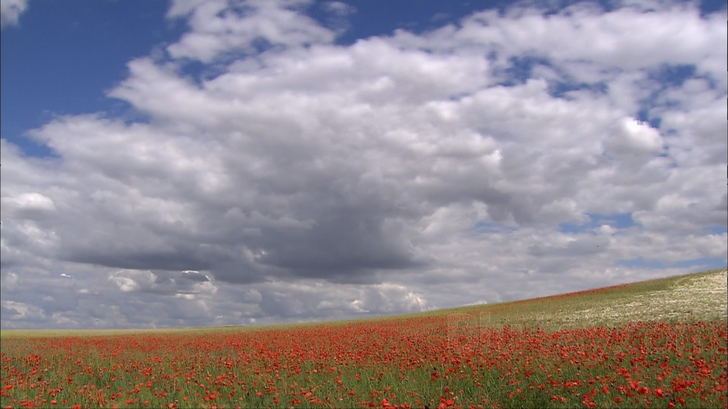
The six episodes on this two disc set are split into features ostensibly focusing on the Americas (actually, mostly Central America) and Europe (actually, mostly the Iberian Peninsula). The Americas disc contains:
Oceans’ Border
When you look at a map or a globe the land masses of North and South America are instantly identifiable, but few ever seem to pay much attention to that skinny little Central American “comma” that joins the two behemoths together. This interesting episode looks at the geologic history of how this intriguing little “land bridge” came to be, and what its ultimate creation meant for a wide variety of species. Volcanic activity slowly built this bridge and there is some very colorful footage here of volcanoes spewing their molten lava over vast areas, building up steaming masses of newly created rock. The episode also delves into how various species ended up here, not just wild life, but things like plants and seeds. There’s some incredibly gorgeous underwater footage here highlighting some of the unbelievably beautiful coral reefs that dot the Caribbean (according to this documentary some 14 percent of the entire planet’s coral “population” grows in the Caribbean).
Looking South
The exploration of the diverse ecosystems of Central America continues in this second episode, one which recounts some of the information from the first episode in generalist terms but then delves more thoroughly into various species who might seem to be odd bedfellows, as it were, living side by side on the relatively tiny land mass that connects the two giant continents of North and South America. Quite a bit of this episode looks at Costa Rica and its widely variant animal and bird life. Though Costa Rica is only about the size of Switzerland, it hosts an impossibly wide variety of species, some of whom are able to carve out their own niche due to Costa Rica’s complex system of inland waterways and its lush and dense rain forests. There are some fun sequences in this episode, including some great shots of spider monkeys hanging from the very tippy-tops of trees as they forage for food and, later, an interesting up close look at a termite colony scurrying about trying to rebuild a mud tunnel after it was assaulted by a monkey.
Quetzals’ Land
This episode gets off to a scenic start with a quick montage of storm winds blowing through the top of gently bending trees, followed by some nice scenes of clouds and mists wending their way through other tree tops. It sets up a suitably moody ambience for this third look at the incredibly diverse ecosystems in Central America which have given rise to a vast array of species. Once again Central America’s labyrinth of inland waterways is credited with providing the lifeblood for any number of species, both animal, bird and plant life, and there are some very nice point of view shots obviously taken from boats skimming through these watery pathways. Some of this episode’s most memorable footage comes courtesy of various bird species. A look at the spectacularly colorful Green Kingfisher (which actually has a red breast perhaps more suitable for a robin) reveals that this region is the only place on Earth where all six species of Kingfisher can be observed together. There’s a comical sequence where a Magpie tries to figure out how to get a berry it’s clutching in its claw to its mouth without falling off of a branch it’s clinging to, an attempt which ultimately fails miserably. The most gorgeous species shown is no doubt the Quetzal, the legendary bird that was sacred to the Aztecs. Taking a look at this little puffball of intense color shows why it was no doubt held in such high esteem. The deeply saturated blue, red and green of this bird’s feather array must be seen to be believed.
The Europe disc contains:
The Rarest Piece of the Puzzle
Just as the Americas episodes focused on the land bridge of Central America, so the Europe episodes focus on the purported land bridge of the Iberian peninsula. This is visually a little harder nut to crack, since there is, after all, the Mediterranean Sea between Iberia and Africa (slim separation though it is), but that qualm aside, there’s an interesting amalgamation of species that are highlighted here, species that exist in a disparate set of ecosystems. There are some rare and even weird species looked at here, like the Great Bustards, the largest flying birds in Europe, which look kind of like mini-turkeys. In a sort of interesting tip of the hat to development, it turns out this species has actually benefited from the deforestation brought by farming and the like since they like to nest in lest densely treed areas. This area has the lowest population density of wildlife in the European Union, but it still is home to a vast array of really interesting species.
Iberian Europe
This second episode features some stark contrasts in weather and wildlife, but opens with a variety of really colorful birds doing things like feeding their young. What’s visually so arresting about this episode is the fact that snowy mountains seem to coexist right next to (or at least close to) the sunnier southern climes of the Mediterranean. This episode spends a lot of time in the Iberian forests, where around xixty percent of all animal species in Europe are found. Some of the weirder species looked at in this episode include the largest beetles on the European continent, as well as a wild boar subspecies that is in a kind of Darwinian struggle with capercaillies, a small bird species.
Mediterranean Iberia
This final episode takes a look at both some of the geologic history of the region (the construction of the land bridge began more than 60 million years ago), as well as several of the interesting species that populate the region. Among the species looked at kestrels, the little mini-falcon like birds that like to build their nests near to humans, often choosing manmade structures rather than trees to nurse their young in. Some of the mountain ranges that span the peninsula are also flown over in some impressive footage which highlights the effects of glaciers and the huge deposits of granite that have been left behind.
The content here throughout these six episodes is generally very enjoyable and informative, and it is filled with a variety of scenic wonders. Once again, though, there are some authoring issues with a Questar release. While this release doesn't have the clunky menu structure (including different resolutions) that previous Questar releases have had, this particular release has another odd anomaly: no chapter stops in any of the spisodes. Therefore the viewer must either fast forward through these or press the Pop Up Menu to select another episode. As with many other Questar releases, each episode is followed by a non-skippable trailer for other Questar releases, which similarly cannot be chapter skipped through (fast forwarding will work).
Wild Life Blu-ray Movie, Video Quality
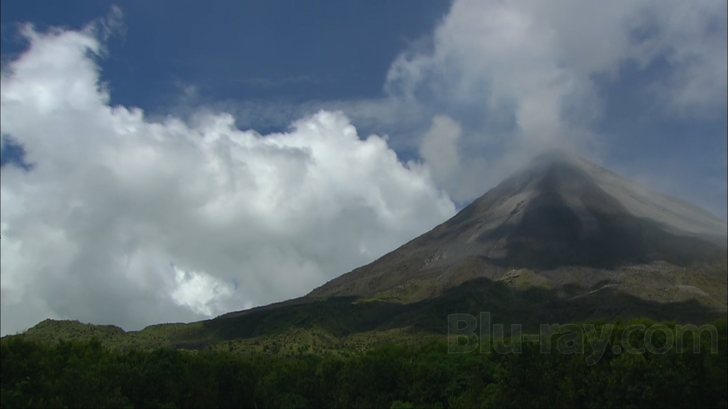
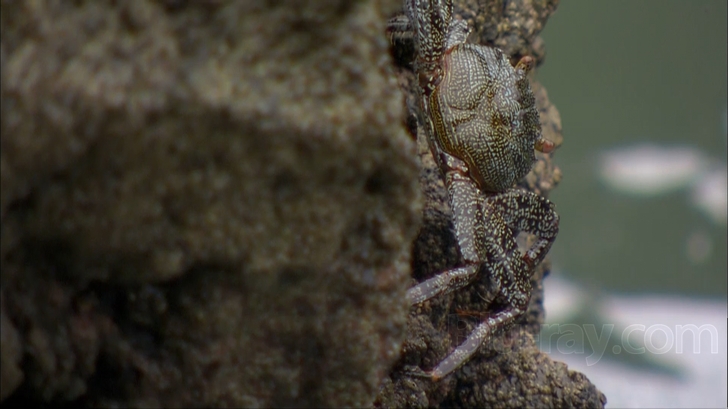
Wild Life is presented on Blu-ray courtesy of Questar Entertainment with an AVC encoded 1080i transfer in 1.78:1. This is for the most part a very sharp and appealing looking high definition presentation, one which is generally consistent looking despite what seems to be some ubiquitous utilization of stock footage. Colors are bold and impressive, and fine detail is often astounding in the many close-ups of the weird and wonderful animal, bird and plant life that the series features. There is some persistent shimmer and aliasing surrounding the often quite "busy" foliage that is on display throughout the vast majority of all six episodes here, but that is the only artifact that will probably bother more persnickety videophiles. Otherwise, while not quite at the level of Planet Earth and its kin, Wild Life sports a generally very sharp and impressive looking image.
Wild Life Blu-ray Movie, Audio Quality
Questar is another smaller label which hasn't consistently adopted a lossless audio standard for its Blu-ray releases, and so Wild Life comes equipped with only a standard Dolby Digital 2.0 mix. This series has good narration (voiced by Stephen Hughes) which is always clear and (obviously) front and center, but it also features some nice music which probably could have benefited from a surround mix, even a lossy Dolby Digital 5.1 mix. That said, this sort of documentary doesn't provide a huge opportunity for knock your socks off sonic activity, and so most people will probably be at least acceptably pleased by what's on tap here, if not overly impressed. Fidelity is fine as far as it goes, even without much dynamic range to speak of.
Wild Life Blu-ray Movie, Overall Score and Recommendation
Wild Life seems perhaps to have originally been produced for a Spanish speaking audience, but it's made the transition to its Americanized version rather well. While the focus here is on territory that may be more familiar to native Spanish speaking peoples, there's a wealth of really interesting information, and some stunning sights, included across these six episodes. Video quality is very good for the most part, and even though this release only features a lossy Dolby audio mix, overall it comes Recommended.

Similar titles
Similar titles you might also like
(Still not reliable for this title)

Deep Sea 3D
IMAX
2006

Enchanted Kingdom 3D
2013

Under the Sea 3D
IMAX
2009

Amazing Ocean 3D
2013

History of the World in Two Hours 3D
2011

Polar Bears 3D: Ice Bear
2013

Adventures of the Penguin King 3D
2011

Fascination Coral Reef 3D: Mysterious Worlds Underwater
2013

Tiny Giants 3D
2014

Sea Rex 3D: Journey to a Prehistoric World
2010

The Ultimate Wave: Tahiti 3D
IMAX
2010

Fascination Coral Reef: Hunters and the Hunted
2012

Wild Ocean 3D
IMAX 3D
2008

WWII in 3D
2011

The Universe in 3D: A Whole New Dimension
2013

America's National Treasures
2010

Winged Planet 3D
2012

Sharks 3D
2004

Hubble
IMAX
2010

Ocean Wonderland 3D
2003