When Rome Ruled Blu-ray Movie
HomeWhen Rome Ruled Blu-ray Movie 
National Geographic | 2010 | 270 min | Not rated | Mar 29, 2011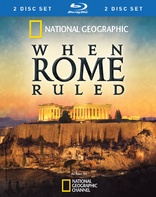

Movie rating
Movie has not been rated yetBlu-ray rating
| Users |  | 0.0 |
| Reviewer |  | 4.0 |
| Overall | | 4.0 |
Overview
When Rome Ruled (2010)
National Geographic's 6-part series reveals ancient Rome's hidden treasures and untold stories.
| Documentary | 100% |
Specifications
Video
Video codec: MPEG-4 AVC
Video resolution: 1080i
Aspect ratio: 1.78:1
Original aspect ratio: 1.78:1
Audio
English: DTS-HD Master Audio 5.1
Subtitles
English
Discs
50GB Blu-ray Disc
Two-disc set (2 BDs)
Playback
Region A (B, C untested)
Review
Rating summary
| Movie | | 4.0 |
| Video | | 4.0 |
| Audio | | 4.0 |
| Extras |  | 2.5 |
| Overall | | 4.0 |
When Rome Ruled Blu-ray Movie Review
National Geographic shows us why Rome wasn't built in a day.
Reviewed by Jeffrey Kauffman May 20, 2011Rome has two oft-repeated phrases or rubrics associated with it, both of which cast a little light on why the city is iconic. Of course everyone has heard that “Rome wasn’t built in a day,” a testament to the city’s enduring influence over a large span of time. But that same proclivity is also flat out part and parcel of its most common soubriquet, namely being called The Eternal City. But there was indeed a time when Rome was little more than a backwater, a village that was just another encampment in the land that would ultimately become known as Italy. Over time and many centuries, Rome grew both in size and influence until it of course became the center of the known universe, ruling over much of that universe. When Rome Ruled actually is a bit more far reaching than its title would suggest, covering a huge amount of material in six fairly well constructed episodes which aired on the National Geographic Channel. About evenly split between contemporary talking head segments and decent recreations of ancient Roman history, When Rome Ruled offers a nice overview of several aspects of Roman history, all told with the typical NatGeo excellence and flair.
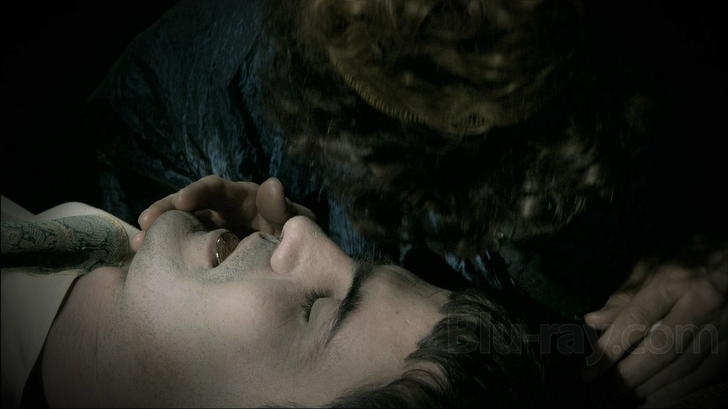
Secrets of the Gladiators. This episode may ostensibly be about Gladiators, but it actually spends a great deal of time on depicting the history and construction of the Gladiators’ main Roman arena, the Colosseum. Secrets of the Gladiators begins in AD 80, when an outbreak of the plague was just one of several tragedies confronting the Roman populace. The beloved Emperor Vespasian had just died, and it had been less than a year since Vesuvius had erupted, something the entire Empire saw as a warning message from an angry God or two. But to help take everyone’s minds off of their troubles, the Colosseum opened under the aegis of Vespasian’s son Titus, bringing to fruition a 10 year building process that had been funded largely on booty and loot culled from the sack of Jerusalem. This episode is a fascinating look at the “backstage” world of the Colosseum, depicting in detail the actual “understage” for wont of a better term) area where things were prepared to be lifted via huge cantilevers up through trap doors to the main floor of the arena. Secrets of the Gladiators makes clear that the Gladiator fights were a near perfect marriage of politics and show business, playing out in a sort of quasi-Las Vegas glitz, all meant to pacify an unruly mob of some 50,000 people.
The Real Caligula. This episode may not be able to completely wash any nightmare visions of the Guccione Caligula out of your memory, but it takes a decidedly less lascivious and more forensic look at one of the most notorious of all Roman Emperors. Combining archeological findings with reports from a forensic psychologist, The Real Caligula comes to the perhaps inevitable conclusion that Caligula was indeed mad, or at least became that way after a sudden illness that seemed to have transformed him from the inside out. But even before that illness, there were warning signs, which are only hinted at briefly in this episode, having to do with a perhaps illicit relationship with his “mentor,” the Emperor Tiberius, who kept Caligula a virtual prison on the remote island of Capreae. One way or the other, there is bounteous evidence of Caligula’s insanity, including eyewitness accounts of him carrying on conversations with temple statues to a huge variety of mammoth and ultimately unfinished projects he undertook, all of which helped to dangerously empty Rome’s coffers. In one of the more interesting sidebars to the main thrust of the episode, there’s a fascinating look at a once floating palace and floating temple which Mussolini uncovered at the bottom of a lake by draining the water out of the lake. Caligula’s perhaps unseemly family “relationships” are also highlighted by the fact that he minted coins featuring his three sisters, Julia, Agrippina and Drusilla, the only time living women ever appear on Roman coins.
Doomsday Pompeii is an interesting reconstruction of the sociopolitical lives of the “common folk” of Pompeii, before the eruption of Vesuvius killed well over 1,000 people, encasing many of them in permanent death coats of stone and ash. More than 20,000 people lived in Pompeii in AD 79. About 150 miles from Rome, and only three miles from a little hilltop mount which was then covered in foliage, perhaps belying its volcanic center, Pompeii was a popular tourist town. While there’s an interesting look at the actual physical ramifications of the eruption of Vesuvius, the most interesting aspect of this episode is no doubt its excellent segment on long hidden away explicit art which was literally cut from the walls of villas in the mid-19th century by “explorers” who feared genteel womenfolk seeing such depictions might get a serious case of the vapors. Pompeii has a certain reputation for being a city of sexual liberation and even perversion, and some of the art and tchockes excavated from the ruins at least hint at that proclivity. Much of this material is housed in a museum, locked away from the general public in an area called The Hidden Cabinet, but NatGeo’s film crew gets an up close and personal look at a number of fascinating artifacts from this era which tend to suggest that sexual practices, unlike this art nowadays, were not “hidden away,” but were in fact often performed out in the open, often in front of slaves, who were there to give a helping hand or two just in case they were needed. This episode perhaps somewhat humorously comes with a warning prelude about its explicit imagery.
Killing Caesar gives a somewhat generalist (no pun intended, considering his military career) overview of Julius Caesar, with the putative point being that everything Caesar did to amass power simply made him the inevitable target of assassination. This episode is a really fine look at the political maneuverings that were a regular part of the aristocracy in the final days of the Republic, before Caeasar’s machinations made him Dictator (his actual title). Caesar was smart enough to work his way up the corporate ladder, so to speak, managing to secure positions like Head Priest of the Temple of Vesta which may not have initially had political ramifications, but which Caesar was able to use for his own benefit in securing his power base. His military exploits and long running conflict with his onetime ally Pompey are also explored here, including Caesar and Pompey’s willingness to thrust Rome into a civil war over what is seen now as a simple “personality conflict” between two men vying for the reigns of power. As this episode makes clear, Caesar’s ultimate downfall was that he was invariably too well skilled at everything he set out to do, making him a prime target once his chief ambitions had been fulfilled. Ironically, the Senate’s hope that his death would lead to a return of the Republic was completely dashed. The people wanted Caesar and only Caesar, and Julius’ progeny and hangers-on went on to rule the empire for another 400 years.
Birth of Rome doesn’t actually talk abou Romulus and Remus and that iconic wolf, but it does get into a little bit of Rome’s early history, although the real thrust of the episode is about some of the problems Rome encountered once it became a world power. Rom was the first civilization to conquer the Western World, and at its greatest expanse the Empire covered three continents and two million square miles, home to over 60 million people. Contemporary building projects in Rome, such as the addition of a recent subway line next to the Victor Emmanuel Monument, keep turning up archeological vestiges of times past, and Birth of Rome spends some time in these ruins, reconstructing the everyday life of a grainery. Some of the huge and still incredibly impressive engineering achievements of Rome are also explored, including the creation of a sewer system to help keep unmentionables out of what was an incredibly polluted Tiber River, as well as Rome’s legendary aquaducts. The Golden House of Nero, the famous Domus Aurea, is also looked at in this interesting episode that may not in fact be as much about Rome’s birth as about its adolescence and early maturity.
Ancient Superpower is in some ways the most repetitive of the six episodes in When Rome Ruled, especially when viewed directly after Birth of Rome, an episode whose information this episode repeats, at least in dribs and drabs. This episode’s chief contribution to the series is in its exploration of how Rome’s conquering ways ultimately were for the benefit of commerce. Conquered territories opened up new markets, and perhaps even more importantly (as sad as it may seem), new populations to be enslaved. There’s an interesting look at the differences in leadership styles between Trajan, who was all about military glory, and his successor Hadrian, who opted for a more peaceful coexistence approach that, while laudatory, may have actually precipitated Rome’s demise.
When Rome Ruled Blu-ray Movie, Video Quality
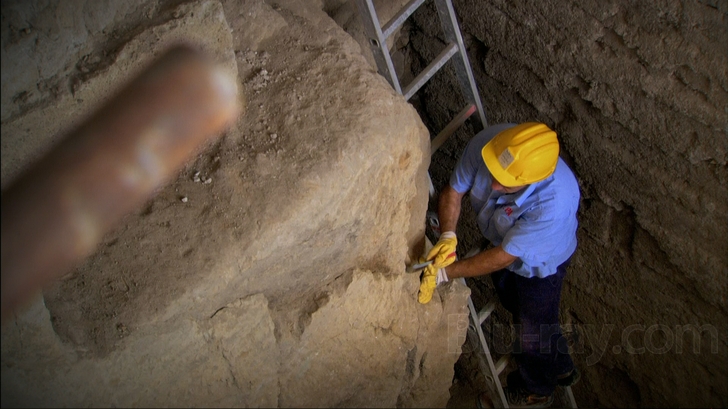
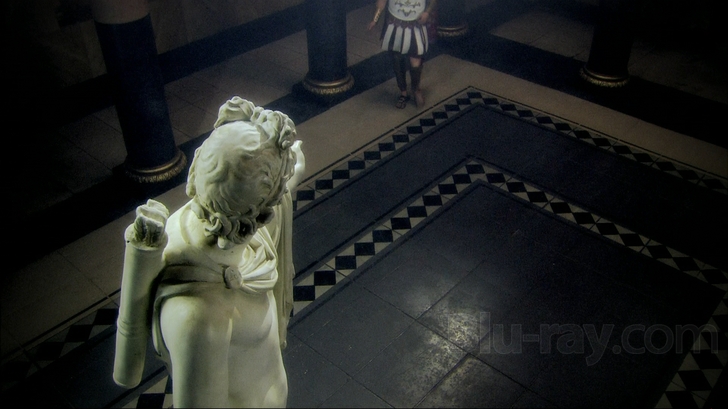
When Rome Ruled is granted a nice looking AVC encoded 1080i transfer in 1.78:1. As with most NatGeo historical outings, we ping pong back and forth between contemporary talking head segments and recreations of long ago events. In both cases, the image is generally very sharp and well defined, with excellent color, saturation and contrast. The interlaced video presentation occasionally devolves into some slight artifacting, typically aliasing, but it's really more minor than many interlaced videos tend to be.
When Rome Ruled Blu-ray Movie, Audio Quality
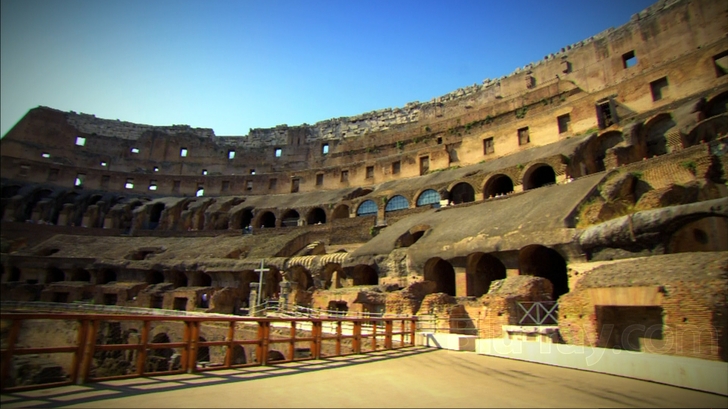
When Rome Ruled's lossless DTS-HD Master Audio 5.1 mix is about what you would expect from a television outing. The talking heads and narration are securely anchored in the front channels, and what surround activity there is is limited to such sonic items as battle scenes and horses' hooves panning across the soundfield. Fidelity is strong and dynamic range is quite robust. There isn't a whole lot of LFE here, although the Pompeii episode, with its recreation of Mount Vesuvius' eruption, does get the floorboards rattling for a moment or two.
When Rome Ruled Blu-ray Movie, Special Features and Extras
- Treasure Seekers (SD; 52:31) is a standalone episode that deals with two men whose fascination with Rome changed the city's history, the 14th century's Nicola Di Rienzo and the 20th century's infamous Fascist Benito Mussolini.
- Map of the Roman Empire. A huge foldout map is enclosed in the slipcase, kind of like those great maps that typically accompany print editions of National Geographic Magazine.
- Trailers
When Rome Ruled Blu-ray Movie, Overall Score and Recommendation

As with most National Geographic offerings, this is a suitably informative and entertaining look at ancient Rome. The series is most captivating when it strays from the iconic characters like Caesar and Caligula and spends some time acquainting us with the everyday Romans. Well produced and written, and with a well above average image and audio presentation, this should be enjoyed by armchair history buffs everywhere. Recommended.
Similar titles
Similar titles you might also like
(Still not reliable for this title)

Turtle Odyssey 4K
IMAX Enhanced
2018

Arabia 3D
IMAX
2010

A Place at the Table
2012

Rescue 3D
IMAX
2011

NOVA: The Fabric of the Cosmos
2011

Magic of Flight
IMAX
1996

Space Junk 3D
IMAX
2013

How the Universe Works
2010

Jerusalem 3D
2013

A Beautiful Planet 4K
IMAX Enhanced
2016

Mysteries of the Unseen World 3D
2013
Galápagos 3D
IMAX
1999

Rocky Mountain Express 4K
IMAX
2011

Flight of the Butterflies 4K + 3D
IMAX
2012

Food, Inc.
2008

NOVA: The Planets
2019

Humpback Whales
IMAX
2015

Wonders of the Sea 4K
2017

Pandas 4K
2018

Microcosmos
1996