What Is Cinema? Blu-ray Movie
HomeWhat Is Cinema? Blu-ray Movie 
Cohen Media Group | 2013 | 80 min | Not rated | Nov 04, 2014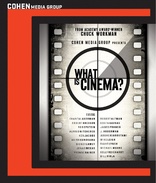
Price
List price:Listed on Amazon marketplace

Movie rating
6 | / 10 |
Blu-ray rating
| Users |  | 0.0 |
| Reviewer |  | 3.5 |
| Overall | | 3.5 |
Overview
What Is Cinema? (2013)
Using the words and ideas of great filmmakers, from archival interviews with Alfred Hitchcock and Robert Bresson to new interviews with Mike Leigh, David Lynch, and Jonas Mekas, Oscar-winning filmmaker Chuck Workman shows what these filmmakers and others do that can't be expressed in words - but only in cinema.
Starring: Chantal Akerman, Robert Altman, Robert Bresson, Costa-Gavras, Rob EpsteinDirector: Chuck Workman
| Documentary | 100% |
| History | Insignificant |
Specifications
Video
Video codec: MPEG-4 AVC
Video resolution: 1080p
Aspect ratio: 1.78:1
Audio
English: DTS-HD Master Audio 5.1
English: Dolby Digital 5.1
Subtitles
English
Discs
50GB Blu-ray Disc
Single disc (1 BD)
Playback
Region A (B, C untested)
Review
Rating summary
| Movie | | 3.5 |
| Video |  | 4.0 |
| Audio | | 4.0 |
| Extras |  | 3.0 |
| Overall | | 3.5 |
What Is Cinema? Blu-ray Movie Review
Who wants to know?
Reviewed by Jeffrey Kauffman November 12, 2014André Bazin may be a name known mostly to film scholars and general cineastes these days, but Bazin wielded a fairly mighty pen in the post-World War II era especially, when his essays in such legendary magazines as Cahiers du cinéma helped to codify how intellectuals perceived both structure and content in film. Many of Bazin’s writings were collected in a four volume tome called Qu'est-ce que le cinéma?, which translates into English as What is Cinema? This multi-volume set ostensibly covered only a few brief years of Bazin’s output, but it still managed to be a relatively exhaustive study of film theory and technique, and it matriculated to several college level courses on film through the years (including one that I personally took back in my college days). Chuck Workman, the Academy Award winning documentarian who is probably best known for his montage pieces on each year’s Oscar broadcasts, may have purloined Bazin’s title for this quasi- retrospective, but his focus is much more particular, centering on at the very least unusual filmmakers and in some cases those who sought to be provocateurs or members of the avant-garde. What is Cinema? contains some thoughtful analyses of various ideas courtesy of a glut of talking heads, including folks like David Lynch, Michael Moore and Jonas Mekas, but on a surface level, the documentary may serve as more of a parlor game of sorts for film lovers who can spend its running time trying to identify all of the little snippets of various classics and little known offerings that Workman stuffs into the piece.
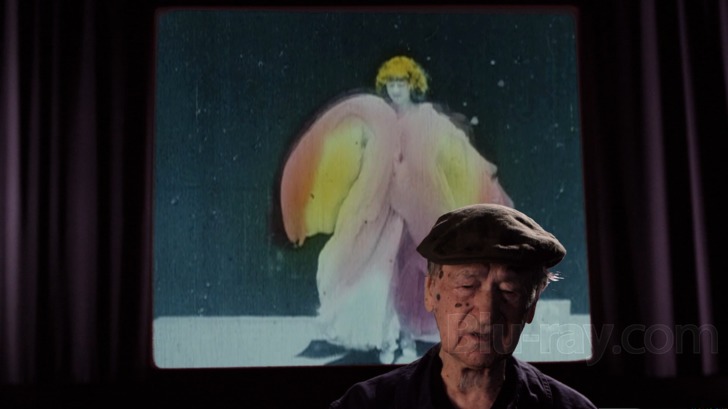
With epigrams from such heavyweights as Ingmar Bergman and Federico Fellini, along with a glut of brief but (largely) identifiable clips from such iconic masterpieces as Vertigo, Citizen Kane and 2001: A Space Odyssey, it might initially seem that Workman is going to ply the world of mainstream cinema, offering insight into some of the subtextual content that informs some of film’s mightiest achievements. And there actually is a bit of that as What Is Cinema? charges through a litany of legendary films, though it ultimately becomes clear that Workman has a much narrower range of talent in mind for this particular documentary query.
The first clue is the appearance of Jonas Mekas, erstwhile enfant terrible who in his own way was kind of an American Bazin, offering trenchant commentary for Film Culture and The Village Voice back in the fifties while also attempting to expand the boundaries of film himself at the same time. Mekas’ love for film is apparent, even if his analogy to drugs is perhaps questionable, and it provides a fascinating entrée for Workman to start exploring ideas of what film can (and perhaps even should) be.
There are other provocateurs on display throughout What Is Cinema? David Lynch has been able to straddle a patently weird middle ground where he’s at least tolerated, and perhaps even loved, by elements of the mainstream while at the same time repeatedly pushing the envelope as to what that very mainstream will either pay to see in theaters or invite into its veritable living room. Michael Moore has a more overtly political agenda to his moviemaking, one that may not be especially subtle but which is obviously very deeply ingrained in Moore’s very being. Both of these men offer commentary about things like the communal aspect of watching films in a theater while also getting into some of the more philosophical nuts and bolts about what films can do for society at large.
The avant-garde filmmakers play in contrast to some of those aforementioned names, some of whom are represented in text quotes or (as in the case of Alfred Hitchcock), archival audio. It’s probably no earth shaking revelation to hear that virtually every filmmaker in What Is Cinema? has a different answer to the titular question, or at the very least subtly nuanced takes on some basic concepts like narrative flow (for the more traditionally minded) or a kind of cut and paste ethos (for the deconstructionally minded).
It also shouldn’t come as much of a surprise that Workman’s approach here is obviously geared more toward asking that titular question than in providing any concrete, immutable answers. That may lead some to believe that the only real answer to the question is more or less “anything you want it to be,” but what becomes obvious in the grand parade of clips employed, as well as the often quite fascinating interview segments, is that that “anything” is a kaleidoscope of creativity that continues to make cinema one of the most vibrant and varied art forms Man has yet employed to plumb the depths of what being human really means.
What Is Cinema? Blu-ray Movie, Video Quality
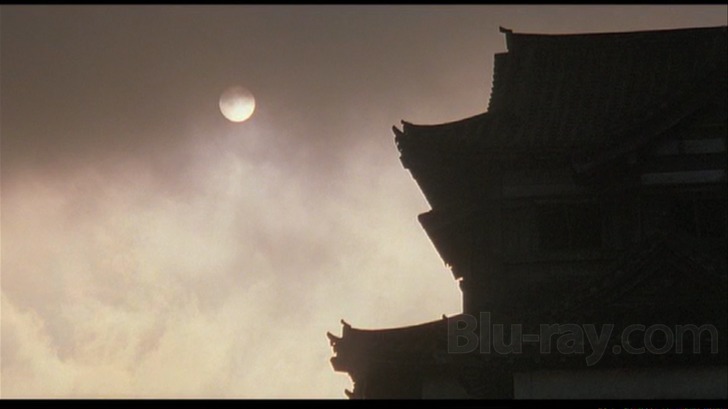
What Is Cinema? is presented on Blu-ray courtesy of Cohen Media Group with an AVC encoded 1080p transfer largely in 1.78:1. Since this documentary includes so many clips from so many films from so many different eras (and common aspect ratios), there's obviously a huge variance in overall aspect ratios on display. That said, all of the contemporary interview segments, as well as some establishing shots, are framed in 1.78:1. In decently lit environments, colors look accurate and there's pleasing if not overwhelming fine detail. Some sequences, like Mekas in a somewhat darkened screening room, don't pop with the same immediacy, but also don't present any egregious problems. The wide variety of film clips varies in quality, though again there's nothing overly problematic. There are no issues with image instability, digital manipulation or compression artifacts.
What Is Cinema? Blu-ray Movie, Audio Quality
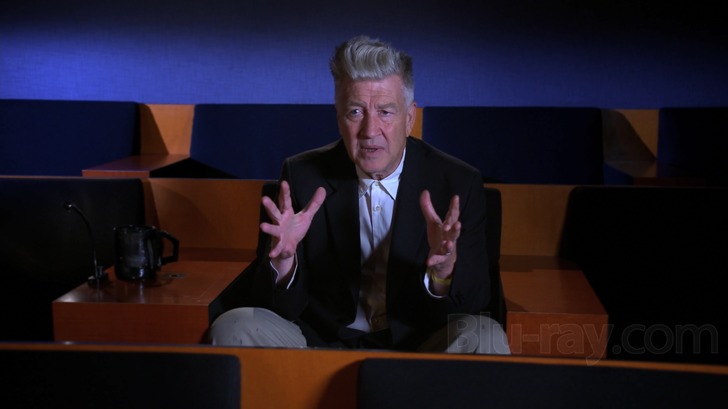
Once again a Cohen Blu-ray release defaults to a lossy Dolby Digital 5.1 audio option even when a lossless DTS-HD Master Audio 5.1 mix is also available. That authoring issue aside, the lossless mix more than capably supports the many interview segments, as well as the glut of (sometimes quite brief) clips from various films. There's really not a ton of surround activity here, as might be imagined in a documentary exploration of this kind, but fidelity is excellent and there are no problems of any kind to report.
What Is Cinema? Blu-ray Movie, Special Features and Extras

- Theatrical Trailer (1080p; 1:18)
- Experimental Film Shorts includes:
- Ballet Mécanique — Fernand Léger (1924) (1080p; 11:25)
- Return to Reason — Man Ray (1923) (1080p; 2:23)
- Leave Me Alone — Man Ray (1926) (1080p; 15:59)
- The Sea Star — Man Ray (1928) (1080p; 15:39)
- The Mysteries of the Chateau of Dice — Man Ray (1929) (1080p; 19:43)
- The Life and Death of 9413 — A Hollywood Extra — Slovko Vorkapich and Robert Florey (1927) (1080p; 13:34)
- Peyote Queen — Storm de Hirsch (1965) (1080p; 8:56)
- Notes on the Circus — Jonas Mekas (1966) (1080p; 12:37)
- Flo Rounds a Corner — Ken Jacobs (1999) (1080p; 6:13)
- Turn It Back — Lewis Klahr (2013) (1080p; 2:55)
- The Emblazoned Apparitions — Phil Solomon (2013) (1080p; 5:40)
What Is Cinema? Blu-ray Movie, Overall Score and Recommendation

If you can live with the fact that the central question raised in What Is Cinema? is either never answered definitively or at least is answered so variably that it's almost as if no answer at all was ever posited, this documentary provides some very thought provoking material that cineastes should find quite nourishing to chew on. There's also the fun if tangential parlor game of trying to identify the many films that flit by interstitially throughout the piece. The supplementary material, featuring a nice assortment of "experimental" shorts, is outstanding. Recommended.
Similar titles
Similar titles you might also like
(Still not reliable for this title)

The Americas 4K
2025

The American Revolution
2025

The Toys That Made Us: Season 1 & 2
2017-2018

The Farthest - Voyager in Space
2017

Cinerama: Seven Wonders of the World
1956

Untold History of the United States Part 3: Reagan/Bush/Clinton/Obama
Oliver Stone's
2012-2013

Mankind: The Story of All of Us
2012

The Dust Bowl
Ken Burns
2012

These Amazing Shadows: The Movies That Make America
2011

America: The Story of Us
2010

Trinity and Beyond: The Atomic Bomb Movie
70th Anniversary Special Edition
1995

When We Left Earth: The NASA Missions
2007

Clash of the Gods: Complete Season 1
2009

The Dog
2013

Drunk Stoned Brilliant Dead: The Story of the National Lampoon
2015

King Cohen: The Wild World of Filmmaker Larry Cohen
2017

The Queen
1968

Bowling for Columbine
2002

Exit Through the Gift Shop
2010

Visitors
2013