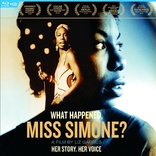
What Happened, Miss Simone? Blu-ray Movie
HomeWhat Happened, Miss Simone? Blu-ray Movie 
Blu-ray + CDEagle Rock Entertainment | 2015 | 102 min | Not rated | Sep 02, 2016

Movie rating
6.9 | / 10 |
Blu-ray rating
| Users |  | 0.0 |
| Reviewer |  | 4.0 |
| Overall | | 4.0 |
Overview
What Happened, Miss Simone? (2015)
Classically trained pianist, dive-bar chanteuse, black power icon and legendary recording artist, Nina Simone lived a life of brutal honesty, musical genius and tortured melancholy. In this epic documentary, director Liz Garbus interweaves never-before-heard recordings and rare archival footage together with Nina’s most memorable songs, to create an unforgettable portrait of one of the least understood, yet most beloved, artists of our time. What happpened, Miss Simone? uses recently unearthed audiotapes, recorded over the course of three decades, of Nina telling her life story to various interviewers and would-be biographers. From over 100 hours of these recordings, the film weaves together Nina’s narrative, told largely in her own words. Rare concert footage and archival interviews, along with diaries, letters, interviews with Nina’s daughter, Lisa Simone Kelly, friends and collaborators, along with other exclusive materials, make this the most authentic, personal and unflinching telling of the extraordinary life of one of the 20th century’s greatest recording artists.
Starring: Nina Simone| Documentary | 100% |
| Biography | Insignificant |
| Music | Insignificant |
Specifications
Video
Video codec: MPEG-4 AVC
Video resolution: 1080p
Aspect ratio: 1.78:1
Original aspect ratio: 1.85:1
Audio
English: LPCM 2.0
English: DTS-HD Master Audio 5.1
Subtitles
English, French, German, Portuguese, Spanish
Discs
Blu-ray Disc
Two-disc set (1 BD, 1 CD)
Playback
Region A (B, C untested)
Review
Rating summary
| Movie | | 4.0 |
| Video |  | 3.5 |
| Audio | | 4.0 |
| Extras |  | 2.0 |
| Overall | | 4.0 |
What Happened, Miss Simone? Blu-ray Movie Review
Feeling good—until she wasn’t.
Reviewed by Jeffrey Kauffman September 2, 2016Anthony Newley and Leslie Bricusse co-wrote two of the more peculiarly named musicals of the sixties, Stop the World — I Want to Get Off and The Roar of the Greaspaint — The Smell of the Crowd, producing through their collaboration a string of popular tunes that were so ubiquitous on the radio by a variety of artists that they soon became considered modern standards, something that had become increasingly rare for stage musicals to do during that era. Stop the World — I Want to Get Off gave Sammy Davis, Jr. one of his biggest hits and what is often thought of as one of his signature songs, “What Kind of Fool Am I?” (several years later, Davis would get another of his signature tunes from Bricusse and Newley, the silly but unforgettable “The Candy Man” from Willy Wonka & the Chocolate Factory). At least a couple of other tunes from Stop the World — I Want to Get Off were covered by a multitude of recording artists, even if those versions never really hit the big time on the charts, including such songs as “Gonna Build a Mountain” and “Once in a Lifetime”. The Roar of the Greasepaint — The Smell of the Crowd produced a big pop hit for both Tony Bennett and (a bit less impressively) Dionne Warwick with “Who Can I Turn To?” while, again, many other tunes from the score, including “The Joker” and “A Wonderful Day Like Today” were pretty much unmissable if one listened to radio back in the mid-sixties. Maybe a little oddly, then, another tune from The Roar of the Greaspaint — The Smell of the Crowd had to wait until 1994 to chart in Bricusse and Newley’s homeland of the United Kingdom. Even more interestingly it was a version of “Feeling Good” originally recorded in 1965, and considered quite popular if not an outright “hit” (as in chart action) in its day, which attracted attention decades after its initial release when it was used in a commercial. Many younger folks in fact probably first became enamored of the silky, Gospel inflected voice of Nina Simone when they watched that commercial and heard her unforgettable singing of the Newley-Bricusse song, since they weren’t around during at least that period of Simone’s long but at times tortured career. The very title of What Happened, Miss Simone? (one which is culled from a quote by Maya Angelou) might hint at the fact that this is not a happily ever after fairy tale story of show business glamour and incredible success (though those two elements show up at least intermittently), but it also alludes to the fact that in many ways this documentary is relayed by Simone herself as if she’s responding to an interviewer’s queries, through a series of archival interviews and diary pages.
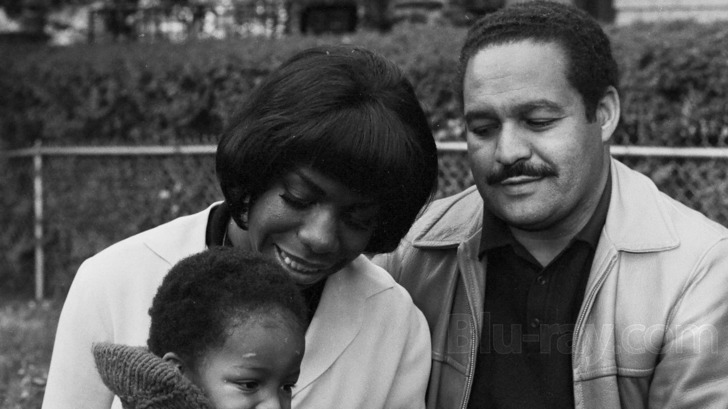
What Happened, Miss Simone? begins with a patently odd video snippet from a circa late sixties concert by Simone, when certain behavioral tics on her part had already become evident. She seems somewhat discombobulated, almost like she’s intentionally doing “performance art” rather than getting ready to actually perform, pausing in a really odd stance by the piano and then sitting at the piano without moving. It’s the first visual clue that somewhere along the line something started disconnecting for this amazing singer and perhaps even more amazing pianist. The documentary then journeys back to detail Simone’s past as a child piano prodigy named Eunice Waymon, a little black girl who literally had to cross to the other side of the tracks in order to take lessons from a kindly white woman who sensed something special in Eunice.
Eunice had dreams of being the first African American female classical pianist to play Carnegie Hall, but fate had a different path in store for her. A fund set up by believers allowed her to attend Juilliard for about a year and a half, but her application to the prestigious Curtis Institute in Philadelphia was rejected, a choice the about to be newly minted Nina Simone (more about that in a moment) rather quickly decided must have been due to racism (there’s no actual proof, but it’s notable that Curtis bestowed an honorary degree on Simone two days before her death, as if to atone—no pun intended —for past sins). With her family having moved to Philly to be near her, Eunice knew she had to get work somehow, and managed to wrangle a regular gig playing a bar. Because she knew her mother would be aghast that her little girl was playing “the devil’s music” (i.e., jazz), Eunice rechristened herself Nina Simone.
Another vagary of fate intruded when Nina, who had been hired to play piano, was informed by the club owner that if she wanted to collect a paycheck she needed to sing, too, and so a rather unlikely career was born. In 1958, Simone became an overnight sensation when her version of the Gershwins’ “I Loves You, Porgy” became a major pop hit. While Simone’s subsequent late fifties and early sixties singles never really took off, her albums sold well, and she became a staple both on the touring circuit as well as on television. In the meantime she had met and married a former vice cop named Andrew Stroud, a guy who in one way was Nina’s savior, since he was able to manage her and her career in a way that she herself had never been able to, but who was also her regular tormentor in an Ike and Tina Turner kind of way, as a series of rather shocking diary entries (not to mention actual memories by the pair’s daughter, Lisa Simone Kelly) make clear.
Things began changing, if not necessarily immediately unraveling, for Simone around 1963, when the Civil Rights movement got into full swing and Simone, in response to one of the more shocking horrors perpetrated on blacks in the south, wrote the intentionally provocative song “Mississippi Goddam”, a tune which Lisa Simone Kelly mentions got returned to the record company in piles of literally broken in half 45s since program managers and the public at large were simply not ready to hear such a self-possessed black woman give the world a piece of her mind. Dick Gregory offers an interesting assessment that despite the song’s notoriety in its day, only an African American woman could have gotten away with such a “blasphemous” statement—the culture of the early sixties simply wouldn’t have permitted an “uppity” black man to have made such a comment.
Whether or not Simone was self-destructive or simply in the throes of what was ultimately diagnosed as bipolar disorder or some combination of the two can probably be effectively argued any number of ways, but Simone’s unrepentant desire to be one of the prime “voices” of the Civil Rights movement wreaked havoc with her career, and that soon spilled over into her personal life. The second half of What Happened, Miss Simone? is therefore a bit melancholy, as Simone’s physical appearance begins declining and her erratic behavior disrupts both her personal and professional lives. The documentary has some fascinating interview segments, most saliently with Lisa Simone Kelly but also (archivally) with Andrew Stroud, but it’s at its best when it’s presenting old video and audio interviews with Simone herself, along with featuring some pretty alarming excerpts from Simone’s diary. (This is a total aside, but one which I found fascinating: some readers of my reviews know I spent years unpacking the “real” story behind another famous artist who suffered bouts of mental illness, Frances Farmer. I was kind of amazed to see that Simone’s handwriting, as evidenced by these diary entries, is amazingly similar to Farmer’s. One of the prevailing theories about Farmer’s “issues” is that she, too, suffered from bipolar disorder.)
There’s no real “moral” to this particular story, which may frustrate those who are looking for some kind of rational narrative to try to make sense out of Simone’s life and work. There are some interesting comments by Simone about what she considers “freedom” to be, and it boils down to her desire to be free of fear. She may have been extremely troubled, at least at times, but What Happened, Miss Simone? makes it abundantly clear that whether she knew it at the time or not, Simone was in fact fearless, or at least appeared to be to those surrounding her.
What Happened, Miss Simone? Blu-ray Movie, Video Quality
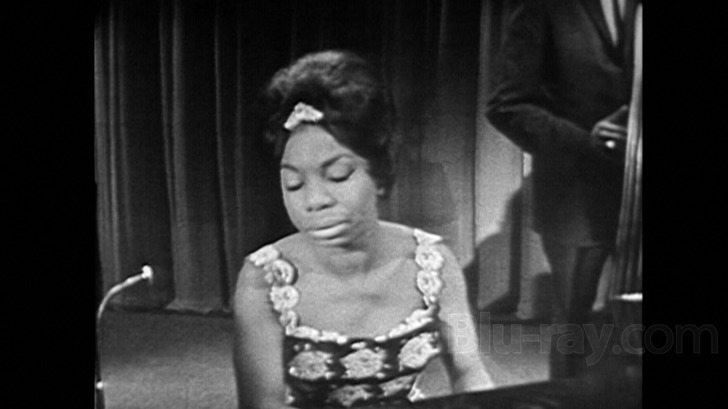
What Happened, Miss Simone? is presented on Blu-ray courtesy of Eagle Rock Entertainment with an AVC encoded 1080p transfer (mostly) in 1.78:1 (some archival footage boasts narrower aspect ratios, while still other archival footage has been reframed for 1.78:1). As should be expected of a documentary cobbled together from different source elements, there's a pretty heterogeneous look to this piece, with some of the older video elements showing minor anomalies like fringing or ghosting (some of the oldest sources are actually kinescopes, not videotape). The contemporary interview segments look sharp and well defined, with a natural looking palette. Some of the sources look like they've been blown up from smaller formats and can look a little noisy at times.
What Happened, Miss Simone? Blu-ray Movie, Audio Quality
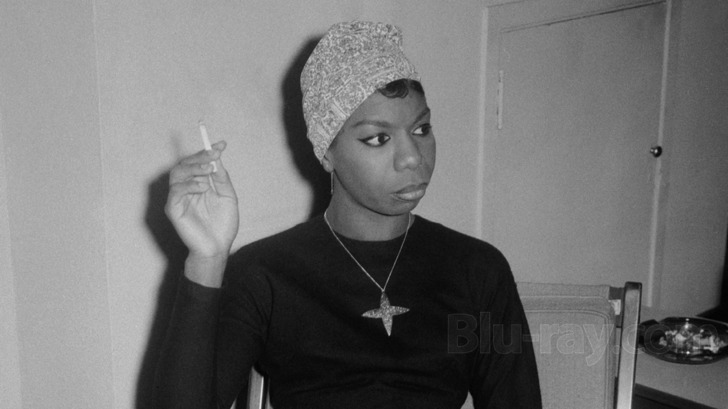
While there are both an LPCM 2.0 and a DTS-HD Master Audio 5.1 track on this release, there is in reality not that much difference between the two. This is due to a couple of reasons, first of which is the fact that Simone's music is really only offered in snippets, and often with voiceover attached. More importantly, though, Simone's small combo sound simply doesn't offer great surround opportunities even when it is playing. All of this said, both tracks offer excellent fidelity and no problems other than inherent issues in some of the archival audio.
What Happened, Miss Simone? Blu-ray Movie, Special Features and Extras
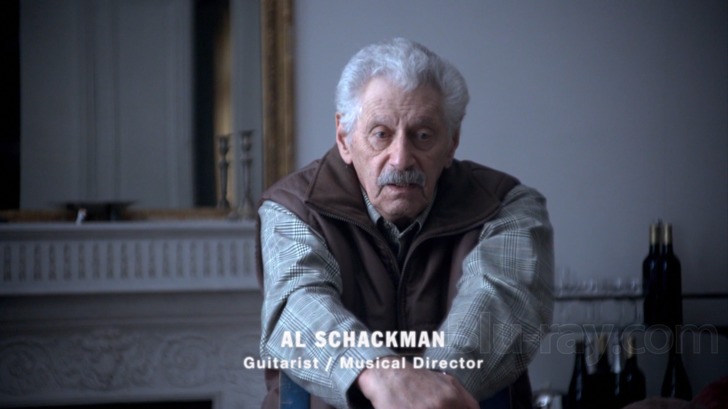
- Bonus Interviews (1080p; 14:19) features extended versions of several edited interviews shown in the documentary.
What Happened, Miss Simone? Blu-ray Movie, Overall Score and Recommendation
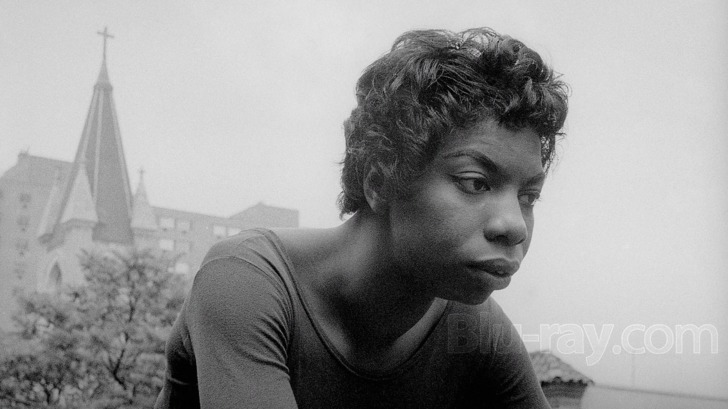
Listening to Simone play "Good King Wenceslas" as reimagined by Johann Sebastian Bach on the piano while she warbles the Rodgers and Hart classic "Little Girl Blue" is an exercise in arranging finesse (and one which apparently gobsmacked none other than Miles Davis, if one is to understand this particular tune is the subject of an anecdote shared in the documentary), just one of countless examples of the genius Simone brought to her music. Simone had a lot of acclaim, at least for a while, but in another way, she's still sadly underappreciated, especially with regard to her phenomenal keyboard skills. What Happened, Miss Simone? is inherently sad a lot of the time, but it's undeniably fascinating, much like its focal artist. Highly recommended.
Similar titles
Similar titles you might also like
(Still not reliable for this title)

Amy
2015
The Great Buster: A Celebration
2018

Won't You Be My Neighbor?
2018

The Kid Stays in the Picture
2002

Marley
with Bonus Disc
2012

I Am Not Your Negro
2016

Magician: The Astonishing Life and Work of Orson Welles
2014

George Harrison: Living in the Material World
2011

Pavarotti
2019

The Devil and Daniel Johnston
Choice Collection
2005

The Stone Roses: Made of Stone
2013

William Shatner: You Can Call Me Bill
2023

Life Itself
2014

Three Identical Strangers
2018

20 Feet from Stardom
2013

Country Music
Ken Burns
2019

The Police: Everyone Stares — The Police Inside Out
2006

Let's Get Lost
1988

Thelonious Monk, Straight, No Chaser
1988

The Salt of the Earth
Le Sel de la Terre
2014