We're No Angels Blu-ray Movie
HomeWe're No Angels Blu-ray Movie 
Limited EditionCinématographe | 1989 | 106 min | Rated PG | Jul 29, 2025

Price
Movie rating
6.2 | / 10 |
Blu-ray rating
| Users |  | 0.0 |
| Reviewer |  | 4.5 |
| Overall | | 4.5 |
Overview
We're No Angels (1989)
Ned and Jim, two escaped convicts on the run, find refuge with the Catholic Church when they are confused for and pose as priests.
Starring: Robert De Niro, Sean Penn, Demi Moore, Hoyt Axton, Bruno KirbyDirector: Neil Jordan
| Crime | Uncertain |
| Comedy | Uncertain |
Specifications
Video
Video codec: MPEG-4 AVC
Video resolution: 1080p
Aspect ratio: 2.35:1
Original aspect ratio: 2.39:1
Audio
English: DTS-HD Master Audio 5.1
English: DTS-HD Master Audio 2.0
Subtitles
English SDH
Discs
Blu-ray Disc
Single disc (1 BD)
Playback
Region A (C untested)
Review
Rating summary
| Movie |  | 2.5 |
| Video |  | 5.0 |
| Audio | | 4.5 |
| Extras |  | 4.0 |
| Overall | | 4.5 |
We're No Angels Blu-ray Movie Review
Reviewed by Brian Orndorf August 7, 20251989’s “We’re No Angels” is a semi-remake of a 1955 Michael Curtiz film, starring Humphrey Bogart. The original picture was a comedy, trying to have a little fun with its central premise of escaped convicts hoping to maintain a low profile as they make their way to freedom, getting caught up in the lives of others. The reworking is written by David Mamet and directed by Neil Jordan, and they don’t really settle on any particular tone for the feature, while comedic intent is often hard to discern. “We’re No Angels” boasts an impressive production design effort from Wolf Kroeger (who replicates his town-building achievement from 1980’s “Popeye”) and cinematography from Philippe Rousselot is stellar, but the movie, as gorgeous as it is, doesn’t quite work. There are a lot of ideas and performances in the mix, but the endeavor doesn’t follow through on most of them, resulting in a frustrating viewing experience.
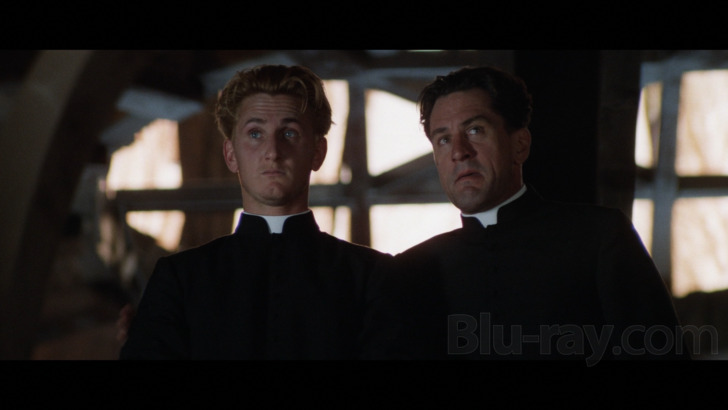
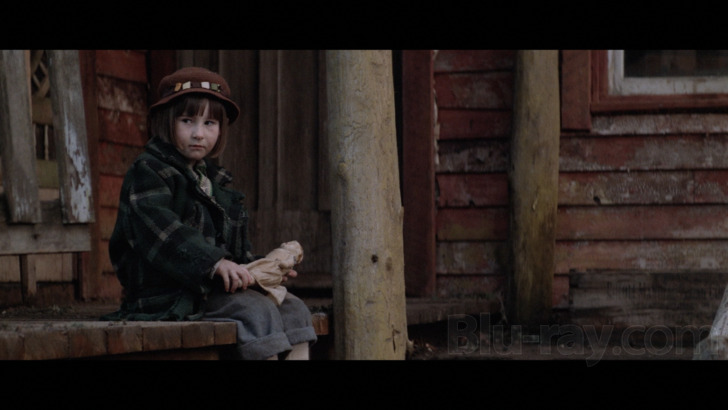
Doing time at the Black Ridge State Penitentiary, Ned (Robert De Niro) and Jim (Sean Penn) live in fear of the Warden (Ray McAnally), a sadistic man who enjoys making life miserable for the convicts. Facing his execution, Bobby (James Russo) makes a break for it, blasting his way out of the prison, pulling Ned and Jim into his escape plan. The men make their way to the Canadian border, trying to keep a low profile as the Warden seeks to collect them, ending up in a small town where the locals mistake them for visiting priests arriving to celebrate the annual procession of the Weeping Madonna statute. Ned and Jim go along with the mistake, with the latter connecting to Young Monk (John C. Reilly), feeling heavenly comfort and purpose. Ned scrambles to find a way to cross the border, confronted by Molly (Demi Moore), a tough local with a deaf daughter who tests whatever goodness remains in the convict.
“We’re No Angels” offers a grim tone, which isn’t a friend to any comedic intent. Ned and Jim initially experience the hellish ways of the penitentiary, facing punishment for talking during a speech from the Warden. They eventually trade the harshness of time inside in the big house for the chilly ways of small town life near Canada, working to handle their panic as the men seek to remove the chains that bind them and avoid attention from a growing number of cops looking for them, including the Deputy (Bruno Kirby). The production offers a bleak sense of Depression-era life, and Mamet tries to complicate the situation with the addition of Molly. While Moore gives a terrific performance, the character never feels connected to the rest of the picture, which is more interested in Ned and Jim’s misadventures in the priesthood.
“We’re No Angels” finds some balance with religious experiences, putting Jim into contact with spirituality he never knew he had, stumbling his way into profundity. There are nice scenes between the crook and Young Monk, who wants to follow in the footsteps of the faux leader, mimicking his accidental style. Ned isn’t interested in God’s light, pushing to get out of town, only to have almost every exit blocked, forcing him to deal with church leadership (including Hoyt Axton and Wallace Shawn). The supporting cast does very well here, finding their places as points of stress on the main characters, and Penn is acceptable as a dimwit. It’s De Niro who seems out of his league as the panicking priest, eventually reduced to making Moe Howard faces to sell the comedic intent of certain scenes, which doesn’t trigger laughs. The actor seems lost here, actually hurting the feature with his uncomfortableness, which intensifies as the story unfolds.
We're No Angels Blu-ray Movie, Video Quality
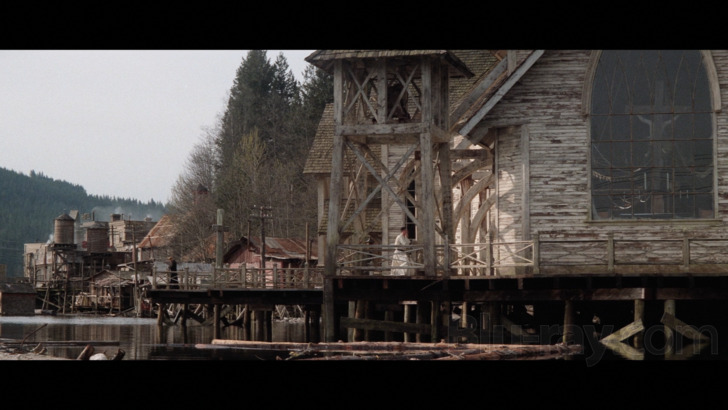
The image presentation (2.35:1 aspect ratio) for "We're No Angels" is listed as a "new director approved 4K restoration from the 35mm original camera negative." Cinematographic achievements are preserved on this release, which protects the wintery look of the feature, maintaining cooler hues with design elements that offer wood and steel, and the iciness of the river area. Costuming maintains darker hues, nicely balanced with the whiteness of religious garb. Signage brings out more varied hues. Skin tones are natural. Detail is strong, examining wear and tear on the characters, along with age. Character additions, such as rotten teeth, are defined, along with hairstyles. Clothing is especially fibrous, examining heavy winter gear and priest robes. Exteriors are deep, securing a full look at production design achievements and locations. Interiors remain dimensional. Delineation is satisfactory. Grain is fine and film-like. Source is in good condition.
We're No Angels Blu-ray Movie, Audio Quality
The 5.1 DTS-HD MA track offers clear dialogue exchanges, supporting performances choices, including a few that favor a more mumbled approach. Dramatic intent remains, along with interplay around locations involving rushing water. Scoring has some heft, with a full orchestral sound and emphasis. Surrounds explore some musical moods and atmospherics, but this is mostly a frontal listening event. Low-end perks up a little bit with more active displays of nature and violent moments. Sound effects are distinct.
We're No Angels Blu-ray Movie, Special Features and Extras
- Booklet contains essays by Patrick Dahl, Joshua Dysart, and Matt Prigge.
- Commentary features film historians Chris O'Neill and Bill Ackerman.
- "A Club That Already Existed" (14:27, HD) is an interview with director Neil Jordan, who wasn't aware of the original film, simply receiving a script from producer Art Linson and actor Robert De Niro, who urged him to helm his first Hollywood movie. Describing the shoot as "fractious," Jordan analyzes elements of stress and tremendous ego found in the cast and crew ("every day was a battle"), but he celebrates the material, which offered themes and ideas to work with. The interviewee praises creativity from production designer Wolf Kroeger, who built the entire town featured in the picture. Casting is dissected, supplying an understanding of De Niro's process, which requires everything to be "real" for him to contribute. Sean Penn's participation is honestly assessed, as Jordan "love and hated" working with him. Nature challenges are highlighted, and the post-production journey is followed, pitting the director against Linson, who wanted a "broader" movie.
- "The Right Elements" (8:42, HD) is an interview with actor James Russo, who shares his casting story, looking to charm Neil Jordan, immediately winning over the director. Characterization is analyzed, and memories of the location are shared, which proved to be too much of a van ride for De Niro, who brought in a helicopter to bring him to and from the set. Memories from the shoot are provided, highlighting Jordan's experimentation and personality, and thespian relationships are recalled, as Russo previously worked with Sean Penn on a few movies.
- Interview (31:25, HD) is actually a post-screening Q&A from 2020 with screenwriter David Mamet, who sits down for a discussion of his career after a showing of "House of Games." Mamet is presented with an award and offered an opportunity to explore his upbringing and creative inspiration. The theme of the evening is noir interests, pushing the guest to detail the moods of his work, not always agreeing with the moderator. Topics also include the world of critics (described here as "feral whores"), Mamet's collaborations with Ricky Jay, and his "death house meal." What's not here is any discussion of "We're No Angels."
- "A Comparison" (13:42, HD) is a video essay by Samm Deighan.
- A Theatrical Trailer has not been included on this release.
We're No Angels Blu-ray Movie, Overall Score and Recommendation
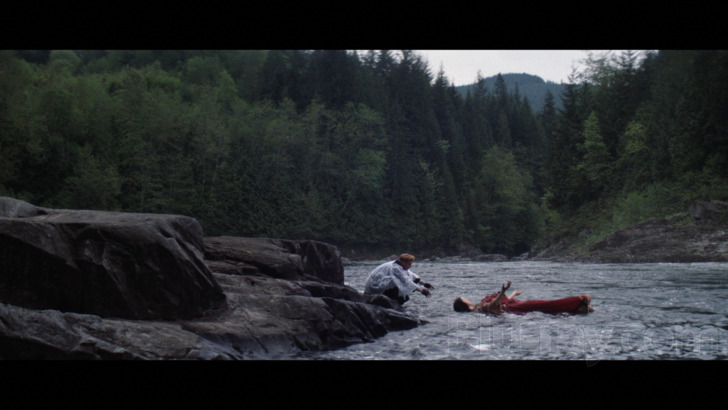
Jordan, Mamet, and the actors are all making their own versions of "We're No Angels" during the run time. It's a kind of creative chaos that doesn't sit well, limiting the picture's reach as a comedy and a tender study of character. Parts of the movie are a mess, but it remains lovely to look at, finding the big-budget approach paying off with a detailed period piece that sells its intended era superbly, creating a more involving visual experience than a dramatic one.

Similar titles
Similar titles you might also like

Vice Academy Part 3
Reissue
1991

Money Talks
Warner Archive Collection
1997

Deadfall
2012

Desperate Living 4K
1977

Bloody Mama
1970
Three Fugitives
1989

Fitzwilly
1967

Mystery Date
1991

Tough Guys
1986

Hanky Panky
1982

The Little Hours
2017

Bad Manners
Growing Pains
1984

Supervixens
1975

The Double Exposure of Holly
Slipcover in Original Pressing
1976

Babyface
1977
Happy, Texas
1999

Blindspotting
2018

Pardon Us
1931

Splitting Heirs
Retro VHS Collection
1993

The Dream Team
1989