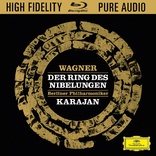
Wagner: Der Ring des Nibelungen - Herbert von Karajan Blu-ray Movie
HomeWagner: Der Ring des Nibelungen - Herbert von Karajan Blu-ray Movie 
Limited Edition w/ Book | Blu-ray AudioDeutsche Grammophon | 1967-1970 | 899 min | Not rated | Jun 30, 2017
Price
List price:Listed on Amazon marketplace

Movie rating
Movie has not been rated yetBlu-ray rating
| Users |  | 0.0 |
| Reviewer |  | 4.0 |
| Overall | | 4.0 |
Overview
Wagner: Der Ring des Nibelungen - Herbert von Karajan (1967-1970)
| Foreign | 100% |
| Music | 2% |
Specifications
Video
Video codec: MPEG-4 AVC
Video resolution: 1080p
Aspect ratio: 1.78:1
Original aspect ratio: 1.78:1
Audio
German: LPCM 2.0
Subtitles
None
Discs
Blu-ray Disc
Single disc (1 BD)
Playback
Region A (B, C untested)
Review
Rating summary
| Movie | | 4.0 |
| Video | | 0.0 |
| Audio |  | 4.5 |
| Extras |  | 2.5 |
| Overall | | 4.0 |
Wagner: Der Ring des Nibelungen - Herbert von Karajan Blu-ray Movie Review
Reviewed by Jeffrey Kauffman July 10, 2017Don’t let anyone ever tell you there’s no such thing as karma. During my younger years, I studiously avoided virtually all Richard Wagner, aside from some assignments I received in my piano studies or, later, with some composition and theory professors. (I once completely ruined a final exam in a theory class by blurting out the “solution” to analyzing Wagner’s famous “Tristan chord”.) That refusal to indulge in one of the titans of music probably was nowhere more pronounced than in my complete (or near complete) lack of interest in Der Ring des Nibelungen, Wagner’ epochal multi-show extravaganza which requires what some might cheekily aver is a major commitment. I was actually quite interested in the Nibelungenlied, the epic poem that served as the basis for Wagner’s “music drama”, and so had more than a passing knowledge of the underlying mythology, but with regard to Wagner’s “musicalization” of the source material, aside from the old warhorses like “Ride of the Valkyries”, I wasn’t that aware and frankly not all that interested in any case. Well, guess what a multi-year stint as a Blu-ray reviewer can do for your classical music edu-ma-cation? As if some cosmic force was aware of my youthful indiscretions (or at least the ones related to Wagner’s Ring cycle), I’ve thus far reviewed several versions, including Wagner: The Ring Cycle, Wagner: Der Ring Des Nibelungen, Wagner: Der Ring des Nibelungen - Highlights (see the review for links to the individual full length releases), Wagner: Der Ring Des Nibelungen, and Wagner: Der Ring des Nibelungen - Georg Solti. Just for good measure, individual works from the Ring Cycle have also ended up in my review queue, including Wagner: Die Walkure.
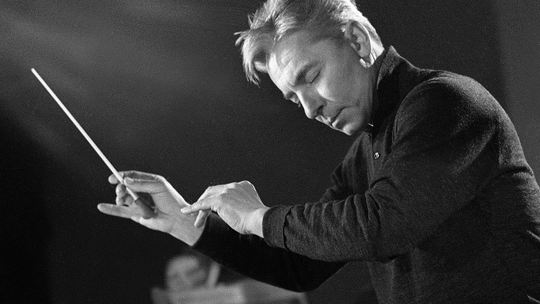
Speaking of "youthful indiscretions", Herbert von Karajan had a bit of a one himself, and one that plays into the subtext of him even approaching the music of Wagner and the Ring Cycle in particular. Karajan was one of countless artists who joined the Nazi party during the war years, later claiming it was merely "part of the job", and there have been a number of rather adamant defenders of the conductor's choices and reputation through the years. No matter how one feels about Karajan's choices from an era fraught with dangers no matter what choices were made, it's probably impossible to divorce this personal history from the larger historical fact of how Wagner and the Ring itself were used in Nazi propaganda efforts.
Salzburg is probably more associated with a certain Wolfgang Amadeus Mozart than it is with a certain Richard Wagner, but as one of the very interesting essays contained in the book part of this release reveals, there’s a definite Salzburg connection the von Karajan Ring Cycle. Salzburg’s more intimate stage sizes led to what some have called a “chamber music” aspect to Karajan’s interpretation of Wagner’s immense scores (an appellation the maestro evidently hated), and while the general sense of that term may in fact be a misnomer when applied to pieces this gargantuan, there’s an attention to detail in these readings that is almost always fascinating, if sometimes passingly anachronistic.
Three of the four original recordings included in this set met with quite a bit of critical acclaim in terms of awards being doled out, with Das Rheingold winning two 1969 Grand Prix du Disque trophies, Die Walkure winning the Grand Prix International du Disque, as well as major Italian and Spanish recording prizes, and Siegfried scoring a Grammy along with supplementary German and Italian recording awards. Though some of von Karajan’s initial casting choices struck some longtime Wagner followers as ostensibly unexpected, the results here are often sumptuous in the vocal department, with singers who achieve traditional Wagnerian timbres and approaches even if their perceived strengths were not supposedly in the Germanic tradition.
That said, one of the chief allures of these recordings is the incredible energy, but also the often restrained nuance, that the orchestral forces bring to the recordings. The Berlin Philharmonic achieves some real luster throughout these readings, with fine, rich brass tones predominating, but with Wagner’s often florid string writing receiving precise playing as well. Von Karajan’s approach is perhaps not quite as alert as Solti’s (for want of a better term), but it’s probably more deliberately passionate (even sensuous at times) and often viscerally exciting, building to an appropriate apocalyptic fervor once Gotterdammerung wends its way to its fiery conclusion.
Wagner: Der Ring des Nibelungen - Herbert von Karajan Blu-ray Movie, Video Quality
There's no video to speak of on this release. A static image of Von Karajan greets the "viewer", with choices for all the operas, which then lead to submenus with complete track listings for that particular piece, with the same image of Von Karajan on those pages. Kind of whimsically, each opera's submenu is "color coded", with, for example, Gotterdammerung sporting appropriately fiery orange-red hues.
Wagner: Der Ring des Nibelungen - Herbert von Karajan Blu-ray Movie, Audio Quality

While the back cover of this release's slipbox includes a Dolby TrueHD logo, the only audio track I could access was an LPCM 2.0 option. There's really next to no technical information given on either the slipcase or the voluminous text inside the book, other than a brief comment that the original recordings have been remastered at 24 bit / 96 kHz by Emil Berliner Studios. The Deutsche Grammophon imprimatur is probably enough recommendation for most discerning classical audiophiles as to the quality of those original recordings, and they've been expertly handled for this release. There's an inherent warmth to the original analogue recordings that's been rather remarkably carried over into the digital domain, and fidelity and dynamic range remain absolutely top notch throughout all four operas. Balance is typically expertly handled, with no real prioritization issues between soloists and the often overwhelming forces of Wagner's orchestral imagination. The soaring upper registers of some the soprano arias could have used a bit more brightness in my personal opinion, but midrange and low end sonics are typically incredibly forceful and resonant. Listening to something more or less "whole hog" as I did with this can be a somewhat mind numbing experience after a while, but I was repeatedly struck with the warm sound of these recordings.
Wagner: Der Ring des Nibelungen - Herbert von Karajan Blu-ray Movie, Special Features and Extras
While the audio Blu-ray contains no supplementary material, this comes housed in an attractive CD sized digibook with a hardback book attached to the tray holding the disc. Several hundred pages are devoted to both generalist essays as well as the original introductions to the operas from the LP versions, as well as complete libretti in both English and German. Extensive archival photographs are also included. The score above reflects the quality of the book additions despite the fact that the disc itself has no supplements.
Wagner: Der Ring des Nibelungen - Herbert von Karajan Blu-ray Movie, Overall Score and Recommendation
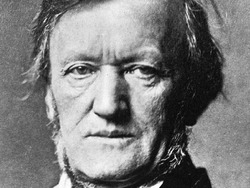
Herbert von Karajan brings a perhaps more robust Romantic fervor to these readings than might be expected from someone so strongly associated with the symmetrical, rational impulses of the Classical (capital C) Era as embodied by Beethoven. Kind of oddly, then, I think I actually prefer Solti's somewhat more intellectual approach toward these scores, though Karajan's passion is communicated quite clearly through both the singing and especially orchestral playing. This is another top flight release in any case, and despite having a pretty hefty current price it easily comes Highly recommended.