Voodoo Macbeth Blu-ray Movie
HomeVoodoo Macbeth Blu-ray Movie 
Lightyear | 2021 | 108 min | Not rated | Jan 17, 2023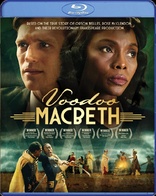

Movie rating
Movie has not been rated yetBlu-ray rating
| Users |  | 0.0 |
| Reviewer |  | 3.5 |
| Overall | | 3.5 |
Overview
Voodoo Macbeth (2021)
In 1936 Harlem, the first all-Black cast production of 'Macbeth' struggles to make it to opening night amid the downward spiral of their young and untested director - Orson Welles.
Starring: Inger Tudor, Donnell Jewell Williams, June Schreiner, Jeremy Tardy, Daniel Kuhlman| Drama | 100% |
Specifications
Video
Video codec: MPEG-4 AVC
Video resolution: 1080p
Aspect ratio: 2.00:1
Original aspect ratio: 2.00:1
Audio
English: DTS-HD Master Audio 5.1
English: LPCM 2.0
Subtitles
English SDH
Discs
Blu-ray Disc
Single disc (1 BD)
Playback
Region A (B, C untested)
Review
Rating summary
| Movie | | 3.5 |
| Video |  | 4.5 |
| Audio |  | 4.0 |
| Extras |  | 1.5 |
| Overall | | 3.5 |
Voodoo Macbeth Blu-ray Movie Review
Reviewed by Jeffrey Kauffman January 12, 2023One of the kind of interesting things that started informing American professional theater and in fact even some other media like film in the 1930s is what might be termed a "collectivist" spirit that often trumpeted Communist ideology outright. In this approach, there were no "stars", per se, and "below the line" and/or "behind the scenes" artisans were (supposedly, anyway) deemed to be just as important as anyone whose name was above the title of the production. The Group Theater is probably the single most salient example of this trend, at least within the confines of 1930s Broadway, though for an interesting example in film, at least insofar as a credits roll is concerned, Syncopation might be of interest to some. The collaborative spirit that was ostensibly fostered by this way of doing things refracts in a couple of fascinating ways in Voodoo Macbeth, a somewhat fanciful recounting of Orson Welles' now legendary production of the so-called "Scottish play" (is there a curse involved when merely typing its title?) as part of the New Deal program called the Works Progress Administration, which funded the Federal Theatre Project, which in turn gave birth to the Negro Theatre Unit, which is the focal troupe of this story. But in a "meta" sense, there's a rather intriguing "behind the scenes" collectivist aspect to this very film, as is disclosed not just in its credit roll, but in a somewhat loose limbed commentary featuring several members of the cast and crew. Voodoo Macbeth is the first outing for USC Originals, a joint production of the University of Southern California's vaunted School of the Cinematic Arts, and Warner Brothers, and it's kind of like a USC "student film", albeit in this case perhaps more accurately students (plural), with a considerably more polished look and feel than is usually associated with such "beginner" efforts, something that's perhaps unexpectedly commendable given the fact that the aforementioned credits roll offers eight scenarists and no fewer than ten (!) directors.

While quite a bit of Voodoo Macbeth at least hovers near the actual historical record, several liberties have been taken along the way, and so for anyone wanting the truth and nothing but, this film may serve better as an introduction for further investigation rather than as the be all end all of accurate information. The film quickly introduces John Houseman (Daniel Kuhlman), who is overseeing the Negro Theatre Unit and is skirmishing with prima dona Rose McClendon (Inger Tudor), who wants to stage an all black version of Macbeth. Houseman is initially skeptical (all of this part of the story is a bit far fetched, since Houseman himself was at least partially responsible for helping the Negro Theatre Unit to have both "contemporary" and "historical classics" categories from which to cull material), but ultimately agrees, deciding to hire his friend to direct, and up and coming radio voice artist named Orson Welles (Jewell Wilson Bridges) who is all of 20 years old.
According to this version of events, Welles himself is initially skeptical and declines the offer, until his wife Virginia (June Schreiner) suggests reimagining the "Scottish play" in a different location entirely, which then sparks enough interest in Welles that he returns to John and Rose and pitches his idea of a more or less modern update of Shakespeare's immortal play taking place in Haiti, and with voodoo taking the place of the original's witchcraft. With the concept at least somewhat in place, any number of challenges ensue, including finding enough competent black actors to handle the play. But here the film perhaps tips just slightly into both stereotype, as well as a somewhat cartoonish aspect involving the chief antagonist of the tale, congressman Martin Dies (Hunter Bodine).
It's the introduction of Dies which may begin to chafe at some armchair historians' reactions to the film, because Dies' anti-Communist screeds delivered in this version ignore the rather provocative aspect of the real story that while, yes, there were "concerns" about the so called "left leaning" perspectives on display, there were actual protests by honest to goodness Communists against this production, who felt the whole thing was an example of what might in modern day parlance be called "woke casting". Voodoo Macbeth also either wholly invents other vignettes, or at least presents them in anachronistic ways, including the relationship between Welles and this film's version of former boxer Canada Lee, here renamed Cuba Johnson (Wrekless Watson). There's also a really provocative moment where Welles supposedly dons blackface to assume the title role, in a sequence that never happened in New York if it ever happened at all (Welles evidently claimed to have taken over the part unannounced one night in Indianapolis, though there doesn't seem to be any actual evidence supporting this questionable assertion).
Still, Voodoo Macbeth offers an especially fierce performance from Tudor, and the film's production design is generally well handled (the commentary mentions how a lot of the film was shot on the Warner backlot, and one slight qualm may have with the presentation is how obvious it is that it is a backlot). While certainly not completely tethered to the historical record, this is an often intriguing production that certainly augurs well for USC Originals.
Voodoo Macbeth Blu-ray Movie, Video Quality
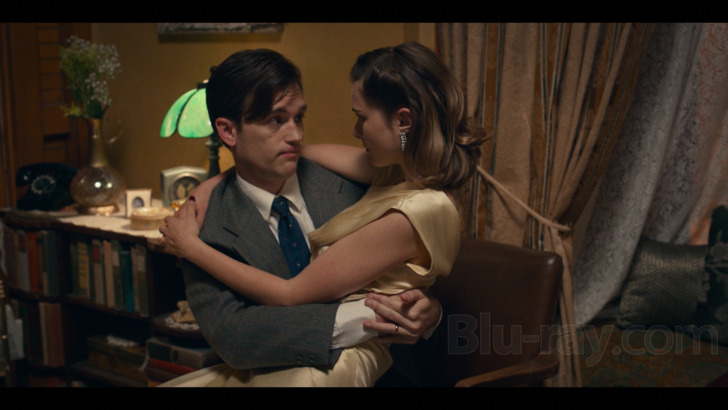
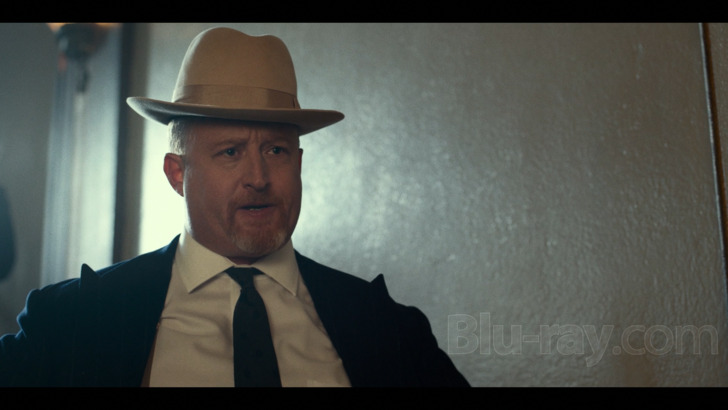
Voodoo Macbeth is presented on Blu-ray courtesy of Lightyear Entertainment with an AVC encoded 1080p transfer in 2.00:1. The IMDb doesn't have any technical data, but this is an appealing looking digital capture that very well could have had a 4K DI, given the overall excellent detail levels on display. A lot of the film isn't especially brightly lit, as can perhaps be made out in some of the screenshots I've uploaded to accompany this review, but aside from some very slight flirtations with crush, detail levels are surprisingly secure throughout the presentation. The palette is very nicely burnished, and there's an appealingly warm glow to a lot of the visuals. While the backlot material may not pass muster with those wanting a more gritty depiction of Harlem streets, interior scenes offer some relatively luxe production design that can offer nice fine detail levels on fabrics in particular.
Voodoo Macbeth Blu-ray Movie, Audio Quality
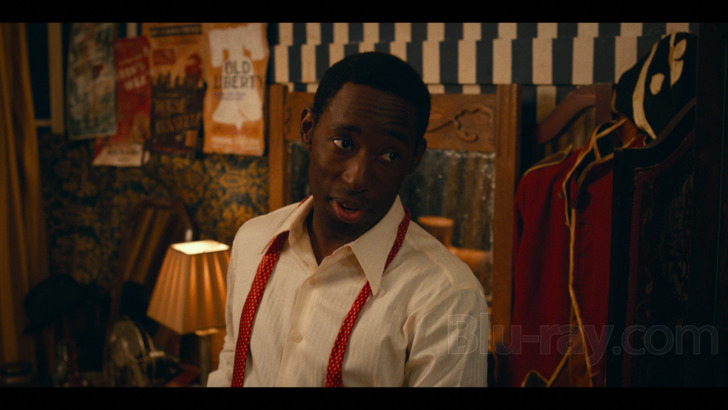
Voodoo Macbeth offers DTS-HD Master Audio 5.1 and LPCM 2.0 audio options. The film frankly doesn't offer a Byzantine sound design, and many scenes are comprised of "simple" dialogue without even many ambient environmental effects, but the surround track can open up noticeably in selected moments, as when Orson and Virginia first hear a street musician busking on some congas, which supposedly sparks their inspiration for a Caribbean setting for the play. Some of the theater scenes can also offer good placement of background noise to help establish spaciousness, but my hunch is those whose setups only allow for the stereo track won't have much to complain about. Dialogue is rendered cleanly and clearly throughout. Optional English subtitles are available.
Voodoo Macbeth Blu-ray Movie, Special Features and Extras
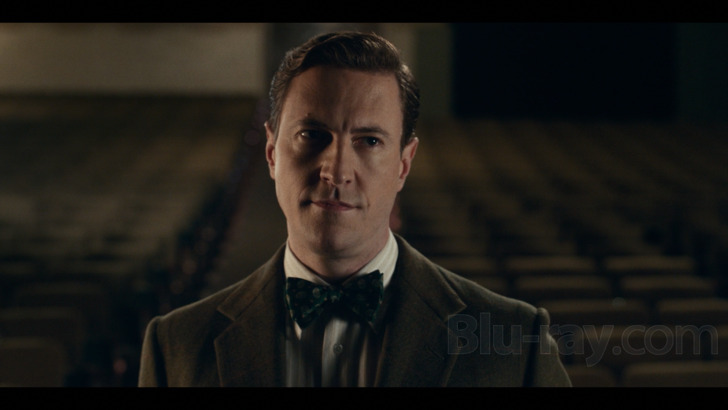
- Original Footage (SD; 4:02) is a fun snippet from a documentary offering a few scenes from the original production. This also plays in a windowbox during the film's closing credits.
- Director's Commentary probably shouldn't have that singular possessive form, given the participation of ten people in that role, but this discussion features Zoe Salnave (one of the ten), along with Jewell Wilson Bridges, Inger Tudor, co-writer Erica Sutherlin, and co-producers Miles Alva and Jason Phillips. This is accessible under the Setup Menu.
Voodoo Macbeth Blu-ray Movie, Overall Score and Recommendation
Voodoo Macbeth tells a fascinating story, and if some may wish that story had been a bit more connected to what actually happened, there is obviously a long and troubled history of films "fictionalizing" things, supposedly for dramatic purposes. The best thing about Voodoo Macbeth is arguably the commanding work of Inger Tudor, and her performance may spark some to research the real life Rose McClendon. Technical merits are solid, and the archival footage of the original is fun, if awfully brief. Recommended.