Visions of Europe Blu-ray Movie
HomeVisions of Europe Blu-ray Movie 
Acorn Media | 12 Seasons | 915 min | Not rated | Sep 20, 2011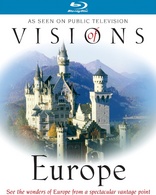
Price
List price:Listed on Amazon marketplace

Movie rating
6.9 | / 10 |
Blu-ray rating
| Users |  | 0.0 |
| Reviewer |  | 3.0 |
| Overall | | 3.0 |
Overview
Visions of Europe ()
A selection from the public television "Visions" series, VISIONS OF EUROPE offers a virtual tour of European cities and landscapes through aerial photography, historical and cultural information, and regional music. This collection presents the following episodes: "Visions of Austria," "Visions of France: Provence and the Riviera," "Visions of Germany: Bavaria and Along the Rhine," "Visions of Greece: Greece and Off the Beaten Path," "Visions of Italy: Northern Style, Southern Style, Sicily, and the Great Cities," and "Visions of the Great Cities of Europe," which visits London, Amsterdam, Rome, Vienna, Budapest, Paris, and Prague.
| Documentary | 100% |
| Nature | 75% |
Specifications
Video
Video codec: MPEG-4 AVC
Video resolution: 1080i
Aspect ratio: 1.78:1
Original aspect ratio: 1.78:1
Audio
English: DTS-HD Master Audio 5.1
English: Dolby Digital 2.0
English: LPCM 2.0
Subtitles
English SDH
Discs
25GB Blu-ray Disc
Six-disc set (6 BDs)
Playback
Region A (locked)
Review
Rating summary
| Movie |  | 2.5 |
| Video | | 3.0 |
| Audio |  | 3.5 |
| Extras |  | 2.0 |
| Overall | | 3.0 |
Visions of Europe Blu-ray Movie Review
The Accidental Blu-ray Tourist
Reviewed by Michael Reuben December 24, 2011The Visions series is an original production of WLIW, which is New York City's "secondary" PBS station and the third most-watched PBS station in the country. The series presents hour-long aerial tours—coffee table books in high definition—of cities and regions all over the world. Visions began in 1997, and to date there have been 24 installments. Twelve have been gathered in this collection under the title Visions of Europe. The great irony of the Visions series is that it's hi-def programming produced by a channel that, even after it converted from analog to digital in 2009, has only ever broadcast in standard definition. Still, for many years, WLIW would show episodes of Visions during pledge breaks and offer DVDs of episodes as pledge bonuses. (The Italian entries proved especially popular.) To understand the appeal, as well as the nature of the program, one needs to understand the make-up of the station's viewership. New York City and its bedroom communities in New Jersey, Westchester and Long Island constitute an enormous and diverse TV audience. In the 1980s, that audience was large enough to support three not-for-profit educational stations. The first was WNET, or "Thirteen", the city's primary PBS station that carried all the "big" programs like Masterpiece Theater or Ken Burns's documentaries (at least in their initial broadcast). By contrast, WLIW was headquartered on Long Island and specialized in local programming primarily of interest to the suburban communities that surrounded it. A third network, WNYC, was owned by the city and carried additional PBS programming, with a focus on children's education and British TV. As competition for viewers' attention increased in the Nineties, this situation had to change. The city sold WNYC to commercial interests in 1995, and its former programming was either picked up by the two PBS stations or scrapped. In an atmosphere of increasing hostility to government funding for PBS, WLIW scrambled to devise programming that it could syndicate to other PBS stations but would still appeal to its core audience. Thus was born the Visions series, which now appears not only elsewhere on public television, but also on HDNet. In a further irony, in 2003 WLIW itself was absorbed by its bigger PBS sibling, Thirteen. Operations were consolidated in Manhattan, and redundant personnel were eliminated. But Thirteen has kept the Visions series going strong. It knew a profitable property when it saw one, even though it rarely shows the programs on its own HD channel.
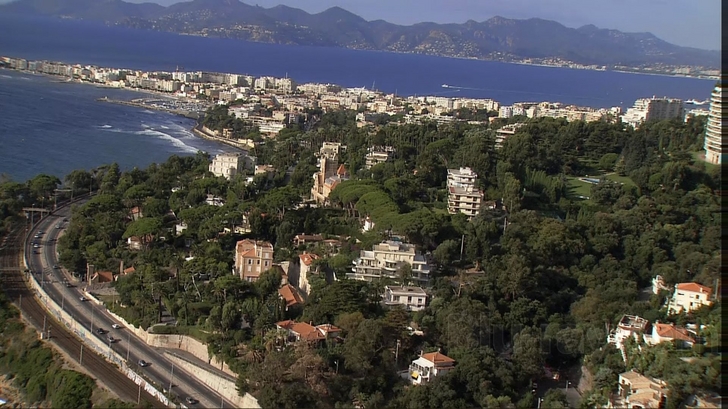
The four programs that make up Visions of Italy ("Northern Style", "Southern Style", "Visions of Sicily", "The Great Cities") were previously released as a separate title and reviewed by my colleague Casey Broadwater. Please consult Casey's review for further information. The remaining eight programs appear in this collection for the first time. In the film The Accidental Tourist , based on the novel by Anne Tyler, William Hurt plays a writer of travel guides whose logo is a winged armchair. That logo could serve equally well for the Visions series. Each episode follows an almost ritualistic process of identifying a locale (or several), then providing as many striking aerial views as possible from a hi-def camera mounted in a helicopter. The goal is to show the viewer countries and cities from a perspective that even an actual visit would not provide. The effect, if you happen to have visited the location yourself, is like buying picture postcards shot by a professional who has captured moments and angles you could never achieve on your own. The major exception is the installment entitled The Great Cities of Europe. Perhaps because cities often involve a lot of walking, this entry is distinguished by many shots from a pedestrian's point of view. The alternation of ground-level and bird's-eye perspectives makes for an intriguing visual contrast, one that the producers of Visions would do well to consider further exploring in the future. Complete coverage of a region is never attempted, and indeed after a new episode airs one can usually find comments at WLIW's website complaining about the omission of this or that area of a country. Then again, how much can anyone expect a documentary to cover in the space of an hour? Nor is educating the viewer a primary objective of Visions. Each episode comes with narration, frequently delivered by a speaker with the appropriate accent, but the voiceover usually is limited to the most general observations, and long pauses are frequent. This can sometimes be an advantage, because there's always a risk that information will become dated. A noteworthy example occurs in The Great Cities of Europe, when the tour reaches Dublin and the narrator enthusiastically informs the viewer that "brain power and technology, not to mention membership in the European Union, have renewed the town's confidence". Ireland's confidence had already taken a beating from the world financial crisis by the time this installment was released in 2009, but given the latest developments with the EU, that line has become an unintentional howler. Of course, if one elects to watch the episode with the music-only track, one need not be concerned with such matters. The very fact that every episode is offered with such a track says all that need be said about the narration's lack of importance. Since there is no story or plot to recount, the most useful guide to a Visions episode would be a complete listing of the individual locales, which are identified by on-screen titles. WLIW typically supplies such a list when a new episode appears, and a separate site is supposed to retain them for all episodes, but the site is poorly designed and badly maintained. As an alternative, I will follow my colleague's lead and supply the chapter headings for each disc. However, as an example of what a "tour" covers, I am including the detailed listing for Visions of Austria, which I was able to locate at the series' website.

- Introduction
- Bregenz, Jerzens, Swarovski Crystal Works
- Innsbruck, Bruck
- Radsberg, Stubeberg am See, Graz, Murinsel, Wörthersee, Klagenfurt
- Wolfgangsee, Mondsee, Mattsee, Salzburg
- Linz, Durnstein Castle, Aggstein Castle, Tausendeimerberg, Spitz, Rohrau
- Vienna
- Credits
- Bregenz (Vorarlberg)
- Bregenz Festival Theater with floating stage (Vorarlberg)
- Alt Ems castle ruins (Vorarlberg)
- Bregenzwald (Vorarlberg)
- Plannsee (Tirol)
- Freundsberg Castle (Tirol)
- Inn Valley (Tirol)
- Jerzens (Tirol)
- Weerberg Parish Church (Tirol)
- Swarovsky Crystal Factory (Tirol)
- Innsbruck Alt Stadt (Tirol)
- Wilten Abbey, Innsbruck (Tirol)
- Bergisel Ski Jump, Innsbruck (Tirol)
- Kitzbuhel (Tirol)
- Kitzbuhelhorn (Tirol)
- Hallstatt (Salzburg)
- Steineresmeer
- Dachstein Mountains
- Mondsee (Upper Austria)
- Wolfgangsee (Upper Austria)
- Linz (Upper Austria)
- St. Florian's Abbey (Upper Austria)
- Grein (Upper Austria)
- Wörthersee (Kärnten)
- Klagenfurt (Kärnten)
- Magdalensberg (Kärnten)
- Hohensalzburg Fortress Castle (Salzburg)
- Mirabell Palace and Gardens (Salzburg)
- Mozartgeburthaus (Salzburg)
- Franziskanerkirche (Salzburg)
- Salzburg Cathedral
- Salzburg Mozartplatz Dürnstein Castle Ruins (Lower Austria)
- Melk Abbey (Lower Austria)
- Rosenberg Castle (Lower Austria)
- Aggstein Castle (Lower Austria)
- Neusiedlersee (Burgenland)
- Eisenstadt Alt Stadt (Burgenland)
- Eszterhazy Palace, Eisenstadt (Burgenland)
- Neue Burg (Vienna)
- Burggarten (Vienna)
- Michaelerplatz (Vienna)
- Rathaus (Vienna)
- Burgtheater (Vienna)
- "Börse" Stock Exchange Building (Vienna)
- Figarohaus (Vienna)
- Secession Building (Vienna)
- UNO City United Nations Headquarters (Vienna)
- Hundertwasserhaus (Vienna)
- Gasometer Complex (Vienna)
- Freud Museum (Vienna)
- Sacher Hotel (Vienna)
- Ringstrasse (Vienna)
- Landtmann Café (Vienna)
- St. Stephen's Cathedral (Vienna)
- Karlskirche (Vienna)
- Schönbrunn Palace (Vienna)
- Belvedere Palace (Vienna)
- Votivkirche (Vienna)
- Parliament (Vienna)
- London
- Amsterdam
- Budapest
- Nice
- Monaco
- Rome
- Vienna
- Prague
- Dublin
- Florence
- Venice
- Paris

- Opening, Carcassonne, Béziers, Rhône River
- Avignon, Châteauneuf-du-Pape, Gorges de l'Ardèche, Orange
- Tarascon, Gardon River, Pont du Gard, Arles
- Camargue, Aigues-Mortes, Crop Circle
- Les-Baux-de-Provence, Gordes, Sisteron
- Durance River, Aix-en-Provence, Mt. Ste-Victoire
- Calanques, Cassis, Embiez Islands, La Ciotat, Bandol
- Credits
- Opening, Cap Ferrat, La Turbie, Annecy
- Theus, Gilette, Utelle, Vésubie Gorge, Village of Eze
- Monaco, Monte Carlo, Menton
- Porquerolles Harbor, La Croix-Valmer, St. Tropez, Ste. Maxine
- St. Raphael, Vence, Grasse, St. Paul, Mougins, Cannes
- St. Honorat Island, Antibes, Villeneuve-Loubet-Plage
- St. Jeannet, Aspremont, Levens, Nice
- Credits
- Opening, Bodensee, Lindau, Mainau, Friedrichshafen
- Landsberg am Lech, Augsburg, Rothenburg
- Würzburg, Vierröhrenbrunnen, Füssen, Mittenwald
- Oberammergau, Schloss Linderhauf, Garmisch-Partenkirche, Zugspitze
- Chiemsee, Schloss Herrenchiemsee, Prien, Passau, Dom St. Stephen
- Bayreuth, Coburg, Bamberg
- Ammersee, Munich, The Alps
- Credits
- Black Forest (Schwarzwald), Freiberg, Hohenzollern Castle, Tübingen
- Ulm, Esslingen, Stuttgart
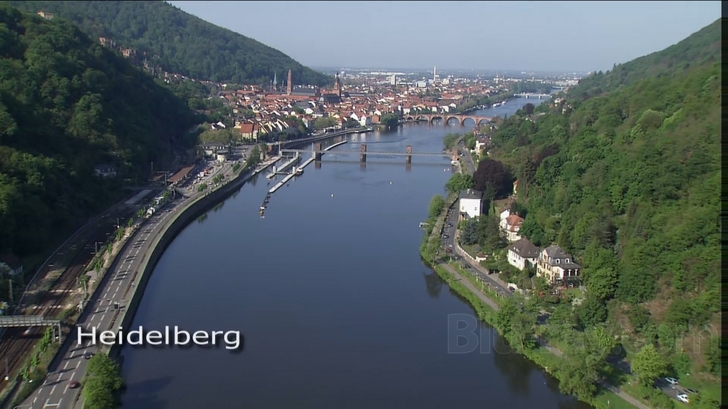
- Heidelberg, Rhine River, Karlsruhe Palace, Maulbronn
- Schwetzingen, Mannheim, Worms, Bad Dürkheim
- Mainz, Frankfurt, Wiesbaden, Statue of Germania
- Bingen, Bacharach Castle, Schönberg Castle, Boppard
- Koblenz, Maria Laach, Remagen Bridge
- Bonn, Cologne (Köln)

- Opening, Mikonos, Delos, Naxos
- Andiparos, Sifnos, Paros, Siros
- Santorini, Crete, Isle of Rhodes, Lesbos
- Kavala, Mt. Athos Peninsula, Thessaloniki, Edessa
- Ionina, Meteora, Corinth Canal, Monemvassia
- Pilos, Methone, Mistras, Poros
- Egina, Mycenae, Epidauros, Olympia
- Zakinthos, Corfu, Delphi, Athens
- Northern Aegean Sea, Alexandroupolis, Agios Nikolaos, Komotini, Vergína
- Ouranoupolis, Agiou Panteleimonos, Megistis Lavras
- Mount Athos, Halkidiki Coast, Thassos Town, Port of Simi
- Iraklio, Island of Simi, Island of Ios, Island of Nassiros, Hania, Crete
- Rethimno Beach, Iraklio Beach, Festos, Moni Isidora
- Sfakia, Crete, Amari Quarry, Vai Bay, Spinalonga Island
- Loutro, Hania, Agia Galini, Ruins at Gortyna, Lassithi Valley, Idra
- Argos, Temple of Zeus, Nemea, Mycenae, Ruins at Sparta, Molai
- Elifonisos Island, Kythira, Island of Nissi, Kastoria, Pisoderi,
- Mount Olympus, Tembi Valley, Kalambaka, Igoumenitsa
- Southern Coast, Corfu, Paleokastriza, Lefkada, Fiskardo, Kefalonia, Assos
- Credits
Visions of Europe Blu-ray Movie, Video Quality
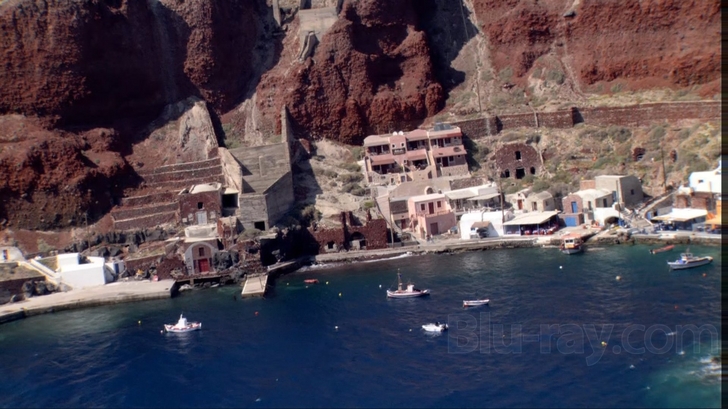
At the outset, let's note an odd phenomenon. When Acorn Media released the four Visions of Italy programs in 2009, they were spread between two BD-50s, two programs per disc. The newly issued eight programs have been organized and formatted in the same way, down to the menus and type (and length) of bonus materials, but now they've been issued on BD-25s. If one compares the discs containing Sicily and The Great Cities, on one hand, and Austria and The Great Cities of Europe, on the other, the two discs feature about the same amount and type of material, but the former has a disc image of approximately 38GB and the later approximately 18GB. Is this an indication of how far compression techniques have advanced in two years (or, perhaps, how much the AVC codec has been improved)? Certainly I wasn't able to spot any fall-off in quality between the new discs and the old ones, in the sense that the video issues previously identified by Casey Broadwater in his review of Visions of Italy still exist in the eight newly released programs. The 1080i, AVC-encoded Blu-rays still suffer from recurrent aliasing and jaggies, and there is more digital noise in certain shots than there should be, even in more recent productions. The larger your screen, the more distracting this is likely to become. On my 72" screen, I found it very distracting. On the smaller screens that I suspect WLIW is anticipating among its core audience, these issues are probably less of a problem. Some installments fare better than others. The two episodes under the heading Visions of France, for example, present a noticeably smoother and more pleasing image. The two episodes on the disc Visions of Greece are not quite as smooth, but they are still noticeably superior to Visions of Austria or the two Visions of Germany programs. However, I couldn't begin to tell you why these variations exists. Variations in equipment, superior cameramen, more skillful helicopter pilots, changes in lighting or atmospheric conditions, peculiarities of the subject matter being photographed—who knows? It is almost certainly not the case that the difference results from any post-production work, because the economics of a small-scale production like Visions render such enhancements impractical. Besides, what would be the point of capturing the natural beauty of exotic locations, only to "enhance" the images in a computer? The strength of the Blu-rays is their varied and often striking colors and, when the aliasing isn't getting in the way, the degree of detail you're able to make out in landscapes and buildings. If you're going to sightsee by video, you might as well be able to make things out. More often than not, on these discs, you can make out much, much more than you'll ever see from the ground, and a lot of things that you'd never see without chartering your own whirlybird.
Visions of Europe Blu-ray Movie, Audio Quality
All eight of the programs reviewed here offer the same audio options: lossless DTS 5.1 with music and narration; DD 2.0 (at 256kbps), also with music and narration; and DD 2.0 (at 256kbps), with music only. (The four programs about Italy offered somewhat different audio options, which are described in the separate review.) The mix on each program reflects a similar approach and philosophy. The narration isn't anchored to the center in the manner of movie dialogue; instead, it floats slightly above and in front of the video image, indicating that the narrator's voice has been spread across the three front speakers. The instrumentals have been similarly treated, but with additional use of the surround speakers to broaden their presence so that the music separates itself from the narration and reaches around the listening position (though without fully enveloping the listener). It's a simple, effective sound design that makes the most of the material. The material itself is fairly routine, leaning heavily toward familiar classical (or, in the case of Greece, regional) selections designed to appeal to the broadest possible audience.
Visions of Europe Blu-ray Movie, Special Features and Extras
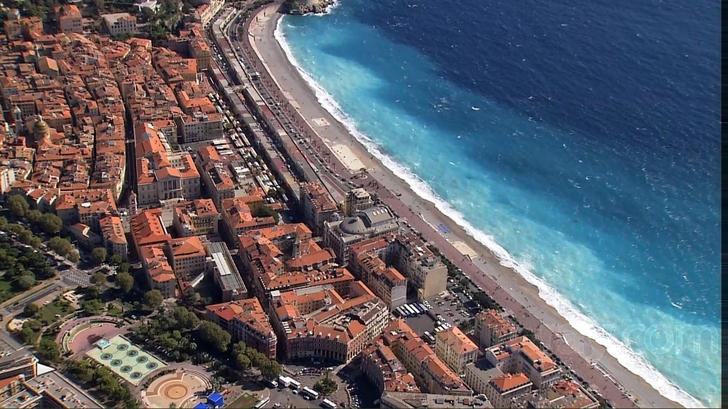
Every program except for The Great Cities of Europe comes with bonus footage, with musical accompaniment but no narration. These are presumably vistas that were included in early versions of the programs but were removed as each installment was edited down to fit its timeslot. In each case, with the exception of the main program for Greece, the video quality is indistinguishable from that of the main program:
- Austria (18:56)
- France: Provence (22:55)
- France: The Riviera (23:57)
- Germany: Bavaria (22:00)
- Germany: Along the Rhine (20:32)
- Greece (31:13): This footage has been upconverted from standard definition and is shown in 16:9 widescreen, enhanced for widescreen TVs. The difference is immediately obvious.
- Greece: Off the Beaten Path (19:29)
Visions of Europe Blu-ray Movie, Overall Score and Recommendation
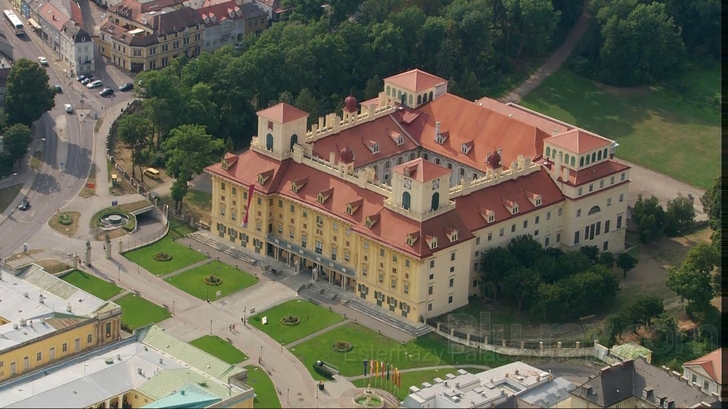
I must confess that, although I have been a subscriber to WLIW for many years (primarily for their British programming), I never watched an episode of the Visions series until luck (or fate) dropped it on my doorstep as a review assignment (which is the final irony of this review). Having now sat through much more of it than I ever imagined possible, I remain baffled by its durability, but continued sales are testimony to the fact that WLIW is clearly doing something right. Maybe it's the appeal reflected in The Accidental Tourist's logo: the comfort of journeying abroad without ever leaving home. Or maybe it's the allure of a professionally assembled video scrapbook; favorable comments at WLIW and Amazon are frequently submitted by recent returnees from abroad who experience a Visions installment as a treasured memento of a fondly remembered trip. Whatever the reason, if this kind of thing appeals to you, there's nothing quite like it on the market. With due disclaimers about the video quality on a large screen, the series is recommended for those who have a taste for it.
Similar titles
Similar titles you might also like
(Still not reliable for this title)

Relentless Enemies
2006

Wild Deep
2013

Great White Shark: A Living Legend
2013

Secret Life of Birds
2011

Great Barrier Reef
2012

Great Migrations
2010

Earth From Above: Life
2004

Over Ireland
1998

Over California
1994

Discovery Atlas: Complete Collection

North America
+ Photo Booklet

National Parks Exploration Series: The Grand Canyon - A Wonder of the Natural World
2012

Wonders of the Solar System
2010

Grand Canyon Adventure: River at Risk 3D
IMAX 3D
2008

Atmospheres: Earth, Air & Water
2008

Sharkwater
2006

Life Story
2014-2015

Hidden Kingdoms
2013

The Blue Planet: Seas of Life
2001

Shark Week: Jaws of Steel Collection