Vincent and Theo Blu-ray Movie
HomeVincent and Theo Blu-ray Movie 
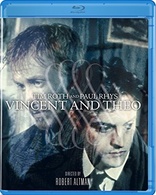
Vincent & TheoOlive Films | 1990 | 138 min | Rated PG-13 | Mar 24, 2015

Price
List price:Amazon: $15.38 (Save 49%)
Third party: $15.38 (Save 49%)
Temporarily out of stock.

Movie rating
7.1 | / 10 |
Blu-ray rating
| Users |  | 0.0 |
| Reviewer |  | 3.5 |
| Overall | | 3.5 |
Overview
Vincent and Theo (1990)
The familiar tragic story of Vincent van Gogh is broadened by focusing as well on his brother Theodore, who helped support Vincent. The movie also provides a nice view of the locations which Vincent painted.
Starring: Tim Roth, Paul Rhys, Adrian Brine, Jean-François Perrier, Yves DangerfieldDirector: Robert Altman
| Foreign | Uncertain |
| Period | Uncertain |
| Drama | Uncertain |
| Biography | Uncertain |
Specifications
Video
Video codec: MPEG-4 AVC
Video resolution: 1080p
Aspect ratio: 1.85:1
Original aspect ratio: 1.85:1
Audio
English: DTS-HD Master Audio 2.0
Subtitles
None
Discs
25GB Blu-ray Disc
Single disc (1 BD)
Playback
Region A (locked)
Review
Rating summary
| Movie | | 3.5 |
| Video | | 3.5 |
| Audio |  | 4.0 |
| Extras |  | 0.5 |
| Overall | | 3.5 |
Vincent and Theo Blu-ray Movie Review
Ears looking at you (and/or your art), kid.
Reviewed by Jeffrey Kauffman February 28, 2015There’s a certain irony in comparing two films that cover at least some of the same territory, 1956’s Lust for Life and 1990’s Vincent and Theo. Both films of course detail the tragic trajectory of the life of Vincent van Gogh, the now iconic artist who was met with almost uniform rejection during his brief, troubled lifetime. Both films were helmed by legendary directors in their own right, Vincente Minnelli in the case of Lust for Life and Robert Altman in the case of Vincent and Theo. But it’s here that a rather unexpected outcome is apparent. Minnelli, one of the most successful purveyors of glossy, big studio fare, departs from typical “bio pic” tropes to deliver a relatively unusual (if also highly fictionalized) depiction of its tortured artist. Altman, certainly one of the most iconoclastic directors to forge a major career, surprisingly hews much closer to traditional filmic models of a celluloid biography in Vincent and Theo, offering a relatively straightforward (at least by typical Altman standards) narrative detailing the contentious if loving relationship between would be painter Vincent (Tim Roth) and his younger art dealer brother Theo (Paul Rhys). Altman’s film is decidedly grittier than the Minnelli offering, covering at least some of the same material in Lust for Life in a kind of proto-indie, up close and personal, way.
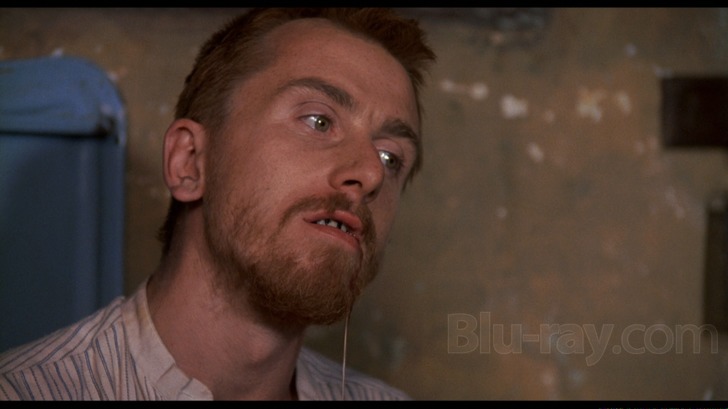
Altman, ever the iconoclast, begins Vincent and Theo with a deliberately ironic contemporary (meaning circa 1980s) real life auction for a van Gogh painting where the bidding climbs into the tens of millions within literally just a few seconds. This contrasts immediately with the actual historical narrative elements, which as the actual story gets underway, finds Vincent living in a hovel, dirty, disheveled and deeply in need of dental care (the repeated glimpses of Vincent’s ramshackle teeth throughout the film almost make the horrifying “ear incident” take a back seat in terms of physical infirmities).
Already Julian Mitchell’s screenplay (which was originally a somewhat longer BBC miniseries) makes clear that Vincent is at least slightly unhinged. While Theo attempts to talk some sense into his older brother, making it clear that he, Theo, has been the source of largesse that Vincent has assumed was coming from their father, Vincent lies almost catatonically in a messy bed, seemingly divorced from the reality that everyone has to make a living somehow.
It’s obvious that Altman feels Vincent is a kind of kindred spirit, a single minded and somewhat obsessive artist who concentrated on craft rather than commercial success. Of course, there’s a certain ingenuousness to this formulation, for however anachronistic and even antagonistic Altman could be with regard to traditional Hollywood and its ways of doing things, he enjoyed at least some major commercial triumphs along the way (M*A*S*H, Nashville). Much of the film’s central conflict, however, spills into the contentious but loving relationship between the siblings centered around Theo’s supposedly middle class artistic sensibilities which he was never able to parlay into sales of Vincent’s paintings.
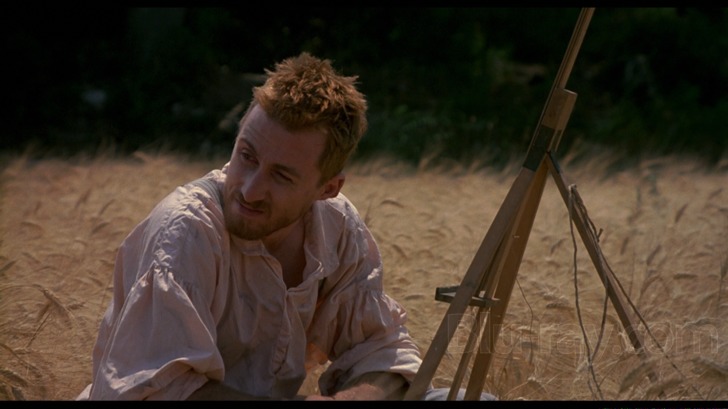
If Altman is occasionally too visually on the nose (the infamous ear sequence has Vincent staring into a shattered mirror, a too obvious glyph for his dysfunctional psyche), the director maintains an unexpectedly straightforward approach to his subject, free of the quirks that often infuse other Altman films. The film is intentionally claustrophobic at times, despite Altman’s offerings of wide open vistas where Vincent goes to paint. The landscapes become almost supporting characters at times, and Altman provides a tantalizing glimpse into Vincent’s deteriorating state of mind, where fields of wheat or flowers seem to almost taunt him, as if to say, “Just try to capture our magnificence in paint!”
Despite its somewhat traditional structure, Vincent and Theo is by and large a film of vignettes, a series of anecdotes that attempts to illuminate the genius and madness that informed van Gogh’s life and painting. Unlike Lust for Life there’s at least some subtextual awareness of Vincent’s homosexuality, something that is referred to somewhat discursively when he hires a prostitute as a model. Like Lust for Life, the film also journeys into Vincent’s stormy relationship with Paul Gaugin (Wladimir Yordanoff). The film repeatedly makes clear that van Gogh suffered from an almost Asperger like inability to connect with people in a normal way, perhaps due at least in part to the weight of his interior monologues.
Ultimately, though, neither Altman nor Mitchell provide any real answers as to what afflicted van Gogh or indeed what generated his now legendary art. Instead the film simply details the painter’s conflicted and dysfunctional life, leaving it to the audience to draw its own conclusions. The film offers a showcase for Roth’s typical Method madness, and he inhabits the role in a somewhat more interior but no less impressive way than Kirk Douglas did in Lust for Life. In fact Vincent and Theo makes for a fascinating double feature with the Minnelli film, for it highlights the way (relatively) contemporary artists (albeit in a different medium) can approach the same subject and see things in completely different ways.
Vincent and Theo Blu-ray Movie, Video Quality
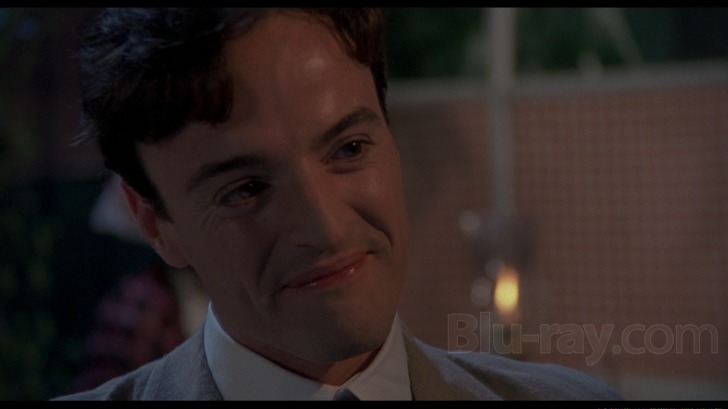
Vincent and Theo is presented on Blu-ray courtesy of Olive Films with an AVC encoded 1080p transfer in 1.85:1. Altman's wont was not to make traditionally "beautiful" films, though I'd personally rate this as among his most (at times grittily) scenic, along with outings like McCabe & Mrs. Miller. Altman utilized the talents of cinematographer Jean Lépine, who had worked with the director on the Tanner 88 series, and Lépine captures both the awesome grandeur of the countryside as well as the decidedly more squalid interiors where Vincent spent a lot of his life. Grain is quite heavy in this presentation, and in occasional outdoor scenes clumps just a bit unnaturally, especially against bold blue skies. The heavy grain along with Lépine's penchant for preferring diffused lighting gives a lot Vincent and Theo a rather soft, gauzy ambience. Speaking of blue skies, the elements utilized for this transfer have weathered the ravages of time quite well from a palette standpoint, with gorgeous blues and yellows suffusing the screen. Fine detail can be quite good as well, bringing out patterns like the crosshatching in Vincent's iconic straw hat convincingly. There are instances of age related damage with the typical anomalies like dirt and other specks showing up. There are also recurrent density and very slight flicker issues which afflict the presentation, something that's more apparent in darker interior scenes (watch during the art emporium scene starting at around 1:11:00 to 1:12:00 for a good example). As might be expected, the opening video elements documenting the auction of a van Gogh masterpiece look pretty ragged when compared to the bulk of the presentation.
Vincent and Theo Blu-ray Movie, Audio Quality
Vincent and Theo's lossless DTS-HD Master Audio 2.0 mono track provides more than capable support for the film's dialogue and completely odd (and in my estimation at times off putting) score by Gabriel Yared. Altman may have walked the "straight and narrow" path in terms of offering a straightforward narrative of the van Gogh brothers and their tribulations, but he obviously wanted to tweak any latent bourgeoisie tendencies with the score to this film. I haven't been able to find much data online about the score, but it sounds like Yared may have used electronic instruments or at least manipulated recorded sounds to offer a kind of almost Edgard Varèse musique concrète ambience, something that (in my estimation at least) clashes rather dramatically with the historical milieu depicted in the film. One way or the other, the score is presented with clarity and precision, for better or worse.
Vincent and Theo Blu-ray Movie, Special Features and Extras
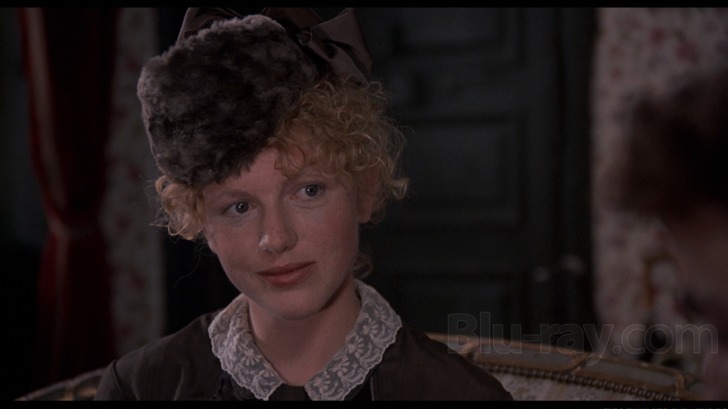
- Trailer (1080p; 1:59)
Vincent and Theo Blu-ray Movie, Overall Score and Recommendation
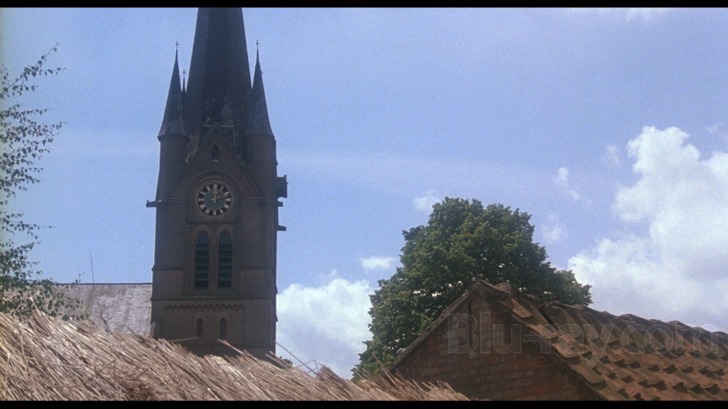
By the time Vincent and Theo wends its way to a rather sad, even tragic, conclusion, it appears that Altman and Mitchell may be arguing for a genetic component to Vincent's trials, something that in turn spills over into Theo's life, though in a different way altogether. This is an often fascinating film, though it tends to amble rather than trot, making its two hour plus running time seem longer than it already is. Roth is amazing as Vincent, and Rhys, while somewhat more tamped down, is similarly impressive. This is by no means a "typical" Altman film (whatever that might mean), but it's one of his most unusual and interesting. Technical merits are generally good to excellent, and Vincent and Theo comes Recommended.
Similar titles
Similar titles you might also like

Sansho the Bailiff
山椒大夫 / Sanshô dayû
1954

Capital
Le capital
2012

The Life of Oharu
西鶴一代女 / Saikaku ichidai onna
1952

The Marriage of Maria Braun
Die Ehe der Maria Braun
1978

The Enigma of Kaspar Hauser
Jeder für sich und Gott gegen alle
1974

Christiane F. 4K
Christiane F. - Wir Kinder vom Bahnhof Zoo
1981

Mishima: A Life in Four Chapters 4K
Director's Cut
1985

Killing
2018
Red Beard
赤ひげ / Akahige
1965

Hara-Kiri: Death of a Samurai
一命 / Ichimei
2011

Harakiri
切腹 / Seppuku
1962

A Touch of Sin
天注定 / Tian zhu ding
2013
R100
Reissue
2013

Belle de jour
1967

Nathalie...
2003

The Wild Pear Tree
Ahlat Ağacı
2018

24 Frames
2017

A Fantastic Woman
Una mujer fantástica
2017

Irezumi
1966
The Disenchanted
La désenchantée
1990