Trace of Stones Blu-ray Movie
HomeTrace of Stones Blu-ray Movie 
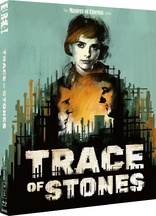
Spur der Steine | Masters of Cinema | Limited EditionEureka Entertainment | 1966 | 139 min | Rated BBFC: 12 | May 18, 2026
Price
List price:Amazon: £17.99 (Save 37%)
Third party: £17.99 (Save 37%)
Only 1 left in stock.

Movie rating
7.1 | / 10 |
Blu-ray rating
| Users |  | 0.0 |
| Reviewer |  | 4.0 |
| Overall | | 4.0 |
Overview
Trace of Stones (1966)
A film about living and working conditions in the GDR of the 1960s, including a little love story, of course.
Starring: Manfred Krug, Eberhard Esche, Krystyna StypułkowskaDirector: Frank Beyer
| Foreign | Uncertain |
| Drama | Uncertain |
| Comedy | Uncertain |
| Romance | Uncertain |
Specifications
Video
Video codec: MPEG-4 AVC
Video resolution: 1080p
Aspect ratio: 2.35:1
Original aspect ratio: 2.35:1
Audio
German: LPCM 2.0 Mono (48kHz, 24-bit)
Subtitles
English
Discs
Blu-ray Disc
Single disc (1 BD)
Packaging
Slipcover in original pressing
Playback
Region B (locked)
Review
Rating summary
| Movie | | 4.0 |
| Video |  | 4.5 |
| Audio | | 4.0 |
| Extras |  | 3.5 |
| Overall | | 4.0 |
Trace of Stones Blu-ray Movie Review
Reviewed by Dr. Svet Atanasov June 10, 2026Frank Beyer's "Trace of Stones" (1966) arrives on Blu-ray courtesy of Eureka Entertainment. The supplemental features on the release include archival documentary about the life and legacy of Frank Beyer; archival documentary about DEFA's censorship practices; and archival documentary by Angelika Andrees Petra Tschörtner. In German, with optional English subtitles for the main feature. Region-B "locked".
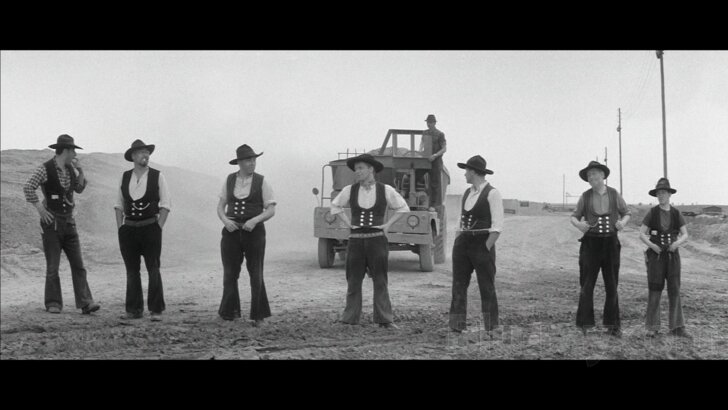
Balla's gang
DEFA and Mosfilm were the biggest cultural propaganda arms of the Communist Party. During the Cold War era, they were funded, staffed, and operated by the Communist Party. However, the two were not identical entities.
Mosfilm had unmatched influence for several different reasons. During the Cold War era, Mosfilm produced propaganda material meant for domestic and international audiences. For this reason, Mosfilm controlled a large international network of friendly state distributors that ensured its propaganda films could be seen from Moscow to Luanda. In addition to the propaganda films, to counter the influence of the popular Hollywood films, Mosfilm also produced big-budget mainstream films, many of which were allowed to exit the Soviet Union and screen at prestigious international festivals. The high-ranking communists who determined how Mosfilm operates were also actively involved in censorship, routinely eliminating improper original content and ‘subversive’ international content.
DEFA was significantly smaller than Mosfilm. More importantly, DEFA did not greenlight films to compete alongside Mosfilm films in friendly territories. DEFA films were made to meet demand in East Germany, which is why few were screened internationally. (International exposure was limited to the former Soviet satellites, too). Unsurprisingly, virtually all DEFA films resonated best with German audiences.
Because DEFA films were notably smaller and less ambitious, they were not as strictly censored as Mosfilm films. (Communist films produced in Hungary, Czechoslovakia, and Poland enjoyed the same ‘freedom’ as well. In Yugoslavia, the Communist Party even allowed Western capital and talent to be integrated in various co-productions, which provided much-needed hard currency for its coffers). For this reason, many of these smaller films often dared to criticize the politics of the Communist Party and the endless flaws of the socio-cultural order it had established after the end of WWII. However, if they spoke the truth too clearly, they were promptly banned.
Frank Beyer’s Trace of Stones is one of these smaller but bold films that spoke the truth too clearly and ended up on DEFA’s black list. It was completed in 1966, quickly banned, and rediscovered several decades later, after the Berlin Wall was brought down. (In America, Trace of Stones was introduced on DVD by First Run Features in 2007, after DEFA’s archives were opened and many once-censored and banned films began reemerging).
More than two-thirds of Trace of Stones takes place at a very large construction site, some hours away from East Berlin, where the Communist Party is building a massive, modern power plant. The construction site has attracted hundreds of experienced workers from all across the country. However, after a promising start, progress has stalled. There are problems galore. A top state engineer has badly screwed up crucial plans, and various structures are being demolished. Building materials are missing. The management is not making payments on time.
To improve the workers’ morale and help restore order, the Communist Party has dispatched one of its trusted young secretaries, Werner Horrath (Eberhard Esche), and a talented young engineer, Kati Klee (Krystyna Stypulkowska). However, both lack practical experience, and neither has ever coexisted with hardened, visibly frustrated workers like those who have been brought in to build the power plant. Also, both have never interacted with a crew leader like Hannes Balla (Manfred Krug), a brash, too outspoken, hard-drinking giant with seemingly endless energy, often causing ruckus, but recognized by virtually everyone as the most influential builder at the construction site.
While Horrath and Klee attempt to engage Balla and initiate the improvements the Communist Party wants made as quickly as possible, the three unexpectedly discover that they deconstruct their miserable reality in very similar ways. Horrath and Klee then begin falling in love, even though the former is already married, while Balla becomes friends with both and eventually starts questioning his feelings for the latter. When Klee becomes pregnant without a husband, the local Communist Party leaders put her on trial for refusing to disclose the identity of her immoral partner.
It is very easy to understand why DEFA banned Trace of Stones. It casually but very effectively exposes the hypocrisy and lies that the Communist Party fed ordinary people for decades. Also, Horrath, the trusted young secretary, emerges as the biggest, most compromised character, blaming the system he represents for his choices and the consequences of his actions. Balla, fearlessly eroding the foundation of the workers' paradise he has been building his entire life with relentless truth bombs, then gradually becomes the voice of reason.
Trace of Stones Blu-ray Movie, Video Quality

Presented in its original aspect ratio of 2.35:1, encoded with MPEG-4 AVC and granted a 1080p transfer, Trace of Stones arrives on Blu-ray courtesy of Eureka Entertainment.
n America, Trace of Stones was introduced on DVD by First Run Features in 2007, after DEFA's archives were opened and many once-censored and banned films began reemerging. I picked a copy for my library. Unfortunately, even by DVD standards, the old presentation of the film is impossible to praise. It is marred by a range of different issues introduced by an incorrect PAL to NTSC conversion, it is not anamorphically enhanced, etc.
This Blu-ray release brings a recent restoration of Trace of Stones, prepared on behalf of DEFA, that is an enormous upgrade in quality. I pulled out my DVD release, but did not feel the need to do any comparisons because the improvements in quality were humongous and everywhere. (I have included a couple of screencaptures from the American DVD release at the bottom of this article). While I was revisiting the film, it felt like I was viewing it for the first time. I would describe delineation, clarity, and depth as excellent. On my system, daylight and darker indoor and nighttime footage looked equally impressive. In a few darker areas, grain became somewhat noisy, but I still liked its overall consistency a lot. There are no traces of problematic digital corrections. The grayscale is convincing as well. Image stability is great. On the older presentation of the film, in several different sections there are noticeable bumps and shaky transitions. They are all eliminated now. The entire film looks very healthy, too. (Note: This is a Region-B "locked" Blu-ray release. Therefore, you must have a native Region-B or Region-Free player in order to access its content).
Trace of Stones Blu-ray Movie, Audio Quality
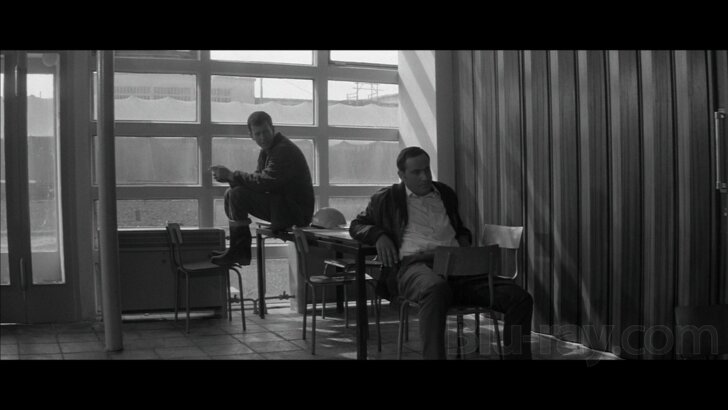
There is only one standard audio track on this Blu-ray release: German LPCM 2.0. Optional English subtitles are provided for the main feature. When turned on, they appear inside the image frame.
Trace of Stones does not have a prominent music score. Also, even though there is quite a bit of mass footage in it, even the best dynamic contrasts are fairly mediocre. All dialogue is clear and easy to follow. However, in several areas, balance is not ideal. It is not problematic, either. However, it is quite easy to notice that there is unevenness which is not natural. I suspect that this is an inherited limitation. On the old DVD release of Trace of Stones that I have in my library, the are other issues, including an incorrectly pitched audio. The English translation is excellent.
Trace of Stones Blu-ray Movie, Special Features and Extras

- Trace of Time - this archival documentary takes a closer look at the life and legacy of Frank Beyer, director of Trace of Stones. In German, with English subtitles. (62 min).
- The 11th Plenum: A Cultural Devastation - this archival documentary revisits the notorious Kahlschlag Plenum, where the Communist Party greenlighted the banning of various DEFA films, including Trace of Stones. In German, with English subtitles. (47 min).
- Children's Home (1978) - a DEFA documentary on the residents of an East German children's home, banned until after the fall of the Berlin Wall. Fullt restored. In German, with English subtitles. (47 min).
- Booklet - an illustrated booklet featuring a new essay on the response of East German audiences to the banning of Trace of Stones by DEFA expert Michael Wedel, as well as technical credits.
Trace of Stones Blu-ray Movie, Overall Score and Recommendation
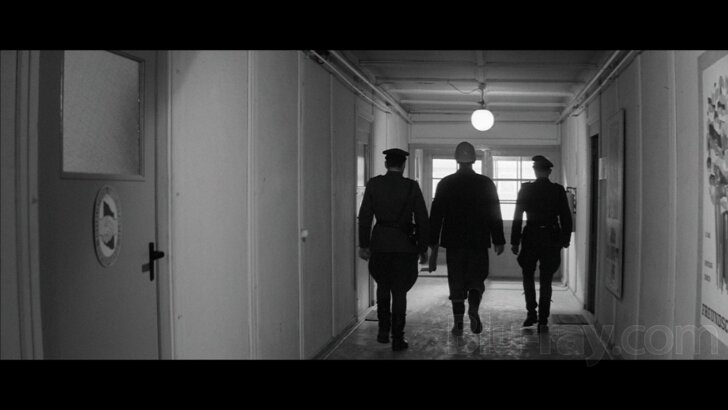
Because some of its characters dared to speak bits of the truth, Trace of Stones was banned by the Communist Party that ruled the defunct GDR. The great irony is that even these bits of the truth, all very carefully polished, are used to sell a lie. The Communist Party did not tolerate people like the three stars of Trace of Stones. The men like Balla and the compromised secretary were either banished to labor camps, where they quietly perished, or made to disappear by Stasi. The women, and especially the unmarried ones who became involved with high-ranking communists and then threatened their public image, were either locked away in mental institutions or driven to commit suicide after the authorities registered them as prostitutes and alcoholics, which meant that they could no longer seek employment. It is how the Communist Party protected itself. In Trace of Stones, Stasi is never mentioned, even after Balla and his men call out the Communist Party's leadership and go on strike, and the problematic unmarried young woman is allowed to start a new chapter of her life, which are utterly ridiculous scenarios. Still, Trace of Stones is a special time capsule, a legitimately bold one, too, which is why it is worth seeing. Eureka Entertainment's Blu-ray release presents a wonderful recent restoration of it, completed on behalf of DEFA. HIGHLY RECOMMENDED.
Similar titles
Similar titles you might also like
(Still not reliable for this title)

The Witches
Le streghe / Arrow Academy
1967

La Ronde
1950

A Scene at the Sea
あの夏、いちばん静かな海。/ Ano natsu, ichiban shizukana umi
1991

Va savoir
Who Knows? | Limited Edition
2001

Cute Girl
就是溜溜的她 / Jiù shì liū liū de tā / Lovable You | Masters of Cinema
1980

Marriage Italian Style
Matrimonio all'italiana
1964

The Wildcat
Die Bergkatze / Masters of Cinema
1921

Juha
1999

Yesterday, Today and Tomorrow
Ieri, oggi, domani
1963

Camera Buff
Amator
1979

Life of Riley
Aimer, boire et chanter / Masters of Cinema
2014

Pauline at the Beach
Pauline à la plage
1983

Hamlet Goes Business
Hamlet liikemaailmassa
1987

La Vie de Bohème
The Bohemian Life / Boheemielämää
1992

The Aviator's Wife
La femme de l'aviateur
1981

Deep End
BFI Flipside
1970

My Girlfriend's Boyfriend
1987

Four Adventures of Reinette and Mirabelle
1987

The White Sheik
Lo sceicco bianco / Vintage World Cinema
1952

A Good Marriage
Le Beau Mariage
1982