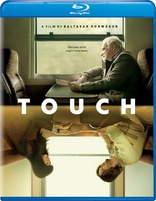
Touch Blu-ray Movie
HomeTouch Blu-ray Movie 
SnertingUniversal Studios | 2024 | 121 min | Rated R | Sep 24, 2024

Movie rating
7.1 | / 10 |
Blu-ray rating
| Users |  | 0.0 |
| Reviewer |  | 4.0 |
| Overall | | 4.0 |
Overview
Touch (2024)
Soon after the break of the pandemic and realizing that his clock is ticking, Kristofer gets the urge to embark on a journey to try to find out what really happened when his Japanese girlfriend mysteriously vanished without a trace from London fifty years earlier.
Starring: Egill Ólafsson, Masahiro Motoki, Yôko Narahashi, Ruth Sheen, Meg KubotaDirector: Baltasar Kormákur
| Drama | Uncertain |
| Romance | Uncertain |
Specifications
Video
Video codec: MPEG-4 AVC
Video resolution: 1080p
Aspect ratio: 2.39:1
Original aspect ratio: 2.39:1
Audio
English: DTS-HD Master Audio 5.1
Subtitles
English SDH, French, Spanish
Discs
Blu-ray Disc
Single disc (1 BD)
Playback
Region A (B, C untested)
Review
Rating summary
| Movie | | 4.0 |
| Video |  | 4.5 |
| Audio | | 4.0 |
| Extras |  | 2.0 |
| Overall | | 4.0 |
Touch Blu-ray Movie Review
Reviewed by Justin Dekker January 18, 2025Director Baltasar Kormákur's ('2 Guns') meditation on the enduring power of love, 'Touch', arrives on Blu-ray disc courtesy of Universal. This
decades-spanning film focuses on the elderly Kristófer's (Egill Ólafsson ('Beowulf & Grendel')) journey to reconnect with and rekindle his
relationship
with Miko (Yôko Narahashi ('Memoirs of a Gesha')), the great lost love of his youth. (The younger versions of these characters seen in numerous
flashback sequences are played by Palmi Kormákur and Kōki.) As a variety of different languages are used in the film, subtitles are available in
English
SDH, French, and Spanish. Neither a slipcover nor a Digital Code are included.
Egill Ólafsson
Kristófer
Kristófer leads a lonely and isolated life in his native Iceland. He sings in a choir which he participates in with diminishing frequency and runs a
restaurant which, for the duration of the film, the viewer never sees in operation. His home is spartan, with his most treasured possession seeming
to be a small box of mementos from his past, including his old college ID from a school in London and a fair amount of material written in
Japanese. There is evidence of a marriage, and, in a more recent flashback, the couple attends a counseling session which points to some deep-
seated issues. A daughter, his by marriage, is occasionally heard over the phone but is never seen. In many ways, Kristófer is an island living on an
island.
At a visit with his doctor, negative health news is confirmed. While his symptoms of memory loss and diminishing fine motor skills point to
dementia, an official diagnosis is never given in the film. Just as the COVID-19 pandemic is exploding and lockdowns and travel bans are a growing
reality, Kristófer decides that now is the time for action. Unwilling or afraid to tell his adoptive daughter the true nature of his plan, he simply
states he is leaving to find a lost friend. He packs his bags and heads to London, the place where he last saw his beloved Miko, to begin his search.
Interspersed with the modern footage of his quest, extended flashbacks are leveraged to inform the viewer how Kristófer came to be in London,
how he met and fell in love with Miko, and the circumstances surrounding their separation. Not changing much over the intervening years, both
versions of Kristófer are painfully shy though their affection for Miko is obvious. The younger iteration is primarily reliant on longing looks to convey
his feelings while the older Kristófer is arguably even less confident but more hopeful, with his world and his ability to connect with it reemerging
commensurate with his rekindled love for Miko during his journey to her.
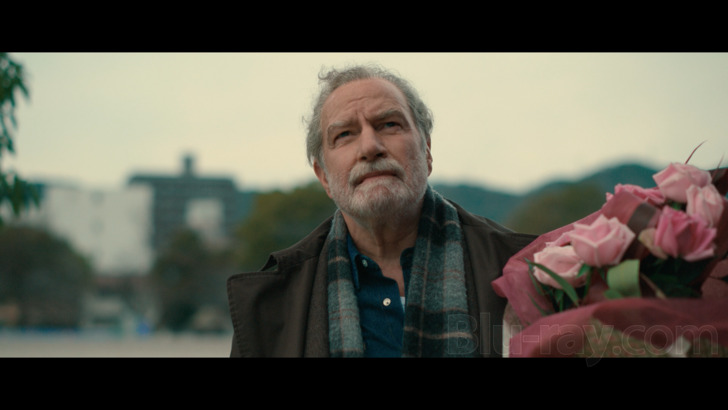
Touch carries two themes with it on Kristófer's globe-trotting search; the importance of touch and the importance of memory. In Iceland, prior to the start of his journey, the isolated Kristófer's life as depicted is relatively devoid of physical contact. He sings in a choir but neither embraces nor shakes hands with any choir members before or after singing as the film opens. In the counselor's office, he and his spouse are as far apart as they can be while sitting on the same couch. Later, he observes her from a distance - he in the house and she outside tending plants. Not even a word is spoken. Further, when he and his doctor discuss his condition, again, there is not a compassionate hug or grasping of his ailing patient's hand. Kristófer is as alone as he could be, his life devoid of physical touch.
Once he decides to pursue his lost love, everything begins to change, though quite gradually at first. In his London hotel, staff encourages him to observe social distancing, chastising him when he fails to follow protocol. His table at the restaurant is suitably removed from the few other patrons. On his flight to Japan, as he grows closer to where he believes Miko to be, the flight attendant is both closer and more friendly, the space between people proportionately diminishing. Hotel in Japan staff decreases personal space as well, verifying his healthy temperature and responding to him quite cordially as he dusts off his rusty, long-unused Japanese. Nearing what he hopes is the end, interaction with a man he meets at a restaurant finally approaches something akin to friendship, the man moving to sit directly next to him as the pair discuss their lives. the more Kristófer reopens himself to the prospect of love, the more he rejoins the world (even during the outbreak of the pandemic!), and the more he can experience physical touch.
The importance of memory is also of significance. At the very beginning, Kristófer is presented an an unreliable narrator, telling his doctor he either needs to work very hard to remember or feels that he often can't trust his memory. While there is some enduring physical evidence of his time in London and relationship of some sort with a young Japanese woman, this data forces the viewer to watch these flashbacks with some quantity of skepticism. While Touch is beautifully and emotionally scored with a variety of period (if I dare call songs from 50 years ago "period") and new pieces, one song, in particular, is dramatically repeated at two very pivotal times, and both times it is sung by Kristófer; "Ég lít í anda liðna tíð" (or, "Looking back at Days Gone By", by Sigvaldur Kaldalóns and Halla Eyjólfsdóttir). The song goes:
Looking back at days gone by
Precious to my heart
Those sweet memories
Those sweet memories
Stay with me day and night
So never ever I forget
So never ever I forget
The first time he sings it is at the film's start, just as his thoughts of the past haunt him and he decides to find Miko. His memories of her are a strong and powerful. In their aftermath, the viewer is presented with the modern Kristófer informing his concerned doctor of the mental games in which he routinely engages in an attempt to keep his memory sharp and avoid any further decline. It's a scheme in which he displays much confidence. The second time it's seen performed in the film is in the past. Young Kristófer sings it in front of a crowd at the restaurant where he works. Though not sung to her, his performance sparks feelings for him in Miko that spur the development of their relationship. Proximate to this event with how the movie is cut, modern Kristófer is on a plane to Japan. He's in his seat doing his mental exercises, but this time the full text of the haiku he routinely recites eludes him and the sequence of numbers is unfinished. It's oft been said that a man is but the sum total of his experiences, and, by extension, his memories. In the context of the film one must accept that as true. After all, it's his memories of the past that cause him to act. These same memories trigger him to remove himself from his seemingly self-imposed exile and reconnect with people. Lastly, it's his memories of Miko and the love they shared so long ago that gives him hope for the future and counters his fear of dying alone.
For Kristófer, it's a race against two frightening competitors. In one of the deleted scenes, it's revealed that he has a brother who is 80 years old. While excising that brief scene from the film helps to compound Kristófer's sense of isolation, knowing that information helps to provide the modern character with an approximate age. It's partly a race against time. If he doesn't spring into action now, he may not be physically able to do so, especially not on his own. Given the perceived tenuous relationship with his daughter and her lack of support for her father as he departs, it's not difficult to assume that she would be unwilling to assist him were he unable to go on his own. The second race is against the integrity of his memories. It's his memories of Miko that trigger all of the action for the film. It's abundantly clear that his memory is fading. What he does remember may not be reliable. To want to find her, he needs to remember who she is, what they shared all those years ago, and how he still feels about her. The instant memories of her fade so does his desire to find her and his last chance for happiness. But he is forgetting. He will forget more. Against both competitors, the clock is ticking.
Touch Blu-ray Movie, Video Quality
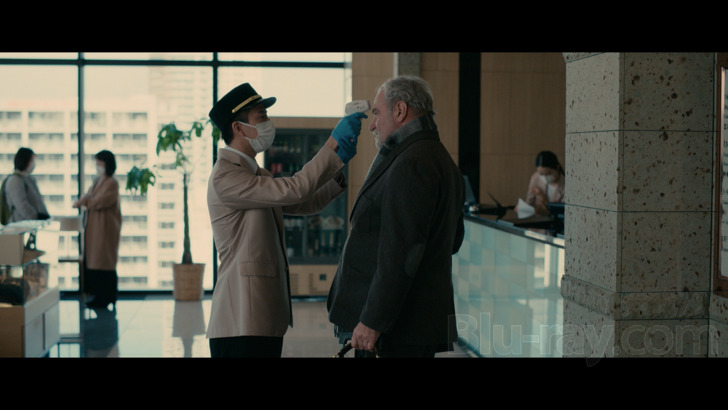
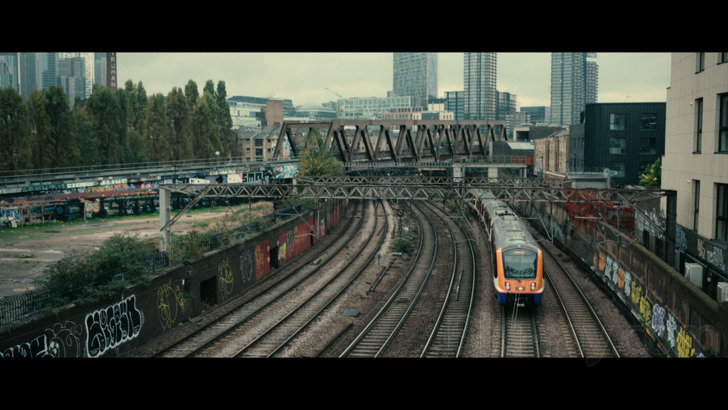
Touch looks wonderful on Blu-ray. Colors are pleasantly and satisfyingly saturated across all environments, indoors and out. Flashbacks are characterized by often being slightly warmer. When the snow swirls around the choir in the opening scene, each flake is discernable and trackable through the image. Fine detail is high, whether it be facial particulars like Kristófer's omnipresent stubble, the delicate Japanese characters found in his aged notebooks, or the specifics of the interior of the jumbled and visually busy Japanese restaurant where Young Kristófer works during his time in London. Wood tones in Kristófer's Iceland home and the London restaurant are warm and rich with grain clearly visible. Fabric textures present with appreciable realism. Building exteriors and cobblestone streets present with realistic roughness and wear. Skin tones are realistic and healthy. Primaries, especially reds, are allowed opportunities to pop nicely. It's an excellent transfer.
Touch Blu-ray Movie, Audio Quality
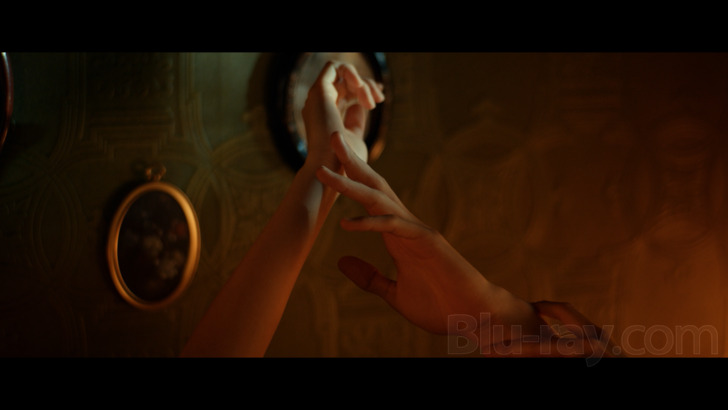
The English: DTS-HD Master Audio 5.1 track starts off as impressively as a relatively quiet film can, with an immersive performance from Kristófer's choir. The numerous male voices surround the viewer, as snow-filled winds swirl around them. Surrounds are used frequently to place the viewer in the middle of the action. Ambient airplane noise during Kristófer's and those associated with rail travel envelop the viewer, placing them alongside Kristófer, and the angry crowd likewise immerse the viewer in the brief protest in London, busy restaurants, street scenes, and the like.. Directionality is accurate and precise and is best appreciated during moments when cars or trains travel through the sound field. The beautiful and hanging score is rendered with precision and fidelity. Bass is more than sufficient to support the musical interludes and sound effects found in the real world, and the track is very satisfying overall. As a side note, I seemed to be unable to turn off the subtitles via the option in the main menu. Because of the languages involved I'm of the assumption that many viewers wouldn't want to turn them off, but I feel that it is worth mentioning. The color and placement of the subtitles is visible in screenshot 12.
Touch Blu-ray Movie, Special Features and Extras
The only on-disc special features included on this release of Touch consist of a small group of deleted scenes as listed below. None are overly
lengthy, but some provide more information about Kristófer and give a more complete view of his life. Some of the scenes were obviously removed for
reasons of pacing, but others, specifically the scenes of modern Kristófer in Iceland benefit the film by their removal in order to better isolate him and
further the film's themes. The deleted scenes are:
- Kristófer at his Restaurant (0.57)
- Kristófer Visits Mundi (1.25)
- Kristófer Checks In (0.36)
- Young Kristófer and Young Miko Walk to the Train (1.56)
- Kristófer Alone in Hiroshima (0.50)
- Yuoung Kristófer Leaves UK Guest House (0.49)
- Kristófer and Hashimoto Talk About Miko (0.50)
Touch Blu-ray Movie, Overall Score and Recommendation
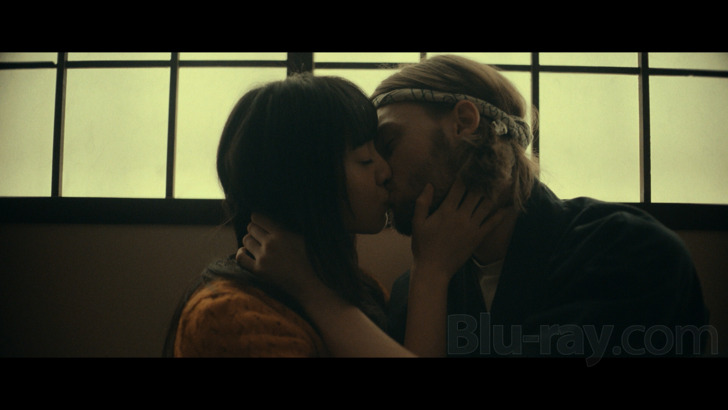
In all honesty, Touch, given my own tastes, is not a film I likely would have screened had it not crossed my desk, but I'm very glad that it did. The leads are excellent, particularly Egill Ólafsson who quickly wins the viewer over, making them happy to join him on what seems like potentially a fool's errand of the highest order. Cutting in scenes of the budding romance between the younger versions of Kristófer and Miko provides needed context for his dramatic journey and makes his successful completion of it all the more important. None of this happens at all without the obvious and endearing chemistry between Palmi Kormákur and Kōki. This story of love lost, the need for physical touch, and the importance of memory is consistently gripping and thought-provoking. While a commentary track and interviews with the actors would have been appreciated, the strength of the film is enough all by itself to make Touch strongly recommended.
Similar titles
Similar titles you might also like
(Still not reliable for this title)

Rosewater
2014

Chaplin
15th Anniversary Edition
1992

My Week with Marilyn
2011

The Personal History of David Copperfield
2019

Le Week-End
2013

Mary Shelley
2017

Breathe
2017

A United Kingdom
2016

Living
2022

Waiting for the Barbarians
2019

Arctic
2018

Bright Star
2009

The Edge of Love
2008

Mr. Selfridge: Season 4
2015

Diana
2013

Tolkien
2019

The Man Who Knew Infinity
2015

The Founder
2016

Pawn Sacrifice
2014

A Beautiful Day in the Neighborhood
2019