Tony Northrup's Beginning Photography Videos: Composition, Lighting, Camera Settings, & Picture Problem Solving Blu-ray Movie
HomeTony Northrup's Beginning Photography Videos: Composition, Lighting, Camera Settings, & Picture Problem Solving Blu-ray Movie 
Mason Press | 2013 | 430 min | Not rated | Dec 01, 2013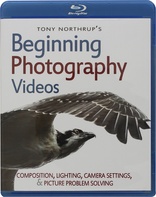
Price
List price:Listed on Amazon marketplace

Movie rating
Movie has not been rated yetBlu-ray rating
| Users |  | 0.0 |
| Reviewer |  | 3.0 |
| Overall | | 3.0 |
Overview
Tony Northrup's Beginning Photography Videos: Composition, Lighting, Camera Settings, & Picture Problem Solving (2013)
Starring: Tony Northrup, Chelsea Northrup| Other | 100% |
Specifications
Video
Video codec: MPEG-4 AVC
Video resolution: 1080i
Aspect ratio: 1.78:1
Original aspect ratio: 1.78:1
Audio
English: Dolby Digital 2.0
Subtitles
None
Discs
Blu-ray Disc
Single disc (1 BD)
Playback
Region A (B, C untested)
Review
Rating summary
| Movie |  | 5.0 |
| Video |  | 2.0 |
| Audio | | 2.0 |
| Extras | | 0.0 |
| Overall | | 3.0 |
Tony Northrup's Beginning Photography Videos: Composition, Lighting, Camera Settings, & Picture Problem Solving Blu-ray Movie Review
Reviewed by Martin Liebman July 17, 2019The larger world of technology is certainly in a state of major change. Much like there's a push in the home video industry to move away from physical media and towards digital delivery, the photography world might be in an even larger state of technological advancement upheaval. Film cameras cannot yet be classified as "dinosaurs" but good luck finding a local place to process the film, and many of today's lenses have done away with aperture rings which make practical usage more of a challenge. While most photographers have embraced the move to digital -- there's really not much choice and there's so much value and opportunity in digital photography, anyway -- there's a current battle between established DSLR technologies and new mirrorless options, the former dominated by Nikon and Canon and the latter by Sony and Fuji until just recently when both Nikon and Canon introduced their own mirrorless systems. Will the DSLR die to mirrorless, and will every style of interchangeable lens camera ultimately perish to the ubiquitous cell phone camera? Hopefully not, because at least in 2019, even with so many major advances and feature-touting going on by the big phone makers, nothing beats a DSLR (or, yes, mirrorless camera) for image quality, versatility, and user creativity. And enter Tony and Chelsea Northrup to explain it all.
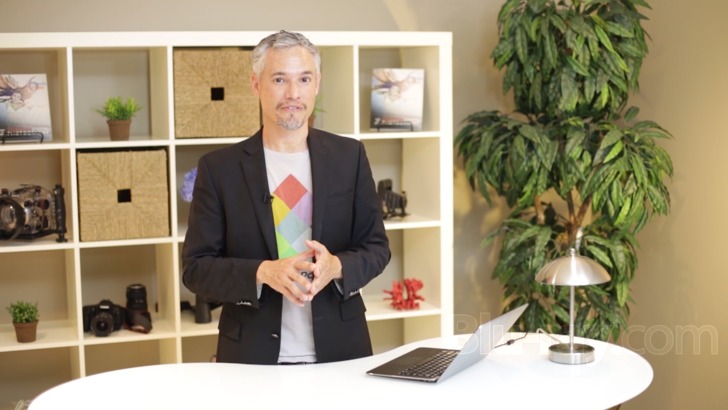
Newcomers to photography certainly have the pick of the litter when it comes to seeking out online experts for trusted gear reviews, tutorials, and the like. Names like Ken Rockwell, Jared Polin, Matt Granger, and Tony Northrup dominate the scene. YouTube Channels like TheCameraStore and DigitalRev TV are excellent resources. Websites such as PetaPixel and PhotographyLife are invaluable. But Tony and Chelsea Northrup have positioned themselves as amongst the web's premiere photography experts, offering a very wide range of camera, lens, and gear reviews as well as an extensive knowledge base through their YouTube channel and print material; this reviewer has read the couple's excellent How to Create Stunning Digital Photography digital cover to digital cover. That book is a terrific companion to this lengthy video collection and, like the book, the Northrups do not disappoint. Presentation style is agreeable and approachable, and there is plenty of valuable information for both DSLR newcomers and experienced photogs alike. It's probably best suited to users who fall somewhere in the middle, who have mastered, or at least have a very firm grasp of, the basics and are looking to hone their skills. But for every range there's a lot of value here. The problem is that the disc is not particularly easy to use; the disc struggles to play properly, if at all, in an Oppo UDP-203; it worked better on a PS4 where much of it was watched for the purpose of this review (the "How to Master Camera Settings" segment would not play at all on the Oppo).
The following segments comprise the program:
- Quick Tips (33:02): Tony discusses the importance of finding the right subject and in the proper environment rather than fixating on camera gear and settings first. He shares some of his favorite photography links and talks about the importance of displaying photographs and framing photos for certain sizes and presentation formats, the difference between taking “snapshots” and making “photographs,” basic camera settings necessary for all users to understand, and editing photos in post using both the free application Picasa and the more advanced Lightroom.
- How to Master Composition (1:04:17): Tony covers the importance of capturing scale, focusing on an interesting detail rather than the entire object in question, the rule of thirds, using different lenses and camera settings to achieve the desired result, using flash to enhance a photograph, making use of lines and symmetry, and stitching photos together. Chelsea chimes in with some thoughts on black and white photography.
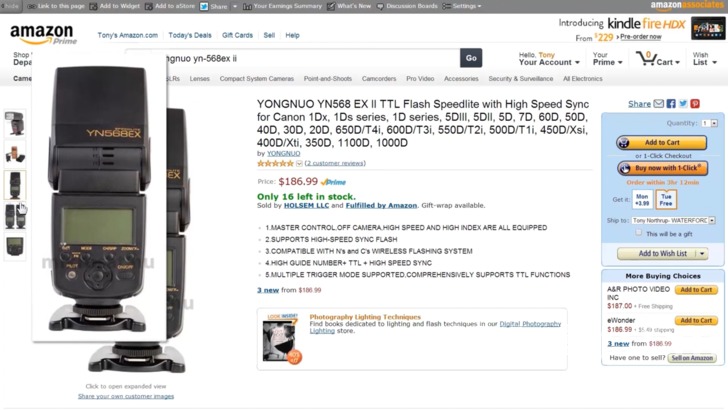
- How to Master Lighting & Flash (1:32:39 total runtime): This lengthy segment begins with a discussion of the distinction between the two: how they affect a subject, the sort of light they produce, and how to use these types of light effectively. The segment even includes some interesting discussions on the science of light. It moves on to examine how hard or soft lighting's placement impacts a photo and how a subject's visual structure is either accentuated or diminished based on lighting. It also examines environmental effects. It studies "The Golden Hour," the hours before sunset or sunrise in which the sky permits good, even, and flattering lighting without that hard overhead sunlight. There is also a discussion of the science behind how the sun's position and the Earth's atmosphere help offer the most flattering natural light available. It explores available digital tools like The Photographer's Ephemeris and Google Earth and how they can be used to enhance photography. Tony looks at different models of flash, flash properties, high-sync speed, white balance, the process of blending flash with different types of natural and artificial light, and the piece ends with some practice opportunities to hone a photographer's lighting skills.
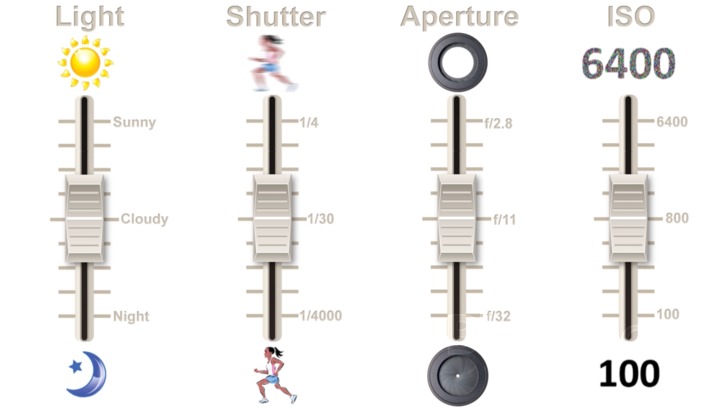
- How to Master Camera Settings (2:35:06 total runtime): This piece opens with an exploration of camera basics such as various user modes (manual, shutter and aperture priorities, auto), camera body components both internal and external, memory cards and ports, and lens structure. The lessons are reinforced by looking at a much older model camera. Tony continues with discussions of focusing methods and technologies, back button focusing, shutter operation (with examples), reducing and eliminating camera shake, taking good pictures in low light conditions (with some repeat footage from the lighting segment), aperture and its effects on a photo and the other points in the exposure triangle, the differences between crop and full frame sensors and the effect on depth of field, ISO (the cameras sensitivity to light), exposure compensation, dynamic range, and making use of the camera's histogram. The piece moves on to a demonstration of manipulating light and mastering ISO, shutter speed, and aperture. Tony also covers the differences between RAW and JPEG files. The segment concludes with Tony offering some ideas for exercises to master the subjects explained in this segment.
- How to Fix Camera & Picture Problems (1:25:42 total runtime): Tony takes viewers through the process of fixing various photographic problems, including why some photos appear blurry (front and back focusing, moving subjects, focus hunting, lack of focal contrast, shallow depth of field and the effects of aperture on a shot, motion blur, camera shake) and how to ensure that a camera is focusing properly. The segment also looks at image noise, color tint problems and white balance, low contrast images, chromatic aberration, the importance of camera sensor cleaning, shooting level pictures, power saving features, the importance of carrying extra batteries and memory cards, correcting red eye and flash sync effects, and lens flare.
Tony Northrup's Beginning Photography Videos: Composition, Lighting, Camera Settings, & Picture Problem Solving Blu-ray Movie, Video Quality

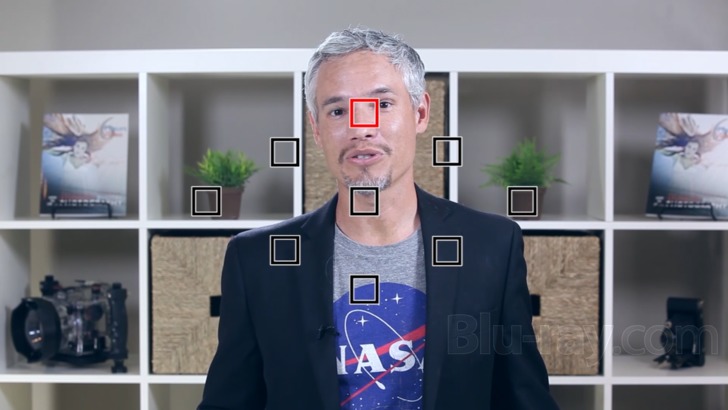
The image quality is not terrific. The 1080i, 1.78:1 presentation, which appears on a burned Blu-ray disc, suffices for the material to be sure, but the picture is flat, colors are drab, and the major problem is a lack of clarity on the many photographs seen throughout the production. While there's enough detail and clarity and stability to reinforce lessons on composition or lighting, for example, it's certainly not a help to the material that it's so compressed. Problems do not end there. There are a couple of dead pixels on Tony's end, a harsh red one near the middle of the frame, one small white one on the left, but only in the dead-on forward shots, not the usual slightly off-center framing. There is also some debris on the frame during a location video seen in the "composition" segment around the 17-minute mark and some compression artifacts are visible when Tony is using Picasa in part one at the 19-minute mark and editing a photo in Lightroom around the 29-minute mark. The modest video quality makes it difficult to see the photo he is editing in the clarity necessary to appreciate the image and the edits, both those in software and those, as mentioned earlier, appearing full screen. There are a few flickers to start the composition segment and again later near the 20-minute mark, and various additional artifacts appear throughout; it would be too time consuming to list them all. The material earns a pass due to the nature of the production -- it's an informative teaching tool video, not a Hollywood production -- but video quality improvements could have made this tutorial video series even better.
Tony Northrup's Beginning Photography Videos: Composition, Lighting, Camera Settings, & Picture Problem Solving Blu-ray Movie, Audio Quality
Tony Northrup's Beginning Photography features a Dolby Digital 2.0 soundtrack. The track is very basic and imperfect. There's almost nothing beyond Tony's voice, which has a bit of a hard edge to it but it's clear enough and almost always intelligible. Chelsea's voice sounds randomly hollow near the 53-minute mark of "composition," and the pitch frequently changes throughout her delivery. Little odds and ends flaws like that are apparent throughout, but that is certainly one of the most prominent and distracting. Vocals usually image towards the center, but not perfectly. There are precious few other sounds; the occasional mouse click or shutter release are audible and only really serve to set a scene.
Tony Northrup's Beginning Photography Videos: Composition, Lighting, Camera Settings, & Picture Problem Solving Blu-ray Movie, Special Features and Extras
Tony Northrup's Beginning Photography contains no supplemental content. The main menu screen only offers the opportunity to select any of the four segments that comprise the program. No DVD or digital copies are included. This release does not ship with a slipcover.
Tony Northrup's Beginning Photography Videos: Composition, Lighting, Camera Settings, & Picture Problem Solving Blu-ray Movie, Overall Score and Recommendation
Kudos to Tony and Chelsea for making this collection available on Blu-ray. Certainly the content doesn't necessarily demand a physical HD option -- most other photogs seem to be selling digitally and on DVD only -- but the increased resolution at least allows the photos to look maybe a little sharper, the up-close camera images more clear, and so on and so forth, though severe compression issues do stand in the way which sometimes drastically lessens the lesson's impact. And that's not even to mention playback problems and concerns. Tony Northrup's Beginning Photography's audio quality is not great, either, and no extras are included, but one buys a disc like this for the knowledge, not demo home theater material. For that, the disc comes highly recommended, even at the price; it will prove to be an invaluable tool for up-and-coming photographers.