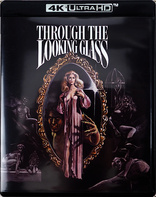
Through the Looking Glass 4K Blu-ray Movie
HomeThrough the Looking Glass 4K Blu-ray Movie 
Melusine / + Cherry Blossom BD / Retailer Slipcase Limited to 4000 Units / 4K Ultra HD + Blu-rayVinegar Syndrome | 1972-1976 | 2 Movies | 92 min | Rated X | Oct 31, 2024
Price
Movie rating
Movie has not been rated yetBlu-ray rating
| Users |  | 0.0 |
| Reviewer |  | 4.5 |
| Overall | | 4.5 |
Overview
Through the Looking Glass 4K (1972-1976)
A rich socialite escapes her boring lifestyle when a ghost takes her to a sexual hell where anything goes.
| Horror | 100% |
| Erotic | 94% |
Specifications
Video
Video codec: HEVC / H.265
Video resolution: 4K (2160p)
Aspect ratio: 1.85:1
Original aspect ratio: 1.85:1
Audio
English: DTS-HD Master Audio 2.0 Mono (48kHz, 24-bit)
Subtitles
English SDH
Discs
Blu-ray Disc
Two-disc set (2 BDs)
4K Ultra HD
Packaging
Slipcover in original pressing
Playback
Region free
Review
Rating summary
| Movie |  | 2.5 |
| Video |  | 5.0 |
| Audio |  | 4.0 |
| Extras | | 5.0 |
| Overall | | 4.5 |
Through the Looking Glass 4K Blu-ray Movie Review
Reviewed by Brian Orndorf December 1, 20241976’s “Through the Looking Glass” is the rare adult film that holds little interest in titillating its audience. It’s more of a horror picture with occasional carnal activity, finding director Jonas Middelton working to avoid heat as much as possible while examining the gradual disintegration of a woman who’s been subjected to violations her entire life, newly tempted to be imprisoned by them. The helmer goes for a surreal journey into darkness, which is interesting in a scholarly sense, watching the endeavor choose grimness in a genre that’s mostly wary of bumming out viewers. “Through the Looking Glass” retains value as a bold offering of artful moviemaking and risky tonality. What hurts the effort immensely is its glacial pace, as Middleton also mistakes slowness for mood, crafting a feature that’s perfectly content to put itself into park, generating a frustrating viewing experience.
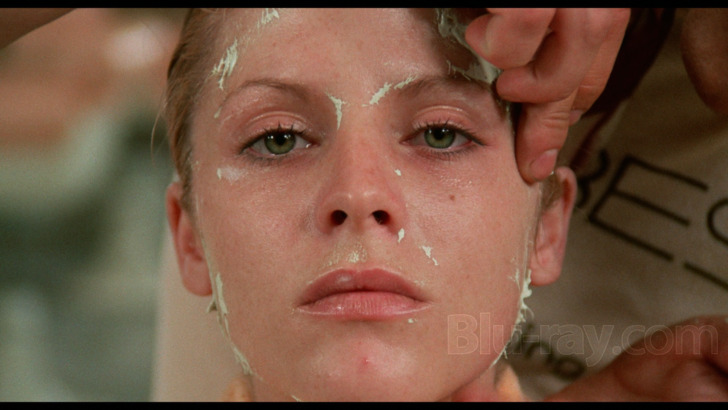
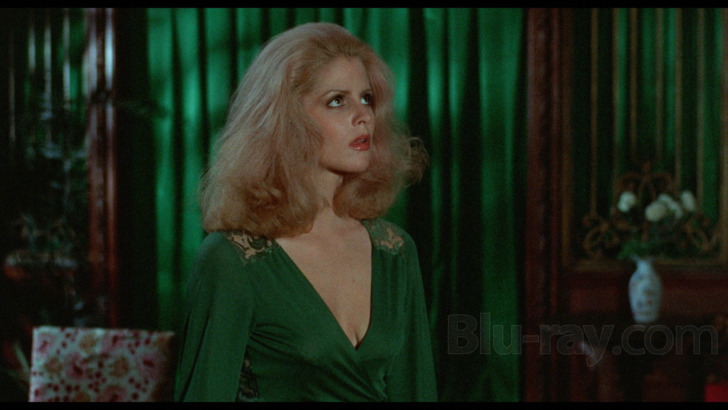
Catherine (Catherine Erhardt) is dazed and distant, living in a remote mansion alongside her husband, Richard (Douglas Wood), and her young daughter, Jennifer (Laura Nicholson). She resists sexual experiences with Richard, showing signs of mental illness her spouse hopes will be alleviated during an upcoming trip to Europe, getting her away from the confines of the house. Instead of seeking peace, Catherine is drawn to an attic mirror, allowing her to remember and relive sexual violence conducted by her Father (Jamie Gillis), losing herself in the power of the moment. The mirror holds a special influence over Catherine, finding a Demon (Gillis) working to lure her inside his world, which is filled with torment and shame. Struggling to process her experiences, Catherine submits to the Demon’s invitation, but this evil presence isn’t content to simply have the mother, as Jennifer starts to understand her own maturation.
“Through the Looking Glass” stays close to Catherine, who isn’t connecting to the world anymore. She was once a happy host, welcoming friends to her house, engaging with others, but something changed after the death of Father six years ago. This obsession drives much of the story, keeping Catherine in a strange state of detachment as she loses herself to dreams and nightmares involving the image of her deceased parent. There’s not much more in the way of family business offered in the writing, but the main character’s domestic experience is followed, rejecting Richard’s concern and bedroom advances, also paying limited attention to Jennifer, who’s looking to engage with her mother. What really captures Catherine’s mind is the attic mirror, which connects her to Father and the Demon, scrambling her brain as dark pleasures are pursued.
“Through the Looking Glass” inspects sexual abuse, but in a roundabout way, as Middleton rides the line between temptation and terror. He’s certainly out to make an uncomfortable picture, examining Catherine’s concentration on her years of molestation, presenting a complicated reaction to this treatment which permits the Demon access to her soul. Mirror World events are only periodically arranged, but they tap into Catherine’s confusion, including a visit to a dinner party where she’s the main course. Her genitals are inspected and poked with food items, and Middleton tries to meet adult cinema expectations by dropping in some random sexual events. Sensuality, or even lust, aren’t found in “Through the Looking Glass,” as Middleton aims for more perverse thrills, extending to a strange scene of domination as the mansion staff, who identify as brother and sister, decide to diminish household tension in their own special way.
Through the Looking Glass 4K Blu-ray Movie, Video Quality
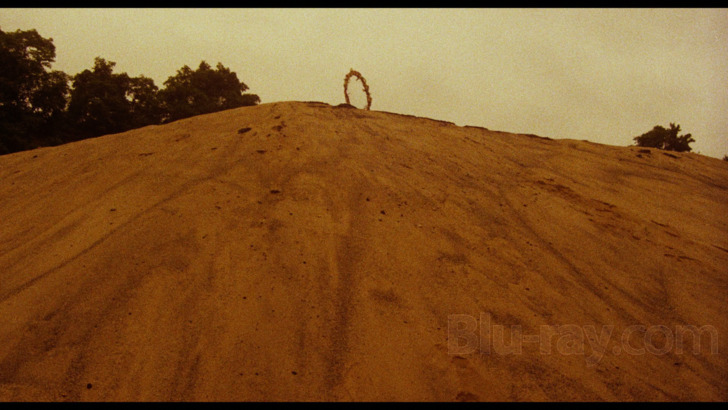
Listed as "newly restored from its 35mm camera negative," "Through the Looking Glass" comes to UHD with care for its strange visuals. Detail reaches as far as possible, working around occasionally hazy cinematography, exploring ample skin particulars and fine hairs. Costuming is also fibrous, exploring formal wear and evening attire. Household interiors retain dimension as the characters move around the mansion. Exteriors are also deep. Colors are active, securing distinct greenery around the dwelling. More dynamic hues are found during mirror sequences, which offer bright primaries. Darker events are also defined with browns and grays. Deep blacks are present, preserving shadowy events. Highlights are tasteful. Grain is heavy and film-like. Source is in good condition.
Through the Looking Glass 4K Blu-ray Movie, Audio Quality
The 2.0 DTS-HD MA mix struggles with elements of age, as dialogue exchanges carry sibilance issues throughout the entire feature. Intelligibility isn't threatened, and emotionality from the performers is appreciable. Scoring supports with decent clarity and instrumentation.
Through the Looking Glass 4K Blu-ray Movie, Special Features and Extras
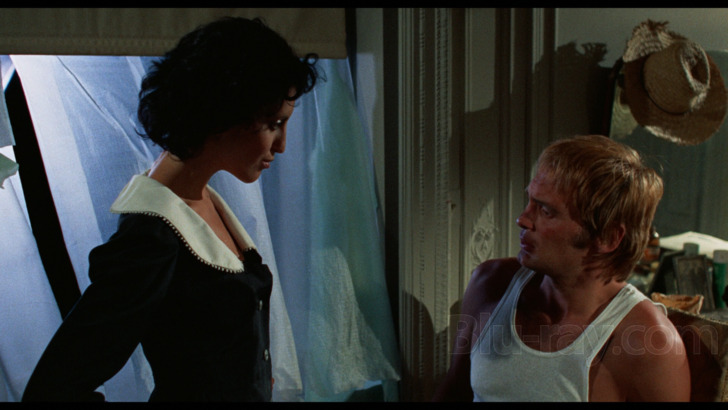
- Booklet (42 pages) provides an essay by film historian Ashley West.
- Commentary #1 features director Jonas Middelton and film historian Ashley West.
- Commentary #2 is listed as an "Audio segment/interview" with Jonas Middelton and Ashley West, pulled from The Rialto Report podcast.
- Interview (40:07, SD) is a 2006 sit-down with director Josh Middleton for a career overview. Making his way to New York, Middleton attempted an acting career, using the experience to understand how to become a filmmaker. Attracting outside attention, professional opportunities arrived, but only in the adult industry, inspiring the creation of 1972's "Cherry Blossom." The interviewee shares his perspective on the business and its players, also identifying his drive to keep momentum going, mounting 1974's "Illusions of a Lady," which left him a little disillusioned. 1976's "Through the Looking Glass" is also examined, describing the production as a "tremendous responsibility," trying to maintain some order while laboring in Long Island. Memories from the shoot are shared, highlighting casting achievements and creative inspirations, though he wishes he could've made a "better film." Most interesting is Middleton's early belief that he was participating in a Hollywood movement to bring hardcore to the mainstream, and he goes in-depth about his legal issues, busted in the late-1970s over content in "Illusions of a Lady." The discussion takes a strange turn in the end, with Middleton suddenly sharing his newfound love of religion while criticizing the feminist movement of the 1970s, believing women belong in domestic servitude roles.
- Deleted Scenes (2:47, HD) are identified as excised from the hardcore version of "Through the Looking Glass," but included in the softcore cut of the movie.
- "Alternate Unfiltered Hell Sequence" (12:11, HD) provides a look at a pivotal scene from "Through the Looking Glass" without the filtering found in the final cut.
- Image Gallery (3:37) includes press kit pages, BTS snaps, and publicity shots.
- A Theatrical Trailer (4:47, HD) is included.
- Bonus Movie: "Cherry Blossom" (64:08, HD) is a 1972 picture from director Jonas Middelton.
- A "Cherry Blossom" Trailer (2:57, HD) is included.
Through the Looking Glass 4K Blu-ray Movie, Overall Score and Recommendation
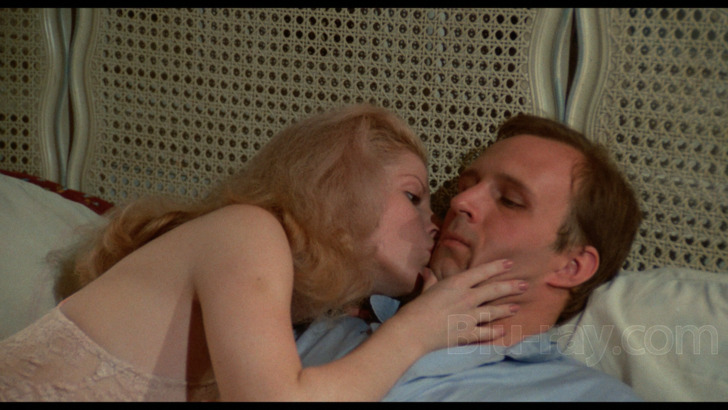
"Through the Looking Glass" really takes its time, bringing Catherine's odyssey to life through various real-time events, including the taking of pills. Middelton moves so slowly in the picture, deflating tension along the way, though he's clearly interested in visually communicating Catherine's brushes with danger, going avant-garde during Mirror World events, including a journey to Hell (actually a gravel pit, but eternal agony is understood). "Through the Looking Glass" arranges a sense of threat and touches on cycles of abuse, but there's nothing urgent to the misery, which could use a great deal more suspense. Or any editorial authority. Instead, there's an artful approach to adult cinema, and that certainly retains creative value, watching Middleton explore a terrible situation with as much cinematic experimentation as the genre allows.