The Song of Names Blu-ray Movie
HomeThe Song of Names Blu-ray Movie 
Sony Pictures | 2019 | 113 min | Rated PG-13 | Mar 24, 2020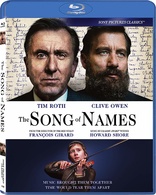
Price
List price:Amazon: $25.00 (Save 7%)
Third party: $25.00 (Save 7%)
Only 2 left in stock (more on the way).

Movie rating
6.4 | / 10 |
Blu-ray rating
| Users |  | 0.0 |
| Reviewer |  | 3.0 |
| Overall | | 3.0 |
Overview
The Song of Names (2019)
Tim Roth and Clive Owen star in an emotional detective story spread over two continents and a half century. Beneath the film's stunning and pulsing musical revelations burn the horror of a war and the lost souls extinguished from history.
Starring: Tim Roth, Clive Owen, Catherine McCormack, Eddie Izzard, Saul RubinekDirector: François Girard
| Drama | 100% |
Specifications
Video
Video codec: MPEG-4 AVC
Video resolution: 1080p
Aspect ratio: 2.39:1
Original aspect ratio: 2.39:1
Audio
English: DTS-HD Master Audio 7.1
Subtitles
English SDH
Discs
Blu-ray Disc
Single disc (1 BD)
Playback
Region A (B, C untested)
Review
Rating summary
| Movie | | 3.0 |
| Video |  | 2.5 |
| Audio |  | 5.0 |
| Extras | | 2.5 |
| Overall | | 3.0 |
The Song of Names Blu-ray Movie Review
Reviewed by Brian Orndorf May 7, 202022 years ago, director Francois Girard made “The Red Violin,” which examined the extended history of a special musical instrument, following the creation as it touched many lives. The picture did surprising business during its art-house run, inspiring the helmer to return to a music world mystery with “The Song of Names,” another tale of the unknown featuring heavy violin references. Considerably tamer than “The Red Violin,” “The Son of Names” offers a more reflective mood, with the lead characters facing the passage of time as they deal with unresolved trauma. Girard strives for screen poetry here, attempting to find dramatic support while giving the feature over to extended scenes of musicianship. It’s a handsome production, and the music, by Howard Shore, aims to please. It’s the overall tautness of the endeavor that’s in doubt, with Girard losing interest in pace as he tries to put together something sincere.
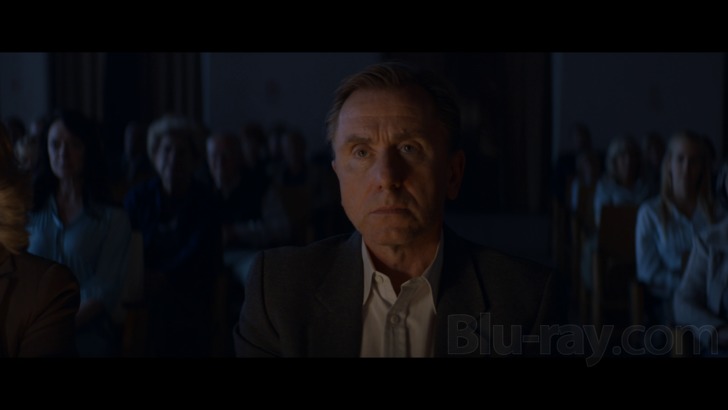
It’s London in 1951, and young Martin is watching tensions rise right before a grand concert assembled by his father, featuring the virtuoso violin talents of Dovidl. When the star of the show doesn’t arrive, Martin’s life is thrown into chaos. 35 years later, Martin (Tim Roth) hears a special sound and form coming from a young violinist, recognizing it as the work of Dovidl (Clive Owen), a man he once shared a life with as a child, making friends with a Jewish prodigy from Poland who came to live with Martin’s family during World War II. While his wife, Helen (Catherine McCormack), is hesitant to reopen old wounds, she can’t deny Martin’s curiosity, with the obsessive older man following names and leads across the globe as he tried to reconnect with someone he once considered a brother, soon coming to understand an entire story about Dovidl he didn’t fully grasp at the time of their sudden separation.
“The Song of Names” has an inviting opening act. The story commences in 1951, examining rising tensions in a backstage waiting area as Dovidl is meant to appear in concert, only to never arrive at the auditorium. Martin’s a teenager, but he understands the unfolding disaster, with crowds gathering and the BBC broadcasting the event, with all eyes on the virtuoso, who doesn’t make the effort to follow through on his obligation. The exact ramifications of this decision are revealed later in the feature, but the event carries on within Martin, who reappears 35 years later in a different life, only to be pulled back into the past when he hear the sounds of a violinist who’s an exact copy of Dovidl. It’s a moment of recognition that appears to launch “The Song of Names” as a puzzle of sorts, with Martin realizing that a man he believed to be dead is actually alive, sharing his gifts with a select few.
There’s some mild globetrotting with Martin’s mission, which initially takes him to Poland to hunt for Dovidl, meeting those with a connection to the violinist. “The Song of Names” soon settles into flashbacks to develop the shared history of the main characters, with screenwriter Jeffery Caine (adapting a book by Norman Lebrecht) ultimately exploring three periods in these lives, tracking Martin and Dovidl’s initial meeting as children, the pains of their adolescence, and their war of secrecy as adults. While Girard shows interest in creating mild thrills with Martin’s detective work, he soon lays off the gas, with “The Song of Names” evolving into a story of fractured identity, as war challenges Dovidl’s relationship with his religion and his gifts. Martin’s clouded headspace is tended to as well, and while there’s room to do something riveting with all the question marks and personal crisis floating around the endeavor, the production starts to drag in its second act, failing to build up a sizable emotional punch for its conclusion. Considering all it has to share about family, tremendous personal loss, and skill, it’s bizarre how easily the effort grinds to a halt on many occasions.
The Song of Names Blu-ray Movie, Video Quality
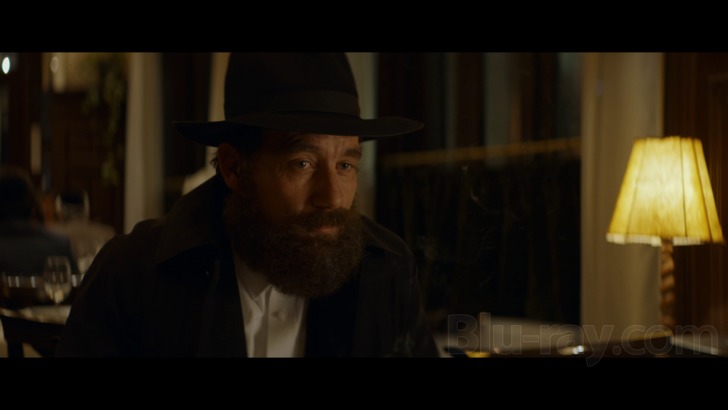
Perhaps an error was made somewhere in the process of putting "The Song of Names" on Blu-ray, but the disc only offers roughly 11 GB for a 113- minute-long film. The AVC encoded image (2.39:1 aspect ratio) presentation wrestles with artifacting throughout the viewing experience, with darker scenes highlighting blockiness and banding. There's an autumnal feel to the cinematography, which offers browns and grays, with earth tones utilized by the production. Costuming carries a bit more variety, as do city visits, delivering brighter greenery and signage. Skintones are natural. Detail has its moments, exploration facial particulars, especially wartime wear and tear, and age is important to note. Locations are passably dimensional, as are concert spaces, with great halls deep, filled with extras. Delineation is prone to solidification.
The Song of Names Blu-ray Movie, Audio Quality
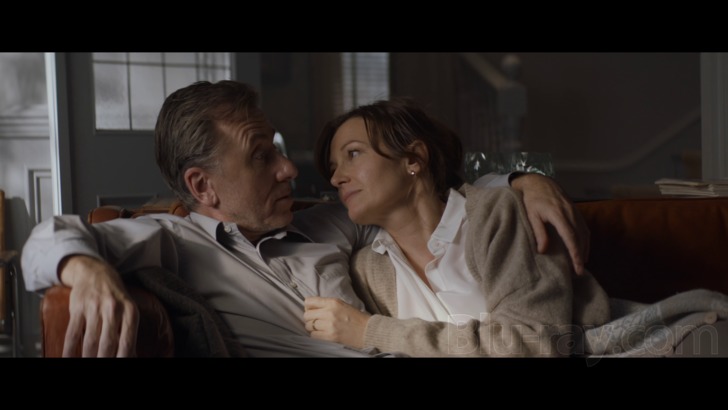
Music obviously plays a critical role in "The Song of Names," and scoring selections are present throughout most of the movie. The 7.1 DTS-HD MA sound mix is built for precision, delivering crisp instrumentation throughout the listening event, with specific attention to violin performances. Orchestral moods are immersive, offered with a circular feel, and surrounds are enveloping with atmospherics, taking note of weather changes and room tone. Dialogue exchanges are direct, handling a variety of accents and thespian choices well, never losing any spoken information. Low-end has some power with percussive moments, and WWII bombing raids contribute some brief rumbling.
The Song of Names Blu-ray Movie, Special Features and Extras
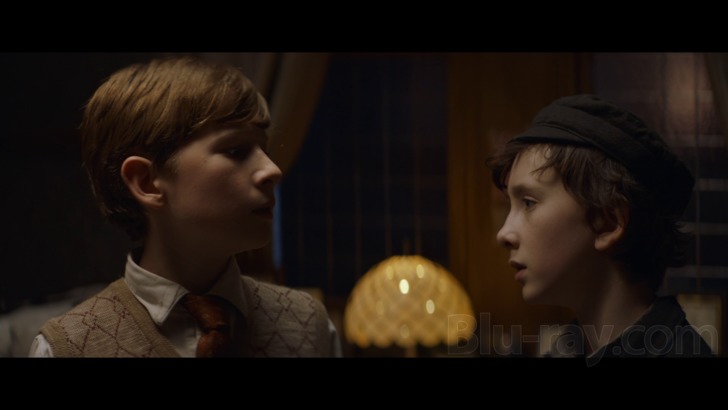
- "Behind 'The Song of Names'" (7:34, HD) is a brief making-of for the film, including interviews with director Francois Girard, novelist Norman Lebrecht, screenwriter Jeffrey Caine, producers Lyse Lafontaine and Robert Lantos, composer Howard Shore, and actors Tim Roth, Clive Owen, Catherine McCormack, Jonah Hauer-King, Gerran Howell, Luke Doyle, and Misha Handley. The conversation moves quickly through examinations of story and character, including individual motivations and psychological arcs. Casting achievements are celebrated, with the production tasked with finding three actors for the each of the main characters. Shore shares his musical vision for the picture, and Owen details his rush to learn the violin to successfully pass as a virtuoso.
- "Howard Shore: Composing & Scoring" (2:31, HD) spends a short amount of time with the music man, who reveals he's been working on "The Song of Names" for two years, required to create violin pieces for Dovidl before shooting began. Cameras visit Shore during his creation of the movie's score, which was recorded inside a cavernous church, and the composer examines the challenge of making music that's meant to carry the storytelling ambitions of the screenplay.
- "Howard Shore & Ray Chen" (3:23, HD) returns to the composer, who emphasizes the importance of the violin sounds in "The Song of Names," required to map out music for the production. Shore provides some insight into his storytelling goals and highlights Chen's contribution to the score. Some performance footage of Chen in action is also included.
- And a Theatrical Trailer (2:14, HD) is included.
The Song of Names Blu-ray Movie, Overall Score and Recommendation
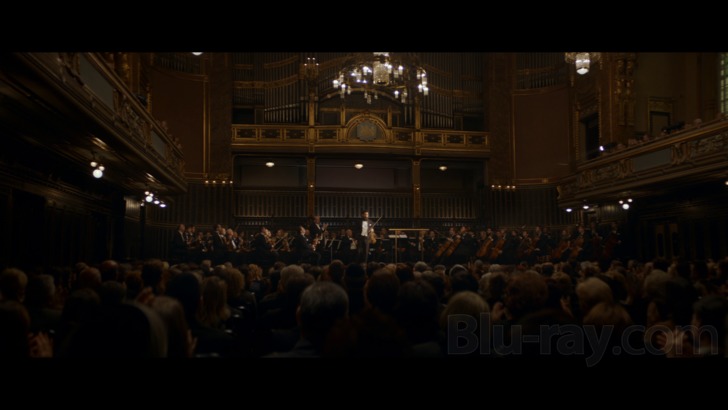
Music is the star of the show in "The Song of Names," and composer Howard Shore comes through with beautiful scoring and passionate violin performances to sell Dovidl's talents and heartache, giving the film a defined aural presence. Roth and Owen also do what they can with the elder versions of Martin and Dovidl, offering a bit more gravitas than the younger cast. Little pieces of the production come through as intended, but the whole isn't overpowering. "The Song of Names" only manages to impart a faint sense of urgency, with Girard unable to get the feature where it needs to be, despite showing directorial clarity early on. He doesn't lose interest in the material, he just forgets to energize it, leaving it unable to reach its potential.
Similar titles
Similar titles you might also like
(Still not reliable for this title)

Serena
2014

Equity
2016

The Looming Tower
2018

The Personal History of David Copperfield
2019

The Daughter
2015

Woman in Gold
2015

Good
2008

The Young Messiah
Christ the Lord
2016

Little Joe
2019

Labyrinth of Lies
Im Labyrinth des Schweigens
2014

Things to Come
1936

The Standoff at Sparrow Creek
2018

Loveless
Нелюбовь / Nelyubov
2017

Paradise
1991

City of God
Cidade de Deus
2002

Racing with the Moon
1984

Prince Avalanche
2013

Beau Brummell
Warner Archive Collection
1954

Game Change
2012

Justin Bieber: Never Say Never
2011