The Reichsorchester Blu-ray Movie
HomeThe Reichsorchester Blu-ray Movie 
Arthaus Musik | 2007 | 90 min | Not rated | Oct 30, 2012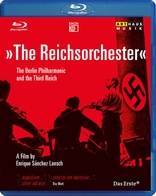

Movie rating
6.5 | / 10 |
Blu-ray rating
| Users |  | 0.0 |
| Reviewer |  | 3.5 |
| Overall | | 3.5 |
Overview
The Reichsorchester (2007)
Enrique Sanchez Lansch directs this documentary that examines the history of the Berlin Philharmonic during the years 1933-1945. Using archive material alongside testimony from witnesses present at the time, the film seeks to shine a light on the members of the orchestra itself, charting their destinies, and examining the role they played in Nazi Germany's propoganda machine.
Starring: Wilhelm FurtwänglerDirector: Enrique Sanchez Lansch
| Music | Uncertain |
| Documentary | Uncertain |
| History | Uncertain |
| War | Uncertain |
Specifications
Video
Video codec: MPEG-4 AVC
Video resolution: 1080i
Aspect ratio: 1.78:1
Original aspect ratio: 1.78:1
Audio
German: LPCM 2.0
Subtitles
English
Discs
25GB Blu-ray Disc
Single disc (1 BD)
Playback
Region free
Review
Rating summary
| Movie | | 3.5 |
| Video |  | 3.0 |
| Audio |  | 4.0 |
| Extras |  | 0.5 |
| Overall | | 3.5 |
The Reichsorchester Blu-ray Movie Review
The Berlin Philharmonic comes to terms with its Nazi past.
Reviewed by Jeffrey Kauffman November 1, 2012Music is supposedly the universal language, but in the hands of the Nazis, it was just another propaganda tool. As with so many other supposed cultural touchstones, Hitler and his acolytes proclaimed Germanic (actually “Aryan”) music to be inherently superior to any other, and as a result forever colored (some would say sullied) the reputations of such composers as Richard Wagner and Richard Strauss, two especially beloved artists of power wielders in The Third Reich. It’s therefore more than a little ironic that the Third Reich, responsible for wreaking so much havoc in the general artistic life of Germany, may actually have been instrumental (no pun intended) in saving what is a hallmark of Germany's cultural accomplishments: the Berlin Philharmonic Orchestra. Until the Nazis came along and assumed state control of the orchestra in 1933, it had been a musician owned and run affair and, as such, was constantly teetering on the edge of bankruptcy. It’s not exactly a secret that many artists live entirely in their right brains and wouldn’t know a financial statement or balance sheet from a veritable hole in their collective heads.

As with so much pain and trauma caused by Hitler’s regime, there’s an undeniable melancholy hanging over this part of the Berlin Philharmonic’s history, despite the fact that Nazi control meant that the orchestra at least weathered the sturm und drang of the Second World War. However well the Nazis' control of the orchestra may have turned out in terms of the group's survival, there are still deep and abiding scars in terms of the members forced to leave, and the enduring ambivalence of those who stayed, including the Philharmonic's most famous conductor, Wilhelm Furtwangler (who did not leave Germany until February, 1945).
This is an often fascinating but rather sad documentary that shows that some Germans still haven't come to grips with the trauma the Nazi era inflicted on various people. There are still apologists firmly on display here, people who insist that this Jewish professional or that wouldn't have stayed in Germany under any circumstances due to professional career advancement, while family members of these same Jewish players insist their relatives were quite happy in Berlin but were forced to leave because of the environment.
While it's obvious there are still lingering aftereffects of the now distant Nazi terror, it's also commendable that the Berlin Philharmonic chose to commemorate its 125th anniversary (in 2007) by casting some light on this little looked at era in the orchestra's history. The answers may in fact not be easy, but it's good that someone at least thought to ask some salient questions.
The Reichsorchester Blu-ray Movie, Video Quality
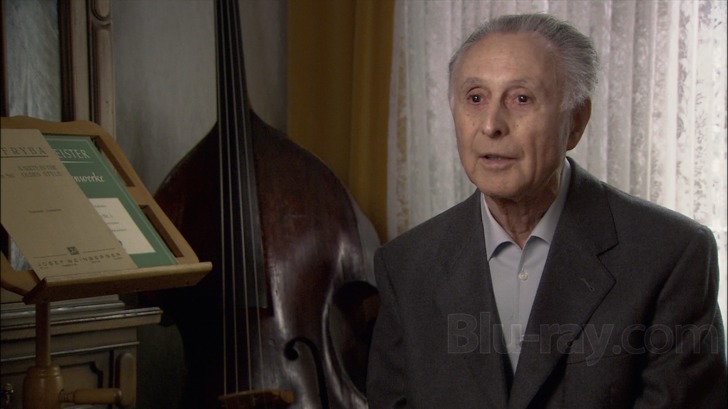
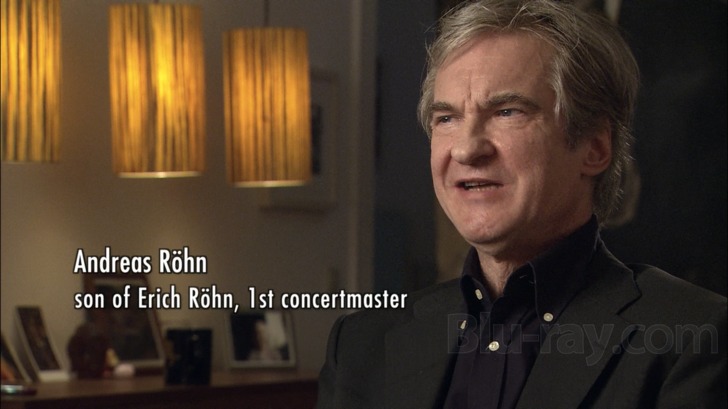
The Reichsorchester is presented with an AVC encoded 1080i transfer in 1.78:1. Contemporary interview segments look decently sharp, if sometimes not very well saturated, and as is to be expected the archival footage varies greatly in quality.
The Reichsorchester Blu-ray Movie, Audio Quality
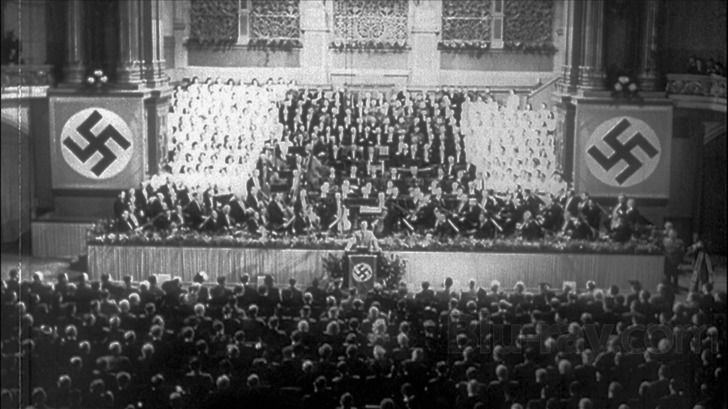
The Reichsorchester's LPCM 2.0 mix does quite well for this documentary since relatively little of it actually includes long snippets of music. This is mostly a talking heads affair and the commentary is delivered with good fidelity and reasonable range.
The Reichsorchester Blu-ray Movie, Special Features and Extras
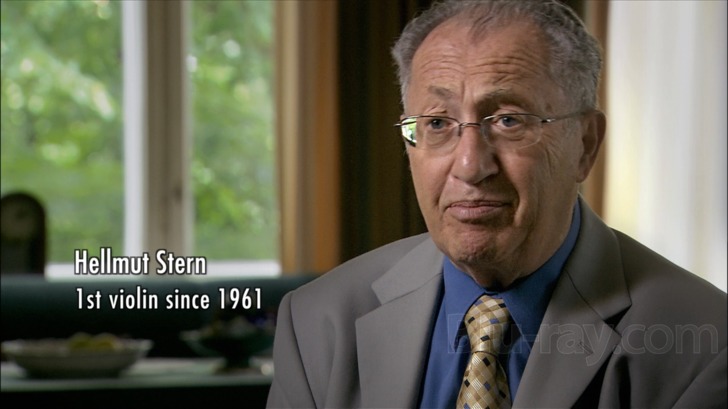
- Wilhelm Furtwängler Conducting the Berlin Philharmonic Orchestra (SD; 9:57) is the complete performance of Richard Wagner's Prelude from Die Meistersinger von Nürnberg which was filmed in 1942 at a concert given at an AEG Company plant. Parts of this performance are excerpted in the actual documentary. There are couple of issues with this presentation: first of all, no subtitles are included, and there is a brief spoken introduction in German, but more problematically what one assumes was the original 1.37:1 aspect ratio has been masked to create an artificial 1.78:1 framing. This has been done generally well, though occasionally tops of heads are cut off.
The Reichsorchester Blu-ray Movie, Overall Score and Recommendation
The Reichsorchester just barely seems to scratch the surface at times of still lingering ambiguity on the part of some who lived through the Nazi era, but perhaps that very ambiguity is instructive as to where some at least in Germany are in terms of coming to terms with the horrors of a bygone age. This is often riveting stuff nonetheless, and comes Recommended.