The Private Files of J. Edgar Hoover Blu-ray Movie
HomeThe Private Files of J. Edgar Hoover Blu-ray Movie 
Shout Factory | 1977 | 113 min | Rated PG | Aug 26, 2025| Cover coming soon |
Price
Movie rating
6.1 | / 10 |
Blu-ray rating
| Users |  | 0.0 |
| Reviewer |  | 3.0 |
| Overall | | 3.0 |
Overview
The Private Files of J. Edgar Hoover (1977)
The film is a chronicle of forty years in the life of FBI director J. Edgar Hoover, starting first in the time of Prohibition, as he enforced the law on bootlegging and organized crime. Later, the director comes up against the Red Scare of the 1950s, the Kennedys, the wave of change in the 1960s, and his hatred of Dr. Martin Luther King, Jr. Examined here is the allegation that he had an 'abnormal' sexual life, along with his obsession with his dead mother.
Starring: Broderick Crawford, James Wainwright, Michael Parks, José Ferrer, Celeste HolmDirector: Larry Cohen (I)
| Drama | Uncertain |
| Biography | Uncertain |
Specifications
Video
Video codec: MPEG-4 AVC
Video resolution: 1080p
Aspect ratio: 1.85:1
Original aspect ratio: 1.85:1
Audio
English: DTS-HD Master Audio 2.0 Mono (48kHz, 24-bit)
Subtitles
English SDH
Discs
Blu-ray Disc
Single disc (1 BD)
Playback
Region A (B, C untested)
Review
Rating summary
| Movie | | 3.0 |
| Video | | 3.0 |
| Audio |  | 3.5 |
| Extras |  | 2.5 |
| Overall | | 3.0 |
The Private Files of J. Edgar Hoover Blu-ray Movie Review
Reviewed by Brian Orndorf August 30, 2025Writer/director Larry Cohen takes on a post-Nixon world in 1977’s “The Private Files of J. Edgar Hoover,” trying to make sense of a presidential mess and American issues by taking a look at U.S. government history. This being Cohen, there’s not a lot of money to help bring an epic study of corruption to life, leaving the helmer to do his usual B-movie thing with the material, pulling together something of a bio-pic without much in the way of polish. “The Private Files of J. Edgar Hoover” isn’t a particularly big swing for Cohen, who gets very messy while trying to assemble the details of Hoover’s experiences and influences, but he does have a large cast to help bring his ideas to life, including a lead performance from Broderick Crawford that captures some of the inner turmoil that kept Hoover clinging to power for nearly 50 years.
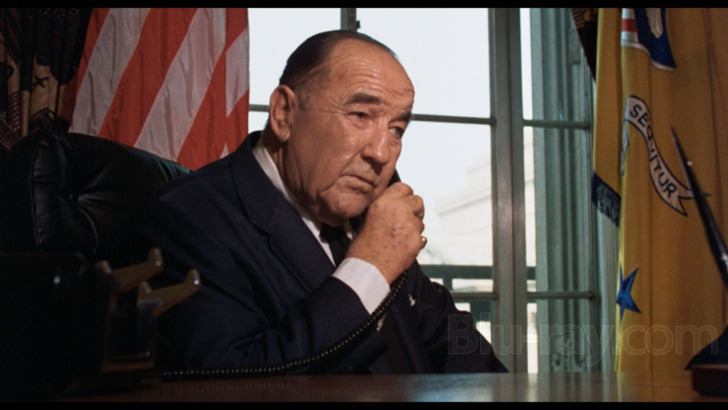
As a young man just entering U.S. government employment, J. Edgar Hoover (James Wainwright) is committed to the ideas of truth and justice, facing a system that has no interest in offering fairness to others. Hoover learns the corrupting ways of influence, eventually made the director of the F.B.I., embarking on a mission to turn this new world of “G-Men” into a mighty power in Washington, D.C., putting secretive surveillance plans into action to track anyone deemed an enemy. As the decades pass, Hoover (now played by Broderick Crawford) finds an unusual adversary in Attorney General Robert F. Kennedy (Michael Parks), who represents a new way forward for government as the U.S. experiences the turbulent days of the 1960s. Hoover’s megalomania only increases over time, along with his paranoia, as others seek to disrupt his control of the F.B.I., and learn more about his relationship with friend Clyde Tolson (Dan Dailey).
“The Private Files of J. Edgar Hoover” is bookended by the frenzy surrounding Hoover’s death in 1972, finally relinquishing control of stored information that many would like to possess, including President Richard Nixon and his team. The screenplay suggests a payback scenario for the U.S. leader, who was denied a chance to become a G-Man, seeking a way to destroy Hoover, even after his passing. Control of these files isn’t actually the focal point of the script, which shows more interest in Hoover’s life story, beginning during his first years of employment. Instead of a hardened man of power, Hoover is depicted as a sensitive soul with genuine concern for those being crushed by government, slowly drained of a conscience as he spends more time on the job. “The Private Files of J. Edgar Hoover” also briefly explores the rise of his paranoia, as sexual attention from a woman triggers something deep within, inspiring him to shut down most personal relationships outside of his mother.
Cohen doesn’t go the Oliver Stone route with “The Private Files of J. Edgar Hoover,” preferring to treat the material like a gangster movie from the 1940s or a T.V. show from the 1950s. The helmer gets pulpy with the endeavor, which has its appeal as Hoover declares war on organized crime, allowing Cohen to assemble some violent Tommy gun attacks and encourage leathery performances from his large cast. “The Private Files of J. Edgar Hoover” finds its groove in the pursuit of secrets, watching Hoover oversee wiretapping and surveillance efforts, keeping tabs on everyone, including his favorite restaurant waiter. The feature achieves a sense of unease when exploring the destruction of privacy, and private vendettas are also interesting to watch, putting Hoover on a mission to ruin those who oppose him, ignoring all laws and moral consideration along the way. There’s certainly a lot in the feature that remains relevant today.
Cohen isn’t big on plot, but he finds a bit of conflict in the battle between Hoover and RFK, with the younger man somewhat shocked to discover the F.B.I.’s true ways, challenging them during the 1960s, but also submitting to some of their effectiveness. In a film that’s not terribly interested in following the nuance of history and character, this arc is as close to an understanding of motivation as the picture gets. “The Private Files of J. Edgar Hoover” also follows the saga of Dwight Webb (Rip Torn), a dedicated lawman who gets tangled up in Hoover’s rules for conduct, growing bitter as he’s demoted, setting up the character for future damage as the political tides turn.
“The Private Files of J. Edgar Hoover” dances around the question of Hoover’s sexuality for most of the run time, but Cohen begins to concentrate on Tolson’s presence in the final act. While Hoover was fiercely protective of this friendship, others gossiped about a closer union between the pair, which was also used to fuel the drama in Clint Eastwood’s 2011 take on the F.B.I. director, the tedious “J. Edgar.” The writing doesn’t sink its teeth into this aspect of Hoover’s life, but Cohen doesn’t turn away from it either, trying to find some sensitivities as the movie draws to a close.
The Private Files of J. Edgar Hoover Blu-ray Movie, Video Quality
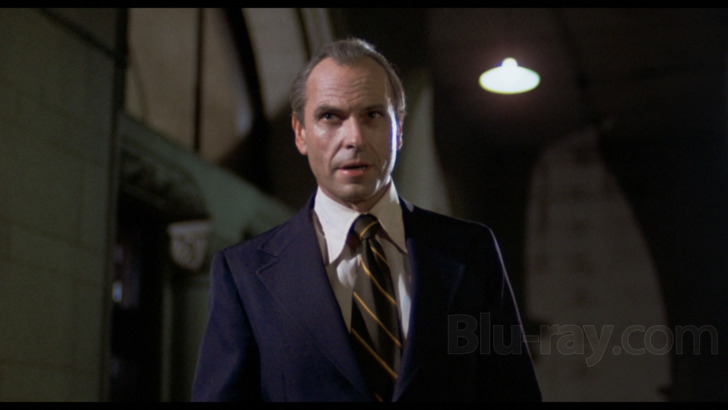
The image presentation (1.85:1 aspect ratio) for "The Private Files of J. Edgar Hoover" is listed as a "new 2K scan from the original camera negative," though it doesn't exactly behave like a typical fresh scan. Actually, the viewing experience looks somewhat aged, with mild clipping on some displays of lighting, and a softer sense of detail as the picture explores the weathered, senior appearances of most of the cast. Only mild texture remains in the movie as period elements are displayed. Interiors retains some depth with offices and living spaces. Exteriors are passably deep. Color favors a cooler look at period fashion and business experiences, handling browns and dark blues. Brighter hues on patriotic displays and signage are acceptable. Skin tones are natural. Delineation is satisfactory. Source is in decent condition.
The Private Files of J. Edgar Hoover Blu-ray Movie, Audio Quality
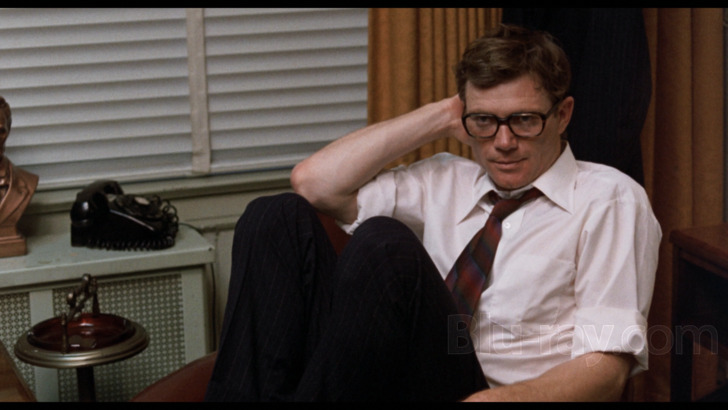
"The Private Files of J. Edgar Hoover" works with a 2.0 DTS-HD MA mix, and often battles technical limitations, finding the actors occasionally competing with background noise. Dialogue is mostly clear, preserving performance choices and emotionality. Scoring supports with acceptable instrumentation and dramatic emphasis. Sound effects are blunt.
The Private Files of J. Edgar Hoover Blu-ray Movie, Special Features and Extras
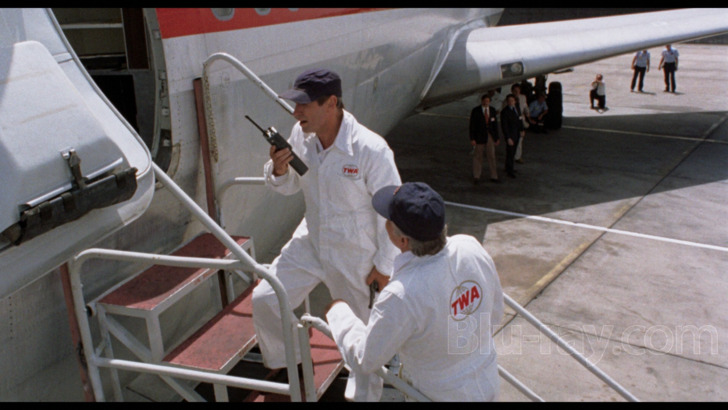
- "The Most Feared Man" (11:12, HD) is an appreciation piece from film music historian Daniel Schweiger.
- And a Trailer (1:40, SD) is included.
The Private Files of J. Edgar Hoover Blu-ray Movie, Overall Score and Recommendation
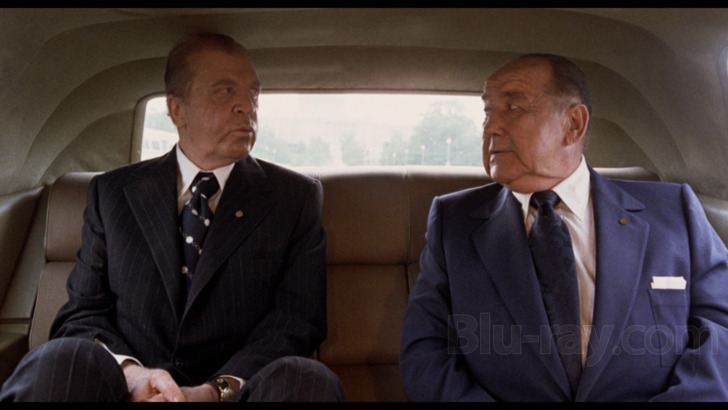
"The Private Files of J. Edgar Hoover" delivers compelling performances throughout, paying the most attention to Crawford, who physically resembles Hoover and tries to inhabit his insecurities, exploring the wall the man built around himself to protect his ego. It's accomplished work, backed by a capable supporting cast who aren't offered too much depth, but attempt to find elements of personality to play, including Parks as RFK. What holds the movie back is Cohen's scattershot approach to telling this story, often jumping around in time to cover so much life and political change. A few tangents into the lives Hoover ruined are supplied as well, allowing inconsequential characters to claim narration duties for a few minutes, which adds some confusion when these people are never heard from again. "The Private Files of J. Edgar Hoover" is messy and not terribly engrossing at times, but Cohen has his moviemaking passions to help support the viewing experience, which is just enough to keep this vision of corruption and obsession on its feet.
Similar titles
Similar titles you might also like
(Still not reliable for this title)
Advise & Consent
1962

J. Edgar
2011

Come Back, Little Sheba
1952

The Captive City
1952

The Turning Point
1952

The Red Menace
1949

At Close Range
MVD Rewind Collection
1986
Johnny Belinda
1948

Big Night
1996

Sweet Bird of Youth
Warner Archive Collection
1962

The Verdict
1982

The Great Moment
1944

Elmer Gantry
1960

All My Sons
1948

No Man of Her Own
I Married a Dead Man
1950

Storm Warning
Warner Archive Collection
1951

The Strange Love of Martha Ivers
4K Restoration
1946

Scarlet Street 4K
1945

Framed
1975

The Postman Always Rings Twice
1981