The Miracle Maker: The Story of Jesus Blu-ray Movie
HomeThe Miracle Maker: The Story of Jesus Blu-ray Movie 
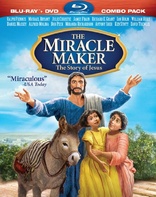
Blu-ray + DVDLionsgate Films | 2000 | 90 min | Not rated | Mar 08, 2011
Price
List price:Listed on Amazon marketplace

Movie rating
6.3 | / 10 |
Blu-ray rating
| Users |  | 5.0 |
| Reviewer |  | 4.0 |
| Overall | | 4.2 |
Overview
The Miracle Maker: The Story of Jesus (2000)
The greatest story ever told comes to life in spectacular clay animation.
Starring: Ralph Fiennes, Michael Bryant, Julie Christie, Rebecca Callard, James FrainDirector: Derek W. Hayes, Stanislav Sokolov
| Animation | Uncertain |
| Biography | Uncertain |
| Drama | Uncertain |
Specifications
Video
Video codec: MPEG-4 AVC
Video resolution: 1080p
Aspect ratio: 1.78:1
Original aspect ratio: 1.85:1
Audio
English: DTS-HD Master Audio 5.1
Spanish: Dolby Digital 2.0
Subtitles
English SDH, Spanish
Discs
25GB Blu-ray Disc
Two-disc set (1 BD, 1 DVD)
DVD copy
Packaging
Slipcover in original pressing
Playback
Region A (C untested)
Review
Rating summary
| Movie | | 4.0 |
| Video | | 4.0 |
| Audio |  | 4.5 |
| Extras |  | 3.5 |
| Overall | | 4.0 |
The Miracle Maker: The Story of Jesus Blu-ray Movie Review
Stop (motion) me if you've heard this one before.
Reviewed by Jeffrey Kauffman March 1, 2011Easter is a moveable feast, which in 325 A.D. the Council of Nicea set as falling on the first Sunday after the full moon (the Paschal Full Moon for you religious terminology sticklers) after the northern hemisphere’s Vernal Equinox. What does that mean exactly? It means that Easter can fall anywhere from mid-winter to early Spring, and in 2011 it falls just about as late as it ever can on the traditional Gregorian calendar, in this case April 24, 2011. What does that have to do with the movie business, you may ask. And I’m here to tell you: those extra weeks mean lots of added opportunity for more Easter-themed product to hit your store and virtual internet shelves. We’re seeing a bevy of Blu-ray releases this year just in time for Easter of some vaunted religious epics, including The Ten Commandments, King of Kings, The Greatest Story Ever Told and The Bible. The story of Jesus obviously is front and center in two of those titles, and the Passion has long been a source of deep inspiration for a huge variety of filmmakers, most of whom treat their subject with traditional reverence, but a few of whom either decide to concentrate on the torture and agony side of the things (Mel Gibson’s divisive The Passion of the Christ) or, alternatively, just sit back and make fun of the whole enterprise (Monty Python’s only slightly sacrilegious The Life of Brian). But in the entire history of films about Jesus, there’s never been anything quite like The Miracle Maker, a 2000 mostly stop-motion enterprise that has a sort of proto-Veggie Tales kid-friendly ambience but which features such bizarrely fascinating visuals that adults may be sucked into the story whether or not they have a religious bone in their bodies.
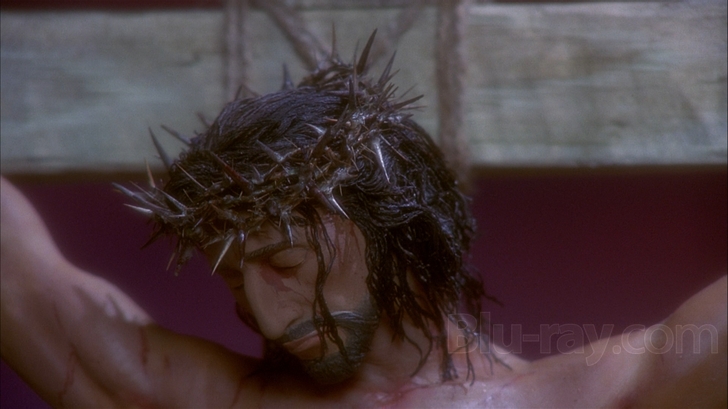
Stop motion has a long and honorable history the stretches virtually the entire course of the motion picture era. Incredibly, the first use of stop motion appears to be an 1898 short called The Humpty Dumpty Circus. But the technique was used regularly in films, sometimes in films where you wouldn’t think it had been (Star Wars for example), and the technique also was famously a defining feature of the popular Rankin Bass holiday television specials of the 1960’s (Rudolph the Red Nosed Reindeer, et al.). My hometown of Portland, Oregon was a “center” of stop motion for years courtesy of Will Vinton’s Claymation Studios, which did a host of famous work, notably those wacky California Raisins. Vinton lost control of his studio several years ago to Nike’s Phil Knight, who formed Laika Studios out of Vinton Studios’ ashes. It just so happened that my youngest son’s best friend’s stepfather turned out to be Laika’s Line Producer on Coraline, perhaps the most ambitious stop motion feature ever produced. Harry (Linden) had also worked quite a bit for Nick Park on Park’s iconic stop motion features (Wallace and Gromit), and so I was privy courtesy of Harry's anecdotes to the unbelievable precision and care a smooth flowing stop motion approach requires.
It’s little wonder, then, that The Miracle Maker took five years to make. It’s perhaps even more remarkable that it even got made at all when you realize the stop motion aspects of the film were actually crafted in Russia by Christmas Films at a time when the old Soviet Union was crumbling and the entire nation was in a state of disorder. Also playing into The Miracle Maker’s own filmmaking miracle is the fact that this was an international co-production. While the puppet work was handled in Russia, the traditional cel animation segments (more about which later) were done by the Welsh house of Cartwn Cymru. These two entities had had a previous relationship courtesy of a British television series called Testament, which animated stories from the Old Testament.
The Miracle Maker may get most of its initial charm and allure from its unusual combination of stop action and unusual looking cel animation, but there’s actually quite a bit of innovation tucked into this appealing feature. The stop motion elements are utilized to depict the “normal” (if that can be used in this context) events of Jesus’ life, while internal mental states are depicted with a nice variety of traditional cel animation techniques, some of which almost seem to have been done in chalk. Therefore we’ll get a fairly straightforward exposition of some aspect of Jesus’ life in stop motion, but if we venture into his temptation by Satan, or the internal mental state of an unbalanced Mary Magdalene, we’re off into cel animation territory. The filmmakers make a cogent argument that this was done to separate the “fantasy” elements from the “real,” but one does have to wonder about production costs and the time to fully create a stop motion enterprise perhaps playing more than a small part in the decision to split the film this way.
Perhaps more subtly, but very intriguing, is screenwriter Murray Watts’ who approach to the Jesus story. Unlike a lot of the big screen epics that filled theaters in the 1950’s and 1960’s, we don’t get a straight chronological retelling of Christ’s life. Instead we’re given a “child’s eye” view of Jesus, told from the viewpoint of a character who appears briefly in the Gospel of Luke, Jairus’ unnamed daughter whom Jesus heals and raises from the dead. In The Miracle Maker her name is Tamar, and we see an unfolding series of well-known events from her perspective, and it gives the film a real charm, as well as an easy entrée for kids, who will probably easily relate to Tamar’s wide eyed love for her literally personal savior.
The voice work here is uniformly excellent, if a bit over the top at times. Ralph Fiennes proves his versatility by bringing both humanity and divinity to his Jesus, and it’s interesting to think Fiennes has now played both sides of the good and evil coin to their veritable hilt, what with his turn as Harry Potter’s Voldemort. A host of iconic voices fills The Miracle Maker, sometimes in relatively smaller roles, including Julie Christie, Ian Holm, Alfred Molina, Richard E. Grant, as well as Miranda Richardson as Mary Magdalene and William Hurt as Jairus. Richardson gets to chew the scenery in almost Simpsons' "cat lady"-esque insanity throughout the early scenes. Hurt especially seems to embody his role fully and brings some nuance and pathos to the part, especially in the sequence where Tamar is healed.
The Miracle Maker is an odd little film to be sure. It’s like revisiting a lost stop motion Gospel in a way, a relic of a bygone age telling an iconic story from a different point of view and with an unusual technique to boot. For parents who are looking to give their kids a suitably accessible Easter video, this film should be just the ticket.
The Miracle Maker: The Story of Jesus Blu-ray Movie, Video Quality

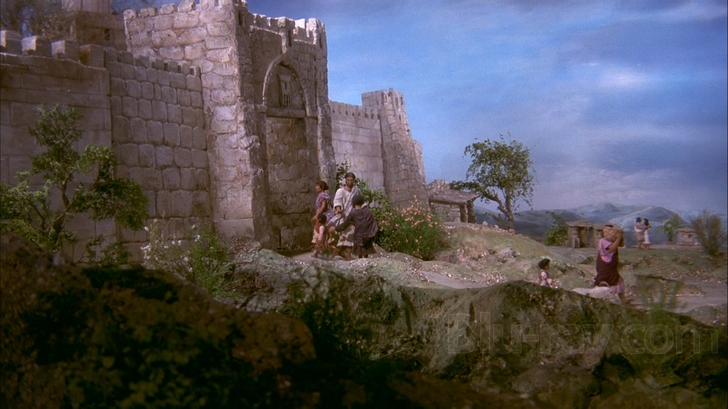
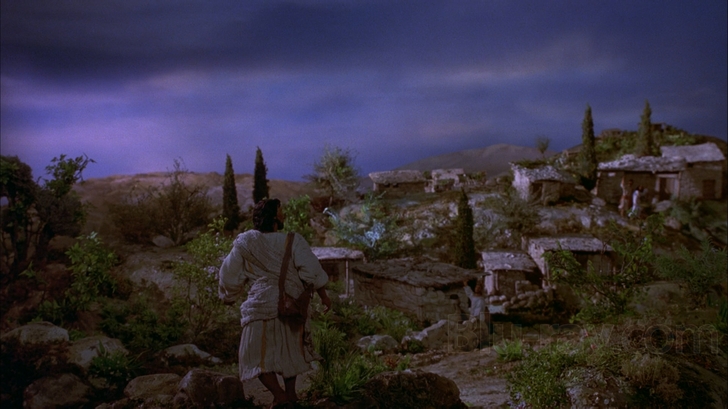
The Miracle Maker is offered on Blu-ray with an AVC encoded 1080p transfer in 1.78:1. The basic source elements utilized for the film look great, and there's a really nice filmic look to the natural appearing grain in the stop motion segments especially. The image is decently sharp, especially in midrange and close-ups, but it suffers from occasional softness in large group shots. Colors are robust and well saturated. The cel animation segments, while fairly rudimentary by today's CGI standards, are precise and sharp looking and there is no egregious print damage to report. This entire film has a slightly surreal look to it, courtesy of the stop motion elements, with some of the characters' faces being perhaps a tad too similar to Gerry Anderson outings like Thunderbirds!. But there are some amazing effects here, notably the highly articulated mouths, which are really lifelike, as well as some amazing water effects that look spectacular.
The Miracle Maker: The Story of Jesus Blu-ray Movie, Audio Quality
The Miracle Maker benefits from a nicely detailed lossless DTS-HD Master Audio 5.1 mix that is nonetheless not incredibly immersive. Almost all of the sound effects and dialogue are relegated to the front channels, but they're reproduced with great fidelity and brilliance here. The best thing about this soundtrack by far, and an element which does nicely spill into the surrounds, is the absolutely gorgeous underscore by Anne Dudley. Dudley, a founding member of Art of Noise and an Academy Award winner for The Full Monty, contributes one of her most evocative and fully formed scores, and it sounds incredible in this lossless offering.
The Miracle Maker: The Story of Jesus Blu-ray Movie, Special Features and Extras
- Feature Commentary by producer Naomi Jones and director Derek Hayes, is really excellently informative and gives a wealth of background information on the (ahem) genesis of the project as well as the actual techniques utilized to create the stop motion effects. There are a couple of funny anecdotes about the puppets being transported in and out of the country that are worthwhile.
- Making of Documentary (SD; 29:12) is also an above average featurette which includes a wealth of interviews with both the Welsh and Russian crews.
- Storyboard to Film Comparison (SD; 3:39) offers a brief look at a couple of segments.
- DVD Copy of the film, which also includes two Interactive Games not found on the Blu-ray.
The Miracle Maker: The Story of Jesus Blu-ray Movie, Overall Score and Recommendation

I'm not sure this qualifies as an actual Easter miracle, but I was uniquely moved by and involved with The Miracle Maker. It takes a little getting used to the stop motion aspect, as well as the sometimes jarring transitions to the traditional cel animation sequences, but this film is a really intelligently handled retelling of the Jesus story, and it also manages to deliver an understated but potent emotional impact as well. Highly recommended.
Similar titles
Similar titles you might also like
(Still not reliable for this title)

The Lion of Judah 3D
2011

Thomas & Friends: Tale of the Brave - The Movie
2014

Angry Birds Toons: Season One - Volume One
2013

Monster High: Escape from Skull Shores
2012

Scooby-Doo! and the Monster of Mexico
2003

Thomas & Friends: Day of the Diesels
2011

Open Season: Scared Silly
2016

What's New, Scooby-Doo?: The Complete Series
2002-2006

Chip 'n' Dale Rescue Rangers: The Complete Series
1989-1990

Monster High: Fright On!
2011

The Flintstones and WWE: Stone Age Smackdown!
2015

Scooby Goes Hollywood
1979

Tom and Jerry Blast Off to Mars
2005

Monster High: Frights, Camera, Action!
2013

Back to the Future
1991-1992

Scooby-Doo! and the Loch Ness Monster
2004

Scooby-Doo! and the Alien Invaders
Warner Archive Collection
2000

Tom and Jerry: Shiver Me Whiskers
2006

The Steam Engines of Oz
2018
Hello Kitty's Furry Tale Theater
1987