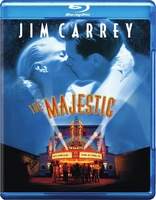
The Majestic Blu-ray Movie
HomeThe Majestic Blu-ray Movie 
Warner Bros. | 2001 | 153 min | Rated PG | Feb 24, 2015

Movie rating
6.9 | / 10 |
Blu-ray rating
| Users |  | 4.2 |
| Reviewer |  | 2.5 |
| Overall | | 2.5 |
Overview
The Majestic (2001)
Set in 1951, an unjustly blacklisted Hollywood writer gets into a car accident and loses his memory. Due to a remarkable resemblance, the residents of a small town mistake him for a local war hero presumed dead.
Starring: Jim Carrey, Bob Balaban, Jeffrey DeMunn, Hal Holbrook, Laurie HoldenDirector: Frank Darabont
| Romance | Uncertain |
| Period | Uncertain |
| Drama | Uncertain |
Specifications
Video
Video codec: MPEG-4 AVC
Video resolution: 1080p
Aspect ratio: 1.78:1
Original aspect ratio: 1.85:1
Audio
English: DTS-HD Master Audio 5.1 (48kHz, 24-bit)
French: Dolby Digital 5.1 (640 kbps)
German: Dolby Digital 5.1 (640 kbps)
Spanish: Dolby Digital 5.1 (640 kbps)
Spanish: Dolby Digital 2.0
Portuguese: Dolby Digital 2.0
Russian: Dolby Digital 5.1
Japanese: Dolby Digital 5.1
Czech: Dolby Digital 2.0
Spanish DD 2.0=Latin; Japanese is hidden
Subtitles
English SDH, French, German SDH, Japanese, Portuguese, Spanish, Czech, Korean, Mandarin (Traditional), Polish, Romanian, Russian, Thai, Turkish
Discs
50GB Blu-ray Disc
Single disc (1 BD)
Playback
Region free
Review
Rating summary
| Movie |  | 2.0 |
| Video |  | 4.0 |
| Audio | | 4.0 |
| Extras |  | 1.5 |
| Overall | | 2.5 |
The Majestic Blu-ray Movie Review
False Majesty
Reviewed by Michael Reuben March 2, 2015It would be unfair to blame the failure of The Majestic on Jim Carrey, whose efforts to repeat the success with drama that he has so often enjoyed with comedy always seem to turn out badly. But it isn't Carrey's fault that the film bombed at the box office ($37 million worldwide on a budget of $75 million) and was savaged by critics (the late Roger Ebert being a notable exception). The problem was the material itself, or at least a mismatch between the material and its director, Frank Darabont, whose previous features, The Shawshank Redemption and The Green Mile, were built on bleak but firm foundations originally provided by Stephen King. The Majestic was something entirely different: an overly earnest attempt to be heart-warming, upbeat and schmaltzy, none of which are Darabont's strength. The fairy tale script was penned by the director's boyhood friend, actor Michael Sloane, who tried to channel the spirit of Frank Capra but succeeded only in demonstrating that what used to be dismissed as "Capra-corn" isn't such an easy blend to mix. Capra may have been corny, but he was genuine. In The Majestic, by contrast, not one thing feels authentic. Rather than evoking nostalgia for a simpler, "truer" America, the film just makes you yearn for a better movie.
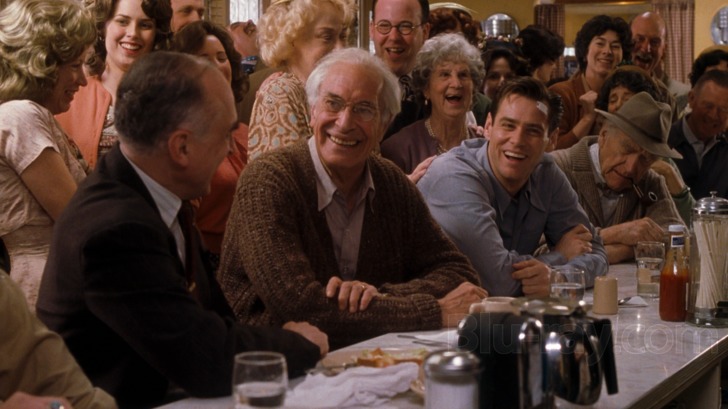
The Majestic is the story of an aspiring and non-political screenwriter named Peter Appleton (Carrey), who, in 1951, is accused of being a communist by the House Un-American Activities Committee and finds himself blacklisted because of an antiwar group to whose meetings he accompanied a pretty girl in college. The opening scene establishes Appleton's menial status in the studio system as he sits alone in the frame with the voices of studio executives yammering from all sides about how his script should be changed. (The voices belong to Carl Reiner, Rob Reiner, Gary Marshall, Paul Mazursky and Sydney Pollack.) His response to the numerous contradictory directives, when he's finally asked, is that they're all "amazing". The Coen Brothers already covered this territory, and covered it better, in Barton Fink, where Michael Lerner's manic studio head managed to convey in a single character the whirligig of conflicting forces in the studio system that drove talented writers to drink. But the Coens understood that they were writing a darkly comic fantasy, in which the villain bubbles up from the depths of the unconscious like a nightmare. (It's no accident that his most famous line is: "I'll show you the life of the mind!") In The Majestic, Darabont keeps casting about for something that will give his story credibility, but he can't find anything, because Peter Appleton not only worships the movies; he's living in one, and a thinly plotted one at that. The Majestic's version of Fifties Hollywood is as much a movie-within-a-movie as is Sand Pirates of the Sahara, the black-and-white B picture that is Appleton's first produced script, starring his current girlfriend, Sandra Sinclair (Amanda Detmer). When the blacklist, HUAC and the FBI interrupt Appleton's career, the event is supposed to represent an eruption of harsh reality into his Hollywood fantasy, but how can we take them seriously, when these characters have no more substance than The Evil But Handsome Prince Khalid (Cliff Curtis), the snarling villain in Sand Pirates? The investigator, Elvin Clyde (Bob Balaban), with his flyswatter, Congressman Doyle (Hal Holbrook) with his gavel, G-men Ellerby and Saunders (Daniel von Bargen and Shawn Doyle) with their flat inflection, even the studio lawyer, Bannerman (Ron Rifkin), who routinely calls Appleton "kid"—these are all figures out of a studio story conference populated by the same kind of specialists in cliche who are assaulting Appleton from off-camera when The Majestic opens. The situation doesn't improve once the action switches to the small town of Lawson, where Appleton washes up on the sea shore after a car accident when he swerves to avoid a possum on a bridge. The citizens of Lawson, which received special recognition from President Franklin D. Roosevelt for the unusually high proportion of fatalities suffered in World War II by the military men from their town, mistake him for a war hero named Luke Trimble, whose body was never recovered and to whom Appleton bears a striking resemblance. The town is overjoyed at this native son's return, and Appleton doesn't argue with them, because he's suffering from that hoariest of script devices, amnesia. (Selective amnesia, too; he can remember movie plots perfectly.) And in a final closing of the circuits of coincidence, Luke Trimble's previously grieving and now revivified father, Harry (Martin Landau), owns the local movie palace, the Majestic, which has fallen into disrepair. But with Luke's "return", Harry is inspired to renovate and reopen the historic shrine to the very Dream Machine that just kicked Peter Appleton out the door. The closest The Majestic comes to anything with a pulse is Appleton/Luke's scenes with Emmett (Gerry Black), the theater's taciturn head usher, who sees more than he lets on, and with Luke's former love, Adele Stanton (Laurie Holden), daughter of the town's doctor (David Ogden Stiers), who is too smart to believe that Luke could suddenly reappear after more than nine years, but Adele lets herself believe it anyway, because she so desperately wants Luke to be alive. In general, though, the scenes in Lawson are tough going, because Darabont directs them with the same ponderous style he used for Shawshank and The Green Mile. The style suited those films, because they were about hard-won redemption after long suffering. When the same leaden pacing is applied to a light-hearted fairy tale, it makes the whole thing too obvious. ("Look at these folks. See how they're bringing Appleton back to his true self by teaching him about courage, decency and self-sacrifice!") In the film's final act, Appleton must return to Los Angeles to face his accusers. By this point, his memory has returned, as it always does in movies that use amnesia as a device. This is The Majestic's version of Mr. Smith Goes to Washington, and it is laughably facile in its solution to Appleton's dilemma. If only all those other writers whose careers were wrecked by the blacklist had known that their persecutors could be defeated with an impassioned speech quoting the Constitution and echoing Paul Muni in The Life of Emile Zola! Then again, they didn't have the town of Lawson behind them, that magical place where people are the salt of the earth, the refurbished neon glows at the Majestic, and dead heroes rewrite history from beyond the grave.
The Majestic Blu-ray Movie, Video Quality
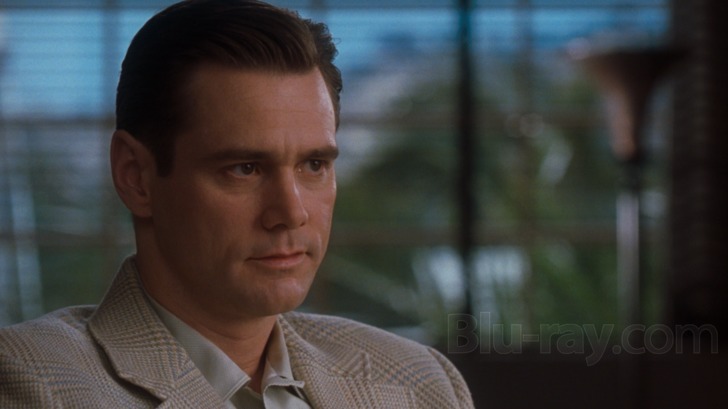
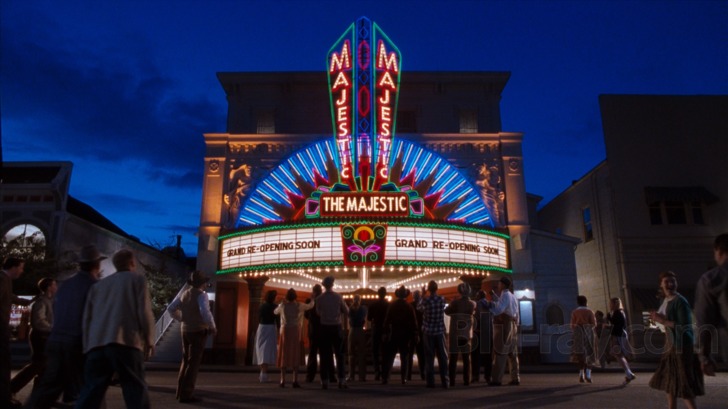
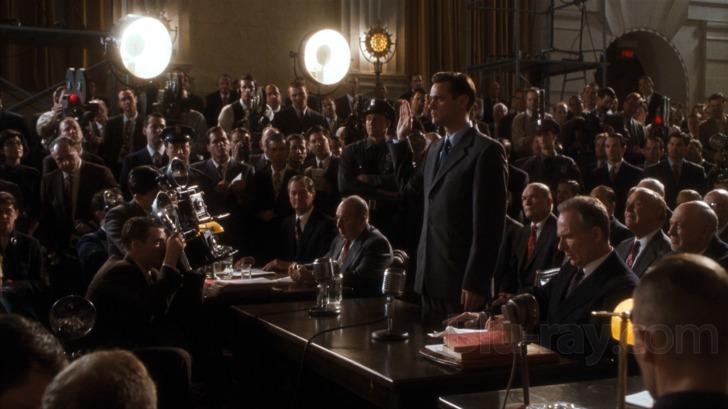
Darabont's cinematographer on The Green Mile , David Tattersall, returned for The Majestic, which has a heavily stylized, period look throughout its running time, accentuated by the production design, costumes, hair and makeup. Warner's transfer for this 1080p, AVC-encoded Blu-ray looks reasonably good, with enough fine detail to delineate individual faces and items of clothing in major crowd scenes (of which there are quite a few) and a sufficiently varied palette to accommodate both the delicate colorations of the women's fashions, the earth tones of the men's in Lawson, the grays of the studio "suits" and the bright neon of the renovated Majestic. Black levels and densities look appropriate, including key effects scenes like the bridge crossing that leads to Peter Appleton's car accident. The film's grain structure appears to be intact, and no artificial sharpening appears to have been applied. Warner has encoded The Majestic with an average bitrate of 23.95, which is within its usual range. It seems to be sufficient for this particular film, which is occasionally busy (e.g., at the HUAC hearings) but is otherwise not especially demanding. Artifacts were not an issue.
The Majestic Blu-ray Movie, Audio Quality
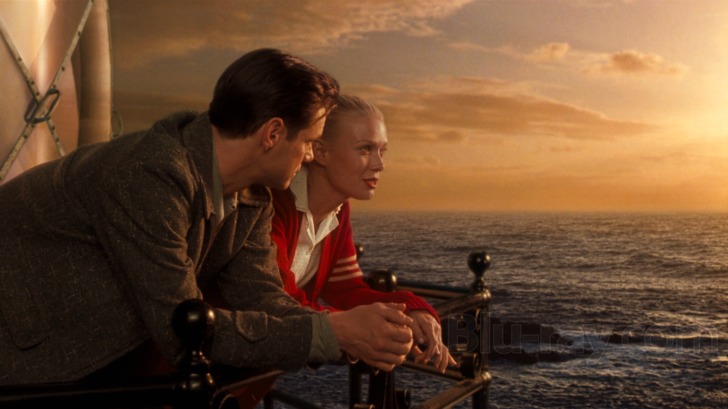
The Majestic's 5.1 soundtrack, encoded on Blu-ray in lossless DTS-HD MA, is mostly a low-key affair, with several standout exceptions. The buildup to Appleton's accident and the immediate aftermath involve a sudden rainstorm and a river, and the surround channels plunge the viewer into the chaos. The HUAC hearings, with the constant barrage of flash bulbs from the press, are another sonic set piece, and so are several large gatherings in Lawson to celebrate the return of "Luke". The dialogue is clearly rendered and, except for the opening "story conference" scene (and a reprise later in the film), generally centered. Mark Isham's score, which includes a heavy jazz influence, is one of the film's best elements.
The Majestic Blu-ray Movie, Special Features and Extras
The extras have been ported over from Warner's 2004 DVD of The Majestic (although I have not been able to confirm whether the DVD contained the deleted scenes):
- Movie Within the Movie: Sand Pirates of the Sahara (480i; 1.85:1; 4:48): This is the "complete" excerpt from the B movie scripted by Peter Appleton that plays a key role in the plot of The Majestic.
- Deleted Scenes (480i; 1.85:1; 9:47): A "play all" function is included.
- Pete Arrives at Work
- Pete Goes to See the Boss
- Sandra Dumps Pete
- Doc and Harry Discuss Luke's Amnesia
- Luke Sees the Lobby
- Adele's First Hiccups
- Discussing the Repairs
- Theatrical Trailer (480i; 1.78:1, enhanced; 2:29): "Once upon a time . . . "
The Majestic Blu-ray Movie, Overall Score and Recommendation
I really wanted to like The Majestic on this viewing. The cast is wonderful, and Darabont is capable of exceptional work, given the right material. But within half an hour (with two more to go), the film has gotten lost, much like Appleton driving aimlessly in the California night, and it never recovers. The Blu-ray looks and sounds good; so if you're someone who sees more in The Majestic than I do, by all means pick it up.

Similar titles
Similar titles you might also like

The Notebook
2004

The Vow
2012

The Longest Ride
2015

A Walk in the Clouds
1995

Redeeming Love
2022

Priceless
2016

Seven Pounds
2008

P.S. I Love You
2007

Forever My Girl
2018

The Man in the Moon
Limited Edition to 3000
1991

The Lucky One
2012

The Last Kiss
2006

The Way We Were 4K
50th Anniversary
1973

According to Greta
2009

Love Happens
2009

Bed of Roses
1996

Hope Floats
1998

Eat Pray Love
2010
Where the Heart Is
2000

After
2019