The Lost Films of Herschell Gordon Lewis Blu-ray Movie
HomeThe Lost Films of Herschell Gordon Lewis Blu-ray Movie 
Linda and Abilene / Ecstasies of Women / Black Love / Blu-ray + DVDVinegar Syndrome | 1969-1971 | 3 Movies | 242 min | Rated X | Jan 08, 2013

Price
List price:Listed on Amazon marketplace

Movie rating
Movie has not been rated yetBlu-ray rating
| Users |  | 3.5 |
| Reviewer | | 3.5 |
| Overall | | 3.5 |
Overview
The Lost Films of Herschell Gordon Lewis (1969-1971)
'The Lost Films of H.G. Lewis' three previously thought lost sexploitation features from the acclaimed master of exploitation cinema. All three films have been restored in 2K from their original camera negatives and are being released on home video for the first time anywhere in the world!
| Erotic | 100% |
| Drama | 25% |
| Western | 4% |
| Comedy | Insignificant |
Specifications
Video
Video codec: MPEG-4 AVC
Video resolution: 1080p
Aspect ratio: 1.34:1
Original aspect ratio: 1.37:1
Audio
English: Dolby Digital 2.0 (192 kbps)
Subtitles
None
Discs
50GB Blu-ray Disc
Two-disc set (1 BD, 1 DVD)
DVD copy
Playback
Region free
Review
Rating summary
| Movie |  | 2.5 |
| Video |  | 4.5 |
| Audio | | 3.5 |
| Extras |  | 2.0 |
| Overall | | 3.5 |
The Lost Films of Herschell Gordon Lewis Blu-ray Movie Review
The art of thrusting.
Reviewed by Brian Orndorf January 15, 2014Referred to as the “Godfather of Gore,” filmmaker Herschell Gordon Lewis built a legacy on the wonders of repulsive, violent entertainment. With “Blood Feast” and “Two Thousand Maniacs,” Lewis gifted moviegoers a new style of horror picture that erased boundaries, delivering grotesque imagery typically involving dismemberment and torture. However, big screen pain didn’t always pay the bills and, under various pseudonyms (such as “Mark Hansen” and “R.L. Smith”), Lewis returned to sexploitation endeavors that originally launched his career, before bloodshed turned him into a genre legend. With “Ecstasies of Women,” “Linda and Abilene,” and “Black Love,” Lewis stumbles through three particularly patience-testing productions, armed only with flat cinematography and an army of actors willing to bare all for the camera, engaging in all types of softcore and hardcore shenanigans while the helmer works diligently to pad these efforts out to feature-length status.
"Ecstasies of Women" (75:10)
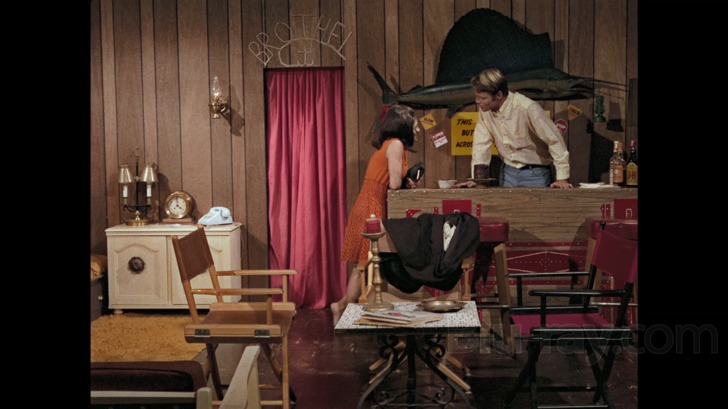
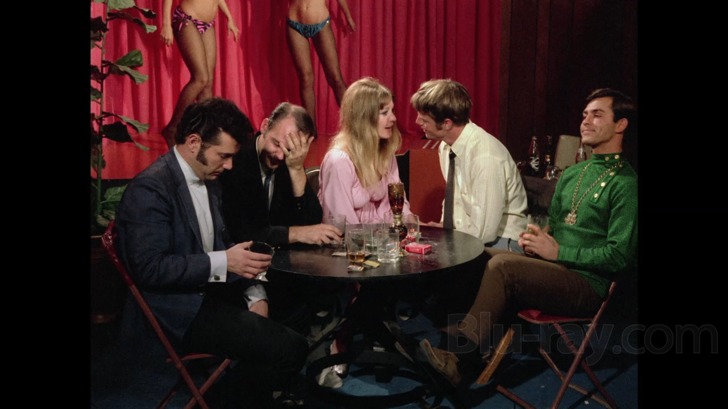
Harry (Walter Camp) is seated in a strip club with three friends, celebrating his bachelor party with copious amounts of booze and slurred banter while dancers perform and interact with the group. Feeling the sexual intensity of the moment, Harry flashes back to prior conquests, bringing model Annette (Jeanette Mills), beach girl Sandy (Vincene Wallace), and teen runaway Philomena (Sharon Matt) back to his houseboat for a little hanky panky. Meanwhile, the men talk up stripper Summer Frenzy (Bonnie Clark), hoping to lure the lady and a few of her coworkers back to the houseboat for a celebratory orgy.
The appeal of 1969’s “Ecstasies of Women” hinges on the likability of Harry. A remorseless cad and lingerie salesman, Harry is obsessed with the opposite sex, dreading his impending marriage as he spends the evening drowning his sorrows and leering at the gyrating goods onstage. Although brightly played by Camp, Harry isn’t a stand-up guy, making his houseboat adventures slightly unsettling, especially when that’s all there is to the viewing experience, which is made up of long takes that study the character’s skills of seduction, talking targets out of their clothes.
Lewis doesn’t push the premise very far, and while transitions between fantasies are smoothly handled, “Ecstasies of Women” is largely inert, relying on ample nudity and Harry’s sexual encounters to wake the film up. There’s a lot of softcore pawing and writhing to watch, a repetitive dance of the pants that wears the viewer down by the end, especially when Philomena enters the story, looking about 20 years younger than our hero (yeesh). It’s a conversational picture, attempting jocularity through reference to silly town names (Harry is based out of Intercourse, PA), but there’s little here that’s engaging, with the pauses between the disrobing eternal at times, though flubbed lines and cue card reading from the actors is amusing to watch.
“Linda and Abilene” (92:37)
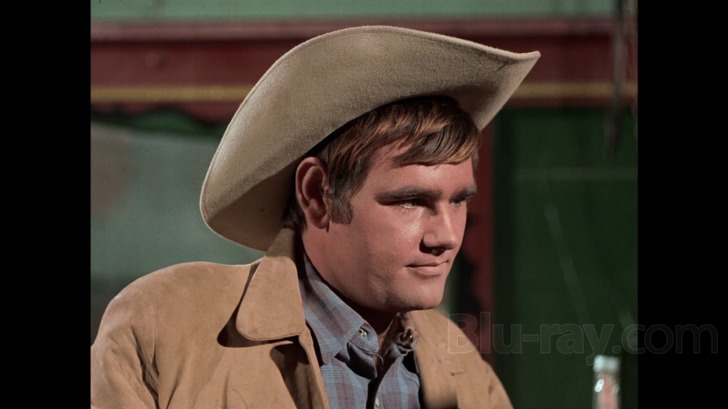
After losing their parents, siblings Todd (Kip Marsh) and Abilene (Sharon Matt) are urged into adult roles, tending to the homestead with chores and dreary routine while depending on each other for emotional support. The isolation soon tests their burgeoning sexuality, finding impure thoughts turning into seductive acts, with the pair soon engaging in an incestuous relationship. Flattened by guilt, Todd takes his urges to Linda (Roxanne Jones), a local prostitute, while Abilene is forced to fend off vicious predator Rawhide (Tom Thorn), who rapes the young woman, enraging Todd.
It’s difficult to tell what the production was thinking here. A western tale from 1969, “Linda and Abilene” isn’t a romp, but a glum story of obsessive thoughts and physical reaction, barely registering as titillation as it explores the sexual appetites of siblings, while rape and murder factor into the third act. It’s not a cheery or directly lascivious creation, instead taking a slightly voyeuristic approach, initially teasing viewers with shots of Abilene bathing in the local creek, or observing the pair masturbate under bed sheets as they consider each other with extreme curiosity.
Once the brother and sister finally go all the way, “Linda and Abilene” reaches whatever potential it has, though it’s difficult to get worked up about the taboo union due the picture’s insultingly glacial pace, taking an eternity to work though pedestrian scenes. The production pads the effort with montages and looks of longing, but 90 minutes of this softcore nonsense is difficult to sit through. “Linda and Abilene” attempts to reward patience with a shot of titular lesbianism in the final act, while Todd engages in a showdown with Rawhide, capping the movie with a brief offering of frontier justice. Although excitement is welcome, this all leads to a downbeat conclusion, perhaps confusing those who’ve come to the film expecting a lighter affair befitting a sexploitation distraction. To be blunt: everything in the endeavor seems engineered to kill boners.
“Black Love” (74:22)
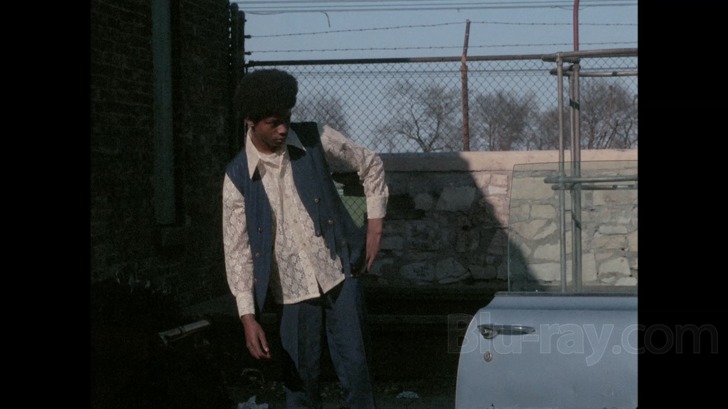
Eschewing any attempt to explore a narrative, 1971’s “Black Love” goes academic, establishing itself as a study of the sexual experience as it pertains to African-Americans. No story, minimal acting, and lots of uncomfortably extended close-ups, “Black Love” aims to tell it like it is.
Of course, the production’s goal isn’t one of observation, cloaking the movie in educational intent as it captures hardcore footage of couples in the throes of passion. Writer/narrator Joseph L. Turner is here to guide the viewing experience in a studious fashion, exploring the stages of curiosity and exposure to sexual situations as interest is formed over the years, working toward an appreciation for the final summation of the titular event: intercourse. To support the investigation, the production offers long takes of penetration, bringing in bright lights to illuminate aroused genitalia, with rhythmic thrusting practically a supporting character of the film. “Black Love” ceases to be a sex ed effort at this point, turning into traditional pornography as we watch couples figure out oral pleasures and positions for the camera.
“Black Love” is strange stuff, lingering on testicles and vaginas in a leering manner while it projects a mood of research (there’s a fine line between lovemaking and a gynecological exam), proclaiming itself a valuable tool for viewers with serious questions about the sexual experience. Sure. The sham seems superfluous, but it’s undeniably entertaining, scored to a funky loop and broken up with dance sequences and mild comedy, helping to unclench the scholarly tone Turner is committed to.
The Lost Films of Herschell Gordon Lewis Blu-ray Movie, Video Quality
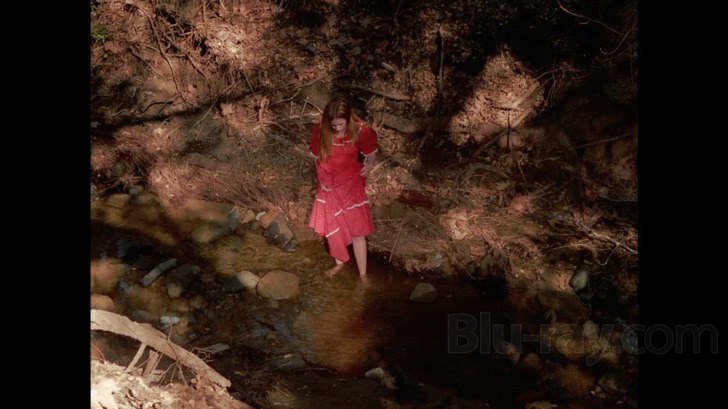
The AVC encoded image (1.37:1 aspect ratio on all films) presentation is impressive. Considering the "lost" status of the pictures, it's amazing what the Vinegar Syndrome team has been able to pull together for this Blu-ray. The images are bright, crisp, and largely clean, though all three features show some signs of wear and tear, with debris, discoloration, judder, and scratches present, but not a distraction. The efforts looks fresh, with bold colors that ring true, finding skintones retaining their natural qualities, while costuming and interior decoration provide more accelerated hues. Shadow detail is defined and controlled, while grain is managed to satisfaction. Bodily textures are preserved, giving the viewer a full view of the graphic content. While their artistic achievements are open for debate, the movies have probably never looked better, with this BD returning the releases to their original theatrical standards.
The Lost Films of Herschell Gordon Lewis Blu-ray Movie, Audio Quality
All three films are presented with a 2.0 Dolby Digital sound mix, bringing these obscure titles to the screen with a minimal but adequate sonic punch. Highs are thin and slightly distorted, while the narration on "Black Love" is buried a little too deep in the track for comfort, but the basics of dialogue exchanges are preserved, capturing what passes here for scripted banter. Emphasis is clearly defined, while scoring cues are comfortably positioned, featuring satisfactory instrumentation. Sounds of sexual pleasure are also heavily featured and eager, taking top priority when the action heats up. A pleasant presence of bass provides a sense of weight to the listening experience. Hiss and pops are detected.
The Lost Films of Herschell Gordon Lewis Blu-ray Movie, Special Features and Extras
- Booklet contains 10 pages devoted to an essay covering the three movies (written by Casey Scott) and disc credits.
- Theatrical Trailers for "Ecstasies of Women" (3:56, HD), "Linda and Abilene" (5:21, HD), and "Black Love" (2:31, HD) are included.
The Lost Films of Herschell Gordon Lewis Blu-ray Movie, Overall Score and Recommendation
The historical value of this collection is understood, unearthing three pictures previously thought lost, adding to the scope of Lewis's unusual career. The entertainment value of these endeavors is debatable, as they exist only to excite, yet the fundamentals of pacing and seduction are completely lacking, sapping merriment that should be overflowing from the work. Still, it's nice to have these features skillfully restored to complete the Herschell Gordon Lewis filmography, and this disc is sure to please fans. Newcomers to the realm of sexploitation and Lewis should step carefully, approaching the movies as artifacts from a different time, not exactly representative of the genre's potential.