The Loss of a Teardrop Diamond Blu-ray Movie
HomeThe Loss of a Teardrop Diamond Blu-ray Movie 
Screen Media | 2008 | 102 min | Rated PG-13 | Sep 07, 2010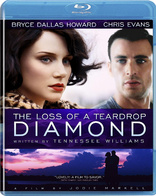
Price
List price:Listed on Amazon marketplace

Movie rating
6.8 | / 10 |
Blu-ray rating
| Users |  | 4.0 |
| Reviewer |  | 3.0 |
| Overall | | 3.8 |
Overview
The Loss of a Teardrop Diamond (2008)
Fisher Willow is a headstrong young heiress who chafes under the constraints of proper Southern society. She rebels by asking the impoverished but handsome son of her father’s caretaker, Jimmy Dobyne, to escort her to the major social events of the season. The relationship is purely a business arrangement at the outset, with Fisher paying for Jimmy’s time and attention, but when she discovers that she really loves him, she finds it impossible to re-write the rules and earn the affection she tried to buy.
Starring: Bryce Dallas Howard, Chris Evans, Will Patton, Ann-Margret, Mamie GummerDirector: Jodie Markell
| Drama | 100% |
Specifications
Video
Video codec: MPEG-4 AVC
Video resolution: 1080p
Aspect ratio: 2.35:1
Original aspect ratio: 2.39:1
Audio
English: Dolby TrueHD 5.1
English: Dolby Digital 2.0
Subtitles
English SDH
Discs
25GB Blu-ray Disc
Single disc (1 BD)
Playback
Region A (C untested)
Review
Rating summary
| Movie | | 3.0 |
| Video |  | 4.5 |
| Audio | | 4.5 |
| Extras |  | 2.5 |
| Overall | | 3.0 |
The Loss of a Teardrop Diamond Blu-ray Movie Review
A Pierce-Arrow Named Hokum.
Reviewed by Jeffrey Kauffman October 9, 2010When Tennessee Williams burst onto the mainstream stage with The Glass Menagerie in 1944, he was immediately and irrefutably placed in the highest echelon of American playwrights. Though he didn’t have another hit for three years, after A Streetcar Named Desire took Broadway by storm in 1947, for the next decade and a half or so one classic after another spilled from Williams’ pen, often bathing the Great White Way in the gentle, and sometimes just slightly fetid, scent of Deep South Magnolia in bloom. If Arthur Miller, who first achieved notable renown in 1947 with All My Sons and then shot to Williams-esque status in 1949 with Death of a Salesman, was the voice of the liberal northeast intellectual elite (even in such ostensibly historical efforts as The Crucible), Williams was always unapologetically Southern in style and, usually, content. Looking over the contributions that Williams made to the art of playwriting in the late 1940s and throughout the 1950s (several plays of which became outright classic motion pictures), it’s hard to think of him as ever having experienced writer’s block. But there are some telling clues in his oeuvre, spans of two or three years between major projects that at least hint of some backstage problems. Williams’ diaries have shed some inner light on this tension, and though they’re notably mum on his long unproduced 1957 screenplay, The Loss of a Teardrop Diamond, what they do tend to support is that Williams was coming out of a long bout of frustration with his writing process when he started working on this piece which recycles ideas and even characters from other, better Williams material. Under the watchful, editorial eye of a director like Elia Kazan, and with stars like, say, Elizabeth Taylor and either Montgomery Clift or Brando himself, Teardrop Diamond might have been a small but quietly sensational picture back in the late 1950s. Coming as it does in the considerably more jaded 21st century, it seems like an odd relic of a bygone age, and not only because of its setting in 1920s Tennessee. Williams’ deliberately flowery language seems inartful and actually ridiculous at times, and the slighter than slight plot never really offers any real meat for the audience to dig into. If The Loss of a Teardrop Diamond is therefore looked at as an often gorgeous character piece, there are some passing merits to recommend it, but this is certainly not prime Williams in any way, shape or form.
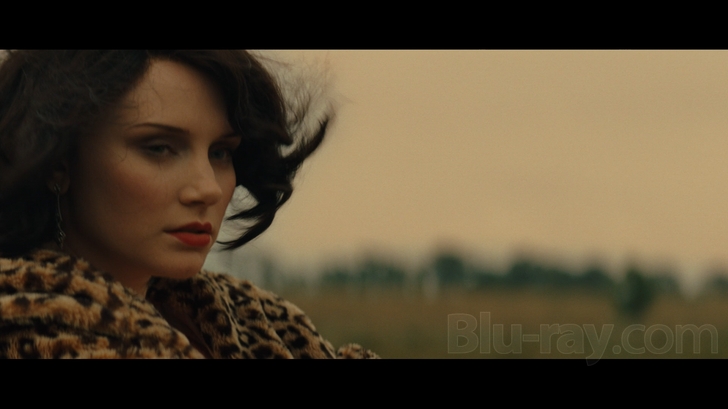
Fisher Willow (Bryce Dallas Howard, though the role was originally cast with jailbird Lindsay Lohan) is a spunky Southern Belle with a troubled past, tooling about the backroads around Memphis in her bright yellow Pierce-Arrow. She’s the daughter of a wealthy landowner whose decision to breech some levees on his property led to the deaths of several people who lived downstream from him. She’s also the granddaughter of a spunky elderly Southern Grande Dame (Ann-Margret) who lends Fisher her teardrop diamond earrings, jewelry which is worth the rather considerable fortune (at least in those days) of $10,000. Fisher more or less hires itinerant worker Jimmy Dobyne (Chris Evans) to be her escort at that season’s series of debutante balls. It’s clear that Fisher has eyes for Jimmy, and also clear that Jimmy doesn’t return the favor. The bulk of the film plays out at one party where Fisher loses one of the earrings, Jimmy hooks up with a former paramour, and Fisher also just happens to perform assisted suicide with an ailing spunky Southern cancer victim (Ellen Burstyn). A busy night, to be sure.
Williams was always a blatantly theatrical writer, and that proclivity is often front and center in The Loss of a Teardrop Diamond. Directors like Kazan and even Irving Rapper knew how to approach that theatricality and either bend it or even use it subtly in the medium of cinema. Here, under the leadership of first time feature director Jodie Markell (you’ve seen her as an actress in scads of episodic television), there’s no attempt to mitigate the theatricality, and in fact Markell chooses to actually literally highlight it (or lowlight it, as the case may be), with sudden changes of light that instantly draw the audience out of the moment and make them aware they’re watching a performance. Markell certainly has a keen eye, and Teardrop is often an incredibly sumptuous viewing experience, full of deep south blossoms and hanging moss, but it’s all window dressing around a pretty hollow center.
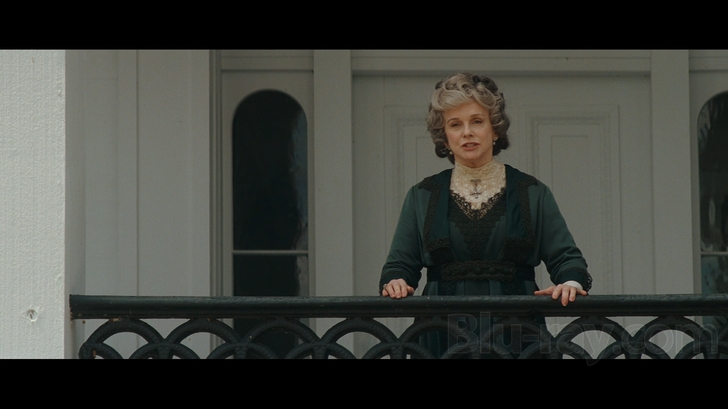
A lot of Teardrop covers some familiar Williams territory. Fisher has a history of mental illness, and Jimmy’s mother is locked up in an institution. Jimmy’s father is an alcoholic. The snarky class distinctions of the Deep South are roiling just beneath the surface of a lot of the dialogue. And Fisher herself is the sort of disaffected heroine in which Williams frequently more than merely dabbled. Fisher is ambitious, artistic and iconoclastic, surrounded by a society of uptight, inconsiderate fools. She reaches out to Jimmy, a boy she hardly even knows, depending on the kindness of strangers, to not exactly coin a phrase. While Howard and Evans do creditable enough work, they traipse around the ghosts of more iconic and frankly glamorous stars who frequented the great Williams film adaptations of yore, and they can never quite escape the spectral comparisons. Ann-Margret is fine, if underutilized, and Burstyn makes the best of what is really a thankless role shoehorned into the film to give Fisher her “big moment” of spiritual illumination (helped, of course, by the sudden lighting shift Markell employs).
It was probably no mere coincidence that The Loss of a Teardrop Diamond sat on an archival shelf for so long. This is minor Williams at best, an OK trek through characters and plotlines we’ve seen before, but really never offering anything new. There’s a depressing spirit of compromise filtering everything to do with this project, none more so than in Williams’ own approach to his characters, which states “settle for what you can get,” more or less. That certainly is an underlying element of several other great Williams plays, but it never really holds the central focus in those efforts as it does here, and it makes the “loss” in Teardrop Diamond all the more apparent.
The Loss of a Teardrop Diamond Blu-ray Movie, Video Quality
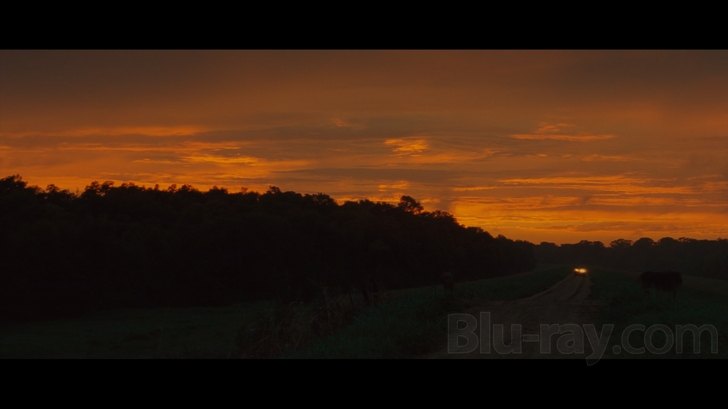
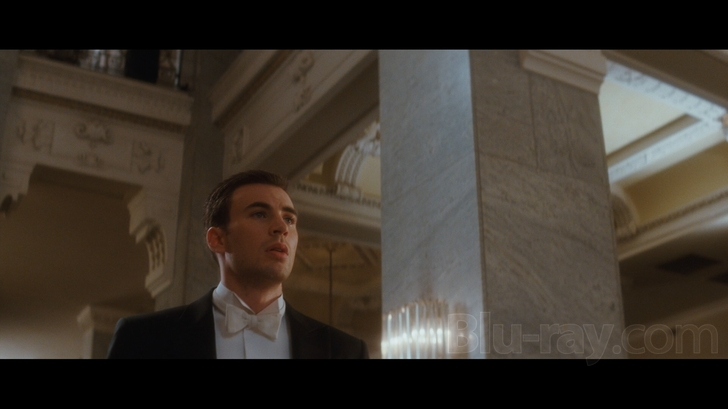
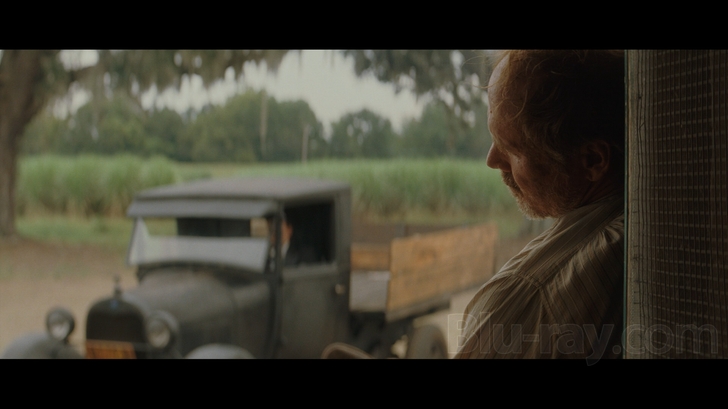
As dramatically inert as a lot of The Loss of a Teardrop Diamond is, this Blu-ray is often ravishing to look at, with a stellar AVC encoded 1080p image in 2.35:1. Director Markell and cinematographer Giles Nuttgens craft a gorgeous looking film that comes through spectacularly well on this Blu-ray. Colors are lovely and beautifully saturated, and detail is exceptional with no artifacting issues to report, even in such usual suspect visual content like busy foliage. In fact the outdoor footage here is breathtaking more often than not; one scene in a backyard garden is a riot of bright reds that pop amazingly well. Contrast is occasionally a bit overblown here, I feel intentionally so, and a lot of the film is bathed in a warm amber glow which, when combined with the blown out contrast, does occasionally deprive the film of perfect detail in midrange and far shots. But overall this is a really beautiful looking film with an excellent Blu-ray transfer.
The Loss of a Teardrop Diamond Blu-ray Movie, Audio Quality
This is a typically dialogue driven, lowkey Williams penned film, and therefore there's not a lot that this Dolby TrueHD 5.1 mix can provide in terms of knock your socks of sonic activity. That said, this is a well realized and often subtly very effective soundmix, with some nice ambient effects as Fisher roams around in her bright yellow Pierce-Arrow. Nice panning effects follow her car on its travels, and when she and Jimmy are out on the levee, there are nice, if subtle, immersive environmental effects. The most impressive surround activity takes place at the long party sequence, where voices spill in from the rear and side channels and effectively recreate the soundworld of a raucous celebration. Fidelity is top notch throughout this soundtrack, with dialogue well placed and very clear, and the period underscore and source cues very well mixed.
The Loss of a Teardrop Diamond Blu-ray Movie, Special Features and Extras
Three brief supplements are included, one of them very good. That is the longest of the three, Conversation With Director Jodie Markell (SD; 13:15), which provides some really interesting background into both Markell's long involvement with the piece as well as Williams' own writing of it. Less effective are the pretty standard EPK-fest Behind the Scenes (SD; 12:32) and the pretty useless and extremely short set of two Deleted Scenes (SD; 1:48).
The Loss of a Teardrop Diamond Blu-ray Movie, Overall Score and Recommendation
Even less than prime Williams offers at least some passing pleasures, but anyone who has spent a lot of time with the Southern master in either the theater or the movie house is going to have a "been there, seen that" feeling throughout a lot of The Loss of a Teardrop Diamond. This is nonetheless a gorgeous film to watch, if dramatically it just sits there like two earrings on a fireplace mantle. It's certainly an interesting curio, if nothing else, and would make a worthy rental for the more literary minded.
Similar titles
Similar titles you might also like
(Still not reliable for this title)

Blonde Venus
1932

The Group
1966

Hamlet
1948

The Sound and the Fury
Limited Edition to 3000 - SOLD OUT
1959

Still Alice
2014

The Mountain
2018

Lilith
1964

Opening Night
1977

A Woman Under the Influence
1974
Manic
2001

The Father
2020

Adopt a Highway
2019

American Pastoral
2016

She's So Lovely
1997

The Story of Temple Drake
1933

Sophie's Choice
Collector's Edition
1982

Secret Ceremony
1968

Suddenly, Last Summer
Limited Edition to 3000
1959

The Private Lives of Pippa Lee
2009

Europe '51
Europa '51 / The Greatest Love / English and Italian Versions
1952