The Living Idol Blu-ray Movie
HomeThe Living Idol Blu-ray Movie 
Cohen Media Group | 1957 | 100 min | Not rated | No Release Date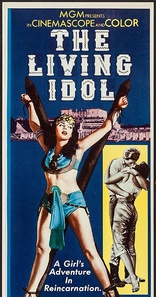
Price
Movie rating
6.7 | / 10 |
Blu-ray rating
| Users |  | 0.0 |
| Reviewer |  | 2.0 |
| Overall | | 2.0 |
Overview
The Living Idol (1957)
Starring: Steve Forrest (I), Liliane Montevecchi, James Robertson Justice, Sara García, Eduardo Noriega (I)Director: René Cardona, Albert Lewin
| Drama | 100% |
| Adventure | Insignificant |
| Horror | Insignificant |
Specifications
Video
Video codec: MPEG-4 AVC
Video resolution: 1080p
Aspect ratio: 2.31:1
Original aspect ratio: 2.35:1
Audio
English: DTS-HD Master Audio 2.0 Mono
Subtitles
English SDH
Discs
Blu-ray Disc
Single disc (1 BD)
Playback
Region A (B, C untested)
Review
Rating summary
| Movie | | 2.0 |
| Video |  | 3.0 |
| Audio |  | 3.5 |
| Extras |  | 0.5 |
| Overall | | 2.0 |
The Living Idol Blu-ray Movie Review
Reviewed by Jeffrey Kauffman January 20, 2021 Note: This film is available on Blu-ray as part of Pandora and the Flying Dutchman.
Albert Lewin isn’t an especially well remembered name in the annals of Hollywood history, despite the fact that he was closely associated with the
legendary Irving G. Thalberg, and was an associate producer on a number of high profile films, including two iconic Academy Award winners, the
1935 version of Mutiny on the Bounty and 1937’s
The Good Earth. Lewin matriculated into both writing and directing,
though not without a few bumps in the road, as he was evidently removed as director from another multiple Academy Award nominee, 1943’s
Madame Curie, before it was completed. However, bookending that perceived
failure were two more notable successes which Lewin both wrote and directed, 1942’s The Moon and Sixpence (Academy Award nominated for Dmitri Tiomkin’s lush score) and 1945’s The Picture of Dorian Gray (three Academy
Award nominations, including one for Angela Lansbury as Best Supporting Actress, with cinematographer Harry Stradling actually winning the Oscar
statuette). The co-star of several of these aforementioned films, George Sanders, reteamed with Lewin and Lansbury for 1947’s The Private Affairs of Bel Ami, which was
not met with much success in either the critical or box office realms, which may explain at least in part the lapse between that film and Lewin’s next
at bat, the patently odd 1951 melodrama Pandora and the Flying Dutchman. Pandora and the Flying Dutchman did at least
relatively well, due in part to the then sensational appeal of Ava Gardner, but Lewin never really regained much momentum, helming only two more
feature films, 1953’s Saadia and 1957’s The Living Idol. Kino Lorber released Pandora and the Flying Dutchman
a few years ago in an edition that touted a new restoration, but Cohen has gone back at least somewhat to the drawing board to offer a new
version, coupling the film with Lewin’s last directorial effort.
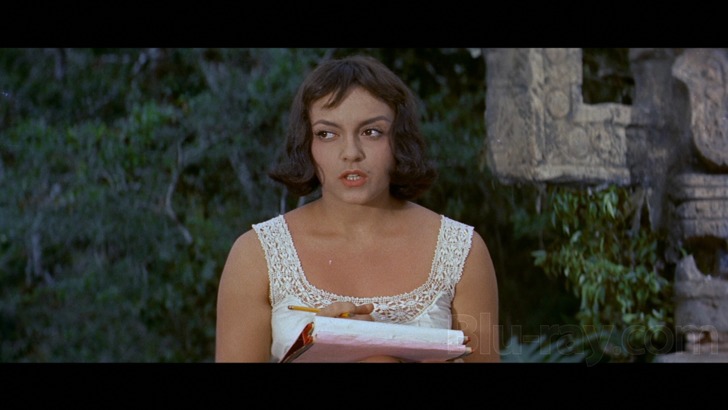
Aside from the probably obvious connection offered by the participation of Albert Lewin, The Living Idol also shares another element with Pandora and the Flying Dutchman, namely an at least subtextual (and maybe overtly textual) reference to reincarnation. This kind of odd feature might best be understood as the cinematic equivalent of the Exotica movement in music which was at the time of this film’s release incredibly popular and prevalent, especially courtesy of any number of albums by Les Baxter. Baxter himself would score a film with a very similar title, The Sacred Idol, , which some insist was never released but which others say was also known as The Mighty Jungle. There’s a mighty jungle in this one, too, with an archaeologist with the perhaps slightly hilarious name Stoner (James Robertson Justice) convinced that Juanita (Liliane Montevecchi) is kinda sorta a reincarnated Aztec princess (or at least has some kind of vestigial ancestral memory) who had been sacrificed to a jaguar god in days of yore. A perhaps questionable bit of “scientific method” makes Juanita a potential sacrifice. Steve Forrest is on hand as Terry Mathews, ready to rescue the focal damsel in distress.
The Living Idol Blu-ray Movie, Video Quality
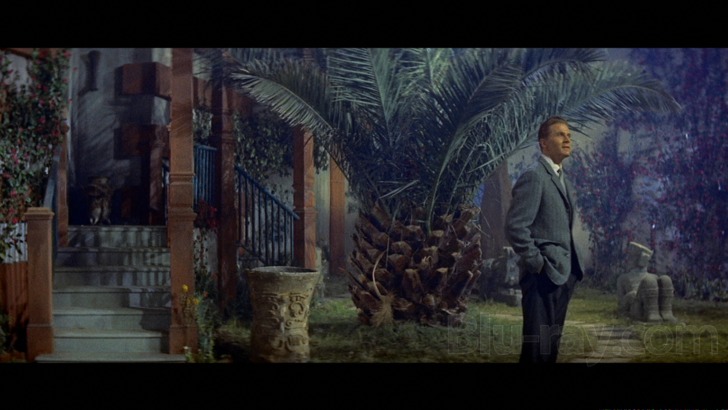
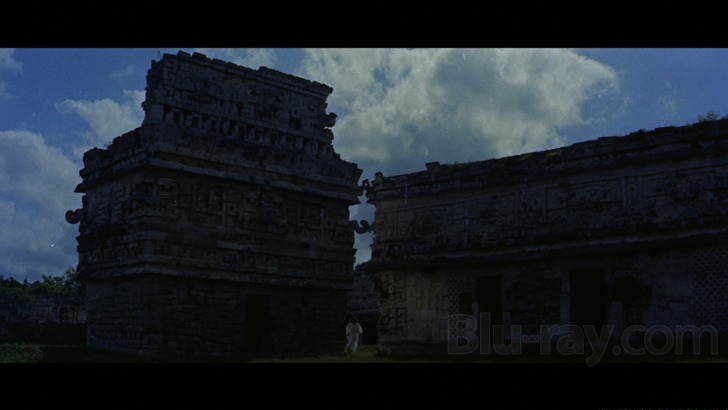
The Living Idol is presented on Blu-ray courtesy of Cohen Film Collection, an imprint of Cohen Media Group, with an AVC encoded 1080p transfer in 2.31:1. While there's an ostensible "restoration trailer" included on this disc as the sole supplement, the trailer provides no information (like even a 2K designation), which may indicate as well as anything that the element (or elements) utilized for this transfer show pretty considerable damage. There are scratches, flecks and rather large horizontal blue (and occasionally red) lines that intrude on the image, as well as noticeable fluctuations in color temperature. It actually looked to me like more than one element may have been utilized, perhaps because of edits made through the years. There's a big dance scene, for example, where suddenly the imagery gets much more brown and grainier, then kind of pops back to its earlier appearance. Other moments skew toward blues. On the whole, though, the palette is one of this transfer's strengths, at least relatively speaking. While things do look faded, so that reds veer toward orange, there are really nice pops of hue, especially in the blue and green side of things. Grain is variable, but resolves naturally for the most part. A couple of lateral pans, notably some early vistas of supposed Aztec ruins, definitely show so-called "Cinemascope mumps". Maybe just slightly incredibly, this film was lensed by the great Jack Hildyard, whose other film of this general vintage was a little thing called The Bridge on the River Kwai, for which he won the Academy Award. My score is 3.25.
The Living Idol Blu-ray Movie, Audio Quality
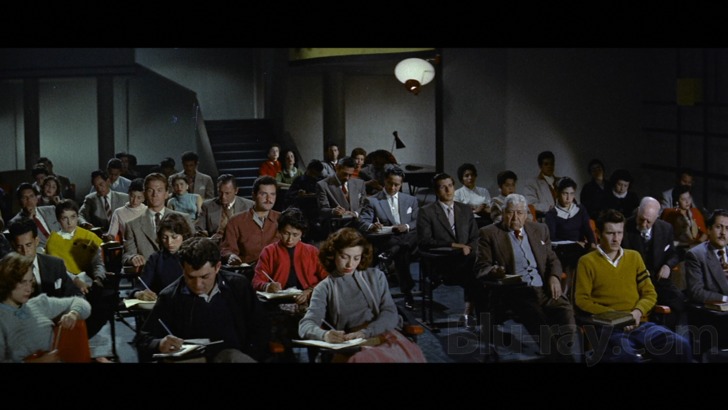
The Living Idol features a DTS-HD Master Audio 2.0 Mono track. Aside from just a few issues, like a rather loud pop right at the end of the film, the track really doesn't exhibit much to be concerned about. The bombastic score by Rodolfo Halffter, which is rather Les Baxter-esque in its own way, sounds full bodied, and the battery of percussion instruments utilized for some cues have no issues with distortion. Dialogue is generally delivered clearly, though Montevecchi has a rather thick accent. Optional English subtitles are available.
The Living Idol Blu-ray Movie, Special Features and Extras
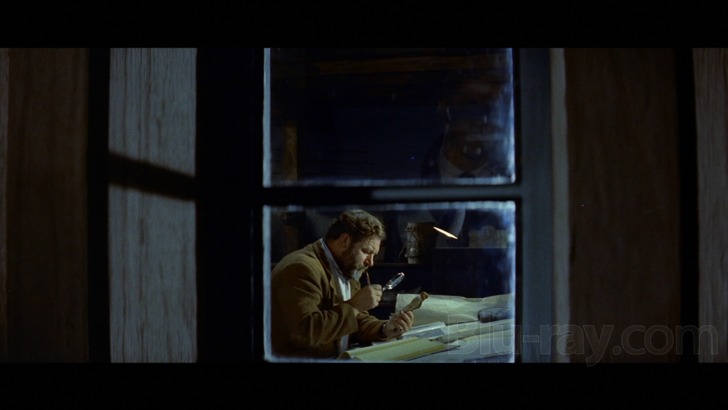
- Restoration Trailer (1080p; 1:44)
The Living Idol Blu-ray Movie, Overall Score and Recommendation
Fans of either Broadway or Fellini may want to check this film despite its obvious deficits, as it features Liliane Montevecchi, who took home a Tony Award for her performance in Nine, Maury Yeston's musical version of Fellini's legendary 8½. The film is colorful, to be sure, but it's relentlessly ridiculous. That said, this has become something of a cult item for "discerning cineastes" (or something like that), so its inclusion here may well delight fans of cult movies. Video has some issues, but audio is fine, for those who are considering a purchase.