The Jacques Rivette Collection Blu-ray Movie
HomeThe Jacques Rivette Collection Blu-ray Movie 
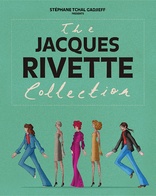
Limited Edition / Blu-ray + DVDArrow | 1976-1981 | 3 Movies | 416 min | Not rated | May 23, 2017
Price
List price:Listed on Amazon marketplace

Movie rating
Movie has not been rated yetBlu-ray rating
| Users |  | 0.0 |
| Reviewer |  | 3.5 |
| Overall | | 3.5 |
Overview
The Jacques Rivette Collection (1976-1981)
See individual titles for their synopses.
| Foreign | 100% |
| Drama | 80% |
| Romance | 19% |
| Mystery | 1% |
| Crime | Insignificant |
| Adventure | Insignificant |
| Fantasy | Insignificant |
Specifications
Video
Video codec: MPEG-4 AVC
Video resolution: 1080p
Aspect ratio: 1.85:1
Original aspect ratio: 1.85:1
Audio
French: LPCM Mono
Subtitles
English
Discs
Blu-ray Disc
Six-disc set (3 BDs, 3 DVDs)
DVD copy
Playback
Region free
Review
Rating summary
| Movie |  | 3.0 |
| Video |  | 4.0 |
| Audio | | 4.0 |
| Extras | | 4.0 |
| Overall | | 3.5 |
The Jacques Rivette Collection Blu-ray Movie Review
Reviewed by Jeffrey Kauffman May 30, 2017Note: The scores above are averages for the three films in the set. Please see the reviews linked below for scores on the individual releases.
According to several sources Cahiers du cinéma is the oldest publication devoted to film still being published. This venerable journalistic
institution was founded in the early fifties by André Bazin, Jacques Doniol-Valcroze and Joseph-Marie Lo Duca and soon employed a coterie of
intellectuals who would ultimately go on to redefine first French film and finally world cinema itself. Among the now legendary names associated
with
Cahiers du cinéma are Éric Rohmer (the magazine’s first editor), Jean-Luc Godard, François Truffaut and Claude Chabrol. A 1954 article
by
Truffaut is often credited with opening the analytical floodgates for what later became known as “auteur theory”, and as should already be evident
given the names listed above, several of the writers employed by Cahiers du cinéma went on to become foundational figures in the
movement known as
Nouvelle vague, the French New Wave. It’s perhaps a little strange, then, that the name of Jacques Rivette hasn’t quite penetrated the
typical American filmgoer consciousness in the same way that (especially) Godard and Truffaut have, since Rivette began writing for the magazine
as
early as 1953 and in fact became its editor around a decade later. Rivette was also reportedly the first writer for the magazine later associated
with
the French New Wave to actually matriculate into feature film making, with his Paris Belongs to Us. That film reportedly began production in 1958, well before François Truffaut’s The 400 Blows came out in 1959 and/or Jean-Luc Godard’s
Breathless appeared in 1960, though it wasn’t finished and
screened until 1961, perhaps robbing Rivette of some bragging rights which would have otherwise been his.
Like some of his (future) New Wave
counterparts, Rivette wasn’t especially pleased with the mainstream French film industry of the 1950s and also like some of his cohorts he tended
to
lionize larger than life Hollywood directors like Alfred Hitchcock and John Ford. As structurally innovative as Godard has been, it’s arguable that in
some ways Rivette was even more anarchic in his approach toward “traditional” filmmaking, introducing some almost gargantuan running times
while also letting his casts (which were often almost absurdly large) to improvise their way through whole sequences. If Godard’s approach toward
deconstruction might be thought of as often a post-production technique, Rivette attacked some of the presumptions of less ambitious filmmakers
from a more foundational perspective, questioning the actual production process itself. This new collection from Arrow gathers together three
interesting efforts from Rivette spanning the years from 1976 to 1983. The first two films in this set, Duelle and
Noroît, were initially meant to be part of a four part series wherein Rivette sought to once again reinvent film “grammar”, though the
series met an unexpected ending when Rivette suffered a debilitating breakdown on the set of the proposed third film (which somewhat confusingly
was initially supposed to be the first to be released and which rather enticingly
would
have starred Albert Finney and Leslie Caron). Rivette’s psychological turmoil made the ultimate follow up production of Merry-Go-Round extremely troubled, as evidenced by the fact that filming
began
in 1978 but wasn’t completed until 1981 (with the film not getting an official theatrical release until a couple of years after completion).
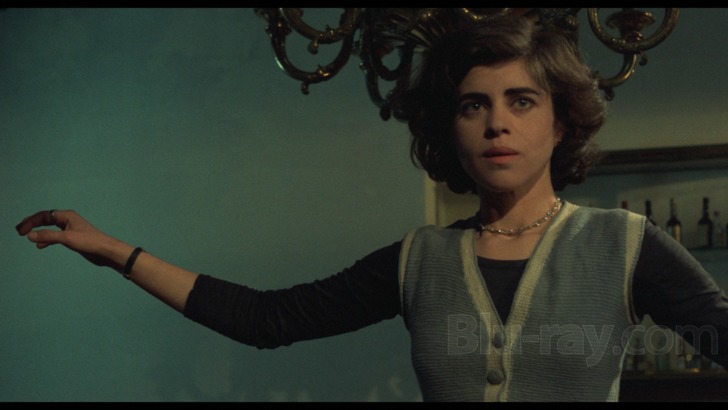
For reviews of the three films in this set, please click on the following links:
Duelle Blu-ray review
Noroît Blu-ray review
Merry-Go-Round Blu-ray review
The Jacques Rivette Collection Blu-ray Movie, Video Quality
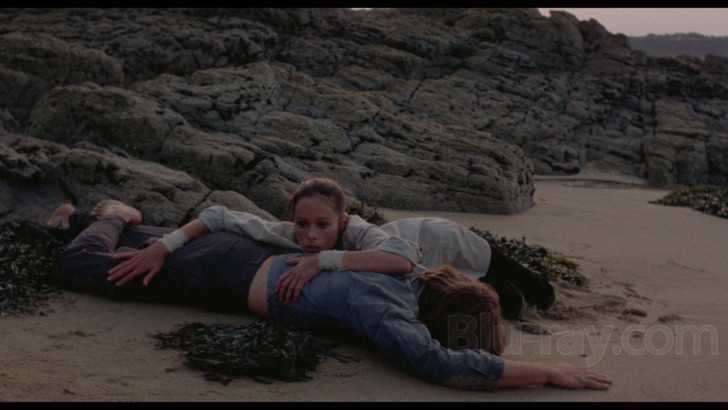
Video quality of each release is assessed in the above linked reviews.
The Jacques Rivette Collection Blu-ray Movie, Audio Quality
Audio quality of each release is assessed in the above linked reviews.
The Jacques Rivette Collection Blu-ray Movie, Special Features and Extras
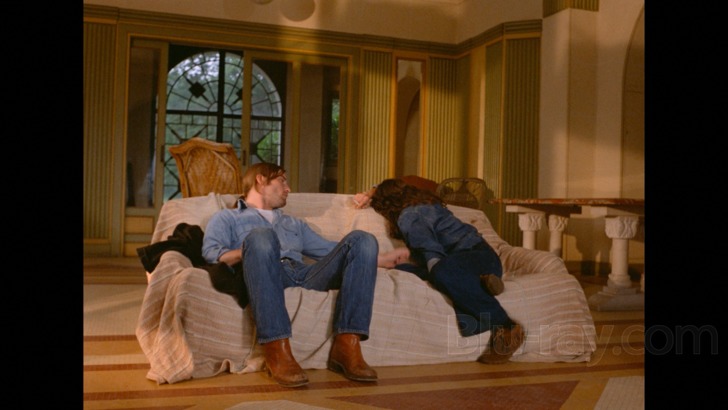
Two (Duelle and Merry Go Round) of the three discs in this set have supplementary material, which is detailed in those reviews. That said, not all of the supplementary material is necessarily focused solely on the film featured on that particular disc. Additionally, Arrow has done their typically nice job of packaging, offering each of the three films in its own keepcase with rather appealing cover art, a sturdy slipbox, and their traditionally well done booklet, which contains essays and production photos.
The Jacques Rivette Collection Blu-ray Movie, Overall Score and Recommendation
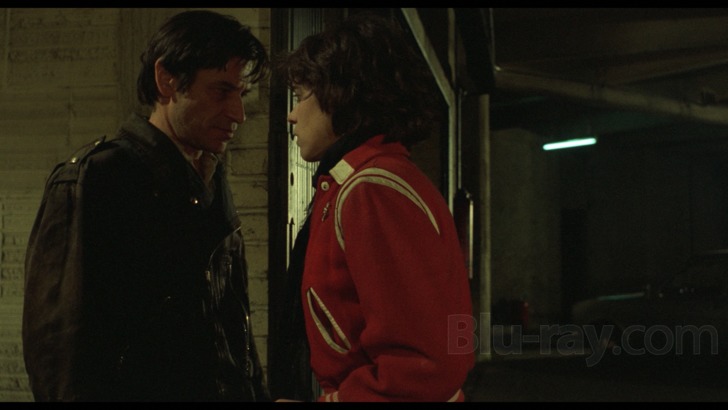
While this is yet another fantastically commendable release from Arrow Academy, it lacks Out 1 which was included on Arrow's British release, which may disappoint some stateside Rivette fans. That said, this is probably a release more for current devotees of the director than for newcomers. For those unacquainted with Rivette, probably one of the better and more easily accessible places to start would be Celine And Julie Go Boating, which unfortunately hasn't been released on Blu-ray as of the writing of this review. Technical merits are generally strong and as usual Arrow has provided some very appealing supplements. Recommended.