The Invisible Man Appears / The Invisible Man vs. The Human Fly Blu-ray Movie
HomeThe Invisible Man Appears / The Invisible Man vs. The Human Fly Blu-ray Movie 
Arrow | 1949-1957 | 2 Movies | 183 min | Not rated | Mar 16, 2021

Movie rating
Movie has not been rated yetBlu-ray rating
| Users |  | 0.0 |
| Reviewer |  | 3.0 |
| Overall | | 3.0 |
Overview
The Invisible Man Appears / The Invisible Man vs. The Human Fly (1949-1957)
| Foreign | 100% |
| Sci-Fi | Insignificant |
| Crime | Insignificant |
| Fantasy | Insignificant |
Specifications
Video
Video codec: MPEG-4 AVC
Video resolution: 1080p
Aspect ratio: 1.37:1
Original aspect ratio: 1.37:1
Audio
Japanese: LPCM Mono
Subtitles
English
Discs
Blu-ray Disc
Single disc (1 BD)
Playback
Region A (B, C untested)
Review
Rating summary
| Movie | | 3.0 |
| Video |  | 2.5 |
| Audio | | 2.5 |
| Extras |  | 1.0 |
| Overall | | 3.0 |
The Invisible Man Appears / The Invisible Man vs. The Human Fly Blu-ray Movie Review
Reviewed by Jeffrey Kauffman April 5, 2021For all of the frankly awe inspiring magic that modern day CGI has brought to the film world, there’s really nothing to match the wonder that is generated by watching an older movie like Universal’s 1933 The Invisible Man (and its many follow ups, as aggregated in The Invisible Man: Complete Legacy Collection). With decades of special effects brilliance having occurred in the interim, from our 21st century vantage point, it’s still absolutely remarkable to think that the often mind boggling effects featured in the first Universal film built around the H.G. Wells classic came only four years after the advent of talkies! There are a number of fascinating sources those interested can consult to find out how some of the more memorable effects were created, but the bottom line is, even after reading about the techniques utilized, the resultant effects are still generally gobsmacking (to use an appropriately British term, given Wells' country of origin), especially when considering the still nascent technologies available to technicians of the early 1930s. The Invisible Man was a major hit for Universal, and it has of course spawned a litany of imitators through the years (including Universal’s own 2020 The Invisible Man), but even diehard film fans may be unaware of the two Japanese entries Arrow has collected in this new release. The cheekily titled The Invisible Man Appears from 1949 and the kind of bizarrely titled The Invisible Man vs. The Human Fly from 1957 may in fact have no connection other than their titular references to a largely unseen focal character, but they prove that the special effects wizards in Japan had obviously studied Universal’s groundbreaking modes of making the invisible, well, visible.
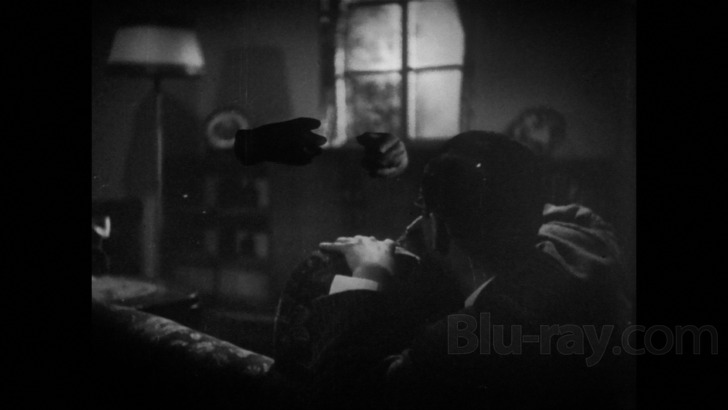
For reviews of the two films included on this release, please click on the following links:
The Invisible Man Appears Blu-ray review
The Invisible Man vs. The Human Fly Blu-ray review
The Invisible Man Appears / The Invisible Man vs. The Human Fly Blu-ray Movie, Video Quality
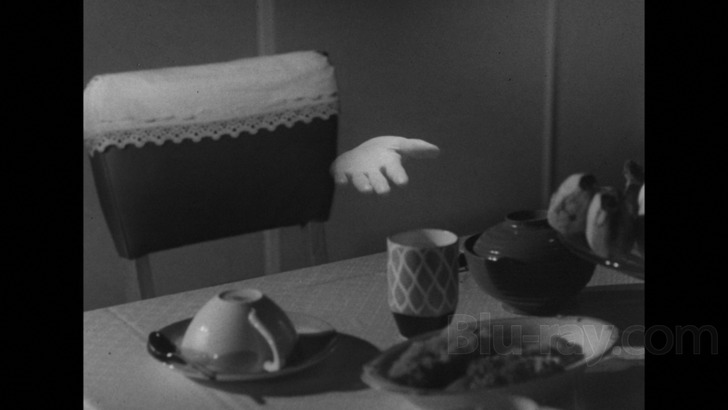
Video quality of each film is assessed in the above linked reviews.
The Invisible Man Appears / The Invisible Man vs. The Human Fly Blu-ray Movie, Audio Quality

Audio quality of each film is assessed in the above linked reviews.
The Invisible Man Appears / The Invisible Man vs. The Human Fly Blu-ray Movie, Special Features and Extras

Arrow has packaged both films together on one BD-50, with the following supplemental features:
- Transparent Terrors (HD; 24:40) is another enjoyable discussion by Kim Newman, who offers a (sub?)genre wide examination of various Invisible Man adaptations.
- The Invisible Man Appears Theatrical Trailer (HD; 2:38)
- Image Galleries
- The Invisible Man Appears (HD; 4:00)
- The Invisible Man vs. The Human Fly (HD; 2:50)
The Invisible Man Appears / The Invisible Man vs. The Human Fly Blu-ray Movie, Overall Score and Recommendation

Neither The Invisible Man Appears nor The Invisible Man vs. The Human Fly is exactly an overlooked masterpiece, but each is kind of good, goofy fun in their own way. Of the two, The Invisible Man vs. The Human Fly seems to actually be trying to introduce some subtextual content that puts it in line with films like Gojira, which were, in their own way, trying to address Japan's place in the world after World War II and the horrors of the atomic bomb. Arrow's own disclaimer (see screenshot 6 accompanying this review) mentions issues with the video quality of this release, and there is occasional brashness in the audio presentations as well, but the Kim Newman overview of various Invisible Man properties is typically enjoyable, for those who are considering a purchase.