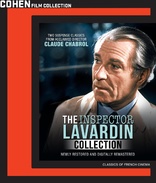
The Inspector Lavardin Collection Blu-ray Movie
HomeThe Inspector Lavardin Collection Blu-ray Movie 
Chicken with Vinegar / Inspector LavardinCohen Media Group | 1985-1986 | 2 Movies | 210 min | Not rated | Apr 22, 2014

Movie rating
Movie has not been rated yetBlu-ray rating
| Users |  | 0.0 |
| Reviewer |  | 4.0 |
| Overall | | 4.0 |
Overview
The Inspector Lavardin Collection (1985-1986)
| Drama | 100% |
| Crime | 22% |
| Mystery | 12% |
Specifications
Video
Video codec: MPEG-4 AVC
Video resolution: 1080p
Aspect ratio: 1.67:1
Original aspect ratio: 1.66:1
Audio
French: LPCM 2.0
Subtitles
English
Discs
50GB Blu-ray Disc
Two-disc set (2 BDs)
Playback
Region A (B, C untested)
Review
Rating summary
| Movie |  | 3.5 |
| Video | | 4.0 |
| Audio | | 4.0 |
| Extras | | 4.0 |
| Overall | | 4.0 |
The Inspector Lavardin Collection Blu-ray Movie Review
Poirot and Lavardin should have breakfast together sometime.
Reviewed by Jeffrey Kauffman April 15, 2014Adherents of the French New Wave might not seem to be logical bedfellows for a director like Alfred Hitchcock, and yet Hitch was lionized by many of the brash youngsters who started taking over French cinema in the 1950s and 1960s, with none being more vocal in his appreciation than Claude Chabrol. Perhaps because Hitchcock had been able to invest his films with a very personal style within the confines of the Hollywood studio system, his achievements were lauded by “kids” who otherwise had little tolerance for the cut and paste ethos of a production line that was often compared to Henry Ford’s assembly of cars. While Hitchcock influenced a variety of French directors like Henri-Georges Clouzot (Diabolique), Chabrol is perhaps notable if only because Chabrol was so vocal in his admiration for Hitch. Chabrol has made no bones about how important Hitchcock has been to his approach toward film, but he also cites several other iconic directors as being just as important, directors as legendary as Lubitsch and Lang. Chabrol’s two Inspector Lavardin films from the mid-eighties may not rise to the giddiest heights of Hitchcock’s best work, but they have the same flashes of style that often invigorated Hitch’s work, even if the actual mystery elements are somewhat more pedestrian than they tended to be in the earlier master’s work. (This set also includes the two "extra" Lavardin pieces Chabrol made for television after the feature films were released.)
Chicken With Vinegar
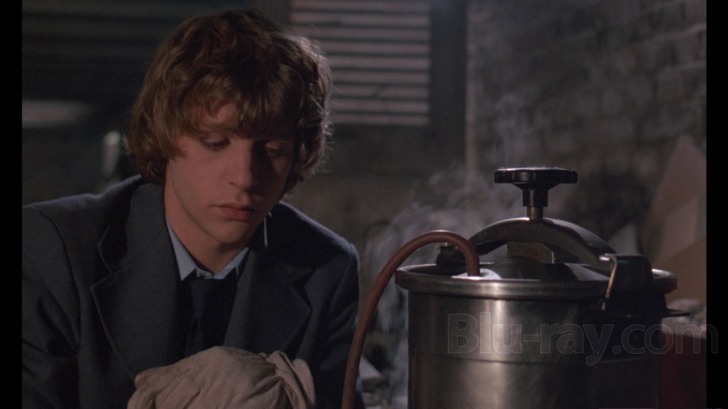
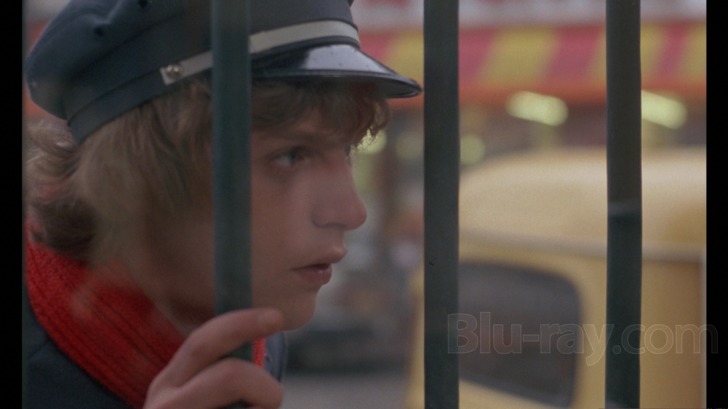
This 1985 Chabrol outing starts with a fantastically stylized opening where someone is snapping pictures of participants at a big gathering, one which turns out to be a birthday party for a woman named Delphine (Josephine Chaplin, Charlie’s youngest daughter). While it’s not initially clear, this opening sequence actually introduces virtually all of the major players who are later involved in a rather convoluted tale of threats, subterfuge and (of course) murder. The two main characters who are not at the gathering are young mail deliverer Louis Cuno (Lucas Belvaux) and his wheelchair bound mother, Madame Cuno (Stephane Audran), and it doesn’t take long to figure out that their exclusion is no mere coincidence. The Cunos are stubbornly holding onto their dilapidated estate despite the best efforts of a trio of town movers and shakers to get them out of it so that the land can be developed into something more profitable.
Louis seems strangely—almost maddeningly—passive when he’s hassled by the group of would be developers, a coterie which includes the local butcher Filiot (Jean-Claude Bouillaud), Doctor Morasseau (Jean Topart), who also happens to be Delphine’s husband, and crooked lawyer Lavoisier (Michel Bouquet). However, it soon becomes apparent that Louis at least has passive aggression going for him. In his guise as the mail delivery boy for his village, he’s been making off with the daily deliveries, taking them back home where he and his mother steam them open to keep track of the plots of their nemeses, as well as a mysterious affair that Delphine seems to be involved in. Louis is also not above foraging out in the French night to spy on the trio, nor to partake in what he sees as some relatively harmless payback like keying one car and pouring sugar in the gas tank of another.
In a series of seemingly unrelated events, Delphine mysteriously disappears, which gets her best girlfriend involved, and one of Louis’ nighttime tricks ends up having disastrous consequences. Meanwhile Delphine’s girlfriend also vanishes, and Louis is caught between his possessive mother and his comely young coworker at the post office, who has guessed some of Louis’ involvement in a recent tragedy. It’s interesting that Inspector Lavardin (Jean Poiret) doesn’t even show up in this film until well past the 40 minute mark, at which point most armchair sleuths are going to have a pretty good handle on what’s going on and how it’s going to play out.
While the mystery element in Chicken With Vinegar may not exactly be mind boggling, Chabrol’s typically piquant approach to the bourgeoisie is very much in evidence. This supposedly quiet, sylvan country village is rife with backstabbing, political malfeasance and just general nastiness. It’s comical when Madame Cuno laments being potentially forced out of her estate which might consign her to the frightful “suburbs”, when it’s quite evident she’s already not in any overly developed urban area and that any potential horrors in a new locale she fears couldn’t be any worse than what she’s already experiencing.
Oddly, the weakest element here may be the character of Lavardin himself. As mentioned above, the inspector doesn't show up until rather late in the proceedings, and once he does he just kind of magically comes to several important conclusions without the film detailing how how arrived at them. Most disturbingly, late in the film Lavardin, who up to this point has seemed like a rather natty, professorial type (if also something of a cipher), suddenly erupts into the Gallic version of some Dirty Harry-esque roughness that comes out of left field and seems tonally at odds with what has gone before. Lavardin's obsession with perfectly cooked eggs for breakfast may remind some mystery lovers of a similar compulsion shared by one Hercule Poirot.
Inspector Lavardin
In a way, it might have helped to get a handle on the character of Inspector Lavardin had Inspector Lavardin been the first film released in the series. Lavardin shows up relatively quickly in this enterprise, and perhaps even more importantly, it quickly becomes apparent that the flashes of excessive violence and other rule breaking are not in fact exceptions but rather the way he does business, at least some of the time. Inspector Lavardin also presents a relatively more convoluted mystery than Chicken With Vinegar does, though it once again offers the blackly comic dealings of a bunch of small town residents, many of whom are harboring secrets.
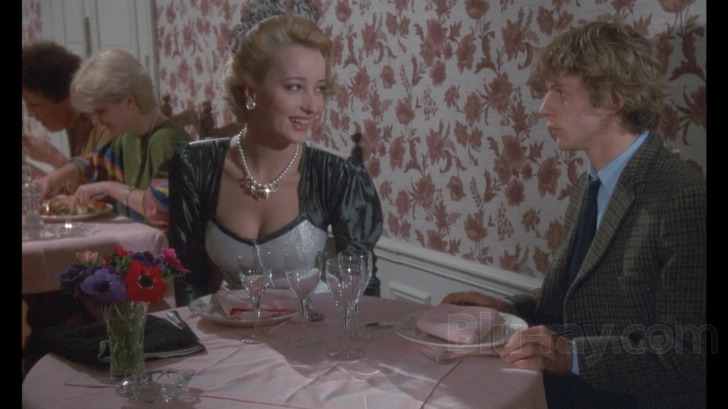
When an unctuous moralist named Raoul Mons (Jacques Dacqmine) washes up dead on the beach, nude and with the word “pig” etched into his back, it’s obvious that his particular “law giving”, which has included shutting down a local play for being blasphemous, has not met with universal acclaim. Lavardin is soon on the case, though he’s somewhat shocked to find out that Mons’ pretty widow Hélène (Bernadette Lafont) is actually a lover from his own distant past. Lavardin wastes no time making up for lost time (in one of Chabrol’s typically insouciant touches), moving into the Mons family home and ingratiating himself not just with his former love, but her lovably smarmy brother Claude (Jean-Claude Brialy) and daughter Véronique (Hermine Clair), whose name is specifically mentioned as one Lavardin had long ago told Hélène he wanted to use should he ever father a daughter.
As with Chicken With Vinegar, the putative mystery is perhaps not as interesting as what Chabrol does with it. This film is filled with images of spying eyes, including the really odd but somehow endearing hobby of Claude’s— manufacturing and painting glass eyes that are made to look like those of famous folks or just his relatives. Chabrol utilizes this analogy in various ways throughout Inspector Lavardin, including several birds’ eye views of the proceedings that seem to suggest the director himself is some sort of divine figure looking down on the idiocy of these duplicitous country folk.
The fact that Lavardin himself almost becomes an accessory after the fact here is more than demonstrative that Chabrol really has no overt interest in standard mystery tropes and is instead crafting more of a character study, one with a trenchant but quite amusing sense of humor. These supposedly "simple" country bumpkins are actually perfect examples of an inherently flawed middle class (at least in Chabrol's conception), one that doesn't need investigating as much as perhaps psychoanalyzing.
The Inspector Lavardin Collection Blu-ray Movie, Video Quality
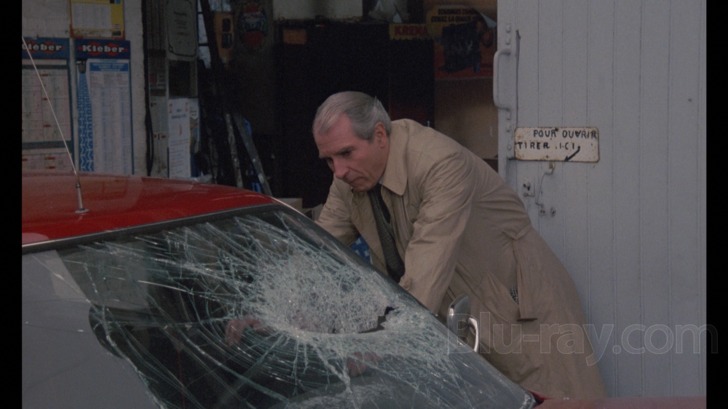
The Inspector Lavardin Collection is presented on Blu-ray courtesy of Cohen Film Collection with AVC encoded 1080p transfer in 1.67:1 (the television movies are in 1.33:1). The elements here show occasional minor age related wear and tear, with minimal scratches as well as quite a few specks of dirt that show up from time to time. The most noticeable visual anomalies are actually some absurdly huge reel change markers that blot the proceedings like spores of mold. Colors are generally good, if not exceptionally vivid (Inspector Lavardin is somewhat more lush than Chicken With Vinegar in this regard). It's interesting that Chabrol or his production designer like to have various characters wearing bright red scarves or mufflers in both of the films, and those elements pop quite nicely. The image here is somewhat soft but natural and organic looking. Chicken With Vinegar has a couple of very brief compression artifacts, but otherwise these are solid if not especially spectacular looking transfers.
The Inspector Lavardin Collection Blu-ray Movie, Audio Quality
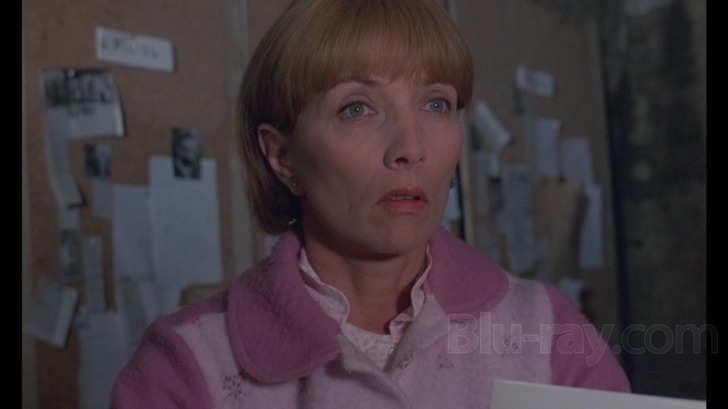
The French LPCM 2.0 mixes here provide perfectly adequate support for these dialogue driven films. Chabrol's son Matthieu contributes the scores here, which are obviously influenced by Les Six and in my not so humble opinion aren't especially helpful at times (they're also mixed somewhat haphazardly, with sudden fades that only draw attention to themselves). That said, fidelity is excellent and neither track has any damage or other issues to report.
The Inspector Lavardin Collection Blu-ray Movie, Special Features and Extras
Disc One:
- The Black Snail (1080p; 1:31:52) is a 1988 made for television feature from The Secret Files of Inspector Lavardin series. Lavardin investigates a case which may involve a serial murderer who leaves large black snails on his victims.
- 2014 Re-Release Trailer (1080p; 1:47)
- Feature Length Commentary by Film Critics Wade Major and Andy Klein. Major and Klein give a bit of background on Chabrol while also providing biographical and filmography credits of various participants in the film. This commentary provides a good overview, with some salient insight into Chabrol's approach.
- Danger Lies in the Words (1080p; 1:34:14) is a 1989 made for television feature from The Secret Files of Inspector Lavardin series. Fans of Hercule Poirot's novelist friend Ariadne Oliver may get a kick out of this episode, for it features the murder of a crime writer.
- 2014 Re-Release Trailer (1080p; 1:28)
- Feature Length Commentary by Film Critics Wade Major and Andy Klein. For my money, this is the better of the two commentaries, if perhaps only because the commentators have a bit more to work with in terms of the plot and its development. Interestingly, they posit that this film is really more in line with Agatha Christie than with Hitchcock, though they mention that the film bears a certain tonal similarity to Hitch's The Trouble With Harry.
The Inspector Lavardin Collection Blu-ray Movie, Overall Score and Recommendation
Those who like their mysteries convoluted and intricately plotted will probably not be completely satisfied with any of the four outings on this two disc set, but for those who love Chabrol's distinctive sense of humor, the Inspector Lavardin films and telefilms are often quite amusing and have just enough intrigue to merit attention. None of these are as overtly stylish or stylized as some of Chabrol's other pieces (it's important to remember Chabrol was attempting something of a commercial comeback with these films and may have been reigning in his more florid sensibilities), but they're fun and enjoyable. Lavardin the character is not quite as well defined as might be hoped, but the scenery is often gorgeous and the supporting characters are a grab bag of typical Chabrol bourgeoisie schemers and plotters. Recommended.