The Immortal Life of Henrietta Lacks Blu-ray Movie
HomeThe Immortal Life of Henrietta Lacks Blu-ray Movie 
Blu-ray + UV Digital CopyHBO | 2017 | 92 min | Rated TV-MA | Sep 05, 2017


Movie rating
7.1 | / 10 |
Blu-ray rating
| Users |  | 0.0 |
| Reviewer |  | 4.0 |
| Overall | | 4.0 |
Overview
The Immortal Life of Henrietta Lacks (2017)
An African-American woman becomes an unwitting pioneer for medical breakthroughs when her cells are used to create the first immortal human cell line in the early 1950s.
Starring: Oprah Winfrey, Rose Byrne, Renee Elise Goldsberry, Courtney B. Vance, Reg E. CatheyDirector: George C. Wolfe
| Biography | 100% |
| Drama | Insignificant |
Specifications
Video
Video codec: MPEG-4 AVC
Video resolution: 1080p
Aspect ratio: 1.78:1
Original aspect ratio: 1.78:1
Audio
English: DTS-HD Master Audio 5.1
French: DTS 5.1
Spanish: DTS 2.0
Subtitles
English SDH, French, Spanish
Discs
Blu-ray Disc
Single disc (1 BD)
UV digital copy
Playback
Region A (B, C untested)
Review
Rating summary
| Movie | | 4.0 |
| Video | | 4.0 |
| Audio | | 4.0 |
| Extras |  | 0.5 |
| Overall | | 4.0 |
The Immortal Life of Henrietta Lacks Blu-ray Movie Review
Reviewed by Jeffrey Kauffman September 6, 2017Will there ever be a cure for cancer? Of course the more accurate question, and one which directly addresses why this pernicious disease has yet
to be completely conquered, would be ‘will there ever be a cure for cancers’, since the mutations cell undergo which are all subsumed
under the general “cancer” rubric are as variantly affected as the regions in the body from which they come. There are scores of different cancers
which can attack the human body, and the causes for cancer erupting in any given area can sometimes hinge on “external” factors like tobacco
use, something else that makes solving the cancer problem so challenging. The research behind a potential cure for cancer supplies the riveting
subtext for The Immortal Life of Henrietta Lacks, but on a more fundamental level this fascinating HBO effort documents issues of medical
ethics and the seemingly cruel hand one family in particular was dealt. While this made for television offering’s title would seem to focus on
Henrietta Lacks, a woman who died quite young from cervical cancer in 1951, it is in fact Henrietta’s daughter Deborah, portrayed by Oprah
Winfrey (who also produced), who is front and center here, along with author Rebecca Skloot (Rose Byrne), who wrote the bestselling account of
the harvesting of Henrietta’s cancer cells (without her knowledge or permission), an event which pretty much singlehandedly led (or at least
massively contributed) to the whole vaccine and biomedical industries.
As is (arguably too quickly) depicted in what amounts to an under credits
montage, after years of attempting and failing to harvest human tissue cells for research which would survive outside of the body, doctors
discovered, perhaps through blind luck, that Henrietta Lacks’ cells weren’t just durable, they were downright prolific, reproducing at an almost
unbelievable rate in test tubes and Petri dishes. The astounding list of achievements various researchers accomplished in the intervening years
utilizing Lacks’ cells reads like a laundry list of some of the most important advances in (western) medicine of the last century or so, including
Jonas Salk’s work developing the polio vaccine and, later, the work that went into developing an AIDS “cocktail”. That long list of incredible
achievements is certainly appreciated by the members of the Lacks family that Skloot meets in her attempt to tell the story of Henrietta, but
Skloot’s journalistic prying ends up picking the scabs off of a deeply wounded family who, aside from their simmering discontent at never receiving
a dime from Henrietta’s cells (despite hospitals selling them to other institutions, raking in veritable fortunes), also experienced a raft of really
disturbing traumas in the wake of Henrietta’s untimely death. The Immortal Life of Henrietta Lacks is often an unexpectedly emotional
piece, and it provides Oprah Winfrey with one of her strongest roles as the emotionally volatile but ultimately sweet natured Deborah.
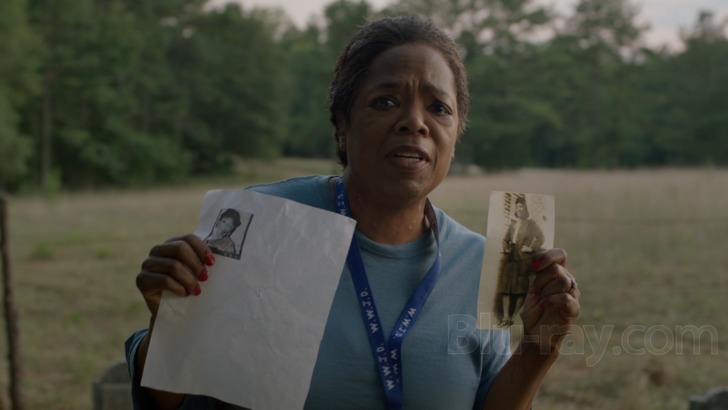
Skloot’s book was a compelling read, but it had the “room” to explore some of the medical background that the film kind of glosses over, along with some other contextual information, like an article Skloot evidently wrote for a Johns Hopkins magazine that started her interest in Lacks’ story. There’s an arguable deficit in the early information imparted about why exactly Deborah is so reticent to talk about her mother, with the character only referencing the fact that she doesn’t want to “get hurt again”. This gives the opening act of The Immortal Life of Henrietta Lacks a bit of a disjointed, even maybe shallow, quality that is thankfully elevated by the fine performances and generally acute writing (by George C. Wolfe, who also directed).
Once the main characters are introduced, which include several of Deborah’s brothers as well as extended family and friends, the film really starts to dig into some of its personal and more universal ethical issues. The fact the most hospitals simply harvest tissue and/or cells without ever asking for permission is addressed quite specifically at several junctures through the film, but there is an indication that Johns Hopkins really acted duplicitously at several key junctures, including drawing blood from Deborah when she was a young woman for motives which were not in fact what the institution claimed. But all of this plays out in terms of a family dynamic with the Lacks kids that is definitely askew, something that ultimately becomes clear Deborah at least “blames” on Henrietta’s death, thereby perhaps projecting some of her angst on the hospital which has continued to profit off of that death, at least tangentially.
The film has some structural issues, perhaps flashing back to Henrietta (Renée Elise Goldsberry) more than is actually called for, typically in effulgently lit interstitials that seem to make Henrietta a Tragic Victim (capital letters) rather than a fully formed human being. The real drama here is not Henrietta’s story, as moving as that tale undeniably is, but instead the havoc that was wreaked on the entire Lacks clan when Henrietta first became ill, later passed away, and the ultimately became part of medical history due to her incredibly hardy cells. It’s here that The Immortal Life of Henrietta Lacks really finds its most visceral emotional power, and it is in fact quite powerful. Byrne does well as the kind of geeky Skloot, but this is Winfrey’s film front to back, and she is really a compelling and very affecting presence throughout.
The Immortal Life of Henrietta Lacks Blu-ray Movie, Video Quality

The Immortal Life of Henrietta Lacks is presented on Blu-ray courtesy of HBO with an AVC encoded 1080p transfer in 1.78:1. Digitally captured with Arri Alexa cameras, The Immortal Life of Henrietta Lacks has a generally very well detailed and sharp looking appearance, though the "everyday" ambience of so much of the film tends to give it a workmanlike effect, rather than something that will in and of itself knock the average videophiles' socks off. Both the opening, which is more or less in high contrast black and white, and several of the flashback interstitials, which are at least somewhat desaturated or skewed toward sepia tones, have the most overt color grading in the piece, and in some of the flashback material especially, fine detail levels can occasionally suffer. The bulk of the contemporary timeline looks naturally lit most of the time, and as should be expected, the more brightly lit or outdoor sequences pop the best, with excellent palette reproduction and commendable detail levels. While housed on a BD-25, this (more or less) 90 minute production doesn't have to compete with a surplus of supplementary material and so resides quite comfortably without any overt compression anomalies.
The Immortal Life of Henrietta Lacks Blu-ray Movie, Audio Quality
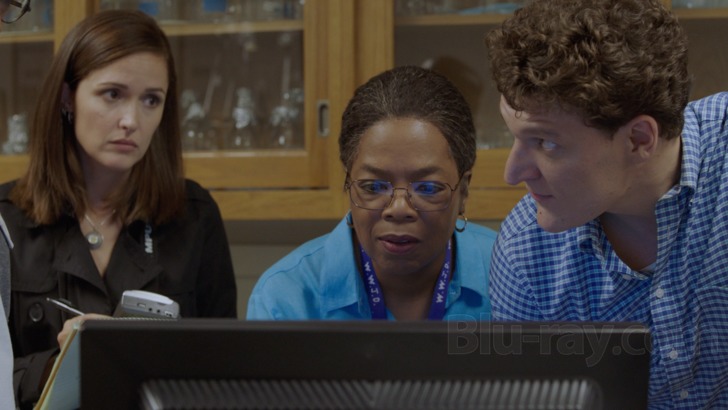
There's quite a bit of music in The Immortal Life of Henrietta Lacks, including everything from classic jazz to some Delta blues, and the source cues tend to give some of the most pronounced surround activity on the Blu-ray's DTS-HD Master Audio 5.1 track. Several outdoor scenes have well placed ambient environmental effects, but the bulk of this film is really more intimate dialogue scenes, often between Deborah and Rebecca, and as such immersion is often somewhat limited. Fidelity is fine throughout the presentation, and there are no problems with distortion, dropouts or other damage.
The Immortal Life of Henrietta Lacks Blu-ray Movie, Special Features and Extras
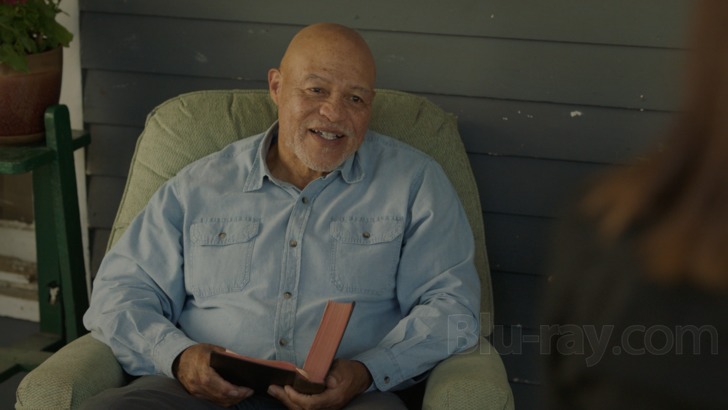
- Family Featurette (1080p; 2:31) offers some pretty brief interview snippets with various Lacks descendants.
- Filming in Georgia (1080p; 3:19) is another brief piece documenting the location shoot.
The Immortal Life of Henrietta Lacks Blu-ray Movie, Overall Score and Recommendation

The Immortal Life of Henrietta Lacks might have benefitted from a bit more development in its early going, but the story is so unbelievably compelling and the performances so strong that some narrative deficits end up not really mattering in the long run. Unexpectedly emotional, given how "scientific" so much of the information being imparted is, this is a really moving piece and it raises a number of important questions that medical ethicists should be pondering. Technical merits are strong, and The Immortal Life of Henrietta Lacks comes Highly recommended.
Similar titles
Similar titles you might also like
(Still not reliable for this title)

Love Is the Devil: Study for a Portrait of Francis Bacon
1998

Jimmy's Hall
2014

Churchill
2017

Harley and the Davidsons
2016

Reagan
2024

The Autobiography of Miss Jane Pittman
1974

The Mercy
2018

The Apprentice
2024

Joe Bell
2021

Tesla
2020

Bombshell
2019

Brian Banks
2018

On the Basis of Sex
2018

Lamborghini: The Man Behind the Legend
2022

Don't Worry, He Won't Get Far on Foot
2018

Tolkien
2019

The Front Runner
2018

Vice
2018

Stronger
2017

Richard Jewell
2019