The House of Hammer: Volume One Blu-ray Movie
HomeThe House of Hammer: Volume One Blu-ray Movie 
Hammer Films | 2026 | 428 min | Rated BBFC: 15 | Jun 15, 2026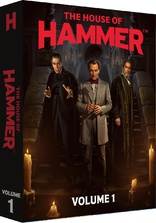

Movie rating
6.6 | / 10 |
Blu-ray rating
| Users |  | 0.0 |
| Reviewer |  | 4.0 |
| Overall | | 4.0 |
Overview
The House of Hammer: Volume One (2026)
Starring: Chris Alexander, Heidi Honeycutt, David Pirie, Jonathan Rigby, Wayne Kinsey| Horror | Uncertain |
| Documentary | Uncertain |
Specifications
Video
Video codec: MPEG-4 AVC
Video resolution: 1080p
Aspect ratio: 1.78:1, 1.33:1
Original aspect ratio: 1.78:1
Audio
English: LPCM 2.0
Subtitles
English
Discs
Blu-ray Disc
Two-disc set (2 BDs)
Playback
Region B, A (C untested)
Review
Rating summary
| Movie |  | 4.5 |
| Video | | 4.0 |
| Audio | | 4.0 |
| Extras | | 4.0 |
| Overall | | 4.0 |
The House of Hammer: Volume One Blu-ray Movie Review
Reviewed by Justin Dekker June 24, 2026The first entrant in a new series focused on Hammer's legacy and the broader world of British horror, 'The House of Hammer: Volume 1' arrives
on Blu-ray courtesy of Hammer Studios. This first volume includes over seven hours of viewing material spread across two Blu-ray discs and also
includes a 120-page perfect-bound book. These elements are housed in attractive slip-boxed Digi-book packaging. The features included here cover
a wide range of topics including rival AIP, the history of censorship in the US and the UK, as well as a piece about Hammer's most memorable
scores. Those who have viewed and enjoyed the on-disc extras included in Hammer's recent 4K and Blu-ray releases will recognize frequent
contributors like David Pirie, Wayne Kinsey, Heidi Honeycutt, Chris Alexander, and others who offer their thought frequently here. A Digital Code is
not included. This release is region-free.
Since Hammer first began releasing the genre-defining and highly influential films from it's heyday beginning with a massive and luxurious 4K
Collector's Edition of Captain
Kronos: Vampire Hunter , the supplemental features which are part of each release, whether large or small, in print or on disc, shed
light on the studio and those in front of and behind the camera. One could, in a way, look at each subsequent release as providing the next "class" in
a massive syllabus of a course on Hammer. From the physical studios themselves, to the scores and those who composed them, to the
ground-breaking effects work, to those who penned the scripts, and the actors who appeared on screen, no subject has heretofore been considered
to large or too small in these supplemental features that grace every title.
Recently, the newly crafted documentary Hammer: Heroes, Legends and Monsters gathered a number of Hammer's former leading ladies
(Madeline Smith, Caroline Munro, and Martine Beswick) and others involved in the films and the industry, shedding additional light on the studio and
the movies that made it famous. With more such supplemental features no doubt to be found on more impending releases, Hammer takes a bit of a
left turn here and focuses more here on the competition; AIP.
American International Pictures should be well-known to genre fans as a company linked to Roger Corman who brought a host of Edgar Allen Poe
adaptions to the silver screen (among other films), including The Raven, The Tomb of Ligeia, The Masque of the Red Death
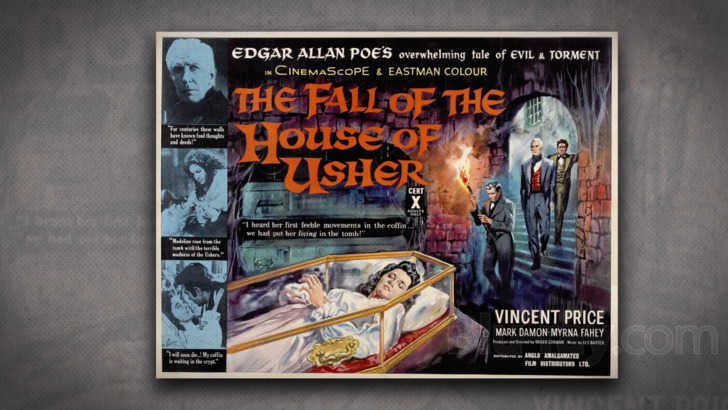
and the unforgettableThe Fall of the House of Usher. Released in the early part of the 1960s, the Poe films featured similar production
values to Hammer's works, along with well-crafted stories and a bankable lead in Vincent Price. Price would appear in all but 1962's The
Premature Burial which saw Ray Milland (X: The Man With the X-Ray Eyes) in the starring role. Hammer alum Hazel Court would
appear in several of these films as well, with the queen of Italian horror Barbara Steele appearing in 1961's The Pit and the Pendulum.
Steele would later share the screen with the two actors who famously portrayed Frankenstein's Monster, Boris Karloff and Hammer's own
Christopher Lee some seven years later in the Tony Tenser-produced 1968 film The Crimson Cult (AKA Curse of the Crimson Altar).
In footage from 1995 included with this release, Corman himself appears on stage at the "Festival of Fantastic Films", with the self-effacing industry
veteran relaying memories from film shoots, numerous anecdotes, and some helpful advice for would-be filmmakers. Those with a deep interest in
horror films of the era will find much here to enjoy.
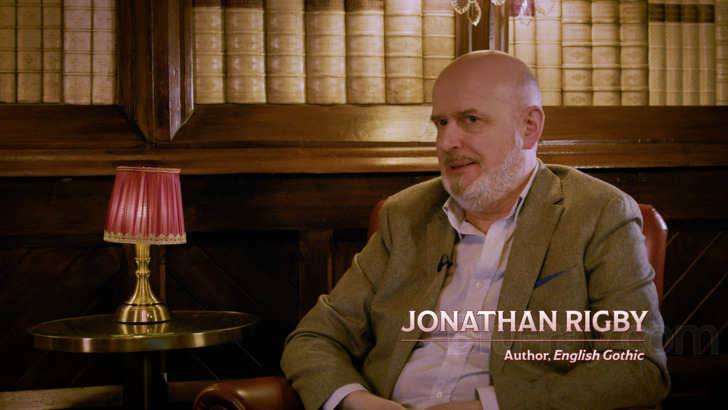
The seven hours of viewing is spread across two discs as below.
Disc One
- Masques, Monsters and Madmen Part 1 (1:51.21) - A host of genre experts including Chris Alexander, Heidi Honeycutt, Dick Klemensen, David Pirie, and others relay the story of Hammer rival AIP, the US company that would garner attention for, among numerous titles, Roger Corman's Poe cycle. The group discuses these films, and others such as the notorious Witchfinder General which also starred Vincent Price. Price's daughter also appears with some frequency, offering a fascinating perspective on the screen legend's work and life.
- The Land Demands Blood: Hammer, Horror and the Legacy of Cornish Gothic (38.10) - This segment featuring clips from films such as Crucible of Terror, Bronco's House, Doctor Blood's Coffin, and many others. Directors Jane Darke and Ryan Mackfall, along with others including writers and academics discuss what they believe makes Cornwall a uniquely effective setting for horror films, and the works they made in the area (as applicable).
- Off the Leash: A Personal Appreciation of Michael Gough and His Horror Films (44.42) - Actor and writer Jonathan Rigby opines on character actor Michael Gough. From early heroic roles, Gough would eventually be seen as a villain later in his career,. Gough's appearances on television's The Avengers (in the episode "The Cybernauts"), and in Doctor Who's "The Celestial Toy Maker" also receive some attention, as does his impressive stage career.
- Ticket to Happiness (30.14) - Sourced from a 16mm copy, this 1959 feature was one of many produced to support a headlining film and was once thought to be lost.
- Stolen face Lobby Cards (0.51) - Rare Mexican lobby cards, along with headshots and stills that missed being included on Hammer's recent Stolen Face Collector's Edition 4K. The images auto-advance in silence.
- Deep Cuts (1:05.02) - The censorship system in the US is the initial focus of this approximately hour-long feature from Chris Alexander, Heidi Honeycutt and others. They track it's origins with the Hays Code, voluntary guidelines to avoid any potential moral outrage at films, guidelines which were heavily religiously influenced. The UK system is also addressed with much time spent on the British Board of Film Censors. While the US guidelines felt much more codified and defined, the UK system was more opinion and impression-based. The "X" certificate comes into focus also. The impact of John Trevelyan as the secretary of the BBFC beginning in 1958 is covered, as is the relationship between the BBFC and Hammer. a mild degree of judder here also.
- Making Monsters (29.21) - Previously seen in the "Recreating the Creature" supplemental feature on last year's massive The Curse of Frankenstein Limited Collector's Edition 4K, Dave Elsey returns and this time is joined by his wife and fellow effects wizard Lou. The pair discuss their entrance to the industry, their love for their work, working together, their fondness for Hammer's horror films, and their interactions with the studio's stars.
- Symphonies of Shudders: Why Horror Films Need Music (39.06) - Author and lecturer David Huckvale begins with a discussion of gothic melodramas which relied on music to help craft tension. Seated at his piano, he dissects and and demonstrates various chords, concepts, and influences that would become the backbone of several well-known and memorable Hammer scores.
- Roger Corman at FoFF 1995 (36.40) - Recording his appearance at the Festival of Fantastic Films, first comes footage of Corman introducing Attack of the Crab Monsters and Not of This Earth. and providing a bit of information and trivia on both. Next, Corman takes part in a panel about low-budget filmmaking along with Robin Hardy, Norman J. Warren, Matt Devlen, and John Bentham of Screen Edge. Finally, Corman sits down for an interview with Stephen Laws. In it, he shares a wide array of memories from the film's he's been involved in over his career. It's a bit truncated due to audio issues at the time of the initial recording, and the footage here reveals the limitations of the source material (see screenshot #18).
- 'The Curse of Frankenstein' 2025 Premier Footage (30.51) - For the screening of the 4K Restoration's World Premier, Kim Newman, Wayne Kinsey, Lucy Bolton, David Pirie, and actor Melvyn Hayes participated in a Q & A, moderated by Mike Muncer. Muncer keeps the conversation going rather efficiently, and makes sure that time is equitable across the participants.
- Quatermass 2 UK Trailer (2.12) - "Run! Run before it's too late!"
The House of Hammer: Volume One Blu-ray Movie, Video Quality
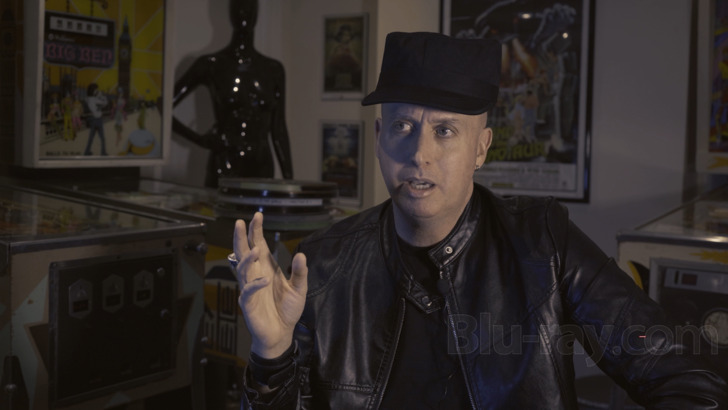
On the whole, the 1080p presentation here looks quite pleasing, but there are two "exceptions" or caveats worth mentioning. First, there is one noticeable peculiarity to the video presentation that consistently effects two of the participants in several of the segments in this release. For the portions featuring Heidi Honeycutt and Chris Alexander on-screen, the image we see is definitely being impacted by the LED lighting used to illuminate the speakers. For both, the image demonstrates a distinct blue push, and skin tones suffer as a result, becoming rather unnatural. Those who attend concerts with modern LED lighting schemes will be familiar with this effect if they have ever tried to capture a quick picture or two of their favorite artist(s). Specifically, most images captured of the performers in these conditions will, to varying degrees based on the colors of the lights being used at the moment, exhibit similarly unnatural and unflattering skin tones. The pinball machines and movie posters positioned behind Alexander are less impacted, likely due to their distance from the lighting elements. The other frequent participants are lit differently and are not impacted in a similar fashion. Their skin tones are natural and healthy looking, with the colors present in their clothing and their environments appearing well-saturated. Fine lines, wrinkles, stubble, and the like are clearly visible on the faces of those speaking. The second issue is perhaps more of an issue as it isn't the result of purposeful choice. While Hammer's releases are normally very well-done from a video perspective, I did notice a bit of judder that occurred intermittently throughout the Masques, Monsters and Madmen Part 1 segment on disc 1, and occasionally on disc 2 as well. Given that this is, for the most part, a talking head endeavor, this is perhaps less critical, but it is observable as it causes heads and hands move unnaturally. It's fair to say that it didn't really effect my overall enjoyment of the release as what the people on screen are saying is vastly more important than a given gesture or tilt of the head, but it's worth mentioning. It's an odd fault in what should have been a flawless presentation.
The House of Hammer: Volume One Blu-ray Movie, Audio Quality
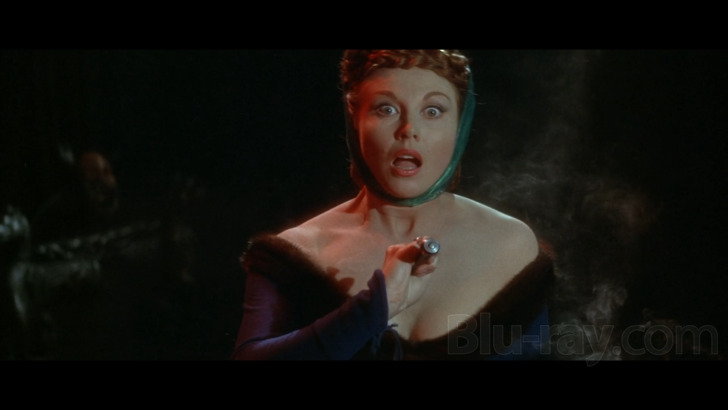
From an audio perspective, things are pretty straightforward. Being a documentary, the vast majority of what this English LPCM 2.0 track has to handle is a single person or a pair of people talking about their particular areas of interest and/or expertise. Dialogue here is consistently clean and intelligible, being well-balanced with the occasional scoring element or musical stings from intercut film clips. Considering that there aren't any sound effects or more modern musical elements with which to contend, the 2.0 track is more than up to the task. Vintage music sounds era-appropriate with tense and well-defined strings and brash and brassy horns on display. Subtitles are only available for Disc 1's Masques, Monsters and Madmen Part 1, The Land Demands Blood: Hammer, Horror and the Legacy of Cornish Gothic, and Ticket to Happiness.
The House of Hammer: Volume One Blu-ray Movie, Special Features and Extras

Choosing to view every on-disc segment found on the two discs as the "main feature", to my eye the supplemental material here is the sizeable printed The House of Hammer: Volume 1. This 120-page perfect-bound book is home to eight excellent essays covering a wide variety of topics, from the production of Cry of the Banshee to Hammer's considerable non-horror output. Also found between its covers are numerous stills, posters, publicity photos, and lobby cards, both in black-and-white and in color. Time is once again split between Hammer and AIP.
The House of Hammer: Volume One Blu-ray Movie, Overall Score and Recommendation
Since Hammer started their impressive run of releases in early 2025, both in terms of the films themselves and the overall package, many features such as those found here have been a part of the on-disc supplemental content. For The House of Hammer: Volume 1 the newly created feature-length documentary Masques, Monsters and Madmen Part 1 is the undeniable main attraction, with an array of experts on-hand to tell the tale of Hammer rival AIP. Aided by clips and still images, each of the features included in Volume One provides more information on Hammer, their films, and the various external forces and inspirations that shaped their horror output into what it was. While perhaps not the best jumping-on point for newer fans who have yet to see many or most of the studios films pertaining to Dracula, Frankenstein, The Mummy, and other things that go bump in the night, those well-versed in those films and British horror as a whole will find a great deal to enjoy. A stylistic lighting choice and a technical issue aside, The House of Hammer: Volume 1 comes strongly recommended to horror and the studio's fans alike.
Similar titles
Similar titles you might also like

Vampir Cuadecuc
Cuadecuc, vampir
1971

Who Is Bill Rebane?
2021
In Search of Darkness
Part III - Elvira Collector's Edition
2022

In Search of Darkness
Elvira Collector's Edition | Limited Run
2019

Pennywise: The Story of IT
2022

You're So Cool, Brewster! The Story of Fright Night
2016

Crystal Lake Memories: The Complete History of Friday the 13th
2013

Never Sleep Again: The Elm Street Legacy
2010

Baron Blood
Gli orrori del castello di Norimberga
1972

In the Earth
2021

Shock
Schock / Beyond the Door II
1977

Threshold
2020

Jungle Trap
2016

Eye of the Cat
Indicator Series
1969

Blood for Dracula 4K
Andy Warhol's Blood for Dracula
1974

Papaya: Love Goddess of the Cannibals
Limited Edition | Papaya dei Caraibi
1978

Revenge of the Blood Beast
The She Beast | Raro Video | Standard Edition
1966

Flesh for Frankenstein
Andy Warhol's Frankenstein / Andy Warhol's Young Frankenstein
1973

Incense for the Damned
Blood Suckers
1971
Whiskey Mountain
1977