The Devil's Advocate 4K Blu-ray Movie
HomeThe Devil's Advocate 4K Blu-ray Movie 
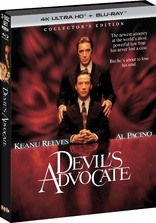
4K Ultra HD + Blu-rayShout Factory | 1997 | 144 min | Not rated | Mar 10, 2026

Movie rating
7.3 | / 10 |
Blu-ray rating
| Users |  | 4.2 |
| Reviewer |  | 3.5 |
| Overall | | 3.5 |
Overview
The Devil's Advocate 4K (1997)
A hotshot lawyer gets more than he bargained for when he learns his new boss is Lucifer himself.
Starring: Keanu Reeves, Al Pacino, Charlize Theron, Jeffrey Jones, Judith IveyDirector: Taylor Hackford
| Thriller | 100% |
| Supernatural | 72% |
| Mystery | 40% |
| Drama | Insignificant |
Specifications
Video
Video codec: HEVC / H.265
Video resolution: 4K (2160p)
Aspect ratio: 2.39:1
Original aspect ratio: 2.39:1
Audio
English: DTS-HD Master Audio 5.1
English: DTS-HD Master Audio 2.0
Subtitles
English SDH
Discs
Blu-ray Disc
Two-disc set (2 BDs)
4K Ultra HD
Packaging
Slipcover in original pressing
Playback
Region A (C untested)
Review
Rating summary
| Movie | | 3.5 |
| Video | | 4.5 |
| Audio | | 3.5 |
| Extras |  | 3.0 |
| Overall | | 3.5 |
The Devil's Advocate 4K Blu-ray Movie Review
Reviewed by Dr. Stephen Larson April 12, 2026Taylor Hackford's eighth fictional feature The Devil's Advocate (1997) was reviewed by Reviewer Emeritus Michael Reuben nearly fourteen years ago. Michael wrote about Warner Bros.' BD-50. To read his opinions about the film and an examination of the disc's a/v presentations, please refer to the linked review.
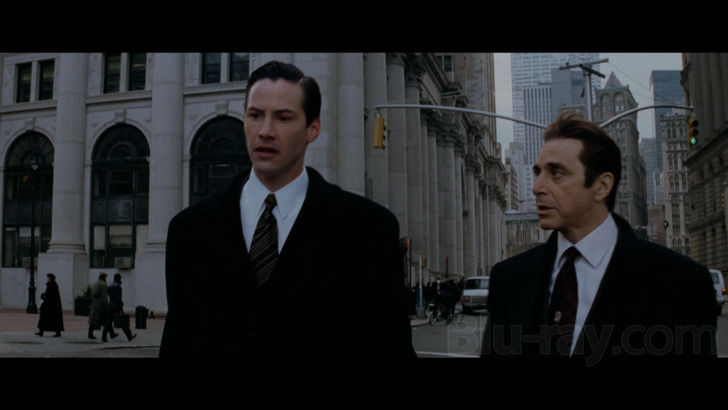
Kevin Lomax and John Milton.
The Devil's Advocate 4K Blu-ray Movie, Video Quality
Scream Factory's spring release of The Devil's Advocate is a two-disc set comprising a 4K Ultra HD Blu-ray and a standard Blu-ray. The case is housed with a slipcover replicating the original theatrical poster art. The basis for each transfer is a 4K scan from the 35 mm original camera negative. The UHD is presented with Dolby Vision (HDR10 compatible). The film appears in its native exhibition ratio of 2.39:1.
When The Devil's Advocate initially came out, a large controversy erupted over the use of an erotic sculpture seen on the back wall of John Milton's (Al Pacino) spacious apartment. The late artist Frederick Hart and the Washington National Cathedral filed a lawsuit against Warner Bros. alleging that the film's bas-relief was essentially a facsimile of Hart's sculpture Ex Nihilo, which depicts the creation of humankind and chaos based on the Book of Genesis. The plaintiffs asserted that the sculpture twisted the Ex Nihilo's religious meaning by making it appear demonic. Warners admitted that the film crew's sculptors reviewed Ex Nihilo and other artworks but did not deliberately copy the former or use it as a model. Hart and the Cathedral unsuccessfully attempted to halt the theatrical release of Hackford's film. In the winter of 1998, Warners agreed to aesthetically alter Milton's sculpture for future TV broadcasts, cable airings, and PPV. (The studio settled the case with Hart and the Cathedral out of court.) But when the legal battle ensued, 400,000 videotape copies were produced that retained the sculpture's original look from the theatrical version. LaserDisc pressings also preserved the maiden appearance. A sticker on the cellophane in the front jacket of my LD copy reads: "The large white sculpture of human forms on the wall of John Milton's penthouse in Devil's Advocate is not connected in any way and was not endorsed by the sculptor Frederick Hart of the Washington National Cathedral, joint copyright owners of the cathedral sculpture Ex Nihilo in Washington, D.C." In addition, Warners appended this postscript following the end credits to my LD copy: "The bas-relief in John Milton's fictional apartment is not intended to depict any other work of art and is not endorsed by, affiliated with or sponsored by any person or organization other than Warner Bros." Exempting the LD and first batch of VHS editions as well as DVD rental copies, all subsequent versions of The Devil's Advocate have sculpted figures in Milton's apartment removed except for the finale which features quite a bit of CGI work. You can see differences between the film's sculptors in Screenshot #s 21-32.
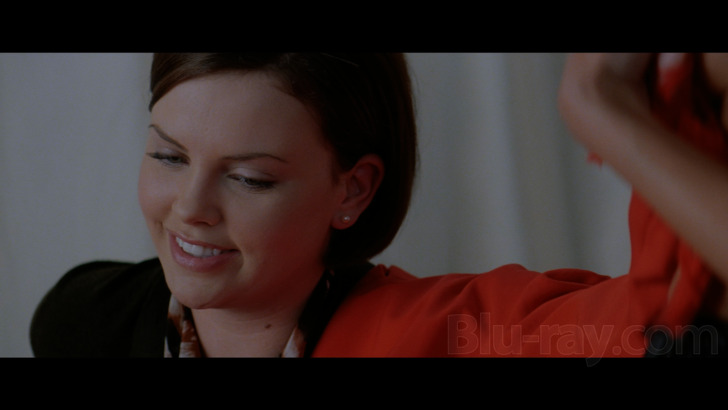
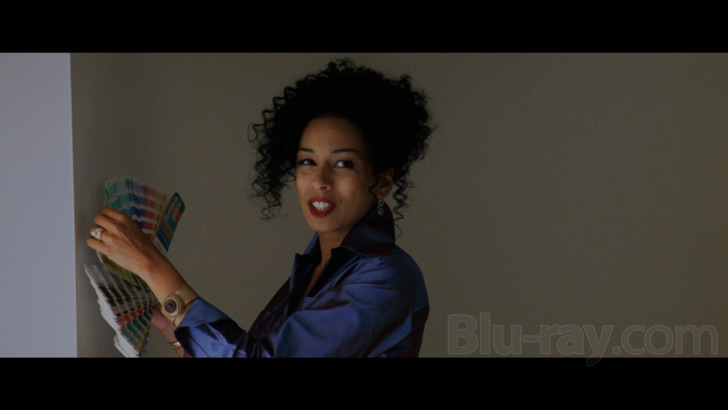
The Warner Bros. Blu-ray served up a fine transfer but skin tones are at times either warmer or sun-baked. For instance, look at the sunny face on Alexander Cullen (Craig T. Nelson) in screen capture #34. By comparison it has a lighter complexion in #s 35 and 36, which the match the LD's look in #33. Much of the film was shot in New York City with overcast skies so there isn't much sunlight. Many of the interiors, especially in Milton's lair, appear dark with table lamps and minimal light sources. Or take Phillipe Moyez's (Delroy Lindo) subterranean abode, which is lit primarily by candles (see #8). Highlights stand out well on the 4K. For example, the stained-glass windows in Alice Lomax's (Judith Ivey) church in frame grab #10. Ditto for the glass, marble, and gold leaf that shine in Cullen's plush apartment. In addition, the lighting looks great in the scene at the bar counter. The 2160p image that's been downsampled to 1080p in #40 is darker than its HD counterpart in #39, although each derives from the same source.
The UHD boasts a mean video bitrate of 81.4 Mbps for the feature and an overall bitrate of 90.9 Mbps for the whole disc. Scream Blu-ray's incorporates an MPEG-4 AVC-encoded BD-50, which delivers a standard video bitrate of 32000 kbps. The encode is superior to the WB BD, which carries a rough average video bitrate of 25952 kbps. Scream's BD lacks any shimmering or compression-related artifacts.
Screenshot #s 1-20, 24, 28, 32, 36, & 40 = Scream Factory 2026 4K Ultra HD BD-100 (downscaled to 1080p)
Screenshot #s 21, 25, 29, 33, & 37 = Warner Home Video 1998 LaserDisc
Screenshot #s 22, 26, 30, 34, & 38 = Warner Bros. Entertainment 2012 BD-50
Screenshot #s 23, 27, 31, 35, & 39 = Scream Factory 2026 BD-50 (from a 4K restoration)
Scream's UHD and BD contain thirteen chapter breaks. The WB BD has a whopping forty-three scene selections, one fewer than the LD.
The Devil's Advocate 4K Blu-ray Movie, Audio Quality
Scream has supplied a DTS-HD Master Audio 5.1 Surround mix (1851 kbps, 16-bit) and a DTS-HD Master Audio 2.0 Stereo track (1558 kbps, 16-bit). The rough average audio bitrates are identical on both the UHD and BD. The audio encode on Warners' BD is superior: the 5.1 track averages 3692 kbps with a bit depth of 24. The Devil's Advocate was recorded, mixed, and presented in theaters with Dolby Digital and DTS tracks. My research also brought up various theater listings with Dolby 2.0 Stereo presentations. I made direct comparisons of Scream's 5.1 and 2.0 tracks with the LD's PCM Stereo 2.0 mix (16-bit). I agree wholeheartedly with a review that appeared in the June/July 1998 issue of Widescreen Review which observes that the dialogue "occasionally sounds ADR-produced." Beginning with the courtroom scenes in Gainesville that open the film and continuing for much of the runtime, spoken words generally sound soft on the 5.1 and 2.0 mixes on the UHD and BD. I could discern what was said throughout but the listener has to pay close attention. The volume on the LD's 2.0 is basically identical but there are some significant discrepancies. Clarity and word enunciation are sharper and more distinct on the LD. I also noticed that pitch is a little higher when Kevin visits with his mother outside the church.
On all the tracks, bass occasionally becomes a strong presence. For instance, it rises when Kevin is in the men's room during a court recess. (The f/x sounds like a thunderclap.) Surround channels are occasionally employed but when they are, f/x are delivered judiciously and effectively. Scream's 2.0 is indeed a fold-down of the 5.1 but it's one of better down-mixes from Scream/Shout. The channels are deployed as a true matrixed surround track as I could hear both music and f/x along the satellite speakers. The 2.0 mix on the LD is heard exclusively along the fronts.
James Newton Howard's score reminds me of Jerry Goldsmith's music for The Omen films. Howard employed the L.A. Master Chorale and a solo soprano (Keegan DeLancie) for the haunting vocals. The synths don't sound dated. The sometime-scary music is arguably better than the film itself.
Scream's optional English SDH are complete and deliver a thorough transcription of the dialogue.
The Devil's Advocate 4K Blu-ray Movie, Special Features and Extras
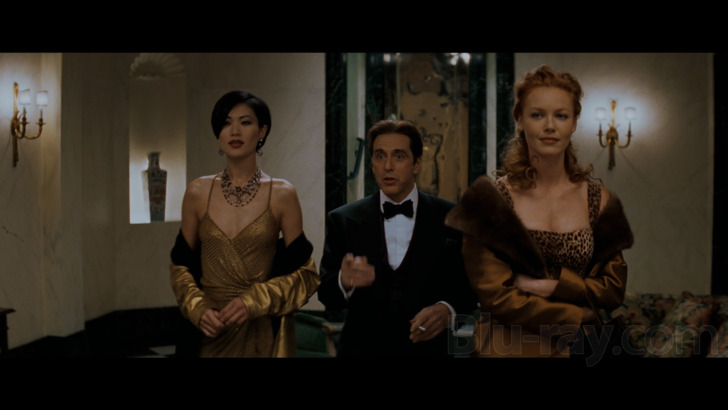
Shout has retained all of the vintage DVD extras sans the production notes. The boutique label has not added any new bonus materials.
- Audio Commentary by Director Taylor Hackford - this feature-length track was recorded for WB's 1998 "Special Edition" DVD. Hackford speaks nonstop for about 140 minutes without taking a single break. He does much more than merely narrate or describe the onscreen action. Hackford discusses the locations, Bruno Rubeo's production design, and very briefly James Newton Howard's score. He reserves special praise for Tony Gilroy's version of the script. Hackford spends a majority of his commentary delving into The Devil's Advocate's narrative events as well as the motives and decisions by the characters. Hackford stops talking midway through the end titles. I disagree with Michael's assessment. While Hackford does provide extensive descriptions about a lot of the scenes, he appends those with character analyses. This is a great commentary. In English, not subtitled.
- Extended Scenes with Optional Director Commentary (47:04 altogether, upconverted to 1080i) - this reel comprises a dozen deleted and extended scenes. Large portions of all of them are present in the theatrical version but this reel includes additional segments. I am aware of two reviewers who saw the DVD and could not turn off Hackford's commentary. Viewing this compilation with just the production audio was not an option. This was first rectified with the WB Blu-ray. Shout has also provided two sound track options for the scenes. Hackford explains what he originally liked about the scenes and why they were later omitted. The scenes have not been cleaned up or restored from their SD state. They contain horizontal line scratches and film artifacts. The scenes are accompanied by a DTS-HD Master Audio 2.0 Stereo track (1558 kbps, 16-bit). In English, not subtitled.
- Theatrical Trailer (2:21, upconverted to 1080i) - Warner Bros.' official trailer for The Devil's Advocate. The trailer is in widescreen but it has been cropped and zoomed in.
- TV Spots (1:33 altogether, upconverted to 1080p) - two US TV spots for The Devil's Advocate.
The Devil's Advocate 4K Blu-ray Movie, Overall Score and Recommendation
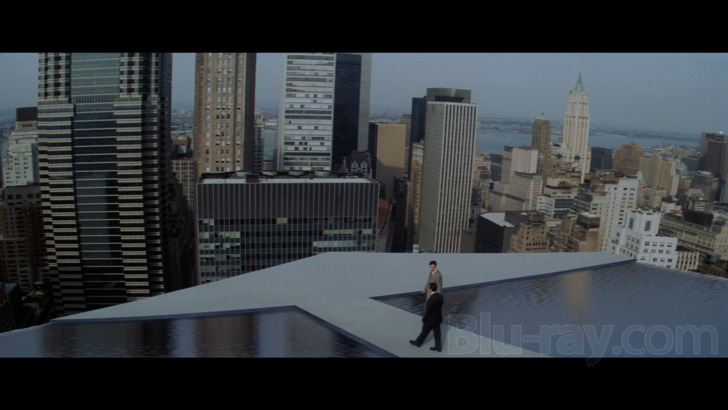
The Devil's Advocate shares similar themes with Peter Hyams's End of Days (1999), which is the superior feature of the two. I've seen Hackford's film four times and appreciate what it does, but it's a slow burn that takes way too long to begin getting its message across. End of Days is thematically deeper and delivers its content with more panache. The courtroom scenes and Pacino's cackling dialogue work best in Devil's Advocate. The Dolby Vision and HDR are solid. I would strongly advise playing either audio mix above your normal listening volume. Hackford's commentary is well worth a listen. A SOLID RECOMMENDATION.
Other editions
Devil's Advocate: Other Editions

The Devil's Advocate
Special Edition | Original version with uncensored statue
1997

The Devil’s Advocate
Unrated Director’s Cut
1997
Similar titles
Similar titles you might also like

Fracture
2007

Sleepers
1996

A Few Good Men
1992

The Departed
2006

King of New York
1990

High Crimes
2002

Presumed Innocent
1990

The Pelican Brief
1993

Gone Girl
2014

A Time to Kill
1996

Closed Circuit
2013

Righteous Kill
2008

Damages: The Complete Series
2007-2012

The Bone Collector
Special Edition | 4K Restoration
1999

Michael Clayton
2007

Perfect Stranger
2007

The Girl Who Kicked the Hornet's Nest
Luftslottet som sprängdes
2009

The Lincoln Lawyer
2011

Consenting Adults
1992

Flight
2012