The Black Belly of the Tarantula 4K Blu-ray Movie
HomeThe Black Belly of the Tarantula 4K Blu-ray Movie 
La tarantola dal ventre nero 4K | Limited Edition / 4K Ultra HD + Blu-rayCelluloid Dreams | 1971 | 1 Movie, 3 Cuts | 98 min | Not rated | Aug 25, 2026
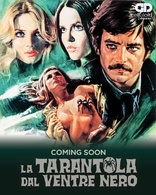
Price
Movie rating
6.9 | / 10 |
Blu-ray rating
| Users |  | 0.0 |
| Reviewer |  | 4.5 |
| Overall | | 4.5 |
Overview
The Black Belly of the Tarantula 4K (1971)
When nymphomaniac Maria Zani is murdered, her ex-husband and insurance broker Paolo Zani becomes the prime-suspect of Inspector Tellini. Then the saleswoman Mirta Ricci is murdered in the same modus operandi - both victims had been paralyzed by acupuncture needles with poison introduced in their necks and their bellies had been ripped open with a knife with the victims still alive, in the same way that tarantulas are killed by tarantula hawks. As suspects keep dying, the Inspector directs his attention to a spa all the victims had a connection with...
Starring: Giancarlo Giannini, Claudine Auger, Barbara Bouchet, Rossella Falk, Silvano TranquilliDirector: Paolo Cavara
| Horror | Uncertain |
| Foreign | Uncertain |
| Mystery | Uncertain |
| Thriller | Uncertain |
Specifications
Video
Video codec: HEVC / H.265
Video resolution: 4K (2160p)
Aspect ratio: 1.37:1, 1.85:1
Original aspect ratio: 1.85:1
Audio
English: DTS-HD Master Audio 2.0 Mono (48kHz, 16-bit)
Italian: DTS-HD Master Audio 2.0 Mono (48kHz, 16-bit)
Italian: DTS 2.0
Subtitles
English, Italian
Discs
Blu-ray Disc
Four-disc set (4 BDs)
4K Ultra HD
Playback
Region A (B, C untested)
Review
Rating summary
| Movie | | 4.5 |
| Video | | 4.5 |
| Audio |  | 4.0 |
| Extras |  | 5.0 |
| Overall | | 4.5 |
The Black Belly of the Tarantula 4K Blu-ray Movie Review
Reviewed by Justin Dekker September 16, 2026From 1971 Paolo Cavara's ('Plot of Fear', 'Stay as you Are') giallo classic 'The Black Belly of the Tarantula' arrives on home video in this Limited
Edition 4K UHD four-disc set courtesy of Celluloid Dreams. The film stars Giancarlo Giannini ('Swept Away', "A Quantum of Solace'), Barbara Bouchet
('Cry of a Prostitute', 'The Red Queen Kills Seven Times'), Claudine Auger ('Thunderball', 'A Bay of Blood") and Barbara Bach ('The Unseen', 'The
Island of the Fishmen'). The 2160p presentation is quite lovely, and the release is accompanied by a wealth of on-disc and physical supplemental
material including a perfect-bound book, 16 press photo reprints, and Celluloid Dreams' site exclusive set of six oversized lobby card reproductions.
The four-disc set includes one 4K UHD disc and three Blu-ray discs. All contents save for the over-sized lobby card reproductions are housed inside a
sturdy slipbox.
In the midst of a blackmail scandal, a mysterious killer is targeting the beautiful women of Rome. But before he kills them, he paralyzes them so that
they are awake and alert though their entire murder, feeling every cut of the blade, but powerless to to stop it. In pursuit of the remorseless and
perverse killer is the young Inspector Tellini (Giancarlo Giannini), a man whose wife (Stefania Sandrelli) may herself be in danger. Can Inspector Tellini
uncover the identity of the sadistic killer and stop him before it's too late?
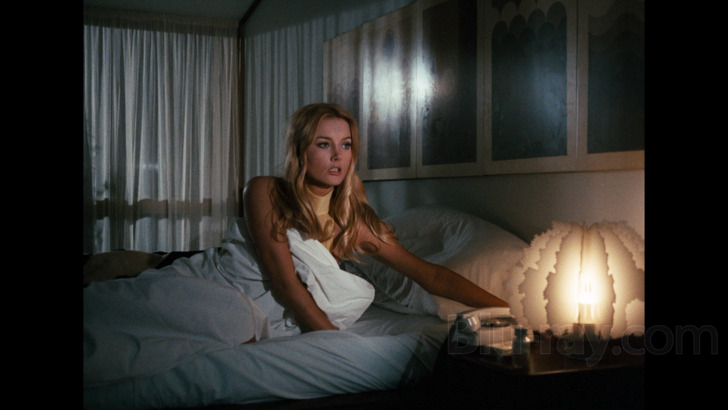
Considered by many to be one of the very best gialli ever made, The Black Belly of the Tarantula has been curiously lacking a home video release in North America since Blue Underground issued a DVD of the film two decades ago in 2006. While Blu-ray releases would eventually come to market internationally, none did so domestically. I was both surprised and excited that the emerging label Celluloid Dreams announced they would be handling the title, and would be releasing a 4K edition, no less. While other gialli would visit the various extremes of the genre delivering more sleaze, bloodier violence, more numerous and frequent plot twists and red herrings, and ever so much more J&B, few are as tightly crafted and possessing of such strong forward momentum as Cavara's The Black Belly of the Tarantula.
Though it had been quite some time since I last put the BU disc in a player, a few things have stuck with me since seeing the film for the first time. Chief among them, though, is the film's unusually sadistic killer. While the notion of adding an animal of some sort to the titles of the films of this genre is commonplace, there are rarely such well-explained and salient reasons for the selection of the named animal. Sometimes the selection feels rather arbitrary, while at others it can feel rather forced. Whereas the titular flies of Four Flies on Grey Velvet where quite smoothly and cleverly wrapped into the film, few linkages have such a direct impact on the film as it does with this picture. Using a moment that may at first feel to be a rather a disjointed and irrelevant aside, in the case of spider wasps (of which tarantula hawks are the largest variety), we lean via some rather dreary scientifically-shot footage, the female of the species uses a paralyzing sting to immobilize a tarantula, before laying an egg on its body and attaching it to the spider with webbing. Once the egg hatches, the young wasp consumes the paralyzed spider while it's still alive. It's spooky and fascinating.
Clearly drawing inspiration from the wasp, the film's killer also paralyzes his prey as a first step. Here, though, it's a precisely placed acupuncture needle that delvers the incapacitating sting, and how this can be unerringly performed in the midst of one of a number of violent physical struggles is best not thought about for any length of time. Not as gory as some other later entrants in the genre, few are more disturbing and meanspirited than these killings where the victim is fully awake and aware. Of al of the chosen prey of the killer, Barbara Bouchet's unblinking and wide-eyed expression that is frozen on her face as she is killed is perhaps the most haunting image from the film that is retained in my mind's eye. The fact that we observe her helpless expression before the flashing blade is put to its cruel work and revisit that same unflinching expression once the grisly cutting has begun is both powerful and disturbing, amplifying the sense of danger as we move deeper into the film, and believably driving Inspector Tellini's growing despair.
Playing out in parallel with her silent and frozen horror is the the stylish and symbolic manner in which the death of Bouchet's Maria is shot. Rising in the night she pads through her shadow-infested home as she tends her fussing dog. Thirsty, she then moves to the kitchen to get something to drink. She brings a bottle of Pejo with her as she heads back to her bedroom. Accosted by the killer, the bottle drops to the floor, and its contents begin to spill onto the red rug where it lands, causing a deep, blood red puddle to slowly expand and blossom as the killer begins to cut Maria a few feet away on the bed. When the last of the water trickles out of the bottle, we know that her life has simultaneously ended. Though quick, violent, eerily scored, and populated with rapid cuts, it's a darkly poetic moment.
The film also routinely plays with genre conventions and expectations. In another of the film's murders, running counter to what viewers may anticipate when the killer stalks another victim, she remains fully clothed while the mannequins she's surrounded by supply the nudity. They stand stoic and still as the woman meets her violent end, unashamed of their nudity and unbothered by the blood. Rather than the usual and customary black gloves, this killer favors flesh-colored latex gloves. From a plot perspective, it does afford the viewer the chance to deduce that based on the hands shown, the killer is likely male. Aesthetically, however, the gloves makes the killer look almost inhuman and otherworldly as those gloved hands resemble those of the Autons which confounded various incarnations of the Doctor on the BBC's Doctor Who. Lastly, there's Giannini's Inspector Tellini. Tasked with solving the crimes, while he's initially bold, brazen and cocksure, eventually, the case with it's unusual murders begins to weigh on him. He laments not being able to ascertain who's behind the killings of these beautiful young women, and he expresses his doubts and misgivings to his wife, to whom he's apparently both faithful and respectful. When he is at his lowest, wracked with self-doubt and feelings of inadequacy, it is she who is able to convince him to not to quit and to continue on with his investigation. It's an interesting and unique wrinkle for both his character, and also for that of Sandrelli's Anna who could simply have been present to be either objectified or to service as little more than a plot device. It's these and other elements that truly set this film apart.
The Black Belly of the Tarantula 4K Blu-ray Movie, Video Quality
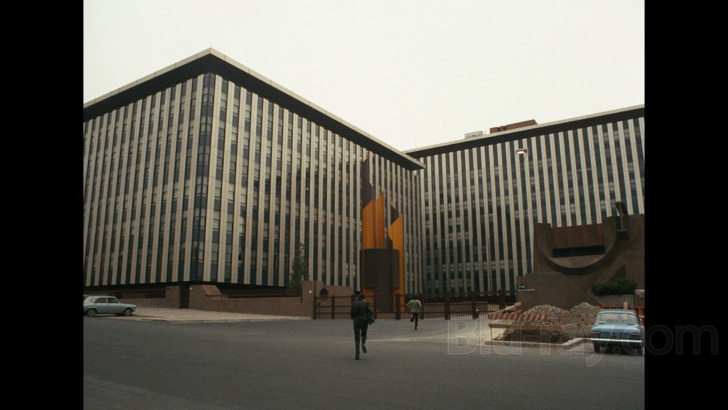
The 2160p presentation of The Black Belly of the Tarantula is fantastic. The film retains a healthy layer of fine film grain that resolves naturally
without clumping or turning noisy, and it provides the picture with a lush, filmic look. Skin tones are universally healthy and realistic, from the ruddier
and sun baked to the paler and more porcelain hues of some of the female cast members. Colors are well-saturated and stable, within the late-
60s/early 70s palette on display. That being the case, bold primaries aren't frequently present, though they do still have a chance to delight when they
turn up on items on store shelves, on set dressing elements, and on automobiles. More often, though, it's earthier hues and more vintage reds that are
on display, and they are suitably rich. Woods fair well, appearing warm and displaying well-defined and realistic grain patterns. Blacks are deep and
inky, which is important for a film such as this, where the killer frequently uses darkness as an ally, and shadow play figures heavily into the
cinematography. While sometimes the darkness may limit our ability to observe what's happening, such as on night-time streets, inside, where the killer
strikes, blacks are handled well and shadows offer a wide array of gradations allowing us to see better into these spaces for both character and set
details. Fine detail impresses, with age and wear noticeable on picture frames and doorbells, precise tactile renderings of stonework and plaster, and
nicely fibrous costuming particulars. It's a gorgeous transfer. It's also worth mentioning that due to fan feedback, Celluloid Dreams has included the film
in two aspect ratios - the original theatrical full-screen, and a much requested widescreen presentation that mirrors what was crafted for early home
video releases. To help fans understand the visual differences between the two aspect ratios, I've included screenshots from both. After spending time
with each, the full-screen presentation looked more appealing to my eye.
- Screenshots #1-15 are sourced from the Full-Screen presentation.
- Screenshots #16 - 20 are sourced from the Widescreen presentation.
All screenshots are sourced from the included 1080p disc.
The Black Belly of the Tarantula 4K Blu-ray Movie, Audio Quality
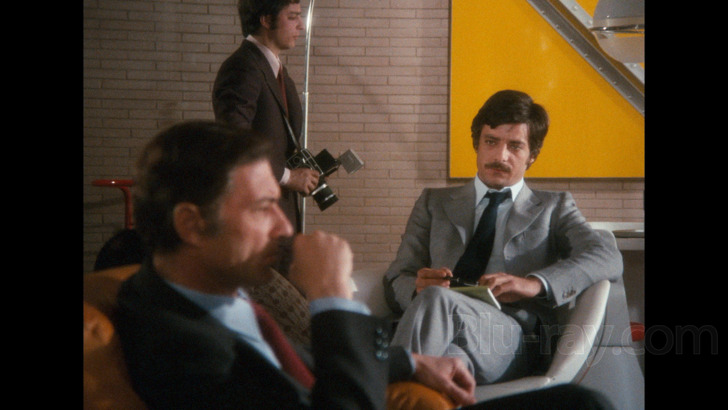
Three distinct audio tracks are included for this new release from Celluloid Dreams; a DTS-HD Master Audio 2.0 Italian track, a DTS 2.0 Italian track, and a DTS-HD Master Audio 2.0 English track. After spending time with each, my preference was for the DTS-HD Master Audio 2.0 Italian track accompanied by English subtitles. The track needs to handle two things well - dialogue and Ennio Morricone's score. It does each of these extremely well. Dialogue is consistently clean and clear, free from any distracting or irritating issues or defects. The score is well-rendered and sounds era appropriate. Frantic moments such as the rooftop chase allow for dizzying percussion to shine with precise snare drums mixed with jangling and discordant keys. More intense, seductive, or emotional moments give moody, ethereal vocals a moment in the spotlight, with the breathy passages being particularly haunting. Horns are full-bodied Contemporary sound effects such as car engines, phones, footsteps, and the like are realistic and believable, though they lack the depth of more modern tracks. On the whole, it's a more than able companion for the film.
The Black Belly of the Tarantula 4K Blu-ray Movie, Special Features and Extras
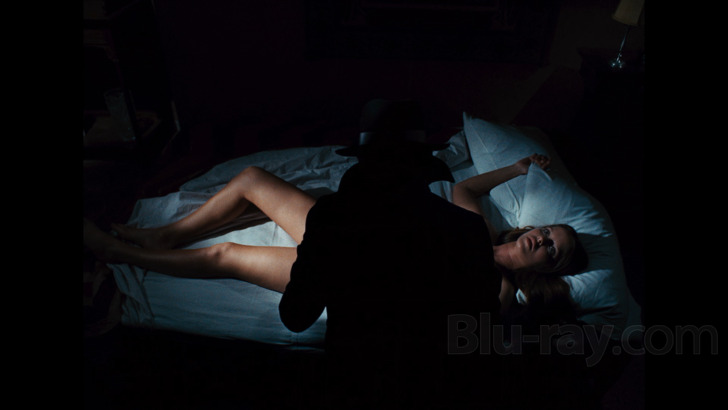
Celluloid Dreams' The Black Belly of the Tarantula: Limited Edition 4K arrives with wealth of on-disc and physical supplemental content.
Disc One: 4K UHD
- Commentary with Guido Henkel - Selectable via the Settings menu, I was pleased to see Guido Henkel return for a another commentary track on this release. Richly informative and highly listenable, Henkel wastes no time in getting to work, providing information on the film's production history, and reminding fans of how marketing and striking delivering prints to theaters were handled very differently in the film's era. From there, after some comments about the film, he goes into detailed biographical data on genre favorite Barbara Bouchet. He discusses the history of sexual blackmail plotlines in the genre and how it is updated and revolutionized here. He also mentions how another giallo from the same year, Luigi Bazzon's The Fifth Cord uses one of the same apartments as a set, and notes other linkages and similarities between these two films as well. Other cast members' careers and lives come into focus as they appear on screen, and he also spends time discussing director Paolo Cavara, and host of other topics from the broad to the trivial. As we've come to expect, it's a terrific track that fans of the film should check out.
- Commentary with Guido Henkel - As above, it is selectable via the Settings menu.
- Commentary with Guido Henkel - As above, it is selectable via the Settings menu.
- Grindhouse Version (1:24.57) - Taken from an original unrestored and unmodified35mm theatrical film print, the rough and tumble presentation provides viewers with vintage viewing experience, minus the sticky floors and the haze of cigarette smoke.
- "Making Up Words" Interview with Edda Dell'Orso (25.12) - Beginning with her childhood, and discussing her formal education and university experience, she eventually moves on to her professional career and recounts singing for Once Upon A Time in the West. She then moves on to the rest of her career and the various films she worked on and her time teaching. In Italian with English subtitles.
- "The World of Paolo Cavara" Interview with Pietro Cavara (22.16) - Pietro Cavara begins by providing some biographical information about his father, before moving on to his entrance into the film industry before arriving at Mondo Cane, which blended Cavara's love of travel with film. Eventually he discusses The Black Belly of the Tarantula and Plot of Fear, their characters, and their themes. His father's relationship with Marcello Danon receives some time, as do his remembrances from as does from his time on the set in his youth. In Italian with English subtitles.
- "What a Tangled Web We Weave" Video Essay (20.50) - This segment opens with a brief but interesting history of the giallo, the directors who most closely associated with it, and a variety of well-known films. Then The Black Belly of the Tarantula comes into focus, along with its stars, inspirations, and its similarities and differences to some of Dario Argento's works. The essay then moves on to discuss the elements of this film which influenced those that came after it. It's brisk and informative.
- "The Uncanny Peephole" Video Essay (22.35) - The themes and inventiveness of Cavara's The Black Belly of the Tarantula are explored.
- Pietro Cavara Archival Interview (4.54) - Pietro Cavara discusses how his father came to work on The Black Belly of the Tarantula, and his approach to the film. He shares his thoughts on the film as well.
- Lorenzo Danon Archival Interview (16.06) - Lorenzo Danon covers the career of his father Marcello Danon and the company he founded. After this grounding he pivots to hs father's work on The Black Belly of the Tarantula intermixed with his thoughts on the project. In Italian with English subtitles.
- English Trailer (1.56)
- Germain Trailer (3.34)
- English TV Spot (1.03) - A television spot for the double feature of this film and The Weekend Murders.
- English TV Spot (Grindhouse) (1.02) - As above but unrestored.
- Censored Japanese VHS Clips (0.24)
- Image Gallery - Viewers advance through a collection of posters, lobby cards, publicity photos, and more using the "Skip Forward" button on their remote.
- 80-Page Perfect-Bound Book - Writing on the film is followed by a wealth of "then and now" color photographs of many of the film's locations.
- 16 Press Photo Reprints - Black and white, measureing approximately 6.75" x 5.25".
- 6 Lobby Card Reproductions - Color, measuring approximately 12" x 8.25". Included on orders placed from Celluloid Dreams' website.
The Black Belly of the Tarantula 4K Blu-ray Movie, Overall Score and Recommendation
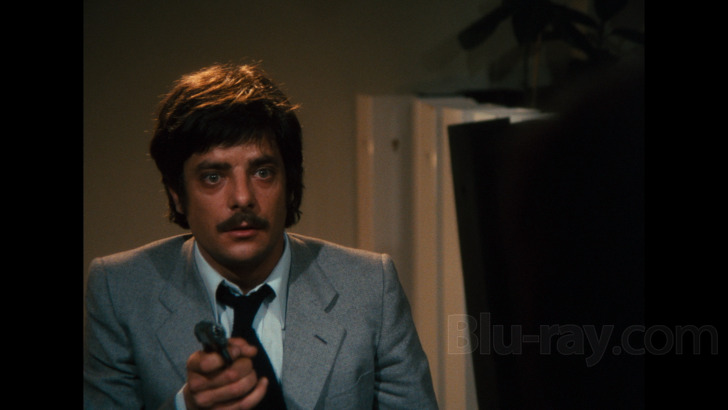
Undeniably influenced by what came before it, and just as influential to the genre films which came after it, The Black Belly of the Tarantula was overdue for an updated release. It was absolutely worth the wait. For established fans it provides an iteration of the film looking better than ever, and for newcomers, the film, in conjunction with the volume of supplements, makes it ready for rediscovery. With a host of top female talent including Barbara Bach, Claudine Auger, and Barbara Bouchet, alongside Giancarlo Giannini who turns in a remarkable performance, the film is moody, intense, seductive, erotic, thrilling, and occasionally funny, and it's certainly one of the genre's best. It's an easy contender for one of the year's best releases. The Black Belly of the Tarantula: Limited Edition 4K UHD earns my highest recommendation.
Other editions
The Black Belly of the Tarantula: Other Editions

Similar titles
Similar titles you might also like

Watch Me When I Kill
Special Edition
1977

The Cat o' Nine Tails
Il gatto a nove code | Remastered | Limited Edition
1971

Jigsaw
2017

The Snowman
2017

Psych:9
2010

The Bird with the Crystal Plumage 4K
L’uccello dalle piume di cristallo
1970

Luz
2018

Don't Let Go
2019

Eyes of Laura Mars
1978

Scream and Scream Again
1970

Four Flies on Grey Velvet 4K
4 mosche di velluto grigio
1971

Pieces
Mil gritos tiene la noche | Remastered | Limited Edition Puzzle to 3000
1982

The Outsider: The Complete First Season
2020

Night School
Terror Eyes / Warner Archive Collection
1981

Play Motel
1979

Don't Answer the Phone!
1980

Tenebrae 4K
Standard Edition
1982

Blood and Black Lace
Sei donne per l'assassino
1964

Faces in the Crowd
2011
Dead Man's Eyes
1944