The Beautiful Truth Blu-ray Movie
HomeThe Beautiful Truth Blu-ray Movie 
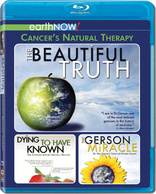
The Beautiful Truth / The Gerson Miracle / Dying to Have KnownCinema Libre Studios | 2004-2008 | 3 Movies | 251 min | Not rated | Mar 15, 2011
Price
List price:Listed on Amazon marketplace

Movie rating
7.2 | / 10 |
Blu-ray rating
| Users |  | 4.0 |
| Reviewer |  | 2.0 |
| Overall | | 2.1 |
Overview
The Beautiful Truth (2004-2008)
Three documentaries are included: 'The Beautiful Truth' (92 min), 'The Gerson Miracle' (90 min) and 'Dying to Have Known' (79 min).
| Documentary | 100% |
Specifications
Video
Video codec: MPEG-4 AVC
Video resolution: 1080i
Aspect ratio: 1.51:1
Original aspect ratio: 1.33:1
Audio
English: Dolby Digital 5.1
Subtitles
None
Discs
50GB Blu-ray Disc
Single disc (1 BD)
Playback
Region A (B, C untested)
Review
Rating summary
| Movie |  | 2.5 |
| Video |  | 1.5 |
| Audio | | 2.0 |
| Extras |  | 0.0 |
| Overall | | 2.0 |
The Beautiful Truth Blu-ray Movie Review
Kroschel waxes hyperbolic about Gerson's controversial cancer therapy in a trio of documentaries...
Reviewed by Kenneth Brown May 9, 2011There are two breeds of documentary. The first examines a subject from all angles, presenting a comprehensive investigation open to any and all corroborating and contradictory evidence. Essentially, a film in search of truth, whatever that truth might be, rather than a film born from a desire to deliver a persuasive argument. The second breed of documentary typically involves a more narrow focus, and tends to frame evidence rather than present it, exclude conflicting information rather than carefully scrutinize it, and systematically undermine anything that might challenge its filmmaker's pre-determined position. Don't misunderstand, neither one is necessarily better than the other. But it never hurts to know which breed of documentary you're opening your fragile little mind to. The Blu-ray release of writer/director Steve Kroschel's The Beautiful Truth features three of the latter -- The Gerson Miracle (2004), Dying to Have Known (2006) and The Beautiful Truth (2008) -- each one meticulously designed to package, promote and advance the Gerson Therapy, a controversial, medically unsubstantiated treatment its proponents claim cures cancer.
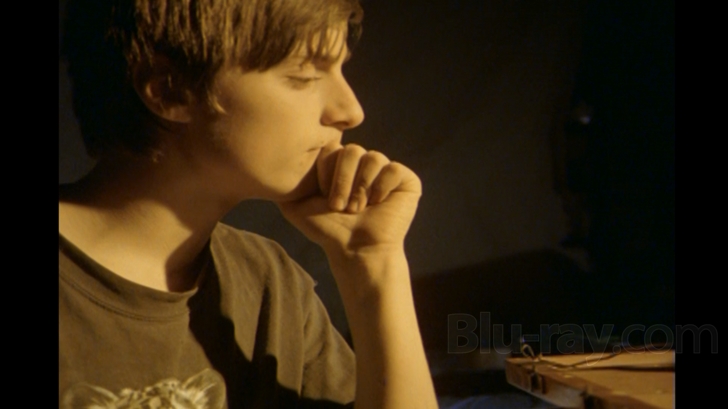
"The beautiful truth is that people around the world are saying no to genetically modified food. They're saying no to irradiation. They're saying no to food additives. And they're saying yes to organic food, and beyond organic food. They're saying yes to food that is local, that is appropriate scale, that is humane, that is bio-diverse and that is socially just."
As beautiful truths go, it's a noble one. As imperative questions go, "what exactly am I putting in my body?" is an incredibly important one. But Kroschel's beautiful truth, his burning question and his subsequent investigations are handled with far more finesse and to far greater effect by a number of like-minded documentaries, chief among them Robert Kenner's Food, Inc. Kroschel is an unapologetic disciple of German physician Max Gerson (1881-1959), the oft-ridiculed eye of the Gerson Therapy storm. What does the Gerson Therapy entail? A systematic elimination of toxic substances from the body; unnatural, manmade substances that Gerson believed were causing epidemics, widespread disease and, in many cases, tumors and terminal cancer. To accomplish this detoxification, patients are required to alter their diets considerably, ingest strictly regulated servings of organic fruits, vegetables and juices, do away with metal utensils, avoid numerous foods, consume a variety of supplements, and subject themselves to countless injections, enzymes and enemas.
Doesn't sound too pleasant, does it? Ease and comfort notwithstanding, claims that the Gerson Therapy cures cancer have attracted attention from desperate families and terminally ill patients the world over since its inception. The promise of a natural elixir is tempting enough as it is; the promise of a remedy that doesn't subject a loved one to surgeries, chemical treatments or radiation even more so. But the Gerson Therapy has also attracted serious fire from its staunchest critics, the U.S. Department of Health and Human Services, the National Institutes of Health and the American Cancer Society among them. Their issue with the treatment? Its purported effectiveness hasn't been verified or reproduced by any scientific evidence or official clinical studies, the Gerson Institute's cure rates remain suspect and unsubstantiated, and the Institute's records are largely incomplete and invalid. Of course, it's all a Catch-22. Gerson proponents insist the Big Bad Wolves of the scientific community are in the pockets of Big Business and Big Government, and the U.S. Department of Healthy and Human Services isn't exactly tripping over itself to validate or refute Gerson's methodology.
The ensuing debate would make for a fascinating documentary; an expose of the tactics employed by each side's most steadfast zealots an intriguing followup. Unfortunately, The Beautiful Truth is not that film. Neither is The Gerson Miracle or Dying to Have Known. Kroschel treads much of the same ground in his documentaries, and each successive entry in his three-part Gerson sermon is more akin to a 90-minute revision than a full-fledged followup. The Beautiful Truth, the most recent in his pseudo-series, is more informative and... erm, watchable than its predecessors, but I simply refuse to believe Kroschel's son embarked on a quest for truth of his own making, particularly considering his father had already made two documentaries on the same subject. Every time Kroschel whispered "Garrett began to wonder" or "Garrett soon realized," I scoffed. Every time the filmmaker suggested his son was shocked by what he was discovering, I cried foul. By removing himself from the narrative, Kroschel inadvertently makes Garrett's entire journey ring false. The director may have the best intentions, but the end result calls his claims, beliefs and evidence into question. If I can't accept his narrative, how can I accept his various points at face value? If I can't trust his methods, how can I trust the validity of the Gerson Therapy? The messenger undermines the message time and time again, and hurts his cause instead of helping it.
I'll be the first to admit there's tremendous value in some of the questions Kroschel raises. Even if the Gerson Therapy doesn't hold water, natural treatments shouldn't be casually dismissed as witch doctory, at least not outright. A responsible medical organization and community at large would benefit from investigating such therapies, even if only to repudiate those proven false by clinical trials and studies. To simply suggest the Gerson Therapy is rubbish because it hasn't been scientifically substantiated is short-sighted; give it its day in court and see if its advocates have a legitimate case. But to simply rally the troops behind a cause based on word of mouth and scorned-expert anecdotes is equally irresponsible. Kroschel is more focused on villainizing groups like the American Cancer Society and identifying devils in every government bush than in demonstrating that the Gerson Therapy is a viable option for curing cancer. Over the course of three documentaries, Kroschel doesn't bolster Gerson's claims; his tone and approach, as well as the all-too-convenient holes in his presentations, only bolster his opposition's suggestion that the champions of the Gerson Therapy are conspiracy theorists, malcontents and quacks.
The Beautiful Truth Blu-ray Movie, Video Quality
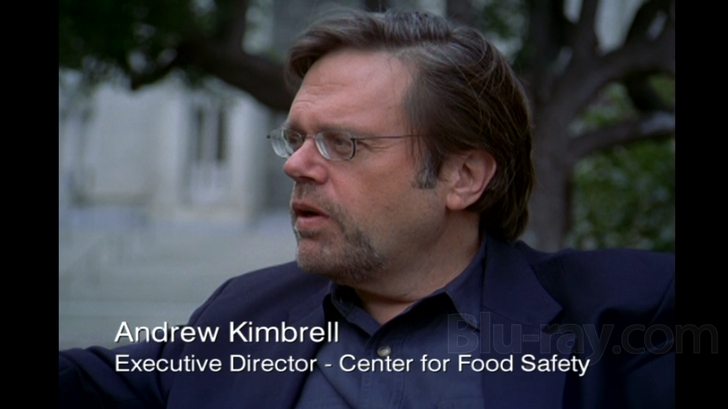
The Gerson Miracle, Dying to Have Known and The Beautiful Truth all feature a 1080i/AVC MPEG-4 encode, but that's where my compliments end. Each one is upscale-DVD quality at best: colors range from pasty to oversaturated, black levels are weak-willed, clarity is terribly disappointing, fine detail is woefully inadequate, edge definition is puffy and pudgy, and severe macroblocking, banding, aliasing, ringing, smearing, noise, pulldown anomalies and a string of other issues wreak havoc on all three presentations. Not a scene goes by that doesn't suffer; not a scene goes by that didn't make me think, "this is a Blu-ray release?" That said, Kroschel's production values are more spotty and problematic than his films' video presentations, and I hesitate to completely berate the results. Cinema Libre had very little to work with and I doubt any amount of TLC could have made Kroschel's documentaries look any better than they do. Proceed with caution.
The Beautiful Truth Blu-ray Movie, Audio Quality
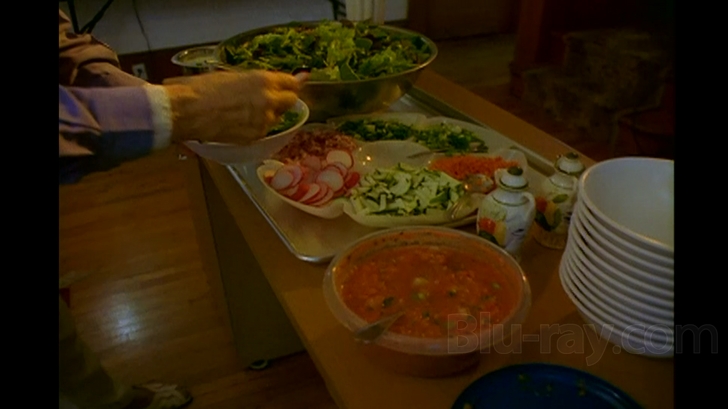
I had a similar reaction to the documentaries' Dolby Digital 5.1 surround tracks. Though tolerable, each one is as front-heavy as a 5.1 mix comes and, even then, Kroschel's narration is typically murky, muddy and distended, and the voices of the experts he interviews don't sound much better. Worse, LFE output is almost non-existent, effects are buried, the rear speakers are often eerily quiet, and the music he uses isn't nearly as crisp or clear as it should be. Again, Kroschel's basement-floor production values come to bear on the experience, but between the audio tracks and video presentations, an inescapable question claws its way to the surface: why release these documentaries on Blu-ray at all?
The Beautiful Truth Blu-ray Movie, Special Features and Extras
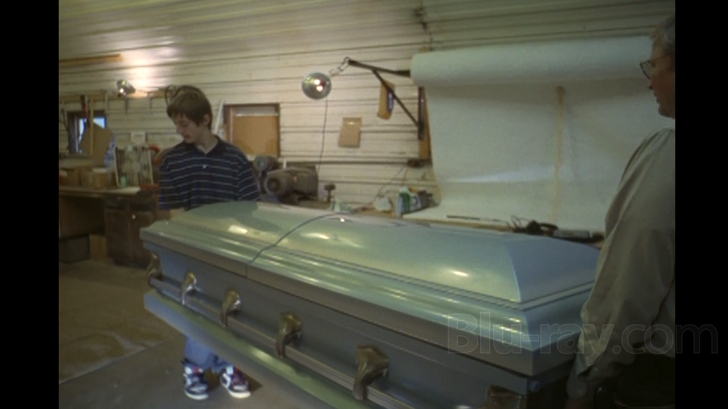
No special features are available for any of Kroschel's documentaries.
The Beautiful Truth Blu-ray Movie, Overall Score and Recommendation
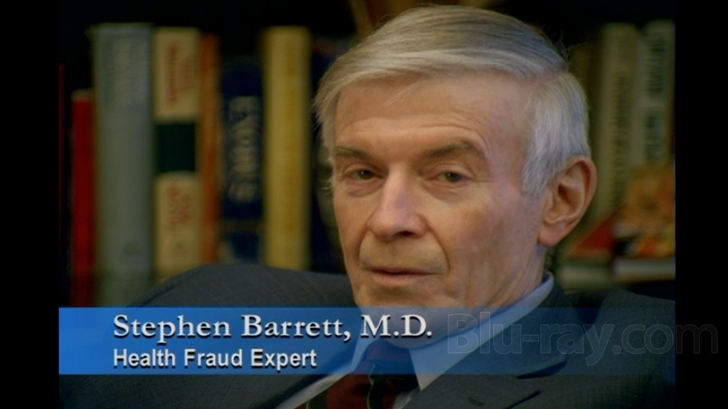
The Blu-ray edition of The Beautiful Truth may offer a collection of three Steve Kroschel documentaries, but "three for the price of one" isn't nearly as good a deal as it might sound. Kroschel's films lack journalistic integrity and aren't as polished, airtight, entertaining or comprehensive as documentaries like Food, Inc., their 1080i video presentations are indistinguishable from their DVD counterparts, their Dolby Digital mixes are awfully underwhelming, and the release doesn't include any supplemental material. Kroschel raises interesting, even valuable questions, but I wanted more, from his films and Cinema Libre's Blu-ray release.