Teknolust Blu-ray Movie
HomeTeknolust Blu-ray Movie 
Strand Releasing | 2002 | 83 min | Rated R | Oct 06, 2020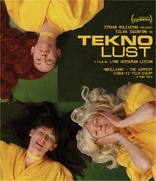

Movie rating
6.3 | / 10 |
Blu-ray rating
| Users |  | 0.0 |
| Reviewer |  | 4.0 |
| Overall | | 4.0 |
Overview
Teknolust (2002)
Academy-Award winner Tilda Swinton plays four roles in this award-winning Sci-Fi film about Rosetta Stone and her three Self-Replicating Automatons, (S.R.A.'s) which she cloned from her own DNA.
Starring: Tilda Swinton, Jeremy Davies, James Urbaniak, Karen Black (I), Josh KornbluthDirector: Lynn Hershman Leeson
| Drama | Insignificant |
| Comedy | Insignificant |
| Romance | Insignificant |
Specifications
Video
Video codec: MPEG-4 AVC
Video resolution: 1080p
Aspect ratio: 1.78:1
Original aspect ratio: 1.85:1
Audio
English: LPCM 2.0
Subtitles
English SDH
Discs
Blu-ray Disc
Single disc (1 BD)
Playback
Region A (B, C untested)
Review
Rating summary
| Movie |  | 3.5 |
| Video | | 4.0 |
| Audio | | 4.0 |
| Extras | | 3.5 |
| Overall | | 4.0 |
Teknolust Blu-ray Movie Review
Reviewed by Brian Orndorf October 4, 20202001’s “Teknolust” returns viewers to the days of internet growth and experimentation, with creators trying to pull users in deeper with increasingly intimate relationship between humankind and the digital realm. Writer/director Lynn Hershman-Leeson aims to understand this strange connection, creating an exploration into obsession, sex, identity, and crime with the screenplay, which offers a loose appreciation for story as it dives into the deep end of performance art. “Teknolust” is an unusual feature, with Hershman-Leeson pursuing a few prescient ideas on internet control, but she’s also attentive to quirk, which runs a little less steady in the final cut. Some elements don’t connect, but there’s an appealing early-2000 indie vibe to the picture, and there’s something special for fans of Tilda Swinton, who dominates the endeavor as she inhabits four roles in full.
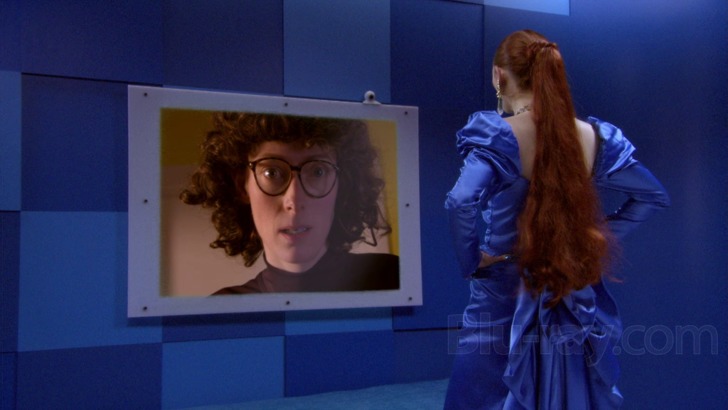
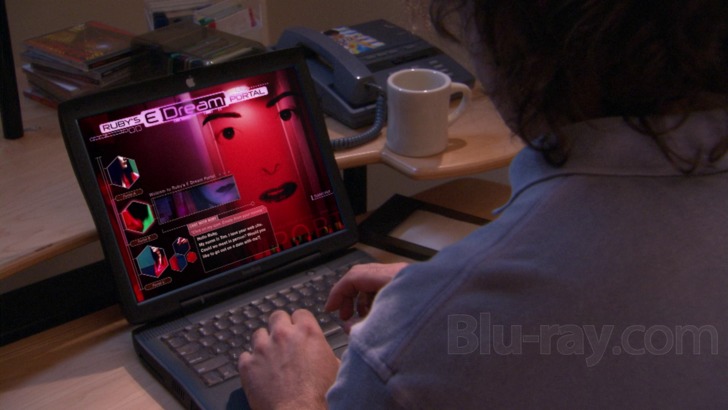
Dr. Rosetta Stone (Tilda Swinton) has made a secret scientific breakthrough, creating three self-replicating automatons in Ruby (Swinton), Marianne (Swinton), and Olive (Swinton). These SRAs are housed in a special lab monitored by Stone via her microwave, keeping tabs on the women as they’re put to use creating special E-Dream portals, offering companionship to lonely users, including copy shop clerk, Sandy (Jeremy Davies). The SRAs are fueled by sperm, requiring Ruby to go out into the night and collect ejaculate from undersexed donors, leaving them impotent and with a rash that resembles a bar code. On the case is government specialist Agent Hopper (James Urbaniak), who pursues the clues left behind by the seemingly viral outbreak, declaring “bio-gender warfare” while joined by Stone, who tries to keep her mission secretive while struggling to control the SRAs and their newfound interest in free will.
“Teknolust” is not a film set in the future, taking place in the midst of the internet revolution. Hershman-Leeson has big ideas on the state of the computer union and science, with Dr. Stone creating three SRAs for “menial labor” purposes, housing them in color coded rooms where they’re fed old movies for inspiration and powered by sperm, becoming the face of web portals that factor into a larger behavioral experiment. The production doesn’t have a significant budget, but the helmer is attentive to style, creating big hues to add an alien look to the picture, with the SRAs defined in appearance and different in personality, giving Swinton an actor’s batting cage to keep taking swings with four distinct characters. “Teknolust” embraces her efforts, supporting Swinton as Hershman-Leeson offers persistent oddity to create a warped reality of power plays and scientific fixation.
There’s also a bit of a detective story in “Teknolust,” though it’s mostly played broadly, including the arrival of Dirty Dick (Karen Black), an unhinged private investigator hired to help with the case of the barcoded men. That there’s any lightness to the film is surprising, as it deals with the mysterious ways of science and crime, but Hershman-Leeson makes a noticeable effort to make “Teknolust” approachable, even when it deals with modern art touches, including its overall visual presentation and a mid-movie dance number with all the SRAs. The script eventually gets to ideas on romance and liberation, but a secure plot isn’t realized in full, allowing the endeavor to wander at times, enjoying itself a bit too much. This permissiveness extends to a few of the performances, finding Davies insufferable as a meek guy hit by Ruby’s electric presence, prone to alarming acts of indication that are difficult to watch.
Teknolust Blu-ray Movie, Video Quality
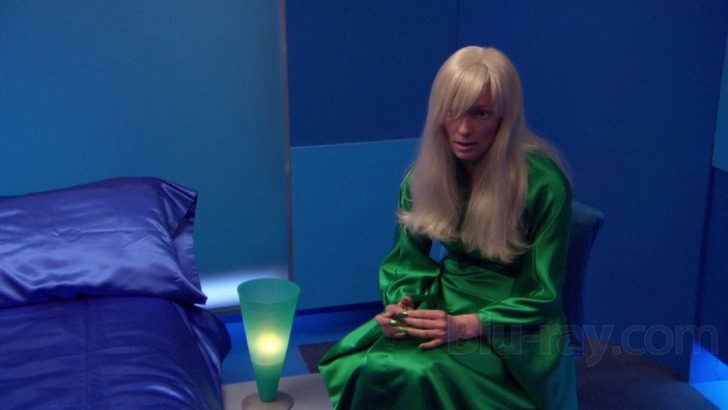
The AVC encoded image (1.78:1 aspect ratio) presentation for "Teknolust" brings the feature to Blu-ray, with the film part of the early years of HD-shot productions. Innate issues with digital are present, exposing some moire patterns and shimmering, and graphic and title additions are at a lower resolution, resulting in occasional jaggedness. While top tech at the time of its release, "Teknolust" looks a bit crude in 2020, and the visual experience picks up on periodic limitations. Colors are impressive, with the director's interest in bright primaries faithfully replicated here, delivering pronounced greens, yellows, and especially reds, with Rudy a striking feminine figure in the middle of a darker male palette. Computer graphics are also lively, securing website hues. Detail is acceptable with some softness, preserving facial surfaces and location distances. Costuming is fibrous. Delineation is comfortable.
Teknolust Blu-ray Movie, Audio Quality
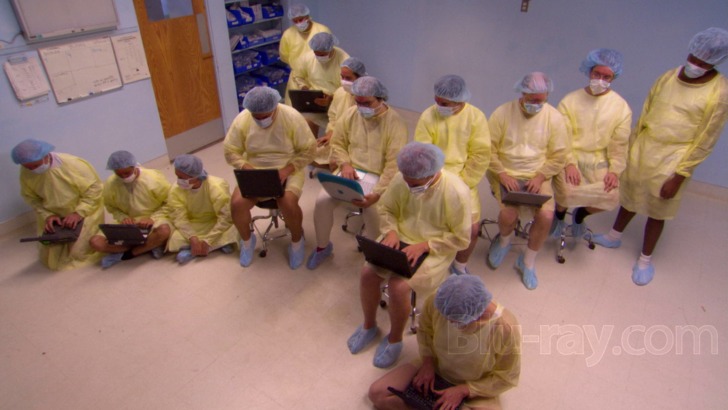
The 2.0 LPCM sound mix isn't too daring, holding tight on dialogue exchanges, which detail a range of performances and characters, including a whispering doctor and the different automatons. Dialogue exchanges are crisp. Scoring selections support as necessary, while more compelling instrumentation is found during bar performances, including sharp vocals. Sound effects are present, capturing the online realms. Atmospherics handle street bustle and room tone.
Teknolust Blu-ray Movie, Special Features and Extras

- Interview (13:06, HD) features writer/director Lynn Hershman-Leeson, who shares the inspiration behind the creation of Rosetta Stone, taking elements from female scientists. The laboratory location is explored and funding is charted, giving the helmer the biggest budget of her career. The interviewee delves into the conception of the automatons, using real breakthroughs in science and cloning to shape the idea, also presenting star Tilda Swinton with a rare acting challenge to portray four characters, going deep into the parts. The prescient ideas in the screenplay are celebrated, along with various cinematic inspirations, with Hershman-Leeson revealing that Spike Jonze was considered for a part, eventually taking "Teknolust" ideas to create his own work (presumably 2013's "Her"). The cult longevity of the picture is detailed, and its technological impact is examined, with the "Agent Ruby" A.I. bot project intending to give viewers an extension of the screen experience, soon becoming its own thing over the years, now housed at the San Francisco Museum of Modern Art.
- Interview (34:58, HD) is a 2009 post-screening discussion of "Teknolust" with Hershman-Leeson and star Tilda Swinton, recorded at the Museum of Fine Arts, Houston. Early inspiration and interest in technology is recalled, along with the initial meeting between the collaborators, which resulted in the 1997 film, "Conceiving Ada." Ideas on feminist DNA and the placement of "Teknolust" in feminist media arts is explored, with Hershman-Leeson detailing ideas on identity, while Swinton offers her acting philosophy, rejecting the idea that she has a "style" she goes by. Production struggles are highlighted, with financing lost the day before shooting, drastically shortening Swinton's shooting schedule, pushing the director to dream up virtual sets to help speed things along. Visual ideas are discussed, with Hershman-Leeson claiming "Teknolust" beat George Lucas to the market with HD cinematography. Cult longevity is shared, including the feature's place in feminist cinema, and relevance is debated.
- "DiNA" (4:53, SD) is a mid-2000 art installation from Hershman-Leeson, who displays her A.I. bot creation to visitors at numerous museums, selling the technological power of the idea.
- And a Theatrical Trailer (1:58, SD) is included.
Teknolust Blu-ray Movie, Overall Score and Recommendation
Strangeness is constant in "Teknolust" (a doctor who only whispers is one of the script's weaker ideas), but Hershman-Leeson doesn't sink her picture with it, balancing idiosyncrasy with an engrossing study of internet living and female control. The saga of the SRAs and their desire for freedom provides something of an adventure to follow, and while "Teknolust" is easily distracted and often too comfortable with iffy ideas, it remains a singular viewing experience.
Similar titles
Similar titles you might also like
(Still not reliable for this title)

A**holes
2017

There's Always Vanilla
1971

Wild Guitar
1962

A Feast at Midnight
1994
My Brother's Wife
1966

Saturday Night at the Baths
Slipcover in Original Pressing
1975
All Men Are Apes!
1965
Fanny Hill
1964

Heavenly Bodies
1984

The Nearest Human Being
2019

Dream a Little Dream
1989

Donny's Bar Mitzvah
2021

The Swinging Cheerleaders
1974

The Stud
1978

Liza the Fox Fairy
Liza, a rókatündér
2015

Penda's Fen
1974

The Bitch
1979

Cool It, Carol!
1970

Kuso
Slipcover in Original Pressing
2017

Chocolate Strawberry Vanilla
2013