Tea and Sympathy Blu-ray Movie
HomeTea and Sympathy Blu-ray Movie 
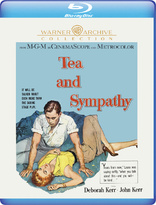
Warner Archive CollectionWarner Bros. | 1956 | 122 min | Not rated | Mar 31, 2026

Movie rating
7.3 | / 10 |
Blu-ray rating
| Users |  | 0.0 |
| Reviewer |  | 4.0 |
| Overall | | 4.0 |
Overview
Tea and Sympathy (1956)
Tom Robinson Lee is a sensitive student who prefers the arts to sports. As a result, he is ridiculed by many of his peers and also hounded by his macho father. He finds sympathy, however, in classmate Al and in Laura Reynolds, the understanding wife of his school's overbearing headmaster.
Starring: Deborah Kerr, John Kerr (II), Leif Erickson, Edward Andrews (I), Darryl HickmanDirector: Vincente Minnelli
| Drama | Uncertain |
| Coming of age | Uncertain |
Specifications
Video
Video codec: MPEG-4 AVC
Video resolution: 1080p
Aspect ratio: 2.35:1
Original aspect ratio: 2.55:1
Audio
English: DTS-HD Master Audio 2.0 Mono (48kHz, 24-bit)
Subtitles
English SDH
Discs
Blu-ray Disc
Single disc (1 BD)
Playback
Region A, B (C untested)
Review
Rating summary
| Movie | | 4.0 |
| Video |  | 5.0 |
| Audio | | 5.0 |
| Extras |  | 1.0 |
| Overall | | 4.0 |
Tea and Sympathy Blu-ray Movie Review
"Years from now, when you talk about this -- and you will -- be kind."
Reviewed by Randy Miller III March 31, 2026Vincente Minnelli's Tea and Sympathy, a beautiful Cinemascope adaptation of Robert Anderson's popular 1953 stage play, won't be universally well-received by modern audiences who are seeing it for the first time. More than most films, it must be at least partially viewed through the lens of cultural norms and restrictions of the time and, though several portions of its story are indeed borderline offensive, this is such a well-acted and thoughtful production that the ends seem to justify the means. Starring Deborah Kerr and John Kerr (no relation) as well as Leif Erickson (also no relation) who are all reprising their roles from the play's Broadway run, Tea and Sympathy shines brightly in its measured examination of various characters that respond differently to a young man who doesn't fit in with "the boys".
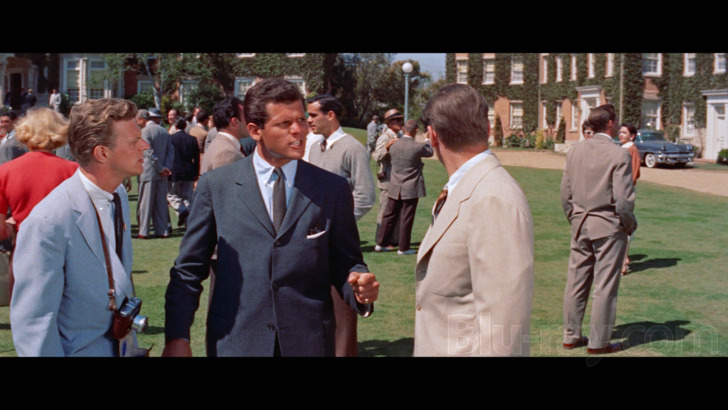
See that guy up there? No, the sad sack on the right. Meet Tom Robinson Lee (John Kerr), now a senior at an all-boys' prep school, who prefers classical music, theater, and just being friends with girls and women instead of chasing them. That's more than enough to ensure constant ridicule from his fellow students under the direction of their macho coach, Bill Reynolds (Erickson), which ranges from light taunts and whispering to outright physical intimidation and repeated name-calling, which in this case is "Sister Boy". Even Tom's father Herb (Edward Andrews) parents him from a distance, unsure of how to treat a quiet young man who doesn't follow his own interests. Poor Tom is essentially alone, but with two main exceptions: his sympathetic roommate Al (Darryl Hickman) treats Tom with decency... and so does the coach's wife Laura (Deborah Kerr), whose late first husband was also a bit on the sensitive side.
Tea and Sympathy doesn't exactly walk so The Graduate could run, if you catch my drift, but its portrayal of a young man's relationship with an older women certainly sounds similar on the surface. The difference here is that ol' Tom is possibly gay, which of course was strictly off-limits in ye olde 1956 and couldn't even be uttered by name. Therefore, this film has no choice but to dance around several aspects of its narrative, which means that new viewers will have to squint a little to understand where it's going with the story... and in certain respects, where it goes isn't exactly friendly territory. On paper, Tea and Sympathy ultimately attempts to convert its main character through this relationship, not to mention other detours like his reluctant visit to a local prostitute Ellie (Norma Crane) -- whose profession is, again, more implied than underlined -- and even an adjacent suicide attempt which, as presented in the film, could also be read as attempted murder. But when delivered via extremely sensitive performances by Deborah Kerr and John Kerr, the plot of Tea and Sympathy doesn't feel as dated or (and I hate this word) "problematic" as expected.
Kerr's performance on Broadway was enough to win him a well-deserved Tony Award, and he and the other two returning players are clear
highlights in an already stacked cast of talent. All three seem rightfully comfortable in their roles and almost wear them as a second skin, allowing
us to partially get past the film's more prickly or dated moments much more easily. Director Vincent Minnelli was likewise an absolutely perfect
choice to helm this adaptation: not only does he have roots in stage direction, but his personal life suggests that numerous similarities seem to
parallel Tea and Sympathy's subject matter and these only strengthen its overall foundation. So while the end result occasionally has a bit
of difficulty navigating the claustrophobic boundaries of 1950s-era "good taste", the end result is still well worth (re)discovering 70 years after its
theatrical debut. Warner Archive's welcome Blu-ray edition offers ample support, serving up a pitch-perfect A/V restoration that makes its lovely
CinemaScope visuals shine like new.
Tea and Sympathy Blu-ray Movie, Video Quality
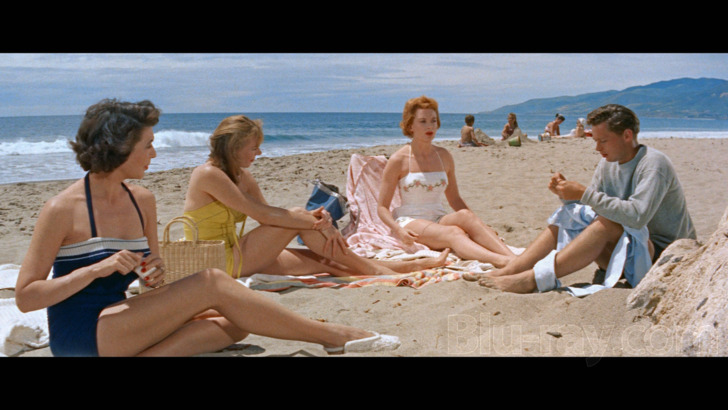
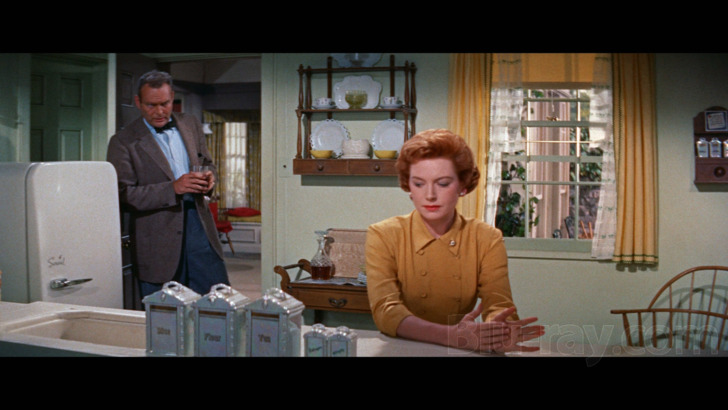
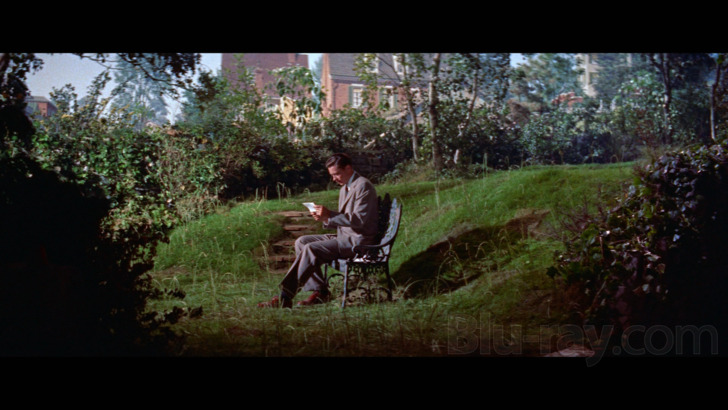
Tea and Sympathy was one of the first CinemaScope films shot in 2.35:1 rather than 2.55:1, which was a necessary change tied to looser restrictions on audio rather than previously required four-track magnetic sound -- see below for a little more on that. In any case, the film's outstanding visuals are preserved perfectly on Warner Archive's flawless new restoration, which is the result of a recent 4K scan of the original camera negative with manual cleanup that basically eliminates all signs of age-related wear and tear while preserving its original grain structure. Those familiar with the boutique label won't be surprised with the 5/5 rating that Tea and Sympathy has earned, as it's every bit as lovely as previous WAC discs that earned perfect marks for their robust detail, perfectly saturated colors, and a beautifully thick and stable appearance that rivals a first-run theatrical showing. As seen in these direct-from-disc screenshots, this is a massive upgrade from previous home video editions and should look very good on almost any size screen.
Tea and Sympathy Blu-ray Movie, Audio Quality
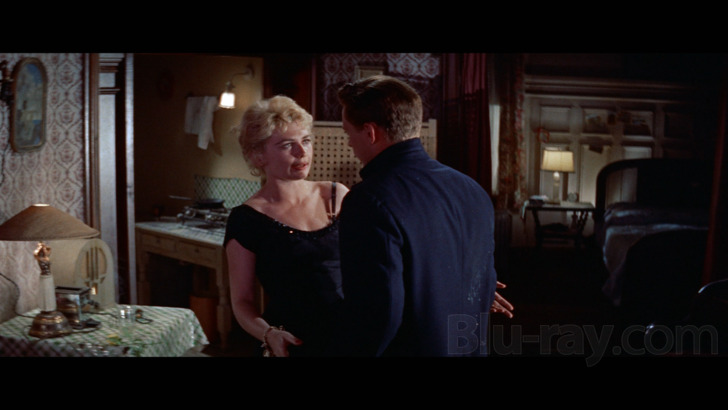
One of the first CinemaScope films produced in mono (as opposed to four-track stereo, which was viewed as a cost-prohibitive requirement of the new format), Tea and Sympathy still sounds respectably rich and full-bodied on Warner Archive's DTS-HD 2.0 Master Audio track. As usual, it's a split presentation of that one-channel source but still easily gets the job done, boasting crisp audio and nicely prioritized effects with plenty of room left over for the outstanding original score by Adolph Deutsch, whose most notable credits include high-profile classics such like The Maltese Falcon, Seven Brides for Seven Brothers, Oklahoma!, and The Apartment. In all respects, this is a very tasteful presentation that sounds like a product of its time but one untethered by obvious age-related damage.
Optional English (SDH) subtitles are included during the main feature only, not the extras listed below.
Tea and Sympathy Blu-ray Movie, Special Features and Extras
This one-disc release ships in a keepcase with vintage poster-themed cover art and two era-specific extras.
- Down Beat Bear (6:30) - "We interrupt this program to announce that a dancing bear has wandered away from the carnival. He is a trained bear and will dance if he hears music." This all-time classic (for me, anyway) Tom and Jerry short has actually appeared on three previous Warner Archive releases, but the one you want is last year's outstanding Golden Era Anthology, which I named as my favorite release of 2025.
- Theatrical Trailer (2:52) - This vintage promotional piece can also be seen here.
Tea and Sympathy Blu-ray Movie, Overall Score and Recommendation
Tom Lee, the central protagonist of Tea and Sympathy, would have a lot less trouble fitting into today's much more accepting world. Sadly, his story takes place in the 1950s, a time when the words "gay" or "effeminate" were either unspeakable evils or just seen as character flaws. While Vincente Minnelli's 1956 film is often limited by unavoidable MPAA/studio restrictions, it still shines as a thoughtful and well-directed film that's loaded with terrific performances, with its three main players recapturing their Broadway roles from three years earlier. The end result is a very unique and moving film that's well worth seeking out, and Warner Archive's welcome Blu-ray offers plenty of support with a sparkling new A/V restoration that helps it look and sound like new. Highly Recommended.
Similar titles
Similar titles you might also like

The Way He Looks
Hoje Eu Quero Voltar Sozinho
2014

Boulevard
2014

Marjorie Morningstar
1958

The Children's Hour
1961

Another Country
1984

Picnic
Limited Edition to 3000 - SOLD OUT
1955

The Last Picture Show
Director's Cut
1971

Come Back, Little Sheba
1952
Splendor in the Grass
Warner Archive Collection
1961

Gregory's Girl
1981

The Perks of Being a Wallflower
2012

Get Real
1998
Kes
1969

Red Dust
Warner Archive Collection
1932

Not as a Stranger
1955

Diner
1982

Hilda Crane
Limited Edition to 3000
1956

My Week with Marilyn
2011

A Summer Place
Warner Archive Collection
1959

The Sign of the Cross
1932