Stolen Face 4K Blu-ray Movie
HomeStolen Face 4K Blu-ray Movie 
Collector's Edition / 4K Ultra HD + Blu-rayHammer Films | 1952 | 1 Movie, 2 Cuts | 72 min | Rated BBFC: PG | Feb 16, 2026


Movie rating
6.3 | / 10 |
Blu-ray rating
| Users |  | 0.0 |
| Reviewer |  | 4.0 |
| Overall | | 4.0 |
Overview
Stolen Face 4K (1952)
A doctor repairs a female inmate's disfigured face to match the lovely woman who left him, and marries her, only to find out how abusive she is.
Starring: Paul Henreid, Lizabeth Scott, André Morell, Mary Mackenzie, John Wood (II)Director: Terence Fisher
| Film-Noir | Uncertain |
| Drama | Uncertain |
Specifications
Video
Video codec: HEVC / H.265
Video resolution: 4K (2160p)
Aspect ratio: 1.37:1
Original aspect ratio: 1.37:1
Audio
English: LPCM 2.0 Mono
English: DTS-HD Master Audio 5.1
Subtitles
English SDH, French, German, Italian, Spanish
Discs
Blu-ray Disc
Two-disc set (2 BDs)
4K Ultra HD
Playback
Region B, A (C untested)
Review
Rating summary
| Movie |  | 3.5 |
| Video | | 3.5 |
| Audio | | 4.0 |
| Extras |  | 5.0 |
| Overall | | 4.0 |
Stolen Face 4K Blu-ray Movie Review
Reviewed by Justin Dekker April 17, 2026The third film he directed for the studio but still several years removed from the advent of his acclaimed horror output, Terence Fisher's Stolen Face arrives on 4K UHD disc in the 'Stolen Face: Collector's Edition 4K' courtesy of Hammer. Produced by Anthony Hinds, with Jimmy Sangster on hand as AD, and Phil Leaky handling make-up, the film stars Paul Henreid ('Casablanca'), Lizabeth Scott ('Desert Fury') in a dual role, and André Morell ('The Plague of Zombies'), with Scott's costumes handled by the legendary Edith Head. The film has been given a handsome restoration, and is accompanied by a rich assortment of on-disc and printed extras including multiple cuts of the film, multiple commentaries, in-depth segments concerning Head, Leaky, and Scott, and a 116-page perfect-bound book with extensive writing on the film and related subjects. Housed in an attractive slipbox, a Blu-ray with identical programming is also included.
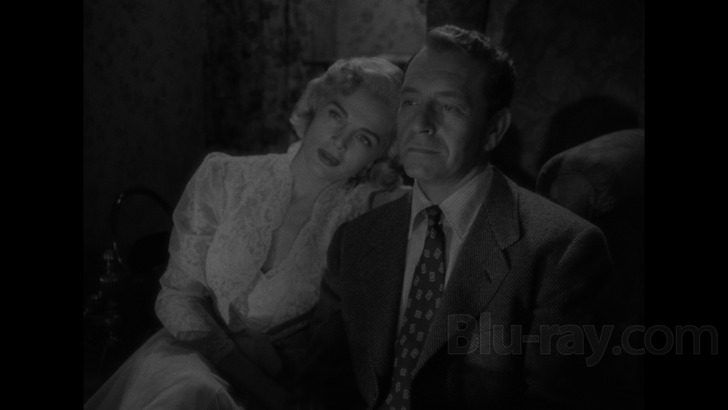
Well-versed film fans who sit down to take in 1952's Stolen Face are likely to quickly notice some parallels to a more more well-known film: Alfred Hitchcock's Vertigo from 1958. Those dates are significant. For while the two films cover some very similar ground with two men in a position of power (relatively speaking) designing to reshape a woman of a lower class into the form of a woman that they had loved and lost, it's important to note that Director Terence Fisher's film arrived in cinemas several years before both Hitch's revered picture and the novel on which it was based hit the market. There are likely several factors at work impacting why the Jimmy Stewart and Kim Novak film is more widely seen and better remembered than this one which pairs Paul Henreid with Lizbeth Scott. Stewart was in the midst of an impressive run of films that included Bell, Book, and Candle, and Anatomy of Murder which he worked on after it, and The Man From Laramie, Rear Window, and The Man Who Knew Too Much which he had completed before it. Novak was coming off of Pal Joey with Frank Sinatra and was also bound for 1959's Bell, Book, and Candle immediately following. Henreid and Scott, however, for all of their prior success (Henreid had starred in Casablanca opposite Humphrey Bogart and Ingrid Bergman, and Scott had dazzled in Too Late for Tears), both were at different points in their careers, and due to a certain amount of notoriety, headed to the UK in order to find meaningful film work. Stolen Face a film deserving of greater esteem than what it currently enjoys, is most certainly a meaningful, unexpectedly dark, and impactful film.
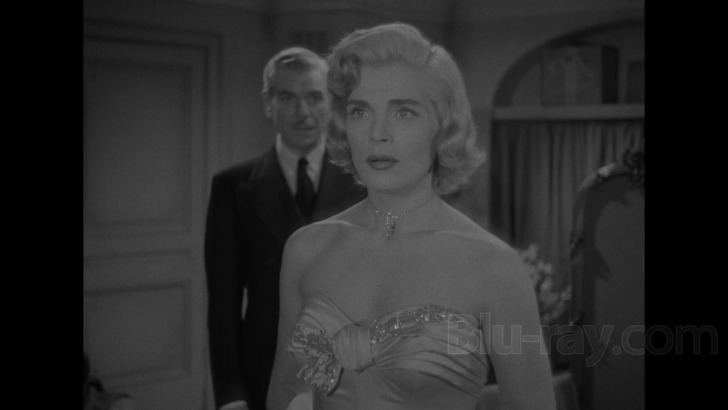
Stolen Face takes its time grounding the viewer in the worlds of Henreid's Dr. Philip Ritter and Scott's Alice Brent. Scott is absolutely magnetic in her portrayal of an accomplished concert pianist, living a the ultimate jet set lifestyle and draped in one glamourous gown after another (designed by Edith Head). Henreid's Dr. Ritter's services as a plastic surgeon are sought out by the wealthy to correct any perceived imperfections to their visages cruelly visited upon them by time, which, to their chagrin, has no concern for their social status. Though engaged, Scott's Brent isn't opposed to diving headlong into a brief tryst after a chance meeting with Ritter. Ritter, for his part, seems willing to help the less fortunate, but is of the curious mindset that people whose faces are scarred are somehow forced into crime, and that repairing those issues will enable them to lead normal, law-abiding lives. He's likewise highly judgemental of those who seek out his services, and to a degree, of the less fortunate to whom he proves them for free. To Ritter, the alluring Brent is the key to a future he'd never though possible. When Brent unexpectedly and abruptly terminates their brief affair, crushing Ritters all-too-brief dream, Stolen Face adopts a more sinister, and more interesting tone.
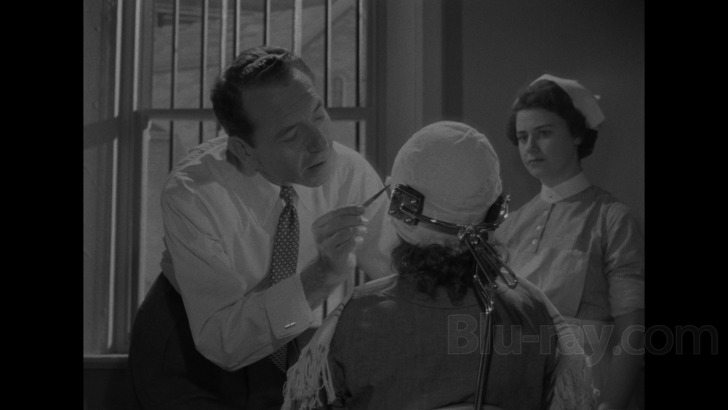
Obsessed with his "perfect" woman who is now, due to an impending marriage, beyond his reach, Ritter devises a plan to save (read: use for his own pleasure) a scarred criminal named Lily. But, beyond erasing the defect, the lovelorn surgeon reshapes her entire face into that of the unattainable Alice Brent and convinces the ex-convict to dye her hair a color identical to hers. Ostensibly to prove a point to his peers, he marries the re-made Lily, but his actions are clearly purely in service to his own lustful desires to possess a woman he cannot have. Hammer fans keeping up with the studio's recent output will find these story elements and themes to be eerily familiar, with Four Sided Triangle, which Fisher directed the following year, mining the same subject matter. That film goes further into science fiction with Bill cloning a copy of his obsession, the lovely Helen, and calling the new entity Lena. While Helen allowed a copy of herself to be made, the end result was still undesirable for Bill, as even the clone was in love with another man. In Stolen Face Lily does consent to having Ritter repair/remove her disfiguring scar, but she did not consent to being completely remade into the likeness of another woman. Though she may look like Alice, dress like Alice, and even sound like her when she speaks, to Dr. Ritter's immense dismay, this simulacrum is a poor substitute for the real object of his lust, and her old behavior patterns reemerge with vigor. It is not dissimilar to how Jeffery Franken reassembles his deceased fiancée Elizabeth into the woman of his sexual fantasies with handpicked pieces of dead prostitutes in 1990's Frankenhooker , only to find that his attractive amalgamation of parts remembered and were relentlessly driven to once again engage in their previous profession. In these films, the women's bodies may be the stuff of the men's dreams, but what they are each quickly aghast to discover is that their creations still possess free will and cannot be made to behave exclusively according to their whims and fantasies. Given this film is a heady mix of noir, horror, and science fiction, a grim resolution to the Philip-Lily-Alice love triangle in this film is all but assured.
Stolen Face 4K Blu-ray Movie, Video Quality
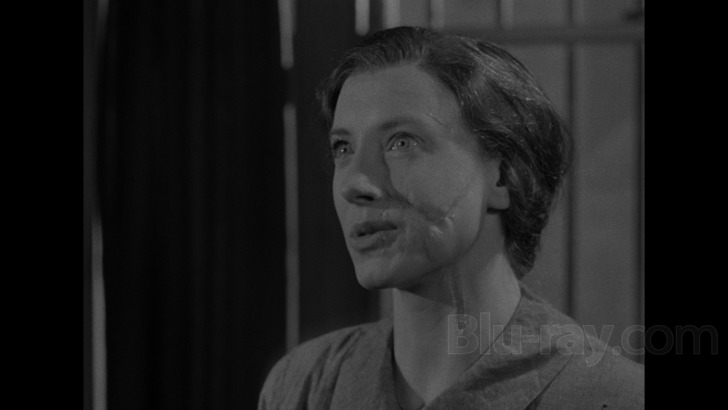
The notes on the restoration found in the back of the included "The Hammer Sci-Fi Files: Stolen Face" perfect-bound book, indicate the the original 35mm negative held at the BFI was impacted by the severe deterioration of the ends of each reel. These were thus replaced with material from a 35mm combined fine grain master found in Hammer's vault. After scanning, dirt, scratches and a general instability that resulted in flickering throughout needed to be addressed in order to create a clean and stable image. Again based on the notes, the difference between the UK and the US version amounts to the UK cut having longer end credits. Overall, I'm quite pleased with Stolen Face's 2160p presentation. Fine grain is present and resolves naturally throughout, never becoming clumpy or noisy. There is a slight softness to some exterior shots, but as the bulk of the films action is studio-bound, such moments are both infrequent and short-lived. Process shots also display their vintage with similar typical and expected drops in resolution to the background or objects in the distance as the case may be, while the actors remain noticeably sharper. Fine detail is high, with facial and hairstyle particulars being visible but stop a notch or two below the pin-point precision characteristic of modern films or more well-known major studio efforts from the era. Blacks don't reach the depths of other Hammer releases, staying a bit more grey than I would like, but they are acceptable, just as whites never rise to the level of brilliance. The Dolby Vision color grade offers an expansive grey-scale to better define shadows and darkened spaces so that characters and set elements remain distinguishable.
Stolen Face 4K Blu-ray Movie, Audio Quality
The performance of the two audio tracks is very much in line previous Hammer releases. The newly-created DTS-HD MA 5.1 track opens up the stage nicely enough, though I'm once again not always in alignment with choices made relative to the placement of certain voices or other sounds, and their movement through the field which is not always a fluid as I would like. For me, the LCPM 2.0 track is again the better choice. Voices are clean and presented without any significant defects, though sensitive ears will likely note occasional sibilance issues. They're never overly distracting though, and one's ear does tend to become inured to them over the span of the film's brisk 72-minute runtime. The film's score is likewise rendered well, whether it's intended to subtly enhance mood or emphasize shock or surprise with a more dramatic sting. As is normal and customary for the tracks of films of this vintage, anything in the mid-range or higher is presents well, but absent any noteworthy bass presence both music and effects can sound rather thin to ears accustomed to more modern cinematic offerings. Considering this is a 1950's thriller with horror and noirish flourishes and the bulk of what this track needs to handle is dialogue with short, sporadic bursts of character-defining piano playing, the 2.0 track is more than appropriate.
Stolen Face 4K Blu-ray Movie, Special Features and Extras
Hammer's Stolen Face: Collector's Edition 4K is outfitted with the level of printed and on-disc extras one has come to expect from the studio,
as detailed below.
- UK Theatrical Version with 2025 Commentary featuring Cathy Lomax and Lucy Bolton - Lomax and Bolton provide a relaxed and comfortable commentary which is consistently driven by the on-screen action. The pair discuss the actors as they appear, Scott's relationship with with Edith Head, and Terence Fisher's directorial style. They cover some legal action Scott took to protect her reputation, and the gossip that stuck with her over the course of her career. They repeatedly discuss the film's themes, some of the films iconography, and the linkage between female characters in cinema and theft. It's a very enjoyable and informative commentary.
- US Theatrical Version with 2025 Commentary featuring Lizbeth Myles and Paul Cornell - Beginning with discussing the character introductions and what is quickly gleaned from them, Myles and Cornell's commentary is largely keyed to the film. Myles is quick to key in on the subject of vanity and Dr. Ritter's judgements and motivation. They provide a fair amount of facts and trivia about film, including the reality of plastic surgery in British prisons. The subject of Terence Fisher's work is occasionally revisited, as is Paul Henreid, and they're not above poking fun at the film from time to time. They dissect the various interpersonal relationships in the film, and Stolen Face's noirish tendency to have character veer toward unhealthy and/or destructive relationships. Class is also frequently discussed, as are the psychological motivations of the lead characters. The pair are having a great deal of fun, laughing frequently, and positing a number of "what ifs" about how the film may have unfolded had the characters made different choices at various points. They especially have fun with the film's climax, and the track a very entertaining.
- UK Censor Card (0.10) - Receiving an "A" rating, Stolen Face is more suitable for adults.
- Face/Off (31.23) - Author and filmmaker Chris Alexander shares a wealth of personal and professional information about Lizabeth Scott, as well as an earnest appreciation of her work, including Stolen Face.
- Un-American: Thomas Doherty on the HUAC (House Un-American Activities Committee) (36.39) - Doherty, a professor of American Studies at Brandeis University discusses the opposing ideological members of the film: one was star Paul Henreid, an opponent of HUAC and a member of the Committee for the First Amendment who was black-/grey-listed at the time as a result, and Martin Berkely, who wrote Stolen Face and was an informant. Doherty traces the committees origins, and its focus which shifted almost exclusively to Hollywood in the post-war era. He pays particular attention to the Popular Front of the 1930 as it's themes and issues would impact what transpired in the late 1940s, providing context to the focus on what was ending up on cinema screens across the nation. He discusses the origins of the Hollywood blacklist and the impact on Henreid before he turns his attention to Berkley, his role as an informant, and the impact of his activities on his career. It's an informative segment about a troubling aspect of the US' political past.
- Putty in his Hands: A Profile of Hammer's Make-up Maestro Phil Leakey (38.49) - Richard Klemensen, the editor and publisher of "Little Shoppe of Horrors" magazine, discusses how Roy Ward Baker connected him with Phil Leakey before playing an audio recording of the man speaking initially of his upbringing and re-film career. He describes getting into make-up quite by accident and the training he received. Peter Leakey (Phil's son) appears to discuss how his career was interrupted by the war, how those experiences shaped him, the end of his military career, and the resumption of his film work in 1947. Phil Leakey as much to say regarding his work on the Quatermass films and the horror films on which he worked. He adds comments on Peter Cushing and his The Curse of Frankenstein work. The material plays out with a mix of stills, posters, and other still images.
- A Distinctly British Phenomenon (25.11) - Written and narrated by Alexandra Heller-Nicholas, she traces the various similarities between this film and Hitchcock's classic Vertigo, before drawing parallels to Ovid's Pygmalion, Shaw's play of the same name, and My Fair Lady. She covers the interest in plastic surgery in films of the era to injuries sustained by many in World War II, and traces the British fascination with sexual obsession through several classic literary works. Ultimately, she turns her attention to an analysis of Stolen Face with these, and other elements, as particular focal points.
- Dressed for Success: Liz Tregenza on Edith Head (18.12) - Tregenza, a Lecturer in Cultural & Historical Studies at London College of Fashion, covers how the legendary Edith Head came to work in costuming, and her lengthy tenure at Paramount, becoming more well- known in the 1930s, with some of her early work influencing broader fashion. She speaks about Head's penchant for working with leading and supporting ladies to craft costumes that would work well for them in a process that was iterative and collaborative rather than prescriptive. Tregenza shares her thoughts on her design work in the 1940s, before discussing Scott's costumes in this film.
- Image Gallery (14.06) - A variety of color and black-and-white images auto-advance and are accompanied by music from the film's score.
- The Hammer Sci-Fi Files: Stolen Face - The 116-page perfect-bound book features nine essays, press material, restoration notes, and numerous black-and-white and color images.
- Press Booklet - This booklet features ads and publicity material for the film.
Stolen Face 4K Blu-ray Movie, Overall Score and Recommendation
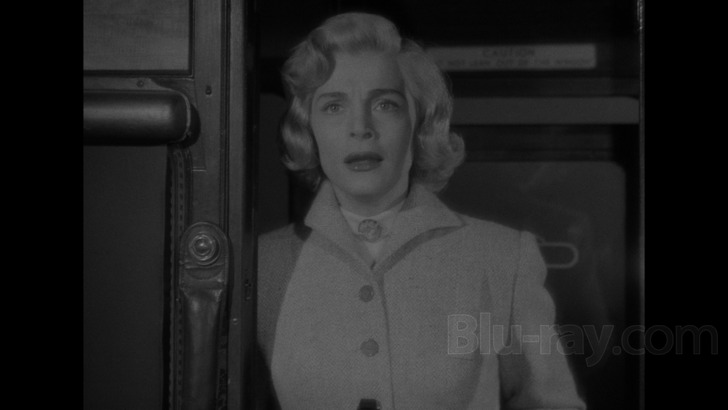
Stolen Face covers a great deal of ground in its brisk 72-minute runtime. Admirably, it spends the necessary time to introduce the critical characters and set the stage for post-surgery action. Once the operation is complete, the formerly staid film features a great deal of excitement, as Lizabeth Scott digs into her dual role with gusto. While she is convincing and lovely as a concert pianist and darling of high society, it's her hard drinking, larcenous, and man-eating surgically augmented Lily that yields a host of degenerate delights. And while not exclusively belonging to the horror genre, it does provide evidence of Fisher honing his craft with certain reveals and other moments providing a whisper of things to come once he brings The Curse of Frankenstein and his other works of horror to the screen. Stolen Face: Collector's Edition 4K comes highly recommended.
Similar titles
Similar titles you might also like

Out of the Dark
2014

Eye of the Tiger
1986

Satan's Slave
Evil Heritage / Indicator Series
1976
Amityville: A New Generation
1993

I Spit on Your Grave
Ultimate Collector's Edition | Day of the Woman
1978

Nightbirds
BFI Flipside
1970

3 From Hell
2019

Late Phases
2014

Cabin Fever 3 - Patient Zero
2014

The Last House on the Left 4K
Special Edition | Theatrical Cut
2009

Friday the 13th Part 3
Special Edition
1982

Wonderwall - The Movie
Digitally Restored Collector's Edition
1968

Dracula: Season One
2013-2014

Baby Love
1968

They Made Me a Fugitive
I Became a Criminal / Indicator Series
1947

Flavia the Heretic
Flavia, la monaca musulmana
1974

Men
2022

Blastfighter
The Force of Vengeance / The Italian Collection #04
1984
Sweeney Todd: The Demon Barber of Fleet Street
Indicator Series
1936

The Ghoul
2016