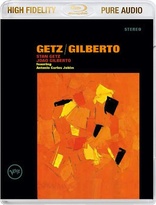
Stan Getz & João Gilberto: Getz/Gilberto Blu-ray Movie
HomeStan Getz & João Gilberto: Getz/Gilberto Blu-ray Movie 
Blu-ray AudioUniversal Music | 1964 | 39 min | Not rated | Oct 30, 2013
Price
List price:Listed on Amazon marketplace

Movie rating
Movie has not been rated yetBlu-ray rating
| Users |  | 0.0 |
| Reviewer |  | 4.0 |
| Overall | | 4.0 |
Overview
Stan Getz & João Gilberto: Getz/Gilberto (1964)
Starring: Stan Getz, Joao Gilberto, Antonio Carlos Jobim| Music | 100% |
Specifications
Audio
Music: LPCM 2.0 (96kHz, 24-bit)
Music: DTS-HD Master Audio 2.0
Music: Dolby TrueHD 2.0
Discs
25GB Blu-ray Disc
Single disc (1 BD)
Playback
Region free
Review
Rating summary
| Movie |  | 5.0 |
| Video | | 0.0 |
| Audio | | 5.0 |
| Extras | | 0.0 |
| Overall | | 4.0 |
Stan Getz & João Gilberto: Getz/Gilberto Blu-ray Movie Review
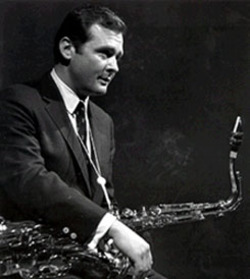
Reviewed by Jeffrey Kauffman February 12, 2014The Bossa Nova had been percolating in Brasil (as they spell it down south) from the late fifties on, especially after the release of Marcel Camus’ epochal Black Orpheus in 1959. American jazz artists’ ears perked up and there soon began an international back and forth where young American stars like Paul Winter and Charlie Byrd starting visiting Brasil, while Brasil sent some of its most prominent young musicians, including future legends like Sergio Mendes, to perform at Carnegie Hall. All of this cross cultural interweaving really burst forth on American shores in 1962 with the release of Stan Getz’s Jazz Samba, which did indeed feature Charlie Byrd on guitar and which fostered an unlikely hit of massive proportions with Antonio Carlos Jobim’s “Desafinado”. All sorts of bossa nova records starting appearing by a hugely disparate group of American jazzmen, but it was Getz who got some of the most authentic sounds of the era in 1964 by teaming with João Gilberto, Gilberto’s then wife Astrud, bassist Sebastião Neto (a veteran of Mendes’ early groups and soon to be Brasil ‘66’s second bassist), Jobim (who composed most of the tracks) and drummer Milton Banana. Getz/Gilberto was even more successful than Jazz Samba, making Astrud an overnight sensation and spawning one of the all time greatest hits in the Bossa Nova era, “The Girl from Ipanema”.
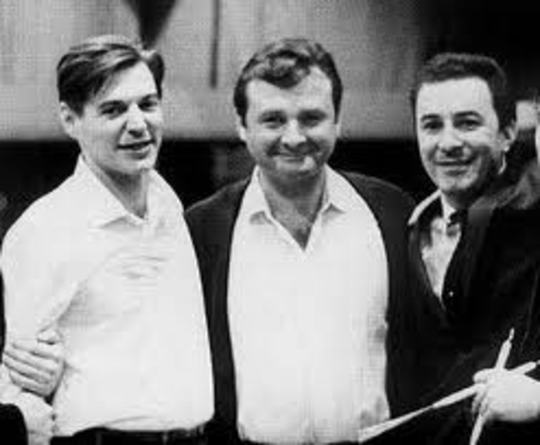
Getz/Gilberto was in its own way as important as the arrival of The Beatles on American shores in 1964. The lilting, lyrical and harmonically complex sounds of the album helped lift the nation out of the doldrums it had experienced from the Kennedy assassination, and the cool, sophisticated changes it offered provided a perfect tapestry on which Getz could weave his forceful but always melodic improvisations. Astrud Gilberto, who famously was just kind of there during the sessions and chimed in on a couple of tunes, went on to a storied career herself, eclipsing a number of perhaps more naturally gifted Brasilian chanteuses of the same generation. (Some may want to check out her stepdaughter, Bebel Gilberto, the daughter of João and his second wife Miucha, sister of Chico Buarque, and who was a longtime collaborator with Jobim. Miucha and Gilberto recorded a fantastic later album with Getz called The Best of Two Worlds, which comes highly recommended.)
Stan Getz & João Gilberto: Getz/Gilberto Blu-ray Movie, Video Quality
Aside from the static Main Menu, there's no video content on this disc.
Stan Getz & João Gilberto: Getz/Gilberto Blu-ray Movie, Audio Quality
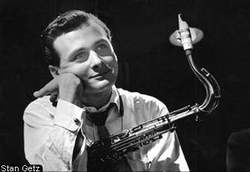
As with previous Universal Music Group High Fidelity Pure Audio releases, three audio options are included, an uncompressed PCM 2.0, a DTS-HD Master Audio 2.0 and a Dolby TrueHD 2.0, all at 96/24. The PCM streamed in the region of 4.6 Mbps, with the DTS track averaging in the high threes and the Dolby track vacillating between the high twos and low threes. Why UMG continues to offer these options instead of more bonus content continues to be questionable, especially since (counter to what's on the insert booklet), this release does not include the bonus 45s that were on the CD reissue. That said, the music here sounds incredibly vibrant. Never before has the solid "thunk" of Neto's low bass notes been so resonant, and there's exceptional stereo separation here, with several of Getz's solos emanating from the left channel and Astrud's plaintive voice coming from the right.
Stan Getz & João Gilberto: Getz/Gilberto Blu-ray Movie, Special Features and Extras

No supplementary material is included on this audio Blu-ray disc.
Stan Getz & João Gilberto: Getz/Gilberto Blu-ray Movie, Overall Score and Recommendation

This is still nascent Bossa Nova, without some of the harder bop presence that would soon emerge, or even later tropes like consistent rim shots on two syncopated beats in every bar. This is often rather spare, ostensibly "simple" sounding music that nonetheless is some of the most harmonically sophisticated of its (or indeed any) era. Getz/Gilberto has never sounded this good, but it's a shame that the bonus tracks weren't included (and what about alternate takes?). Highly recommended.